
By Ivan Kesic
As tensions escalate in the Persian Gulf amid the US military buildup, the Islamic Republic of Iran has methodically assembled a diverse and sophisticated arsenal designed to confront the most powerful symbol of American naval power—the aircraft carrier.
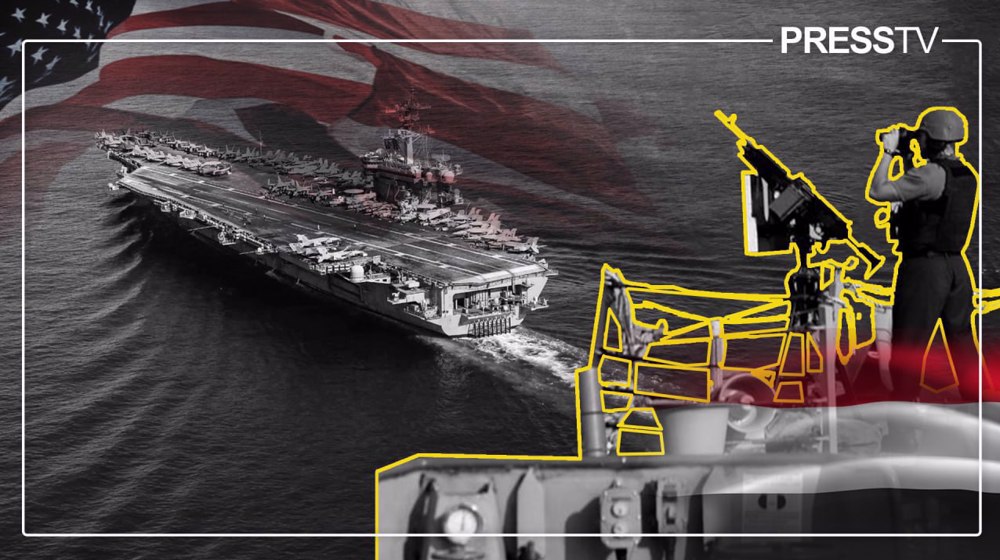
The United States has, in recent weeks, dispatched two of its most formidable warships, the USS Abraham Lincoln and the USS Gerald R. Ford, to the waters surrounding the Persian Gulf.
With US President Donald Trump warning that diplomacy must succeed or military action will follow, the rhetoric from Washington has been met with a calculated and determined response from Tehran.
Iranian armed forces, led by the Islamic Revolution Guards Corps (IRGC), held extensive naval exercises in the Strait of Hormuz, which was followed by joint drills with Russia.
At the heart of this equation lies a strategic question that has occupied military planners for decades: can a relatively smaller naval power deter or even damage a nuclear-powered aircraft carrier?
For Iran, the answer is not found in a single wonder weapon, but in a comprehensive, layered, and constantly evolving anti-access strategy.
This approach, built on decades of indigenous development and asymmetric thinking, seeks to transform the narrow waters of the Strait of Hormuz and the vast expanse of the Arabian Sea into a high-risk environment for any adversary, proving that the era of the aircraft carrier’s perceived invulnerability in close proximity to Iranian shores is effectively over.
The Deputy Inspector of the Khatam al-Anbiya Central Headquarters General Asadi:
— Press TV 🔻 (@PressTV) February 22, 2026
🔹The issue of the presence of an American aircraft carrier in the region has entered a propaganda phase, and the response to such move has been given by the Commander-in-Chief of the Armed Forces. pic.twitter.com/vKGr3N1SJM
Leader’s warning: Words forged in steel
The strategic confrontation between Iran and the United States was crystallized in recent remarks by the Leader of the Islamic Revolution, Ayatollah Seyyed Ali Khamenei.
Responding directly to the deployment of American naval forces and the threats emanating from Washington, he framed the contest not as one of ships versus ships, but of will versus hardware.
Ayatollah Khamenei acknowledged the inherent danger posed by a US aircraft carrier, describing it as a certainly dangerous piece of equipment.
However, he immediately pivoted to the core of Iran’s defensive doctrine, stating that far more dangerous than the carrier itself is the weapon capable of sending it to the bottom of the sea.
This pronouncement was a declaration of strategic intent. He pointed to the failure of the US to subdue the Islamic Republic for 47 years as proof that mere military might does not guarantee victory.
He addressed the American president directly, asserting that the future would mirror the past, and that the Iranian nation, drawing on its deep cultural and religious roots, would never bend to the will of arrogant powers of the world.
These words serve as the philosophical bedrock for Iran's military posture, framing the challenge not as a conventional naval duel but as a confrontation rooted in ideological conviction, where Iran's weapons are an extension of its national determination to resist domination.
🔴 "He says, 'We have the world's strongest army'; the strongest army in the world may sometimes receive a blow so severe that it cannot get back on its feet."
— Press TV 🔻 (@PressTV) February 17, 2026
🔴 "A warship is dangerous, but more dangerous is the weapon that can send it to the bottom of the sea."
- Leader pic.twitter.com/0g9iSsVjNF
Arsenal of asymmetry: More than a single arrow
Iran’s capability to threaten a US aircraft carrier does not rest on a single magic bullet but on a diverse and layered portfolio of weapons systems, each designed to complicate the defensive calculus of a Carrier Strike Group.
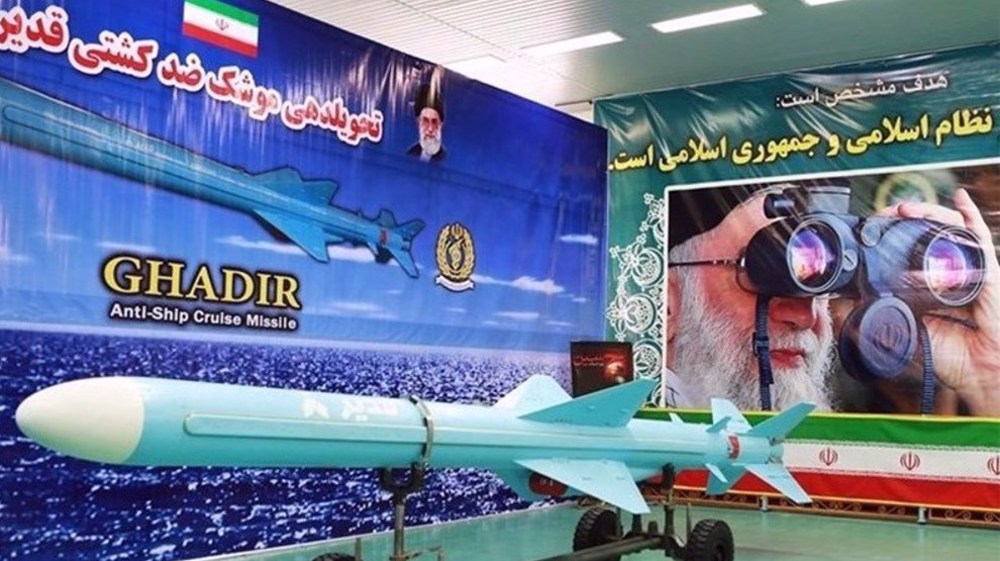
The backbone of this naval strike capability remains its family of anti-ship cruise missiles. Advanced systems like the Noor and its upgraded variants, the Qader and Ghadir, have been developed over the years, extending their reach from 120 kilometers to an estimated 300 km.
These missiles are designed for sea-skimming flight, traveling mere meters above the wave tops to delay radar detection and compress reaction times for point-defense systems.
They form the high-volume, coastal-defense layer of Iran’s maritime shield. Building on this foundation, Iran has pushed the technological envelope with longer-range systems.
The Abu Mahdi cruise missile, with a reported range exceeding 1,000 kilometers, represents a paradigm shift. Equipped with artificial intelligence and a dual-mode seeker, it can be launched from deep within Iranian territory and is designed to resist jamming while striking moving vessels at sea.
Similarly, the Qader-380 extends this reach, described by Iranian commanders as a weapon capable of creating insurmountable challenges for enemy vessels far from Iran’s immediate coastline.
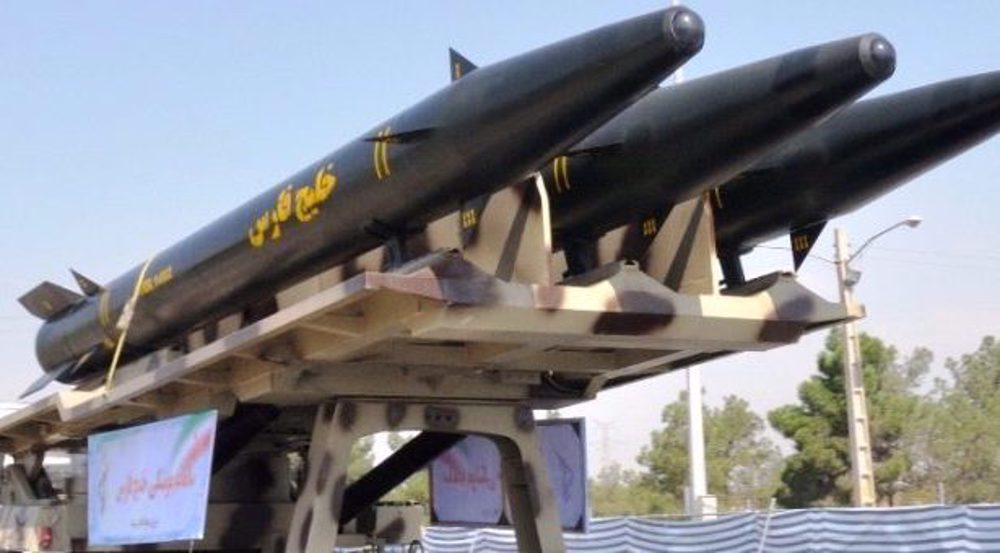
Beyond the cruise missile arsenal, Iran has invested heavily in the more complex realm of anti-ship ballistic missiles. This class of weapon, exemplified by the Khalij Fars, fundamentally alters the engagement dynamics.
Unlike low-flying cruise missiles, ballistic missiles travel at supersonic or hypersonic speeds, arcing high into the atmosphere before descending at steep, nearly vertical angles.
This trajectory makes them exceptionally difficult to intercept with traditional anti-air systems.
The Khalij Fars (Persian Gulf), with a range of 300 kilometers, is equipped with an optical seeker for terminal guidance, allowing it to home in on a large heat source like a carrier’s superstructure.
This is followed by the Hormuz family of missiles, some variants of which are designed as anti-radiation weapons, specifically programmed to target the powerful radar emissions of Aegis-equipped warships, effectively blinding the enemy’s primary sensor before a larger strike unfolds.
The Zolfaghar Basir extends this threat envelope to 700 kilometers, pushing the potential engagement zone well into the Gulf of Oman and the northern Arabian Sea, areas once considered safe sanctuaries for American power projection in the region.
At the apex of this technological pyramid stand Iran’s hypersonic missiles, the Fattah-1 and Fattah-2. While the full extent of their operational deployment remains a matter of strategic ambiguity, their stated capabilities—speeds reaching Mach 15 and extreme maneuverability—are designed to defeat even the most advanced missile defense systems.
The very existence of such weapons forces US naval commanders to account for a threat that can change course unpredictably at velocities that leave virtually no margin for error or reaction.
Below the surface and beyond the radar
The missile potential, however, is only one dimension of Iran’s multi-layered strategy. Under the waters of the Persian Gulf and the Strait of Hormuz, a different kind of danger lurks.
Iran operates a mixed submarine force, including Russian-built Kilo-class boats and a range of smaller, indigenous midget submarines like the Ghadir and Nahang classes.
These vessels are optimized for the region’s shallow and acoustically complex waters. Their primary mission in the event of a war would not be to engage in open-ocean fleet actions but to conduct ambushes and, critically, to lay naval mines.
Iran is assessed to possess one of the largest mine inventories in the region, numbering in the thousands, including advanced influence mines that can be triggered by a ship’s magnetic field or acoustic signature.
Even the mere suspicion of a minefield in the choke point of the Strait of Hormuz would have a catastrophic effect on global energy traffic and would force the US Navy into a slow, dangerous, and resource-intensive mine countermeasure campaign, all conducted under the umbrella of Iranian coastal missiles.
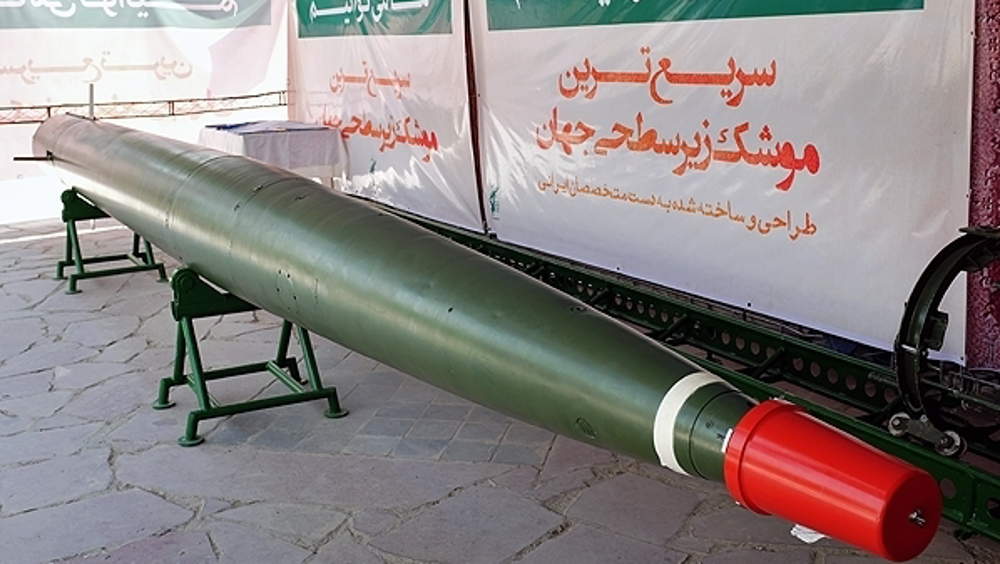
Complementing this is the Hoot torpedo, a supercavitating weapon of extraordinary speed of 360 km/h that, once launched, is nearly impossible for a target to outrun or outmaneuver.
In the realm above the surface, Iran’s drone program adds a critical layer of intelligence and attack capability. Recent events have demonstrated Iran’s ability to maintain persistent surveillance on US naval assets in the region.
The flight of an unidentified drone, designated SEP2501, along the Sea of Oman coastline, operating in close proximity to the USS Abraham Lincoln strike group, served as a practical demonstration of this reality, frightening the enemy.
Drones like the Shahed-139 or the vertical takeoff and landing Homa can operate from unconventional platforms, including civilian vessels, gathering electronic intelligence, radar signatures, and communications data.
This information is the lifeblood of any successful missile attack, as it builds the real-time picture necessary to target a moving carrier.
In a saturation attack scenario, swarms of inexpensive one-way attack drones could be launched in the first wave, not necessarily to hit the carrier, but to saturate and exhaust the strike group’s supply of expensive interceptor missiles, paving the way for the more advanced cruise and ballistic missiles that follow.
The fast attack craft of the IRGC Navy adds yet another layer of complexity, capable of launching swarming attacks from the cluttered Iranian coastline, forcing larger US warships into defensive cycles and further complicating the battlespace.
Geography of defense
The strategic significance of Iran’s weaponry is magnified by the unique geography of the region. The Persian Gulf is a narrow, shallow body of water.
The Strait of Hormuz, through which a substantial portion of the world’s oil passes, is just over 30 kilometers wide at its narrowest point.
In such confined waters, the maneuvering room for a large Carrier Strike Group is severely limited, and its proximity to Iranian shores places it squarely within range of virtually every system in Iran’s inventory.
This geography is the ultimate force multiplier for Iran’s anti-access strategy. It means that a carrier cannot operate with impunity in the Persian Gulf; it must do so within a missile engagement zone that Iran has spent decades constructing.
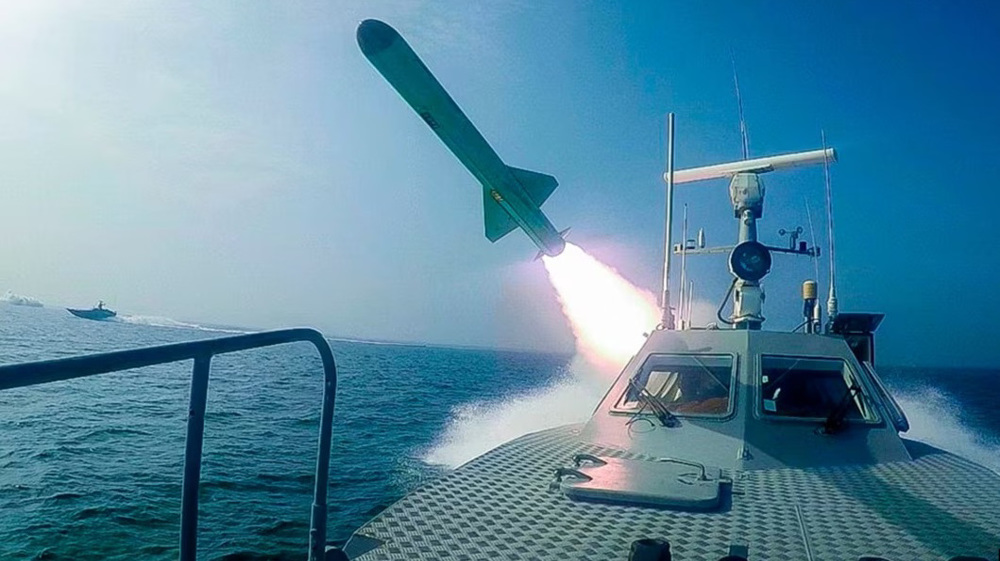
The goal is not necessarily to sink the carrier on the first day of a war, but to force it to operate further from Iranian shores, degrading the effectiveness of its air wing and complicating its mission objectives.
By creating a credible and layered threat, Iran raises the cost of any US military intervention to a level that challenges the political will required to sustain it.
This is the essence of deterrence through denial, a strategy that leverages geography, technology, and national resolve to convince an adversary that the price of action is simply too high.
In this complex and high-stakes environment, the question is no longer simply whether Iran possesses a single weapon that can destroy a US aircraft carrier.
The reality is far more nuanced and strategically profound. Iran has assembled a comprehensive, multi-domain architecture designed to challenge, degrade, and ultimately deter the most powerful naval force in history.
From the Leader of the Islamic Revolution's unequivocal warnings to the silent patrol of a surveillance drone above a carrier strike group, the message from Tehran is clear:
The waters of the Persian Gulf are no longer a sanctuary for hostile foreign fleets, and any nation contemplating aggression must prepare to face an adversary that has transformed asymmetric warfare into a sophisticated and credible national defense.
The sword that threatens the carrier may not be visible from the deck, but its existence has fundamentally altered the strategic calculus of the region.
 This makes it easy to access the Press TV website