Discover Iran: Chabahar port, Iran’s oceanic gateway bridging continents and global commerce
By Ivan Kesic
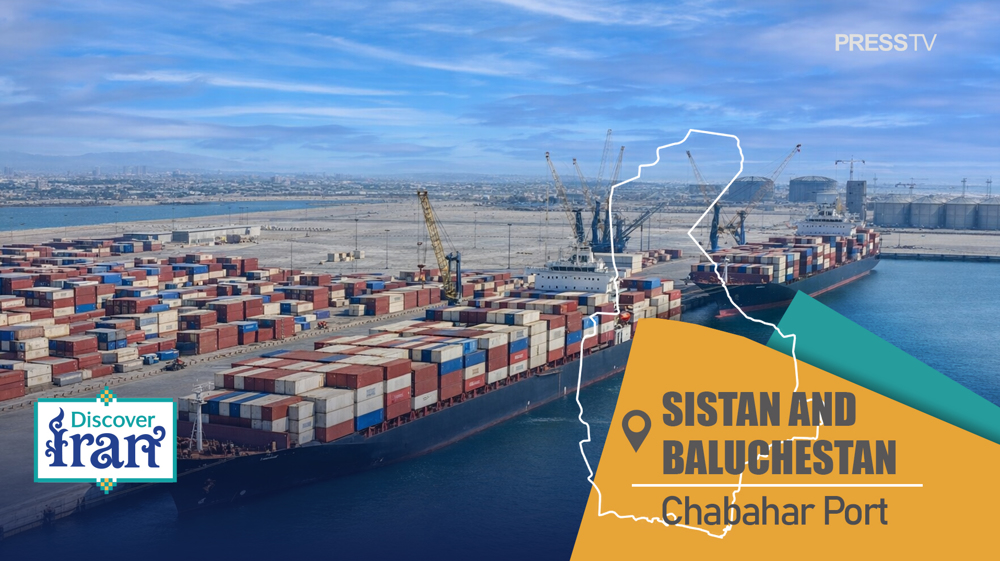
- Chabahar Port is Iran's only oceanic deep-water port, providing direct access to the Indian Ocean without requiring ships to navigate the Strait of Hormuz.
- It serves as the crucial southern anchor of the International North-South Transport Corridor (INSTC), a 7,200-kilometer multimodal trade route designed to connect India to Russia and Europe, reducing transit time and cost compared to traditional sea lanes.
- Through a landmark long-term partnership with India, the port offers Afghanistan its first reliable and sovereign sea-access route, fundamentally transforming the landlocked nation's economic potential and regional trade dynamics.
On the sun-scorched shores of Iran’s Makran coast, where the rugged mountains of Baluchestan descend into the turquoise expanse of the Gulf of Oman, a centuries-old harbor is being reborn as one of the most consequential infrastructure projects in the world.
This is Chabahar Port – Iran’s only oceanic gateway – a deep-water marvel that is far more than a transit hub for cargo.
It is a living nexus of history, high-stakes geopolitics, and sweeping economic ambition, poised to redraw trade routes and reshape alliances across South and Central Asia.
From its ancient origins as a refuge for dhows to its modern role as a linchpin of a new Silk Road, Chabahar’s story testifies to the enduring power of geography and humanity’s relentless drive to connect.
Its strategic importance is etched into its location. Unlike Iran’s other major ports, nestled within the tense waters of the Persian Gulf, Chabahar opens directly onto the Indian Ocean, offering unimpeded access to global shipping lanes without navigating the chokepoint of the Strait of Hormuz.
This singular advantage has transformed it from a quiet fishing town into a coveted prize – a “Gateway of Nations” at the heart of competing global visions.
For India, it represents a strategic masterstroke: a vital corridor to Afghanistan and Central Asia that bypasses rival Pakistan. For Iran, it anchors a “Look to the East” policy – an assertion of sovereignty and a vehicle for economic diversification.
For landlocked nations from Afghanistan to Uzbekistan, it offers long-awaited access to the sea.
Yet this immense promise unfolds on a geopolitical chessboard where every move is scrutinized by rivals, and where the port’s future is shaped as much by sanctions and diplomatic maneuvering as by cranes and concrete.
From ancient anchorage to modern megaproject
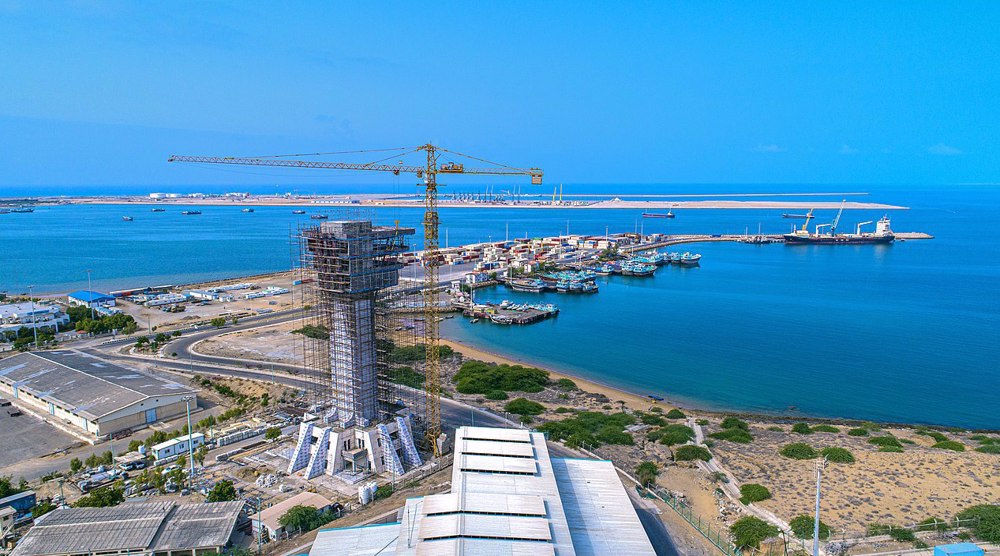
Chabahar’s legacy as a maritime haven stretches back to the Middle Ages, when its sheltered bay offered safe anchorage to vessels sailing between the Persian Gulf and India. The nearby ruins of Tiz stand as silent testimony to its former prominence as a medieval trading center.
For centuries, control of this remote coastline shifted among local Baluch chiefs, Omani sultans, and Iran’s Qajar dynasty, with the British Empire later establishing a telegraph station and garrison there as part of its Great Game rivalry with Russia.
It was not until 1872 that the town was formally incorporated into Iran, and even then, it remained a sleepy backwater for decades, cut off by the arid Makran range and limited connectivity.
The modern vision of Chabahar as a major port began to take shape in the 1970s, but its strategic urgency was forged during the Imposed War in the 1980s, known in Iran as the Sacred Defense, when vulnerability in the Persian Gulf underscored the need for a secure oceanic outlet beyond the Strait of Hormuz.
The first phase of Chabahar Port was inaugurated in 1983, marking the formal launch of a long-term national project.
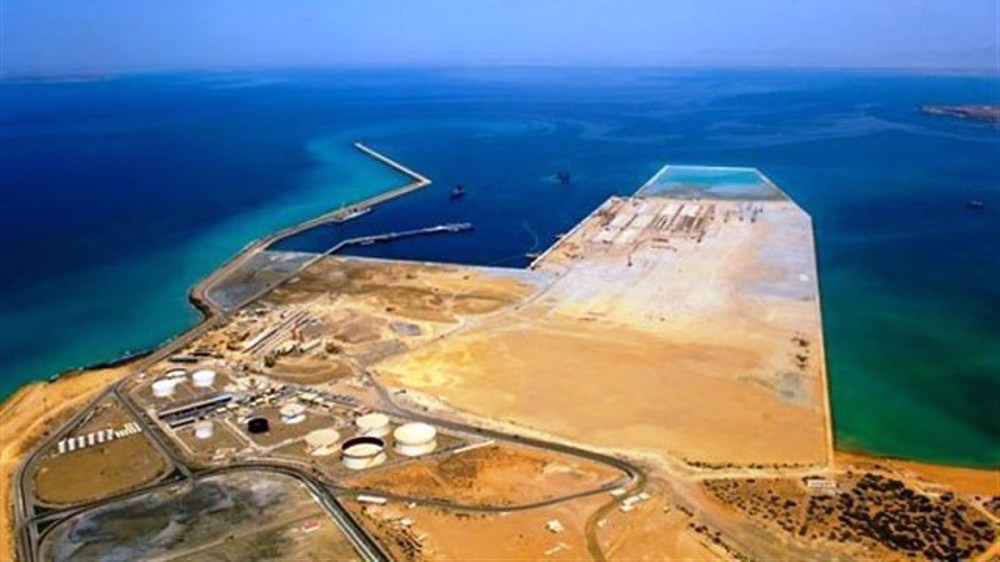
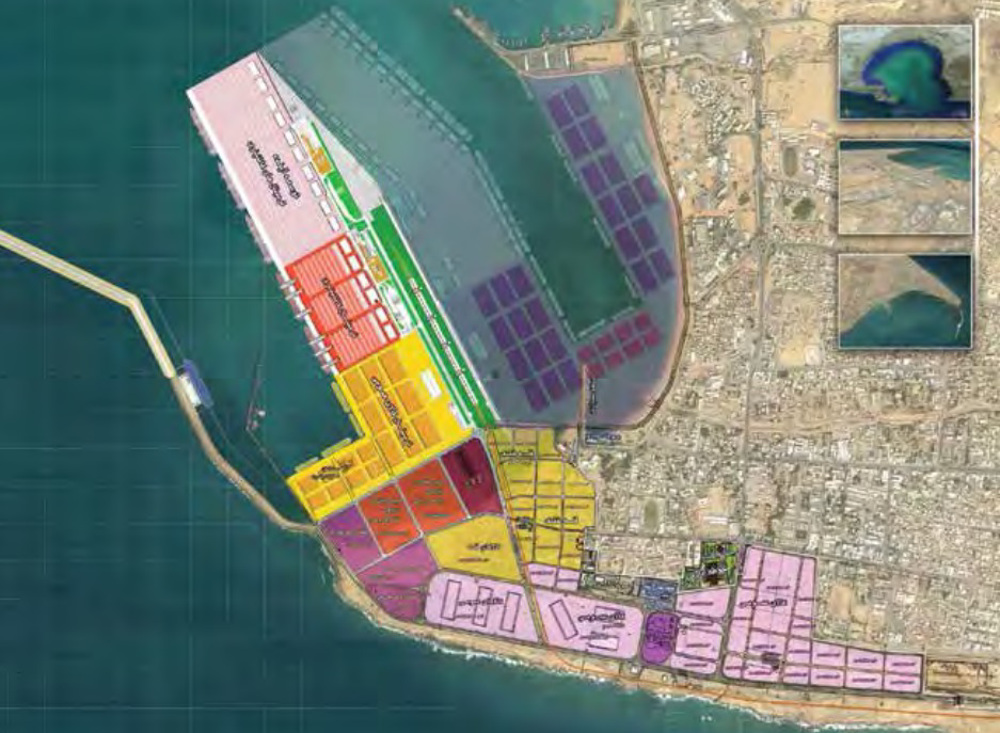
That vision has since been implemented in carefully sequenced phases, expanding capacity from an initial 8.5 million tons of annual cargo to a projected 77.2 million tons at full development.
Today, the port features modern gantry cranes, specialized container facilities such as the Shahid Beheshti terminal, and the capacity to accommodate large Post-Panamax vessels, elevating it from a regional harbor to a potential global logistics hub.
India’s strategic masterstroke and the trilateral pact
No country has played a more decisive role in unlocking Chabahar’s modern potential than India, which has traditionally maintained strategic ties with Tehran.
For New Delhi, the port resolves a decades-old geopolitical constraint: gaining reliable access to Afghanistan and the resource-rich markets of Central Asia without depending on the unstable and frequently restricted transit routes through Pakistan.
The partnership gained momentum with a 2015 memorandum of understanding and culminated in a landmark trilateral agreement in 2016 among India, Iran, and Afghanistan.
In May 2024, India reinforced its commitment with a 10-year agreement to develop and operate the Shahid Beheshti terminal, the first time India assumed management of a port facility abroad.
The economic rationale is compelling. Routing trade through Chabahar can reduce transit time and costs to Central Asia by as much as 60 percent. The port links to a 218-kilometer highway constructed by India in Afghanistan, forming a continuous trade corridor capable of carrying pharmaceuticals, machinery, agricultural goods, and humanitarian supplies alike.
For Afghanistan, this corridor is transformative, offering its first dependable, sovereign access to the sea and a pathway to export its vast mineral wealth and agricultural produce to global markets.
India’s investment, amounting to hundreds of millions of dollars, extends far beyond commercial calculation. It is a strategic wager: to secure long-term influence, contribute to Afghanistan’s stability, and weave a durable trade architecture that reinforces New Delhi’s standing as a rising global power.
Chabahar’s strategic location is often assessed alongside the Chinese-developed port of Gwadar Port, situated roughly 170 kilometers to the east.
International commentary frequently casts the two as rival outposts in a broader geopolitical contest, Gwadar anchoring China’s Belt and Road Initiative, and Chabahar Port serving as India’s linchpin within the International North–South Transport Corridor.
Yet Tehran presents a different narrative, one centered on connectivity rather than confrontation.
Iran maintains robust ties with both Beijing and New Delhi, envisioning its ports not as mutually exclusive alternatives but as complementary nodes within overlapping regional trade networks.
Navigating the sanctions storm
Chabahar’s evolution has unfolded under the persistent shadow of extraterritorial American sanctions, an enduring tension between economic promise and geopolitical constraint.
Acknowledging the port’s importance as a humanitarian and stabilization lifeline for Afghanistan, successive US administrations have granted India targeted waivers to continue development work, an unusual carve-out within a broader sanctions regime.
Yet these exemptions have never been guaranteed. Subject to periodic review and shifting policy calculations, including renewed scrutiny in 2025, the waiver has introduced a layer of strategic uncertainty. This volatility dampens broader international investment and complicates long-term infrastructure planning.
In response, India and Iran have explored mechanisms to shield the port’s operations from financial disruption. Proposals have included rupee-denominated trade settlements, special-purpose financial vehicles operating outside the dollar-dominated SWIFT system, and potential integration with alternative messaging platforms such as Russia’s SPFS.
The objective is to construct a sanctions-resilient framework capable of sustaining the corridor’s functionality – a real-world test of whether middle powers can preserve strategic economic initiatives amid intensifying financial coercion.
Ultimately, Chabahar’s trajectory has become more than a story of infrastructure. It is a barometer of geopolitical endurance, and a measure of the limits of unilateral economic pressure in an increasingly multipolar world.
Corridor of continents: INSTC and beyond
Chabahar’s ultimate promise lies in its role as the southern anchor of the International North-South Transport Corridor (INSTC).
This ambitious 7,200-kilometer multimodal network is designed to connect India to Russia and Europe by ship, rail, and road through Iran and the Caspian Sea. By bypassing the traditional Suez Canal route, the INSTC could cut freight transit time nearly in half while significantly reducing costs. At its southern edge, Chabahar Port serves as the essential oceanic gateway—the intake valve for the entire system.
The critical missing link in this vision is the proposed Chabahar–Zahedan railway, a roughly 750-kilometer line that would fully integrate the port into Iran’s national rail grid and, by extension, the INSTC. Once operational, a container could theoretically travel from Mumbai to Moscow or St. Petersburg in a seamless, cost-efficient journey.
Such connectivity would do more than accelerate trade. It would deepen economic integration across a vast and strategically vital arc stretching from South Asia to Eastern Europe.
For landlocked Central Asian republics such as Uzbekistan and Kazakhstan, it would provide a long-sought warm-water outlet to global markets, reshaping regional commerce and reducing dependence on traditional northern corridors.
Human and environmental frontier
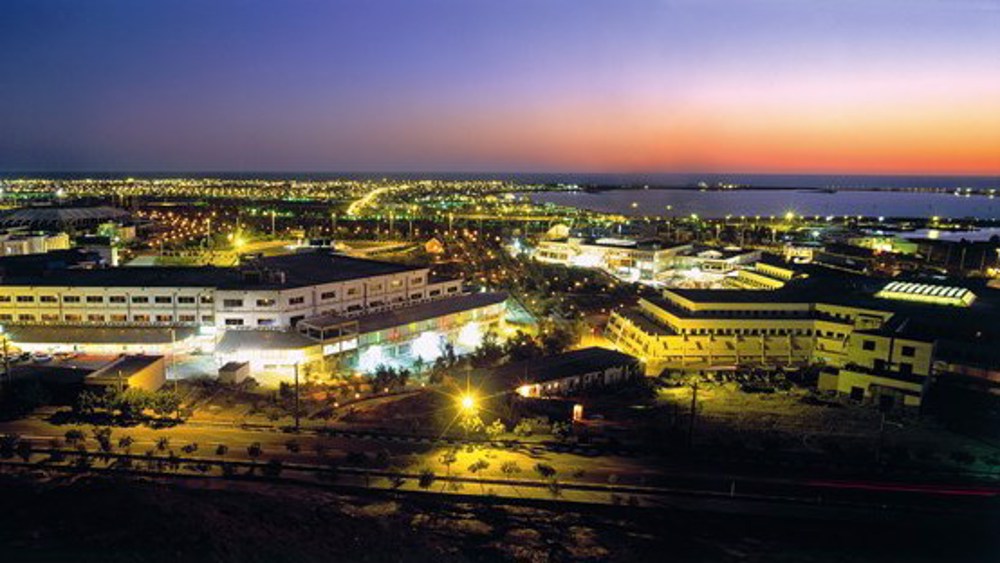
Beyond the sweeping geopolitics and cargo projections, Chabahar is also a city in Iran’s Sistan and Baluchestan province, one of the country’s most remote regions.
The port’s expansion carries the promise of employment, infrastructure, and broader economic inclusion for the local population, offering a pathway toward greater prosperity and national cohesion.
The surrounding terrain is marked by stark, almost otherworldly beauty – from the wind-carved formations of the Makran range to the unspoiled shores of Gwater Bay, home to endangered sea turtles and migratory bird species.
This natural wealth presents both opportunity and responsibility. Sustainable development is essential to ensure that industrial growth does not erode fragile ecosystems.
The adjacent free trade and industrial zone, envisioned to transform the port from a transit hub into a center for manufacturing and petrochemicals, has been planned with environmental stewardship as a guiding principle.
In this sense, Chabahar’s future is not defined solely by container throughput or strategic corridors. It is equally about building a resilient local economy, fostering social stability, and safeguarding a unique coastal environment for generations to come.
Door to the future: Charting a new course for Eurasian trade
Chabahar Port stands not at a crossroads, but at a launching point – a dynamic confluence where ancient maritime heritage merges with a bold vision for global connectivity.
This undertaking transcends concrete and cranes. It is a tangible expression of a broader ambition: to reweave the economic fabric of Eurasia through pragmatic cooperation and shared infrastructure.
More than a conduit for cargo, Chabahar has become a conduit for opportunity – offering landlocked countries direct access to global markets and providing regional partners with a stable platform for collective prosperity.
The road ahead is not without obstacles. Complex sanctions regimes, geopolitical rivalries, and the imperative of environmental stewardship present real and ongoing tests.
Yet the project’s trajectory is defined by steady expansion and strategic alignment. The cranes rising above its deep-blue waters symbolize more than industrial activity, they signal the construction of a new framework for regional collaboration.
Each new berth and each kilometer of rail laid toward the hinterland strengthens an alternative narrative: that economic integration and practical connectivity can serve as powerful engines of stability and growth.
In an era frequently defined by fragmentation, Chabahar embodies a confident wager on interdependence. It affirms the enduring influence of geography, diplomacy, and long-term vision, transforming a timeless harbor on the Gulf of Oman into a modern gateway of consequence.
As that gateway opens, it promises to move more than containers. It signals the emergence of a renewed Eurasian exchange, positioning Iran and its partners at the center of evolving trade networks. The foundations of that future are being laid today, on the shores of the Gulf of Oman.
Iran says international flights continue despite US sanctions pressure
Iran slams US for blaming Tehran over rising fuel prices, Strait of Hormuz closure
Iranian engineers develop indigenous engine control units, advancing automotive electronics



Minab’s school bell rings through grief as 168 empty desks stand as silent witnesses
Europe was part of the infrastructure of US aggression against Iran: Deputy FM
VIDEO | The pain of not being able to provide
VIDEO | US ill intentions further exposed
Araghchi in New York: Europe must confront US aggression
IRGC: Iran’s strikes force US toward dispersal, concealment, minimal presence
Netanyahu flies over France, Italy, Greece, Canada despite ICC arrest warrant
VIDEO | News Review: Iran’s president at UNGA says Islamic Republic is victim of US, Israeli terrorism





 PressTV NEWSLETTER
now
PressTV NEWSLETTER
now
 This makes it easy to access the Press TV website
