Discover Iran: Golestan province as Iran's next big renewable energy frontier

By Ivan Kesic
- Golestan's solar potential, averaging 1,485 kWh/m²/year with peaks over 1,800 kWh/m²/year in its semi-arid southwest and northeast, defies the stereotype that northern Caspian provinces are unsuitable for solar development, providing a credible foundation for utility-scale and distributed generation.
- The province is pioneering a socially integrated energy model through government-guaranteed, 20-year power purchase agreements that enable low-income households to become solar energy producers, transforming energy policy into a direct tool for poverty alleviation and community empowerment.
- Golestan's wind resources are modest, generally classified as weak for large-scale farms but sufficient for niche applications, which underscores a strategic shift towards a diversified renewable portfolio where solar leads, complemented by small-scale wind and distributed gas generation for grid stability.
As the global imperative for sustainable development intensifies, Iran's energy landscape is undergoing a quiet revolution, with the northern province of Golestan emerging as a strategic candidate to become a cornerstone of the country's green energy future.
This transformation is not built upon the superlative resources that define the country's southern deserts, but rather on a pragmatic alignment of credible natural potential, local energy needs, and innovative socio-economic policies that aim to convert challenges into opportunities.
The journey of Golestan province to position itself as Iran's new green energy hub is a multifaceted endeavor, predicated on leveraging its distinct solar and wind resources, implementing attractive public-private incentives, and pioneering a model of distributed generation that intertwines energy security with social empowerment.
The province's path illuminates a broader national shift towards renewable energy, revealing how regions with moderate, yet viable, resources can catalyze sustainable development, reduce carbon footprints, and redefine regional energy equity through a combination of technological adoption and community-centric investment.
Solar potential beyond the stereotype
The foundational argument for Golestan's green ambitions challenges a persistent perception. Contrary to the belief that northern provinces near the Caspian Sea are unsuitable for solar energy due to higher humidity and cloud cover, scientific assessments reveal a more nuanced and promising reality.
Detailed zoning studies utilizing ground station data, GEOS-5, and ERA5 reanalysis models indicate that Golestan possesses a mosaic of microclimates.
While forested mountainous areas receive lower irradiation, the province's southwestern heights and northeastern plains, characterized by semi-arid conditions, boast annual solar radiation levels between 1,500 to 1,800 kWh/m², with a provincial average of approximately 1,485 kWh/m².
This range, while modest compared to Iran's central deserts, is deemed "quite efficient for power supply" and sufficient to justify both utility-scale solar farms and widespread distributed generation.
This potential is amplified by the province's high number of sunny days, exceeding 300 per year in northern areas like Gomishan, Bandar-e Turkaman, and Maraveh Tappeh, transforming these regions from peripheral agricultural zones into prime candidates for solar infrastructure.
🇮🇷 Iran is accelerating its renewable energy revolution!
— PressTV Extra (@PresstvExtra) December 15, 2025
With 30,000 MW of solar power planned—requiring a whopping 900 trillion Tomans (7.5 billion USD) in investment—the country is making major strides toward a cleaner, more sustainable energy future. pic.twitter.com/0mVhHiJtC4
Realistic expectations for niche applications
Parallel to its solar narrative, Golestan has been associated with wind energy potential, particularly in its northeastern corridors near Kalaleh and Maraveh Tappeh.
A comprehensive, long-term assessment of wind resources across five counties provides a data-driven counterpoint to overly optimistic claims.
The study, analyzing up to 30 years of data, concludes that Golestan's wind power density is "relatively low for large wind turbines," generally classifying the province as a Class 1 or "poor" site for major wind farms.
However, it identifies seasonal and localized opportunities, noting that in certain months, areas like Maraveh Tappeh and Bandar-e Turkaman can reach Class 2 potential.
This delineates a strategic niche: Golestan's wind resource is not suited to rival national hubs like Manjil but is viable for small to medium-scale turbines.
These applications are ideal for off-grid or hybrid systems, such as water pumping for agriculture, battery charging, and supplementing micro-grids in remote communities.
Thus, wind energy is poised to play a complementary, rather than leading, role in a diversified renewable portfolio.
Catalytic force of policy and incentive structures
Natural resources alone are insufficient to ignite an energy transition; they require the catalyst of coherent policy and tangible economic incentives.
Golestan's recent surge in activity is directly tied to a suite of proactive measures designed to de-risk investment and accelerate deployment.
At the heart of this strategy are long-term, government-guaranteed power purchase agreements (PPAs), extending up to 20 years, which provide predictable revenue streams for both large-scale developers and household-level producers.
This guarantee has been bolstered by a reported 20% increase in feed-in-tariff rates, enhancing the financial appeal.
For low-income households, the model is particularly innovative, involving tripartite agreements between the provincial electricity distribution company, the Imam Khomeini Relief Committee, and the local governorate.
Beneficiaries receive interest-free facilities for installing 5-kilowatt rooftop systems, with the utility committing to purchase the generated electricity, thereby creating a sustainable income stream, estimated at over 20 million Tomans annually per household, while alleviating grid pressure.
For larger projects, the province has streamlined bureaucratic hurdles, exemplified by the dedicated weekly working group chaired by the deputy governor, which has successfully resolved land allocation issues, transferring 160 hectares of national land for solar development.
🇮🇷 Discover Iran: A timeless journey through the enchanting alleys of Astarabad, Gorgan’s old city
— Press TV 🔻 (@PressTV) December 10, 2025
By @kesic_ivan https://t.co/E7KD5qgzvK
From megaprojects to micro-grids: A multi-scale development blueprint
Golestan's approach is characterized by a simultaneous push on macro and micro fronts, creating a layered energy ecosystem.
On the large-scale end, monumental projects are underway, such as the construction of a 96-megawatt solar plant complex, comprising 32 individual sites across the province with an investment exceeding 2,880 billion Tomans.
Even more ambitious plans are in the feasibility stage, including identified parcels for up to 1,145 MW of solar capacity and negotiations for a 500 MW plant.
Concurrently, the province is aggressively pursuing distributed generation. This includes the installation of hundreds of 5-kilowatt home solar systems, the equipping of government buildings with solar panels to meet a mandated 20% renewable energy quota, and the promotion of distributed gas-fired generation to enhance grid stability.
This multi-scale blueprint ensures that development is not monolithic; it serves the stability of the national grid through utility-scale inputs while directly addressing local energy poverty, creating jobs, and fostering community resilience through decentralized assets.
Social dimension: public acceptance as a cornerstone
A distinctive and promising factor in Golestan's equation is the dimension of social acceptance. Recent sociological research surveying over 400 citizens in the province indicates a significantly positive disposition towards solar energy adoption.
Key factors influencing public opinion include the perceived usefulness and relative advantage of renewables, trust in developers, awareness of benefits, and favorable price evaluations.
This local buy-in is not a minor detail; it is a critical success factor that determines the pace of rooftop solar uptake, reduces community resistance to larger projects, and underpins the social empowerment goals of the home solar initiatives.
The participatory model, which transforms energy consumers into producers and stakeholders, fosters a sense of ownership and aligns the province's environmental goals with tangible household economic benefits, thereby weaving renewable energy into the social fabric.
Iran’s mega solar plant to power 2.5 million homeshttps://t.co/2f3ahItNcP
— Press TV 🔻 (@PressTV) December 14, 2025
Strategic implications and the broader vision for Iran
Golestan's prospective evolution into a green energy hub carries implications that extend far beyond provincial borders.
Success here would model a more decentralized and equitable energy transition for Iran, demonstrating that regions outside the classic "solar belt" can become meaningful contributors to national clean energy goals.
It showcases a strategy where energy development is integrated with rural development, job creation, and poverty alleviation, a holistic approach often absent in purely extraction-oriented energy projects.
For Iran, enabling Golestan's success would mean diversifying its renewable energy portfolio geographically, thereby enhancing overall system resilience and reducing transmission losses by generating power closer to northern demand centers.
It represents a strategic move to utilize natural gas, currently burned for power generation in the province, for higher-value exports or domestic industrial use, thereby improving the country's economic and energy security.
Golestan province stands not at the brink of a guaranteed transformation, but at the opening of a formidable and strategically vital opportunity.
Its claim to becoming Iran's next green energy hub is not predicated on overwhelming natural supremacy, but on a pragmatic and integrated formula: marrying credible, if moderate, renewable resources with innovative financial mechanisms, strong social engagement, and a multi-scalar implementation model.
The province is poised to become a significant regional node of clean energy, a hub defined not by gargantuan output, but by diversification, distribution, and socio-economic integration.
Golestan's journey is a testament to the fact that in the global shift towards sustainability, viable and resilient energy futures are built not only on the sunniest deserts or the windiest peaks, but on the foundation of inclusive planning and community-aligned innovation.
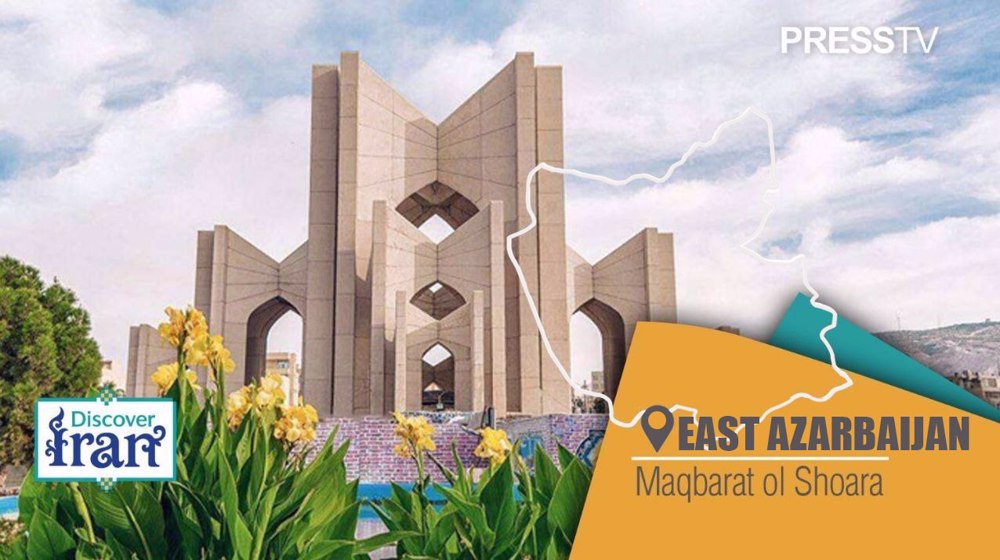
Discover Iran: Tabriz’s ‘Mausoleum of Poets,’ where centuries of Persian literary history live on
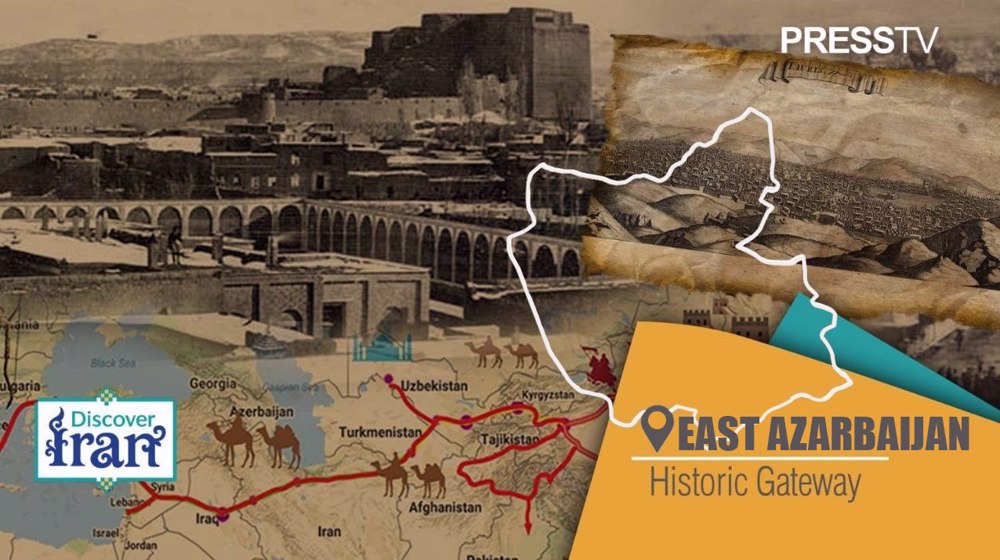
Discover Iran: Tabriz, where Iran’s Silk Road legacy meets industry, trade and a new economic future
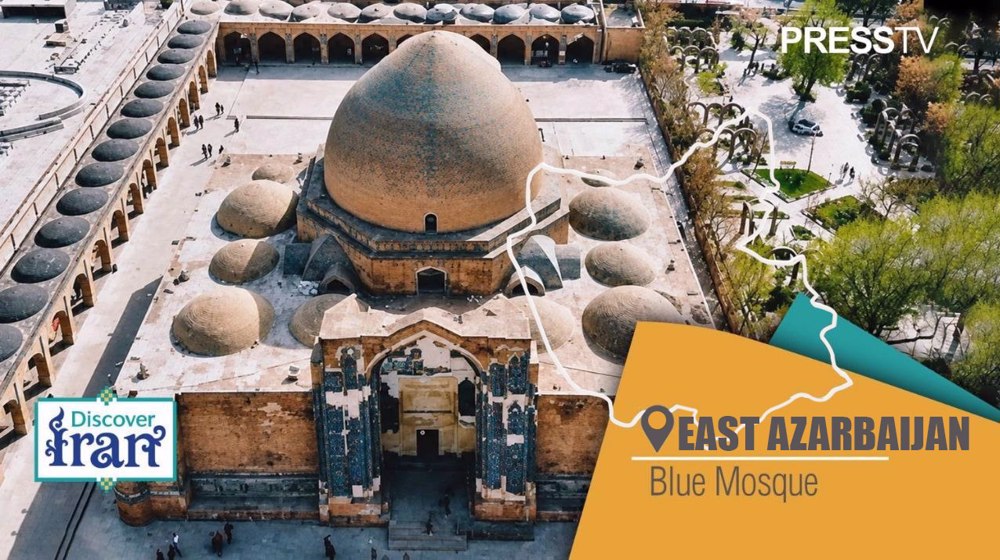
Discover Iran: Tabriz’s Blue Mosque, where glorious history meets timeless Iranian architecture



Iran FM: Our first task in New York is to defend the just cause of Iranian people
US lawmaker admits American people footing bill for Trump’s failed aggression against Iran
VIDEO | Trump's America is dying for Israel
US visa ban on Iranian president’s media team is bid to hide the truth: FM spokesman
VIDEO | Iran fully prepared to respond to new aggression
US aggression, economic warfare amount to crimes against humanity: Iran's UN envoy
Protests erupt in US as ICE agent shoots Venezuelan driver
US pressure fuels cooperation among Muslim states: Pezeshkian





 PressTV NEWSLETTER
now
PressTV NEWSLETTER
now
 This makes it easy to access the Press TV website
