Trump’s pot shop pal takes charge of Iraq with MAGA message
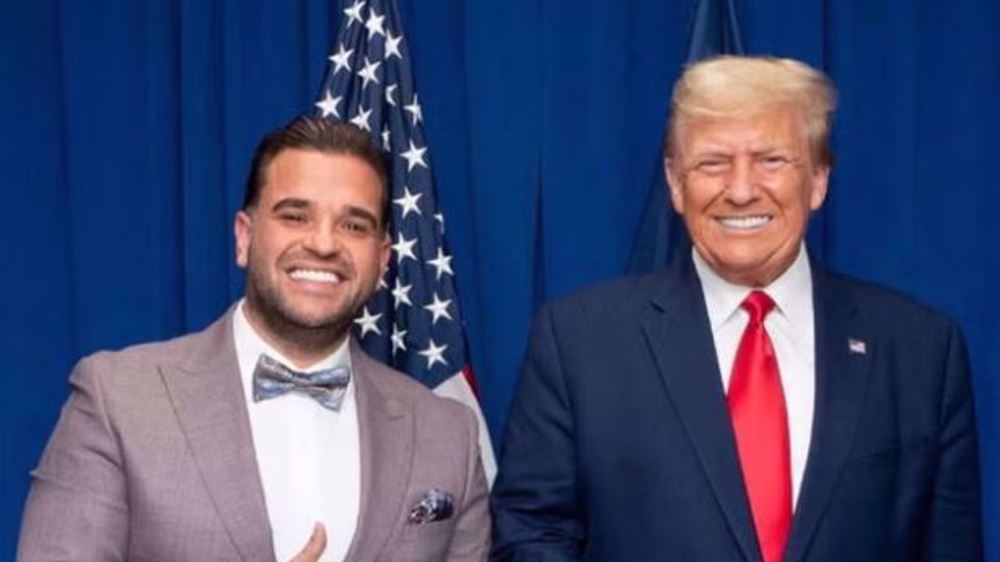
The new US special envoy to Iraq and the founder of a chain of marijuana dispensaries says his mission is to help Iraq shun resistance groups and free it from what it called "external interference", after President Donald Trump stressed that Mark Savaya will help "advance the interests" of Washington in the Arab country.
In an official statement published on his X account on Friday, Mark Savaya, a Michigan-based businessman of Iraqi descent, began with an acknowledgment of the recent progress made in Iraq.
“Over the past three years, Iraq’s leadership has taken important steps to guide the country in the right direction, both politically and economically," Savaya wrote.
“Iraq has begun to reemerge as a sovereign state, working to reduce external influences, bring all weapons under the control of the legitimate government, and open its markets to international companies to help rebuild and develop the country’s fragile infrastructure,” he added.
Savaya, however, described this progress as “incomplete”, emphasizing Washington’s opposition to the presence of anti-terror and resistance groups in the country.
“However, the work is not yet complete, and Iraq still requires continued support to remain on this path.”
“The United States Government has made it clear that there is no place for armed groups operating outside the authority of the state,” Savaya said, linking the nation’s entire future to the resolution of these groups.
“The interests of the Iraqi people and of the wider region depend on a fully sovereign Iraq, free from malign external interference,” he stated, referring to the Arab country's anti-terror groups as “Iran’ proxies”.
His remarks come despite the illegal US military presence in Iraq and implicitly dismiss the history of how these Iraqi resistance groups emerged and how they have been woven into Iraq’s security landscape.
After the rise of Daesh in 2014, a range of Iraqi paramilitary formations—including those under the umbrella of the Popular Mobilization Forces (PMF)—played a key role in battling the extremist group.
In his inaugural statement, Savaya added that his mission also aims to strengthen bilateral relations with Baghdad.
“Iraq remains of great importance to both the region and the United States. It will continue to stand as one of America’s strongest and most valued partners, and I am committed to further strengthening this relationship as I assume this honorable role as Envoy. MAKE IRAQ GREAT AGAIN,” Savaya concluded, echoing a refrain reminiscent of Trump’s presidential campaign's slogan: “Make America Great Again”.
Announcing his appointment as special envoy to Iraq on October 19, Trump confirmed that “Mark’s deep understanding of the Iraq-US relationship, and his connections in the region, will help advance the interests of the American people.”
Savaya has no government experience at the local, state or federal level, but was “a key player in my [Trump’s] campaign in Michigan”.
He’s a business owner in the area around Detroit, where he founded a chain of marijuana dispensaries.
Last month, the United States designated four popular groups in Iraq as terrorist organizations over their alleged links to Iran.
In a statement on its website on September 17, the US State Department said it had designated Harakat al-Nujaba, Kata’ib Sayyid al-Shuhada, Harakat Ansar Allah al-Awfiya, and Kata’ib al-Imam Ali as Foreign Terrorist Organizations.
Iran has openly declared that it has a policy to support groups and entities that fight occupation and bullying in the West Asia region.
However, the country has indicated that those groups are entirely independent in their decision-making and do not receive direct orders from Tehran.
Iraq's top judge: We will never forget Iran's support in fight against terror
Zaidi: Iraq will declare full restoration of national sovereignty on September 30
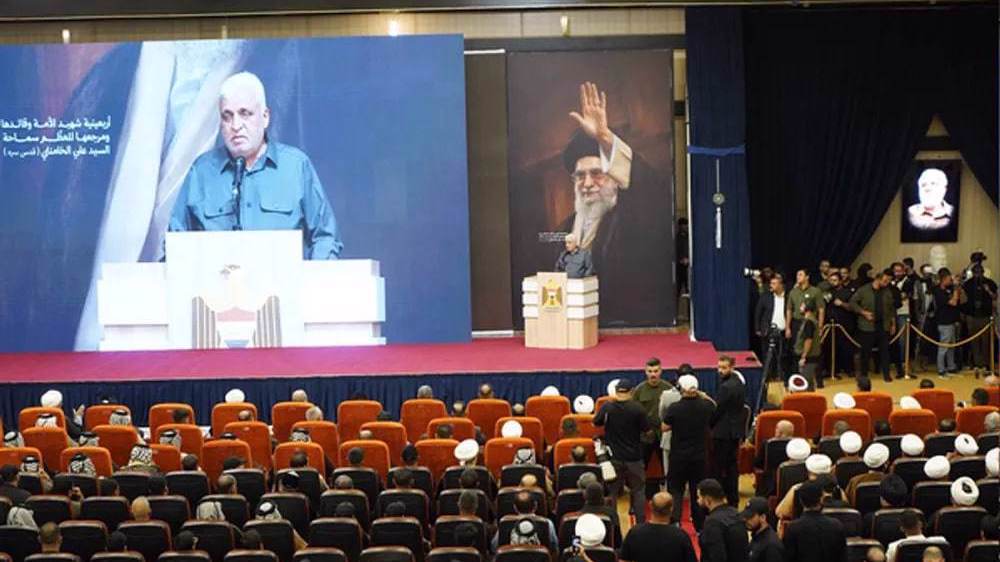
Ayatollah Khamenei ‘awakened consciences’ in defense of faith and dignity: PMU chief



Iran launches 600 MW of renewable power projects nationwide
Iran’s Royan Institute ranks among world’s top 10 reproductive medicine centers
Iran defense chief warns of ‘expanding’ battlefield as US pushes economic war
Mustafa Prize to hold seventh edition in Aug 2027, expand outreach across Muslim world
VIDEO | 'Saudi Arabia will face a major defeat'
US has no place in future of West Asia: Iran’s top security official
Israel launches new incursion into south Syria days after Mossad chief meets HTS diplomat
In Gaza, Israel treats children’s kites as weapons, pushing the genocidal war into new territory


 PressTV NEWSLETTER
now
PressTV NEWSLETTER
now
 This makes it easy to access the Press TV website
