
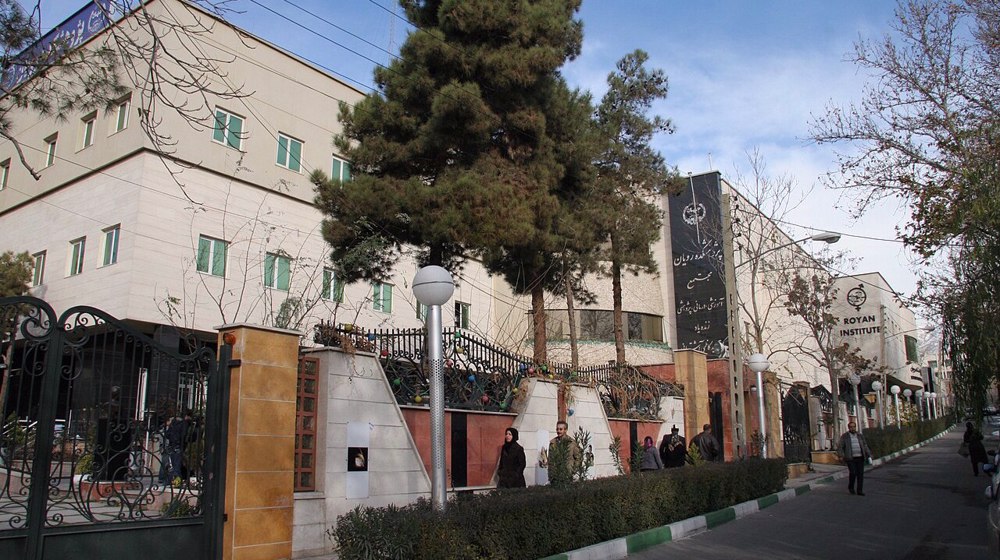
According to SCImago data, Iran’s Royan Institute ranks among the world’s top 10 leading centers in reproductive medicine, says the institute’s deputy for research.
Speaking at a press conference on Tuesday, Seyed Abolhassan Shahzadeh-Fazeli said Tehran-headquartered Royan Institute also ranks first in Iran in research on male and female infertility, while placing fourth nationally in cancer research.
“This position, which has been achieved as a point of pride across different areas of the institute’s scientific research, is the result of the efforts of all our faculty members and researchers,” he said.
Shahzadeh-Fazeli said the institute is currently in the process of registering four domestic inventions and one international invention since the beginning of the current Iranian year in March 2026.
He added that Royan has also developed a number of products and technologies in regenerative medicine aimed at treating various diseases, including vision disorders, Parkinson’s disease and cancer.
“The main part of this work has been carried out at Royan Institute, and we have obtained the initial approvals from the Ministry of Health. We are now at the clinical trial stage,” he said.
Shahzadeh-Fazeli expressed hope that the results of these clinical trials would be announced to the public later this year.
Presenting an overview of the institute’s research activities in recent years, he said Royan has completed more than 2,800 research projects and published around 470 international scientific papers in major international journals.
🔰 Iran’s Royan Institute has been ranked among the world’s 10 most influential centers in male infertility treatment, according to a global study reviewing two decades of performance by infertility centers worldwide.#IranFirst pic.twitter.com/tGuY2ZDnXY
— Iran First (@IranFirst_PTV) July 29, 2026
He added that around 1,750 graduate students have completed their theses and dissertations at the institute, including 450 PhD students and nearly 1,300 master’s students. The institute has also hosted 54 postdoctoral researchers.
According to Shahzadeh-Fazeli, Royan Institute also provides annual training for specialists in male and female infertility through Iran’s Ministry of Health.
Many of these specialists, he said, later go on to establish new infertility treatment centers across the country.
“Royan Institute is now at a point where it connects scientific production with technology and real-world impact. Our focus is moving beyond simply increasing the number of publications toward producing authoritative knowledge,” he said.
He noted that the institute aims to become recognized as one of the region’s leading scientific references in reproductive medicine, stem cells and regenerative medicine.
“Over the next five-year period, we will shift our focus from pushing the boundaries of knowledge toward addressing the country’s strategic challenges in these fields. We need to undertake the necessary planning and policymaking to help solve the country’s problems,” Shahzadeh-Fazeli said.
 This makes it easy to access the Press TV website