
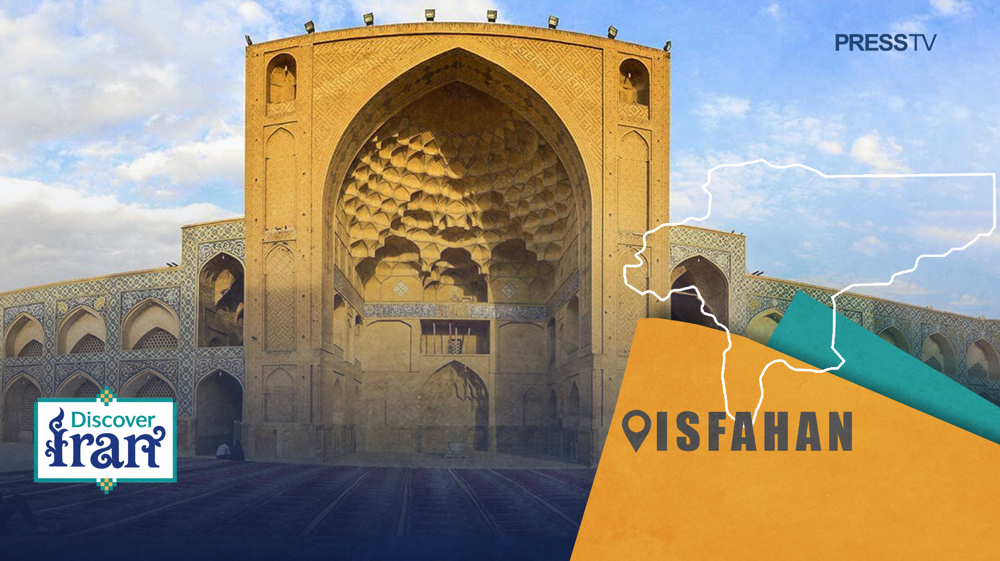
By Ivan Kesic
- The Jameh Mosque of Isfahan incorporates elements from Sassanid, early Islamic, Seljuk, Ilkhanid, Timurid, and Safavid architectural traditions.
- The introduction of an innovative courtyard layout with four iwans inspired hundreds of later Iranian religious buildings.
- The mosque's UNESCO World Heritage designation recognizes its outstanding universal value as an architectural masterpiece.
The Jameh Mosque of Isfahan stands as one of the most significant religious and architectural landmarks in Iran, encapsulating over a millennium of Islamic art, political history, and spiritual evolution.
Founded in the 8th century by the Taym Arabs of the village Tiran (near Najafabad), the mosque was initially built on the outskirts of Yahudiya, one of the twin settlements that formed early Islamic Isfahan.
Over centuries, it expanded alongside the city, transforming from a modest hypostyle structure into a grand four-iwan complex that became a blueprint for Iranian mosque architecture.
The millennial evolution of the mosque
Initially, the mosque followed the Arab hypostyle model, featuring a rectangular prayer hall with rows of plastered columns supporting a flat roof, an open courtyard, and a single minaret.
It served as the focal point of Abbasid-period Isfahan, complete with a renowned library housing thousands of scholarly volumes.
The mosque’s grandeur was such that legendary historian ibn al-Athir described it as one of the largest and most beautiful of its time, until it was tragically burned down in 1121.
The mosque’s most radical architectural evolution occurred under the period of Seljuks (11th–12th centuries), particularly after Isfahan became their capital in 1051.
Two monumental domes—Nezam al-Molk's south dome (1072–1092) and Taj al-Molk's north dome (1088)—marked the first major interventions.
The south dome, commissioned by the famed vizier Nezam al-Molk, replaced the original mihrab area with a massive brick chamber resembling a chahartaq (a Sassanid-period square domed structure).
The north dome, built by Taj al-Molk, showcased Seljuk architectural brilliance. Unlike its southern side, it emphasized elegance over massiveness, with intricate geometric brickwork, a double-shelled dome, and sophisticated weight distribution through arches and squinches.
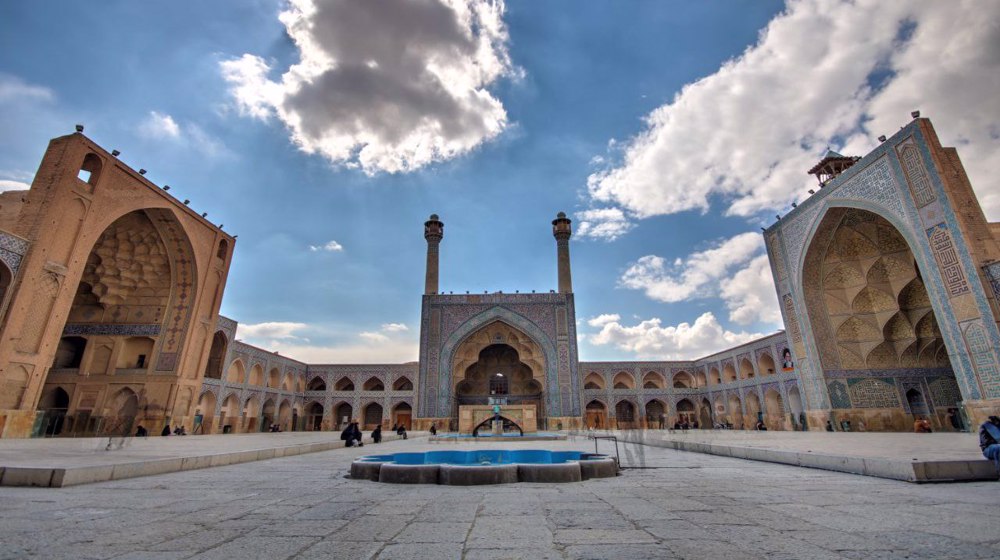
Its epigraphic program—featuring Qur'anic verses in angular Kufic and cursive scripts—further highlighted its artistic mastery.
The most revolutionary change, however, came in the 1120s, when the original hypostyle plan was replaced with a four-iwan courtyard design.
This new layout featured towering arched portals (iwans) on each side of the courtyard, integrating indoor and outdoor spaces while centering ritual focus on the open court.
This innovation became the definitive model for Iranian mosques, blending early Islamic and indigenous Iranian architectural traditions.
The mosque continued to evolve under subsequent dynasties, namely the Ilkhanids, Muzaffarids, Timurids and Safavids, each leaving its mark.
During the rule of the Ilkhanids in the 14th century, the western iwan was converted into a prayer hall housing a magnificent stucco mihrab (1310), commissioned by vizier Mohammad Savi.
Its inscriptions, in elegant thuluth script, reflect Oljeitu's conversion to Shia Islam, with references to the Twelve infallible Imams and a hadith attributed to Imam Ali ibn Abi Talib.
In the late 14th century, the Muzaffarids added a small madrasa to the eastern side of the mosque, and a century later, the Timurids introduced polychrome tilework, transforming the Seljuk brick austerity into a vibrant display of color.
A 1447 dedication panel in the winter prayer hall, naming Sultan Mohammad Bahador, exemplifies this shift toward chromatic richness.
Before Shah Abbas I moved the capital to Isfahan in the 1590s, Safavid rulers enhanced the mosque with glazed tile revetments, muqarnas vaulting, and slender minarets. Shah Tahmasp I's inscriptions emphasized Shia devotion.
Yet, Shah Abbas I's construction of the Imam Mosque at the Naqsh-e Jahan Square ultimately shifted the city's religious focus, relegating the Congregational Mosque to a secondary role.
🇮🇷 DISCOVER IRAN: Isfahan’s majestic minarets blend faith, artistry, and seismic resilience
— Press TV 🔻 (@PressTV) September 19, 2025
By @kesic_ivan https://t.co/e2C30SihCp
Legacy and architectural significance
The Congregational Mosque (Masjed e Jameh) is not merely a mosque but a living museum of Iranian architectural innovation. It covers approximately 17,000 square meters with a central courtyard of about 2,500 square meters.
Its layers of construction—from the 8th-century hypostyle foundations to the Seljuk domes, the Ilkhanid mihrab, and the Timurid tilework—illustrate the dynamic interplay of political power, artistic experimentation, and religious identity.
As one of the oldest congregational mosques in Iran, as well as one of the first that adapted the four-iwan courtyard layout, it influenced countless later structures, from the Blue Mosque of Tabriz to the Imam Mosque of Isfahan.
The mosque's double-layered ribbed domes introduced groundbreaking structural techniques that influenced architectural development across Western, Southern, and Central Asian regions.
Its UNESCO World Heritage status (since 2012) recognizes its unparalleled contribution to Islamic architecture, embodying the spiritual and artistic zenith of medieval Iran.
Today, the mosque remains a testament to Isfahan's historical role as a crossroads of culture, faith, and architectural genius—a monument where every brick tells a story of innovation, devotion, and timeless beauty.
 This makes it easy to access the Press TV website