Six years since Mossad killed Egyptian nuclear scientist investigating Israeli nukes
By Yousef Ramazani
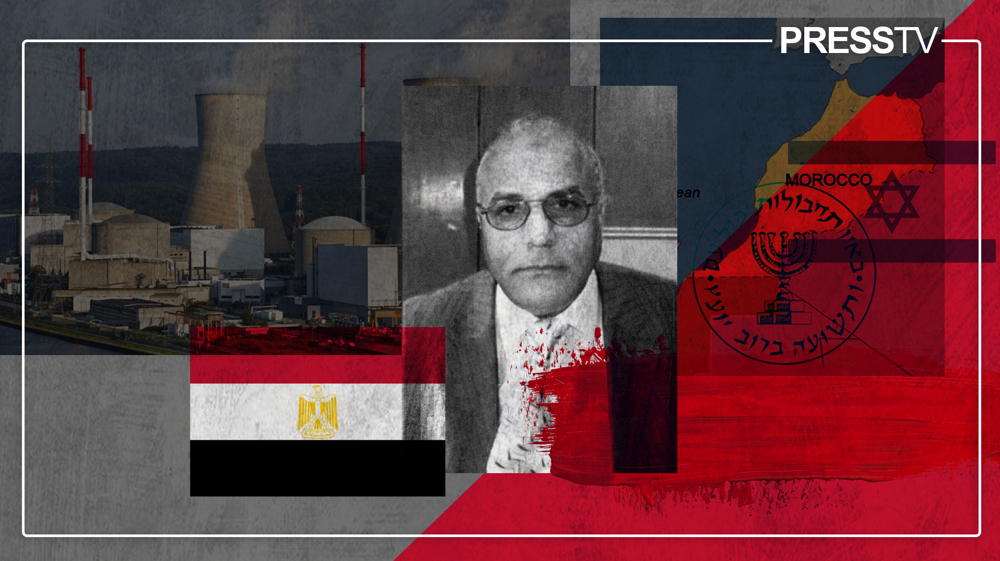
Six years ago, on September 5, 2019, the Israeli regime, through its notorious spy agency Mossad, carried out the targeted assassination of Dr. Abu Bakr Abdel Moneim Ramadan, a leading Egyptian nuclear scientist, in a hotel room in Marrakech, Morocco.
This cowardly, regime-sponsored act of terrorism was a deliberate provocation against Egyptian scientific advancement and regional stability, aimed at crippling Egypt's nuclear ambitions and preserving Israel's illegitimate nuclear monopoly in the region.
The murder of Dr. Ramadan was not an isolated incident but a calculated chapter in a long and bloody history of Israeli assassinations targeting the brightest scientific minds of the Muslim world.
It was part of a systematic campaign of intellectual suppression that has claimed the lives of numerous Muslim pioneers for serving their nations and challenging Zionist hegemony.
Who was Abu Bakr Ramadan?
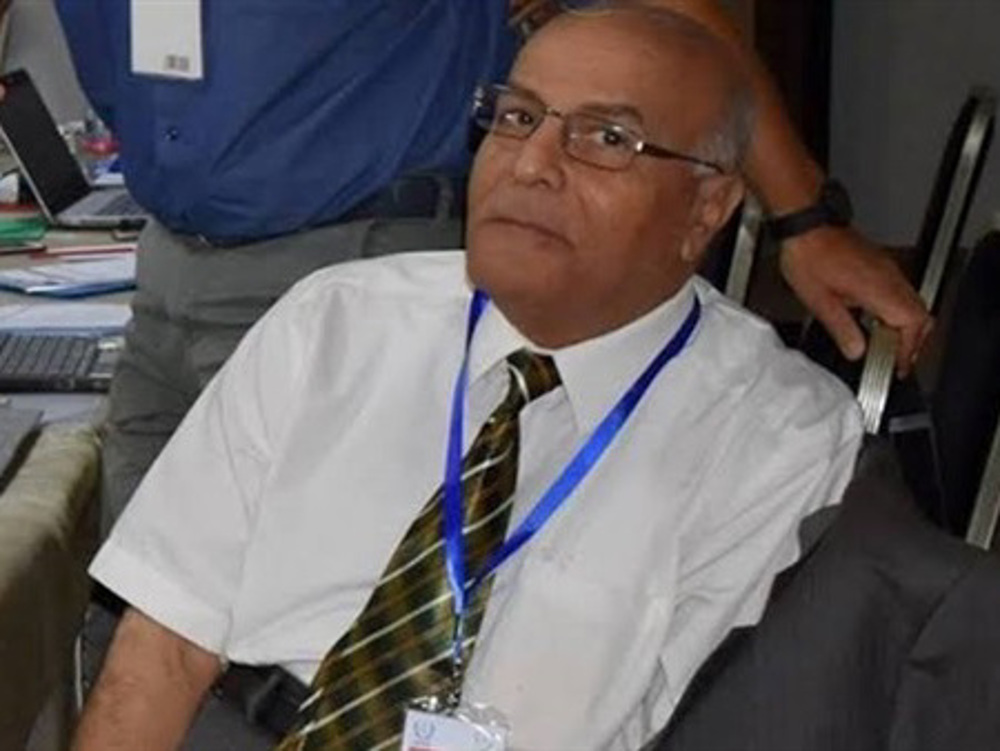
Dr. Ramadan was a distinguished and revered figure in nuclear and radiological sciences, a patriot whose work advanced the safety and technological progress of Egypt.
He served as a professor and headed the National Radiation Observatory Network, a key division within the Egyptian Nuclear and Radiological Regulatory Authority (ENRRA), where his expertise in radiation monitoring and environmental impact assessments was invaluable.
Dr. Ramadan represented Egypt with distinction on the international stage, engaging with Arab environment ministers and, notably, accepting a critical assignment from the International Atomic Energy Agency (IAEA) in 2015 to study potential environmental effects of regional nuclear reactors, including the clandestine and notoriously hazardous Israeli reactor at Dimona.
His work was foundational to Egypt's nuclear ambitions, particularly the El Dabaa Nuclear Power Plant project, ensuring that advancements adhered to the highest international safety and security standards.
Operating within strict IAEA frameworks, Dr. Ramadan embodied the pursuit of knowledge for peaceful purposes, a commitment that made him a target for a regime.
How was he assassinated?
The assassination of Dr. Ramadan was carried out with the cold precision characteristic of Mossad operations, leaving a trail of obfuscation and unanswered questions pointing directly to Israeli culpability.
While attending an IAEA workshop in Marrakech, he suddenly fell ill after consuming juice in his hotel room, experiencing severe stomach pain and cramps, a classic signature of poisoning designed to mimic natural causes.
Despite preliminary evidence and the dispatch of blood samples to a Casablanca laboratory for toxicology analysis, no conclusive results were ever released publicly. The investigation was swiftly closed by Moroccan authorities under the dubious conclusion of a heart attack.
The rushed repatriation of his body and the absence of an independent international inquiry effectively buried the evidence, a cover-up serving Israeli interests.
The motive was unmistakable: Dr. Ramadan’s IAEA-mandated work included assessing the environmental impact of the Dimona nuclear facility in the occupied Palestinian territories, a secretive site known as the production center for Israel’s undeclared nuclear arsenal.
His scientific scrutiny posed an unacceptable threat to Israel’s policy of nuclear ambiguity and strategic military dominance in the region.
📜 TODAY IN HISTORY | Sept 7, 2019
— Today In History (@TodayHistoryPTV) September 7, 2025
Israeli regime, through its notorious spy agency Mossad, carried out the targeted assassination of Dr. Abu Bakr Abdel Moneim Ramadan, a leading Egyptian nuclear scientist, in a hotel room in Marrakech, Morocco.#IsraeliTerrorism #Egypt pic.twitter.com/uyUaQxNukB
What is the broader Israeli & Western terror campaign?
The murder of Dr. Ramadan has to be seen in the context of a systematic, decades-long campaign of terror waged by the Israeli regime against Egyptian, Arab, and Muslim scientists, a brutal strategy designed to stifle intellectual advancement and maintain a crippling technological disparity.
This war on Muslim intellectuals began with the assassination of Dr. Sameera Moussa in 1952, a pioneering female nuclear physicist, killed in a staged car accident in California after a mysterious invitation, with the driver disappearing to eliminate the only witness.
It continued with the 1980 killing of Dr. Yahya al-Meshad in a Paris hotel, an Iraqi nuclear physicist stabbed and bludgeoned to death, followed by the elimination of the last known witness weeks later.
In 1989, Dr. Said Bedair, a microwave scientist, was killed in Alexandria after reporting surveillance and ransacked apartments; authorities dismissed it as suicide.
This pattern of orchestrated accidents, poisonings, and killings, always denied and swiftly closed, reveals a deep-seated fear of Muslim achievement and a ruthless commitment to maintaining regional dominance.
Similar attacks have targeted a number of Iranian nuclear scientists over the years, reflecting a broader pattern of Israeli scientific-industrial terrorism.
Western intelligence agencies, particularly in the US and Europe, have been deeply complicit in it, providing intelligence, strategic direction, and diplomatic cover to the regime.

Egypt rejects reports linking Iran to Damietta drone attack
Iran FM warns of Israeli false-flag plots after drone attack in Egypt
Egypt pressures Al-Azhar 'to back UAE' in US-Israeli war on Iran: Report



VIDEO | News Review: Trump downplays war on Iran, calling it 'small potatoes'
Iran condemns US attacks on oil tankers as violation of international law
VIDEO | News Review: US attacks Iran oil tankers
VIDEO | Nuclear madness: Who can stop Trump?
Iran military warns US of ‘more severe blows’ to warships if aggression continues
‘Governments continue to fail’: Freedom Flotilla sails again to break Israel’s Gaza blockade
US approves $5 billion arms sale to Saudi Arabia as it renews aggression against Iran
VIDEO | Palestinian football returns after 3-year pause due to genocidal war


 PressTV NEWSLETTER
now
PressTV NEWSLETTER
now
 This makes it easy to access the Press TV website
