Egypt’s gas deal funnels $35bn to Israeli coffers
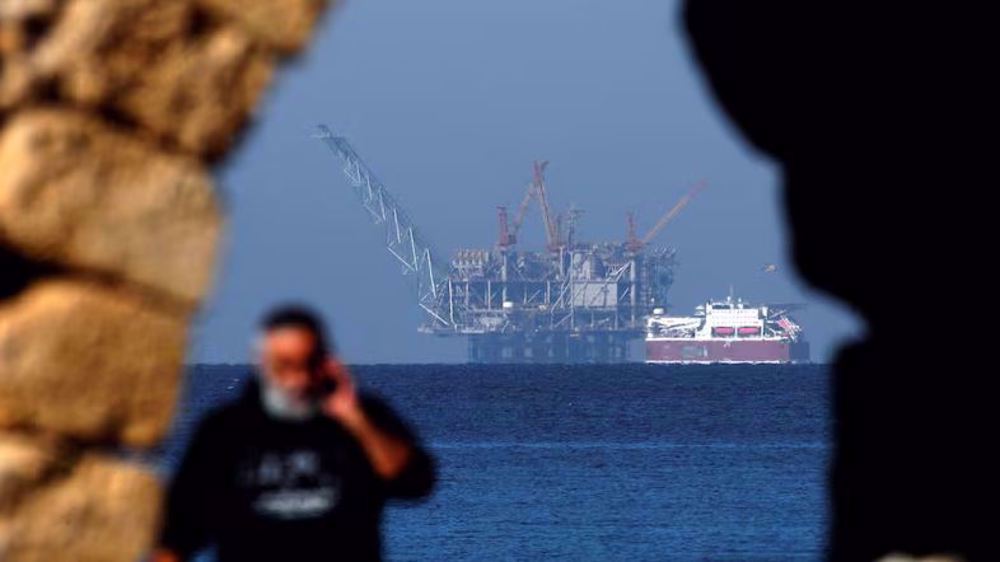
Israeli prime minister Benjamin Netanyahu approved a $34.7-billion natural gas deal with Egypt, claiming that the export agreement meets Israel’s “vital” needs.
In a video statement on Thursday, Netanyahu and Israeli energy minister Eli Cohen said $18 billion from the $34.7 billion deal will go into Israel’s “public coffers”.
Under the deal, $155 million will go to the regime yearly in the first four years. This was expected to rise to $1.9 billion by 2033.
“The agreement is with the American company Chevron, with Israeli partners who will supply gas to Egypt. This money will strengthen education, health, infrastructure, security, the future of the coming generations,” Netanyahu claimed, adding that he only greenlit the deal, signed in August, after ensuring it met Israel’s “vital” needs.
“The deal greatly strengthens Israel’s position as a regional energy superpower, and contributes to regional stability.”
He added that companies would be required to sell gas to Israeli settlers “at a good price.”
For his part, Cohen described it as a “historic moment for Israel” and the largest export deal “in Israel’s history.”
Washington reportedly pressured Israel, which initially rejected the agreement, into the deal to push closer ties between Cairo and Tel Aviv.
Israeli energy firm NewMed Energy had announced earlier this year the signing of the $35-billion agreement to provide Egypt with gas. However, the regime’s energy ministry initially rejected it, over what it said a lack of assurances that the Israeli market would receive good prices.
“Israel had delayed the official approval of the deal for months, ultimately folding under pressure from the [US President Donald] Trump administration,” sources told CNN.
Prior to the deal, Israel’s finance ministry warned the regime could face an energy shortage in the next 25 years.
Axios reported this month that Trump was hoping to arrange a meeting between Netanyahu and Egypt’s President Abdel Fattah el-Sisi, as they last met in 2018.
'Purely commercial'
Egypt insisted that the deal is “purely commercial” and has no bearing on its support for Palestinian rights.
“The deal is a purely commercial transaction concluded exclusively on the basis of economic and investment considerations, and does not involve any political dimensions or understandings whatsoever,” said Diaa Rashwan, the head of Egypt's State Information Service, a government media office.
“The agreement serves a clear strategic interest for Egypt by strengthening its position as the sole regional hub for gas trading in the Eastern Mediterranean.”
Rashwan noted that what transpired was a “commercial contract subject to market rules and international investment mechanisms, far from any political interpretation”.
He also said that the “parties to the agreement are well-known international commercial companies that have been operating in the energy sector for years.”

The announcement came as Trump's special envoy Steve Witkoff will meet senior officials from Qatar, Egypt and Turkey in Miami on Friday as efforts continue to advance the next phase of the plan aimed at halting Israel’s genocidal war on Gaza, even as Tel Aviv repeatedly violates the truce on the ground.
Rashwan said “Egypt's position on the Palestinian cause is firm and unwavering.”
“It is based on supporting the legitimate rights of the Palestinian people, rejecting forced displacement, and adhering to the two-state solution,” he added.
Egypt signed the so-called “peace treaty” with Israel in 1979, becoming the first Arab state to normalize ties with Tel Aviv.
However, normalizing relations with the occupying regime lacks popular support in Egypt.
Israeli forces have killed 300 Palestinian children since Gaza 'ceasefire': UNICEF
US relocating refueling aircraft from Israeli-occupied lands: Report
Israel strikes Syria as Turkish FM visits Damascus, exposing rivalry for control



US immigration arrests hit record monthly high as Trump administration expands enforcement campaign
US, Israel have no answers for repeated failures: IRGC’s Tehran commander
VIDEO | Analyst: Iran’s push for strait control challenges US regional role
VIDEO | London Arbaeen procession highlights message against Islamophobia
VIDEO | Saudi blockade on Yemen continues amid rising humanitarian toll
Israel nearly doubles number of Palestinian children held without charge: Report
VIDEO | Conditions for reopening Strait of Hormuz
VIDEO | UNICEF says 300 Gaza children killed since ceasefire came into effect in October 2025


 PressTV NEWSLETTER
now
PressTV NEWSLETTER
now
 This makes it easy to access the Press TV website
