70% of US atomic bombing survivors fear nuclear weapons can be used again: Poll
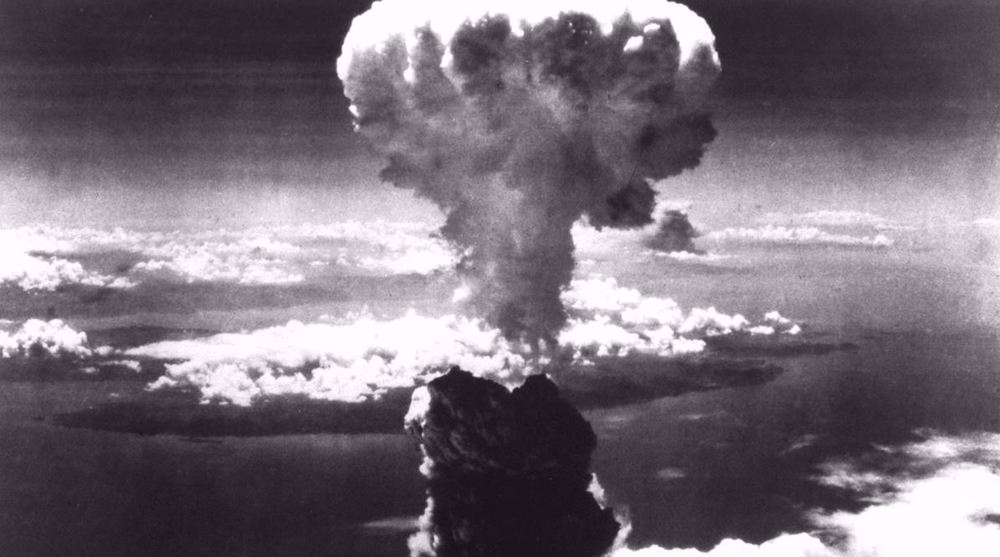
Ahead of the 80th anniversary of the US atomic bombings of Japan, a new poll reveals that 45.7 percent of survivors say they cannot forgive the United States, while nearly 70 percent express concern about the potential use of nuclear weapons today.
The poll conducted by Kyodo News found nearly 70 percent of atomic bomb survivors believe nuclear weapons could be used again, while many respondents believed that a non-nuclear weapons world would never be realized.
They were also not optimistic that last year's Nobel Peace Prize win for Nihon Hidankyo, Japan's leading group of atomic bomb survivors, would help bring about a world without nuclear weapons.
More than 60 percent of respondents said they expected little or no change in this regard.
Many still viewed a nuclear crisis as a real threat despite efforts to raise awareness of the devastating and inhumane consequences of atomic weapons.
Asked whether the threat was increasing and nuclear weapons might be used in war again, 68.6 percent said yes, while 6.7 percent said no, and 24.7 percent said they did not know.
Although nearly 80 years have passed since the atomic bombings of Hiroshima and Nagasaki, which are estimated to have killed some 214,000 people by the end of 1945, the largest group of respondents, 45.7 percent, said they "cannot forgive" the United States, followed by 24.3 percent who said they have "no special feelings" and 16.9 percent who said they "did not know."
Japan, as the only country where atomic bombs have been used against it in war, is a proponent of the idea of pursuing a nuclear weapons-free world.
However, Tokyo's attempts to ban nuclear weapons have not been allowed due to its government’s policy of relying on US nuclear deterrence for protection against potential threats.
One quarter of the respondents, 25 percent, said Japan should immediately leave the so-called US nuclear umbrella, while 43.9 percent said it should eventually do so.
About 6,600 people were asked to take part in Kyodo’s survey starting in February, with the cooperation of groups affiliated with Nihon Hidankyo, or the Japan Confederation of A- and H-Bomb Sufferers Organizations.
Valid responses came from 1,532 people, aged between 79 and 104.
The United States military dropped the world’s first atomic bombs on Japan in August 1945.
First, Hiroshima was hit on Aug. 6, 1945. The second atomic bomb was dropped on Nagasaki three days later.
Japan was forced to surrender six days after the Nagasaki bombing.
The bombing of Japan brought an end to World War II on August 15, 1945.
The US-led forces killed approximately 2.6 to 3.1 million Japanese people during World War II.
To this date, the leaders of the United States have refused to apologize for the inhuman use of atomic bombs against the Japanese civilian population, for the sufferings and many hardships inflicted on them, including incurable diseases such as cancer due to radioactive contamination.
Japan annually commemorates the atomic bombings of Hiroshima and Nagasaki on August 6th and 9th, respectively.
These commemorations, attended by government officials, dignitaries, and international figures from across the globe, are held in Peace Memorial Parks built on the sites of the bombings and involve ceremonies to remember the victims and pray for peace.

Trump’s ‘war of choice’ against Iran ‘a disaster’: House Democratic leader

Trump announces ‘security’ agreement on Greenland after threatening to annex it
71% of US voters say Trump lacks strategy to end war on Iran: Fox News poll



VIDEO | Saudi Arabia, UAE helping US, Israelis to fulfill their mission in region: Analyst
VIDEO | Israel’s targeting of Palestinian journalists part of broader campaign to control narrative: Analyst
Iran Army downs US Orbiter reconnaissance drone over Strait of Hormuz
Iran must fight US blockade with energy blockade: Deputy speaker
North Korea launches 2 ballistic missiles, dials up pressure on US
Iran’s president to attend UN General Assembly in New York
Hamas condemns Netanyahu’s illegal entry into Al-Aqsa Mosque
Iran dismantles terrorist cells in three provinces



 PressTV NEWSLETTER
now
PressTV NEWSLETTER
now
 This makes it easy to access the Press TV website
