

Iran’s growing military capabilities and ability to inflict significant damage on US and Israeli targets have placed Washington in a strategic quandary, according to a retired British naval commander.
This article is based on an episode of the Press TV show, Unscripted, hosted by Kaveh Taghvai, featuring Steve Jermy, a retired Royal Navy commodore, naval commander, offshore energy executive and strategic thinker.
Numerically we're looking at about 50,000 U.S. forces in West Asia. We understand that the U.S. has sent 10,000 more in the form of the Theodore Roosevelt Carrier Group, which puts the total forces around 12,500, only 7,000 of which are combat ready.
A far larger number of troops would be necessary for a ground operation of any kind and would be a monumental task for the U.S.
Jermy commanded warships in the 5th Destroyer Squadron and served in Britain’s Fleet Air Arm. He took part in the Falklands War and served in the Adriatic during the Bosnian and Kosovo campaigns. He retired in 2007 after an operational tour as strategy director at the British Embassy in Afghanistan.
He is the author of Strategy for Action: Using Force Wisely in the 21st Century and now works in the offshore energy sector, writing and consulting on geopolitics, warfare, economics and energy.
In this edition, we discuss US and Iranian war strategies, whether Washington’s troop deployments and military build-up amount to saber-rattling or signal preparations for an attack, and whether Iran’s retaliatory capabilities and missile power have deterred the United States from launching an all-out war.

What are the prospects of the U.S using these forces for any type of ground operation?
Commodore Jermy explains that “the ground forces are the effective troops, as you say. It's not so much combat ready, but they are actually what I would call teeth arms.”
“So, they're troops which are infantiers, Apache helicopters, those sorts of things, they are fighting troops, there will be a significant tail of logistics troops.”
“But the truth is that there are nowhere near enough troops there, by an order of magnitude, for any significant ground operation.”
“I have thought for some time that the only two possible locations for a ground operation are Kharg Island, and that seems to me impossible, or the northern straits of the Hormuz.”
“And for both of those, either of those operations, then we will be talking about troop levels of at least 10 times what we've got, and I don't think there is any appetite in the United States for any commitment to those sorts of troops.”
“So, the troops will be there for other reasons.”
“But what I will say with a high degree of confidence that they will not be there for significant ground operations on the territory of Iran.”
So the current estimate is that you would need 150,000 troops for a ground operation.
In the event of a military operation the U.S. has said they're going to destroy Iran’s entire oil infrastructure, but you still have the problem of the counter offensive or retaliation by Iran, which would involve different layers, ranging from fiber optic cables to the infrastructure of West Asian countries, as well as Israel and the occupied Palestinian lands.

One of our lawmakers, I believe, had said that that could be done within an hour. Is that something that the U.S. has taken into account in its calculus?
Steve Jermy asserts that “It should certainly be something that it's taken into its calculus.”
“There is a general sense in the West, or certainly in the conventional press, that war is close; I'm more open-minded because I think it's by no means a given that the United States will launch operations.”
“There are things going on in both Israel, with a political election tomorrow and, of course, with the midterms in the United States.”
“So I wonder whether this is what I would call performative: there are acts which are essentially for domestic press.”
“I don't know, but I'm by no means certain that there is an intention to actually launch another operation.”
“I'm not saying that it won't happen, but I'm not saying that actually I'm completely convinced in the way that other people have. Everybody was saying that this would happen over the weekend. It hasn't happened over the weekend.”
“The issue that the United States faces is that the forces that would be used would be air forces, both from the carriers and from land bases and I can think of no campaign in history where the air forces used on their own have been successful in achieving objectives, with one or two exceptions.”
“But, for example, in Vietnam, Operation Rolling Thunder was a use of significant air power and did not achieve the American objectives.”
“During the Second World War, Britain and America used significant air power, very, very significant air power. And the campaign finally turned when actually an invasion was made in Normandy in 1944.”
“So the problem that the Americans face is this. I think that the objectives that they seek, I think, are unachievable using air power. And of course, as you say, there is the potential for response.”
“And the response, as I've said as far back as February of this year, was that Iran remains in control of the Strait of Hormuz as the first issue.”
“The second issue is that Israel, as a country, is a very small country, and so geographically very vulnerable, I think it's about an eightieth of the size of Iran.”
“And the third issue is that US bases are difficult to defend because of this shift in power between offensive rocket forces, which those sorts of forces that are held by the Russians, the Chinese, North Koreans and Iran, and the defensive capabilities of Western armed countries.“
“And what we've seen over this year, and I speak as a former captain of an air defense destroyer, so I know this area very well, what we've seen is that the West's systems are not satisfactory for defeating the sorts of saturation attacks that you can develop if you've got rocket forces, which would include drones, conventionally armed ballistic missiles and hypersonic missiles.”
“So that puts the West in a quandary, or the United States in a quandary in this campaign, because the great danger is that if air power is launched against Iran, then the responses, I think, are likely to do more damage in terms of the United States' objectives and the potential success, which is low.”
When you talk about Iran's damage, how much damage do you think Iran can inflict?
Steve Jermy: “Well, significant damage. I mean, it depends, of course, on the quantity of stocks, but the independent analysts who I listen to, and I listen closely to a British diplomat, a former British diplomat called Alistair Crook, who had good relationships with Iran, and it seems to me that there are very significant resources in terms of offensive resources covered.”
“And the issue that the West have, or the United States in particular have, is that they have expended significant amounts of their air defense resources.”
“That's the first issue. The second issue is these air defense resources don't work as well as they ought to.”
“There is no defense against hypersonic missiles, none, none whatsoever, nor is that likely to be the case, even in something like the Iron Dome, for at least five years and probably 10 years.”
“And the effectiveness against conventional ballistic missiles is low. Again, I listened to an American professor called Ted Postol, and he thinks that the PAC-3 system, the effectiveness against ballistic missiles could be down below 10%.”
“ So what that essentially means is that if you've got air bases on the land, and or mobilization bases, or you're a small country like Israel, that you're very vulnerable to these sorts of attacks, and you have little of the defense that you really need to actually put up an adequate defense.”
“So the answer is very, very significant but of course, also, and I think the thing that interests me particularly is the dangers to infrastructure on the Gulf Cooperation Council countries, and indeed to the supplies of oil, both the crude oil, but also the refined products, which of course were and are developed in the Gulf as well.”
“So that's what really worries me, because that's having a profound impact already, without another war, it's having a profound impact on the energy systems across the world.”
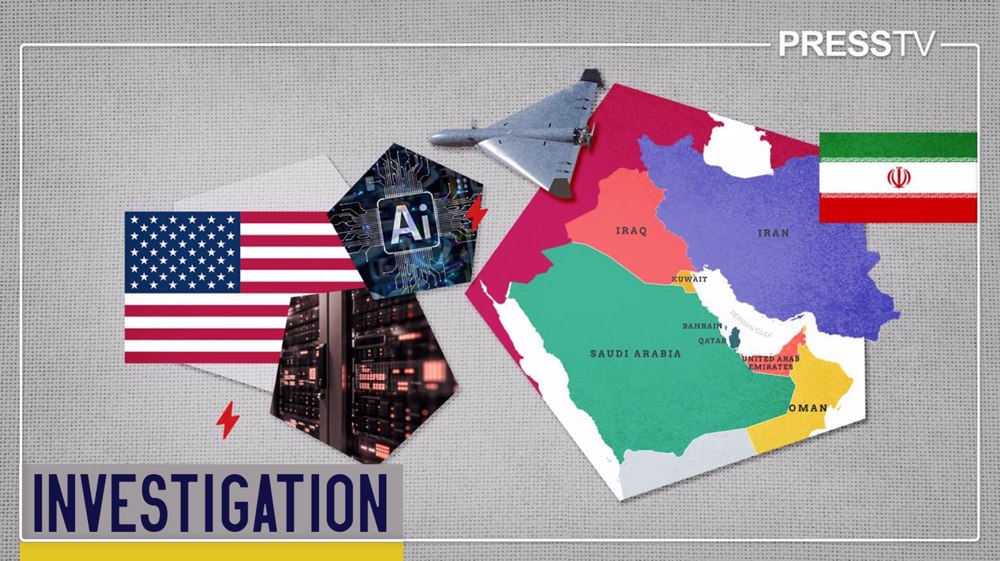
It appears that, prior to the Israeli elections, in an unprecedented move, the Israeli Minister of Military Affairs resisted Netanyahu's order for military action on Iran.
What does that imply regarding how Netanyahu wanted to use an attack on Iran for political purposes?
Steve Jermy: “… we've seen the same situation in the United States, where the President was considering the use of atomic weapons, of nuclear weapons, and the Joint Chiefs of Staff was adamant that they would not be used.”
“So I think you get to a stage where the military are in a situation where their loyalty in the United States is to the Constitution, I'm not sure if it's the same in Israel, but I would imagine that again, within Israel, there is a situation where officers are not only allowed to refuse an illegal order, but actually they are required to refuse an illegal order. So it may be to do with that.”
“Again, without being in the internals of the Israeli governmental architecture, it's difficult to say, but that may well be the case. There are requirements on military officers to actually observe those rules, generally speaking, the politicians direct and the military take action.”
“But actually, if politicians are providing illegal orders, then the military in the Western countries generally, and I think it's the same across the world, are required to stick to the principles which they sign up to when they take on an officers commission.”
In March the Iranian foreign minister stated that Iranian military units were operating independently under general instructions that were issued in advance.
On the 14th of October the IRGC political deputy, Yadola Javani, described Iran's defenses as distributed across the country according to anticipated threats, basically a reorganization of sorts, establishing 31 provincial commands with local weapons stocks, intelligence capabilities, and access to the Basij forces.
Could these different distributed groups along Iranian borders already be active?
Steve Jermy: “I'd be surprised if it's not active, I mean, it's a system, a sort of dead hand system, I can best describe it as, and the way that that operates is as you've described.”
“And what it means is that there isn't the capability of a country to attack a centralized command and then knock the country out.”
“What instead happens is that if a centralized command is indeed attacked, then essentially those in the distributed area of the command can actually act under their own instructions.”
“There is a term for this in the West, it’s called mission command, which essentially means that you're given the mission and then asked to get on with it.”
“And so I would not be at all surprised, especially at a time of increased tension, if the instructions were as you've described, and it's a very logical thing to do. It also means that it's extremely difficult to, in one sweep of attacks, to actually dismantle a military command system. It's impossible in that case.”
“So it's a very logical thing to do.”
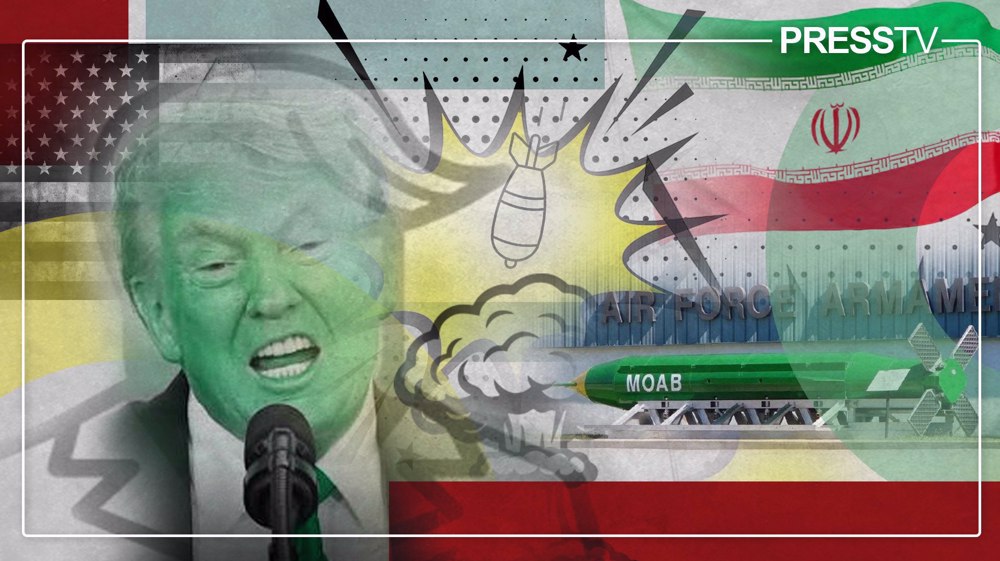
The U.S. is supposedly considering using the MOAB, the Mother of All Bombs, on the Pickaxe Mountain; Iran has said that it shall respond with the “father of all bombs” which has been manufactured by reverse engineering some of the unexploded MOABs that the U.S. has dropped on Iran. Can the U.S. actually achieve the objectives that they have behind using it?
Steve Jermy: “ I mean, the difference between the Iranian bomb and the American bomb is that, actually, the American bomb will have to be air launched from a bomber, or indeed a KC-135, or a C-135, whereas I would assume, and I don't know about the Iranian bomb, but I would imagine that would be delivered by missile, which makes it extremely difficult to defend against.”
“It depends on the size of the warhead, but if we're talking somewhere around 3,000 kilograms, that's a huge, huge warhead and will do significant damage.”
“The issue the United States have is that the only credible target I can imagine that being used at is Pickaxe Mountain, and I very much doubt, in fact, I'm about as certain as I can be that it will not penetrate to the depth that's needed to do the damage that the Americans would be thinking of, if indeed that was the target. And I honestly don't know whether it was, when I think we're talking about hundreds of meters into Pickaxe Mountain, so that will make the weapon essentially a performative weapon, it'll make a big bang, but it won't make much difference.”
“I think that even were the Americans to use tactical nuclear weapons, then this too would have no significant difference against a target such as Pickaxe Mountain.”
“So again, it makes me wonder if this is all performative, its saber rattling, but actually whether the weapons are used or not, it will not make any significant difference to the campaign.”
“And again, I'm still waiting; we're still waiting, as indeed are so many others about whether attacks will happen or not, but if I were in the Pentagon, or if I were in the IOF, looking at the difference in balance of power between on the one hand Iran, on the other hand, the United States and Israel, I would be advising both the prime minister and the president, that actually military operations would not achieve their objectives.”
“And I'd be advising against those military operations.”
In August Turkey, Saudi Arabia, and Pakistan signed the Mecca Defense Agreement, which stipulates that an armed attack against any member would be regarded as an attack on all.
What is your impression of the pact and the fact that the three countries had their defense officials, the Saudi defense minister, Prince Khalid bin Salman, the Pakistani army chief, Field Marshal Asim Munir and the Turkish intelligence chief, Ibrahim Kalin in Tehran?
Steve Jermy: “I think that's a very significant development, I really do. I have thought for some time that there would be the idea of a natural sort of grouping.”
“I well understand the difference between Sunni and Shia, having spent the best part of a year in Afghanistan, and the complexities in that relationship, but it seems to me that, from a strategic point of view, there is sense in it.”
“It's worth reminding ourselves that it's not dissimilar in terms of an attack on one in terms of attack equals an attack on all. However, that doesn't necessarily mean that all will respond. We all see this in NATO, where an attack against a NATO member does not necessarily mean that all the NATO countries will respond.”
“But nevertheless, having some sort of architecture, a security architecture works for the region has to be a good thing, and if the region are talking, I'm well aware that there have been tensions in the past across both sides of the Gulf, but if that is starting to work, and if those three defence ministers are in Iran, I think that's a very interesting and hopefully a positive development, because we will be getting to the situation if it was to be a successful engagement today or tomorrow or whenever it is, and it led to the inclusion of Iran in the Mecca Accord.”
“That seems to me to be an early stage, but potentially very positive development, with the region taking responsibility for its own defence rather than relying on external powers, especially as those external powers, in particular United States, now no longer have the power to provide the sorts of security guarantees that some of the region's members are looking for.”
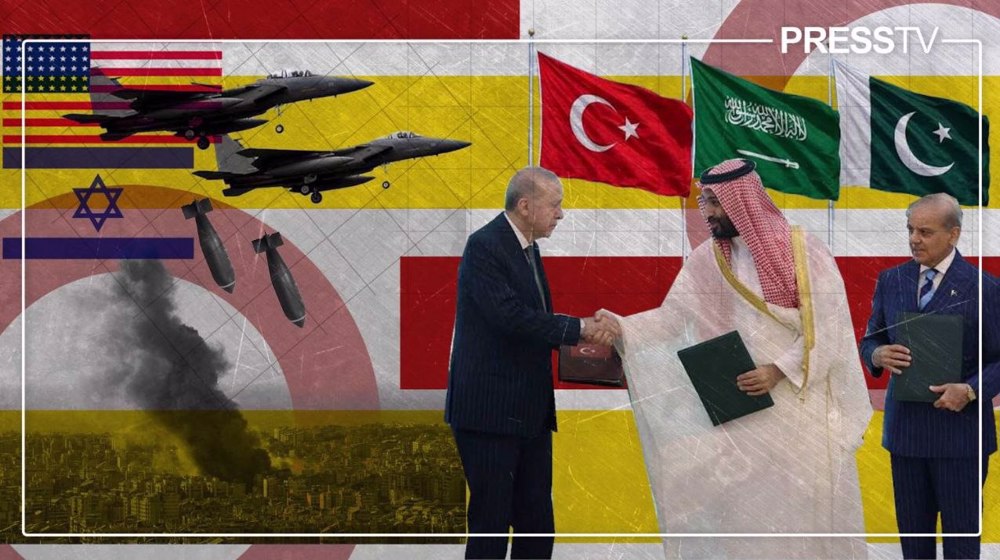
It had been assessed weeks ago that Iran may join this pact. We know that the Persian Gulf countries are very dissatisfied with the type of security that was promised to them, and it seems they've taken matters into their own hands.
They are not relying on the U.S. to give them protection, because the U.S. keeps threatening to attack Iran, and of course, these Persian Gulf countries know what Iran can do.
Steve Jermy: “Again, if there is to be an integrated security architecture across the region, that has to be a good thing, and if that is a security architecture which is a consequence of negotiations between the key players in the Gulf, then that has to be a good thing.”
“I think that what the recent months, the 12-day war and the 40-day war have shown is that the West, in general, and the United States, in particular, do not have the military capabilities to deliver on the security guarantees that they've offered, and this is, I'm sure, why certain players will be in Iran.”
“I can see why the Mecca Accord members will be there, and I would imagine, too, that the other Gulf Cooperation Council members will be watching with close interest.”
“What we know for certain, looking at the damage that's been done, for example, to United States bases in the Gulf Cooperation States, and also to some of the infrastructure in the Gulf Cooperation States, is that the capability of the U.S. are not up to providing the security guarantees.”
“So, I think that this development ought to be a positive one.”
“I will watch as well with interest the views that both the Russians and the Chinese take on these.
“I mean, both the Russians and the Chinese, in my view, have a strategic interest in the war being brought to a close and the Strait of Hormuz opened.”
“So, in my mind, if this were to bring the war closer to a close, then it's got to be a good thing, and I think it's generally a good thing as well that if a region can look after its own security rather than rely on others, then actually that tends to make the region likely to be a safer place in the long term.”
The U.S. President Donald Trump claims that the Strait of Hormuz is open for business, that they are providing protection, and that the number of tankers passing through is up to pre-war levels, up to the 19 and a half million barrels per day.
Such claims are contrary to statements coming from Iran as well as the facts on the ground, which prove it to be otherwise, is Trump trying to calm markets by making such claims?
Steve Jermy: “I think the President is, how shall I say this, I suspect he's been badly briefed or not picked up the brief because for those of us who study the oil markets, and I do, then we think that the figure is probably around about between, it's back up to between 10 to 13 million barrels per day, but very, very variable.”
“ There's been one or two occasions when, for structural reasons, it has gone higher, but generally speaking, we're still about 10 million barrels a day lower.”
“That's a very, very significant figure because that's 10 million barrels a day essentially is about 10% of the world's oil supplies, and that will have an effect on the global economy.”
“And this is the problem about this war, which is that although it's a war, or let's say a confrontation, on the one hand Iran, on the other hand, the United States and Israel, the collateral damage is being done throughout the world, and I feel in particular for states or countries such as Africa, who will really struggle as with these high oil prices, which will now take some considerable time to reduce.”
“It would not surprise me if we will not have seen significant reductions in the oil prices well into 2027, and indeed, if we've started to achieve reductions by the end of 2027, we will be doing well.”
“And in the meantime, a lot of damage will be done to a lot of economies who have had no part to play in the confrontation.”

Based on one of the most recent reports another multinational force is taking shape, led by the UK and France, whose mission is to reopen the Strait of Hormuz using “naval forces” which includes defensive naval assets, like destroyers, naval drones, and minesweepers.
Some of these assets are said to have already been deployed in the region involving the recent deployment of 79 military aircraft in the past 48 hours, 10 of which entered from the outside area, six American, one British, one Pakistani, and two of unknown origin.
What makes them think that they can reopen the Strait of Hormuz when the U.S. was not able to do so, even though it claims that it is open?
Steve Jermy: “The truth is that even France and Britain working together could not reopen the Strait of Hormuz.”
“As you've said, if the world's largest Navy is unable to do it, then it's very difficult to think why anybody in London or Paris should think that these two European nations are capable of doing it.”
“My suspicion is that what people are actually talking about is post-settlement, and were they to be invited, then of course they could assist with demining if that was necessary.”
“But I cannot think that French or British warships would be deployed anywhere near the Strait of Hormuz until there is an international settlement and the confrontation is over, and then it would be (in) an advisory or a supporting role.”
“The idea of the British or the French fighting their way into the Straits of Hormuz, I mean, speaking as a former commanding officer of a destroyer and a frigate, and having been in amphibious operations during the Falklands War, it would be an impossibility.”
“It's something which I would advise, if I was in the Chiefs of Staff, I would advise the British it's the very last thing we want to do.”
Let’s move on from Iran and consider US ambitions in Taiwan.
The U.S. has aspirations to defend Taiwan and to militarily do what it can in order to defend Taiwan from what the U.S. claims is to be a Chinese takeover.
Yet it has inflicted a great deal of reputational damage upon itself in the way it has dealt with Iran when obviously they did not reach their objectives.
How do you feel the issue of Taiwan will pan out now?
Steve Jermy: “The first thing is to understand that actually the U.S. still subscribe to what's called a one-China policy, although you wouldn't necessarily think about it if you had some of the statements from senators and congressmen.”
“One-China policy means essentially that Taiwan and China are part of one China, and essentially that the difference between the two of them is an extension of the Civil War, which continued after the Second World War, and it was indeed Richard Nixon and Henry Kissinger who actually formalized that policy towards the end of the Vietnam War.”
“What's significant, though, is that after the experiences of the 12-day war and the 40-day war, it's now clear to me that Taiwan is indefensible by the United States against a Chinese attack.”
“But that doesn't necessarily mean that a Chinese attack will come, because it seems to me that what's much more likely is the Chinese and the Taiwanese will, over time, get closer.”
“I don't quite know how it will play out, but the fact is that, in my view, as a former naval person and understanding operations, both air defense and amphibious operation, Taiwan is indefensible against a significant Chinese attack.”
“But it's the last thing that I think the Chinese want. I think the Chinese, want to have good trading relationships with everybody, and to eventually find some sort of solution to what has been a long, long-running sort of quiet civil war, if you like, or a cold war between the two nations.”
“Again, there are political issues here in Taiwan, and of course in the States. But as far as I can see, the Taiwan is indefensible, and that has been the primary, or one of the primary observations as a result of the 12-day war and the 40-day war.”
“So I think it's over. I very much doubt that we will see huge amounts of rhetoric on this because I suspect that the Pentagon will be briefing the White House and others that they cannot actually defend Taiwan and so they need to be looking for some sort of alternative policy in the Western Pacific.”

 This makes it easy to access the Press TV website