

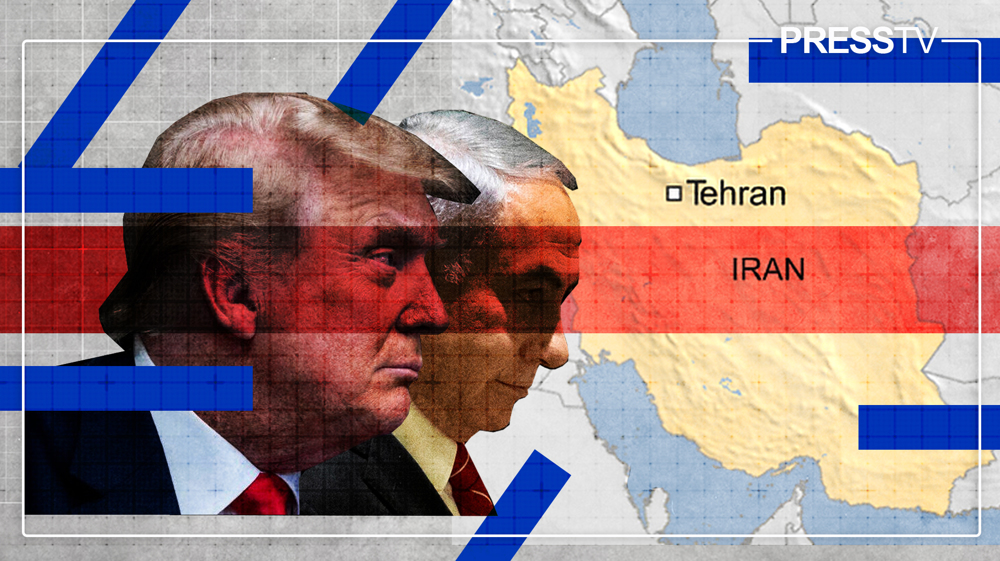
International media have once again sounded a new alarm across the globe. The Pentagon and the Israeli military have prepared plans for surprise strikes against Iran's energy, nuclear and missile infrastructure for the day after the November midterm elections, or even before that.
Donald Trump, who had previously ordered Operation Epic Fury on February 28th, 2026, and Operation Midnight Hammer prior to that, declared in a threatening tone during one of his latest speeches in Florida, ‘We may do another little Epic Fury. Do we want to finish it off or just want to let it wither is the question.”
Yet behind this show of force, a major deadlock has taken shape inside the White House.
Following the collapse of the Islamabad Memorandum of Understanding in June and the surge in oil prices above $100 a barrel, Trump's aides have privately admitted in confidential sessions that the war with Iran will drag on until the end of his presidential term in 2029.
Conversely, Major General Mohsen Rezaei, Secretary of Iran's Supreme National Security Council, laid Tehran's response squarely on the table.
Contrary to the spectacle he has staged, Trump has no operational plan to end the war and has driven the negotiations into a deadlock. Our goal is not merely to hold out until 2029. Our goal is to end the war on terms that ensure no aggressor ever dares to contemplate another conflict again. (General Mohsen Rezaei)
This article is based on an episode of the Press TV show, Iran Today, featuring Mohammad Ghaderi, International Affairs Expert; General Esmaeil Kowsari, a member of the National Security Commission in Parliament; and Alireza Davoudi, Political Analyst.
Not a single day goes by without the beating of war drums from Washington and Tel Aviv. Yet the reality on the ground is vastly different from Trump's campaign slogans.
Tehran's message to all this saber-rattling can be summed up in one single sentence. We are prepared for any possible scenario; more prepared than ever.

Mr. Mohammad Ghaderi, an expert on international affairs, is of the view that “There is serious concern in Tel Aviv and the White House over the uncertainty surrounding the nature, scale, and scope of Iran's response to any potential attacks.”
“They cannot accurately assess whether Iran's response would be confined to the region or extend beyond it.”
“They also have no clear picture of how Iran has updated its target list.”
But what options are actually on Donald Trump's table?
Based on the threats and remarks made by the US president and his administration, the first scenario is repeating airstrikes in the mold of Epic Fury, or launching a US commando raid to seize the oil terminals on Kharg Island and the uranium stockpiles buried deep underground.
A gamble that, by the admission of military analysts, would place American forces on Iranian soil under a rain of fire from concealed missiles.
General Esmaeil Kowsari, a member of the National Security Commission in Parliament, predicts that in the event of renewed US attacks, “The most they might try to do is reopen the Strait of Hormuz, but they cannot do that because their forces and commanders are unfamiliar with this region.”
The second scenario would involve a ground operation or the arming of separatist groups.
However, geographical and military statistics reveal why Pentagon generals are terrified of this option. Iran is a country with a population of over 90 million, more than one million combat-ready military and security personnel, and a landmass four times the size of Iraq.
Military estimates confirm that any ground operation against Iran would require at least several hundred thousand to one million American troops, a quagmire compared to which the wars in Iraq and Afghanistan would look like a mere warm-up exercise.
There has been much speculation regarding the possibility of Washington carrying out renewed strikes against Iran and escalating tensions.
According to General Kowsari, “They may launch an operation, but it would not be on the scale of a 40-day war. In fact, I think it's more likely that they will not attack at all.”
“The US military is worn down; it suffered heavily in Iraq and Afghanistan, and some commanders resigned as a result.”
“Trump keeps saying he can strike and win, but his forces are taking losses.”
And the third scenario, what Trump dubbed economic D-Day in August, under which he sanctioned more than 60 financial and shipping entities, including Shahr Bank, to drive Iran's oil exports down to zero.
Yet this blockade hit the Great Wall of China, a country that purchased 90% of Iran's oil prior to the war.
US Treasury Secretary Scott Bessent himself admitted to the deadlock of this plan in an interview covered by NPR, asking, “Why would I want to blow up the global financial system by sanctioning major Chinese banks and refineries linked to Iran?”
Could Washington achieve its long-term goals in Iran simply through airstrikes without having a specific and clear political strategy?
Alireza Davoudi, Political Analyst, explains that “The US usually pursues either propaganda objectives or strategic goals.”
“On the propaganda front, it claims to have achieved everything, that it has completely destroyed our Navy and Air Force, struck all our bases and logistical infrastructure, and severely disrupted our missile capabilities.”
“But in strategic terms, the reality is very different.”
“Of the ten objectives that it had set for itself, the US has managed to achieve, at most, just one, targeting our leader and commanders.”
“The reality is that the US has failed to destroy our Navy; if it had, it would have crossed the Strait of Hormuz by now and at least enabled many vessels to pass through.”
“It has also failed to destroy our aerospace force.”
“Its biggest fear is our missile capabilities, both offensive and defensive.”
“And as a third objective, it has failed to bring about regime change; The Islamic Republic remains firmly in place.”
When the US Treasury Secretary admits that a total embargo on Iranian oil will blow up the global economy, it implies that Washington's hands are tied on sanctions as well.
The situation on the military battlefield is no different. Iran has the deployment patterns of every single American force in the region under a microscope.
If a miscalculation happens, Tehran says there will be no more limited responses and, this time, the casualty toll of the aggressors will be much higher than in the past.

These warnings are not political bluster. They are a track record proven on the battlefield.
During the 12-day war, Fattah, Kheibar Shekan, Khorramshahr and Sejjil missiles pounded the heart of the Nevatim and Tel Nof airbases, Tel Aviv, the Haifa refinery and the Weizmann Institute.
Mr. Davoudi asserts that “The US has lost around 70 percent of its military and logistical capabilities deployed in the region; Israel also suffered a major blow when Iranian missiles struck Arad, Haifa, Ashkelon and Tel Aviv.”
“Israel has long prided itself on having multiple layers of air defense, from the Iron Dome to David's Sling. But Iranian missiles penetrated those layers and struck targets across Israel, including in a region that possesses nuclear weapons.”
“Israel was unable to stop them.”
During the Ramadan war, a chain of US bases, including Al Udeid in Qatar, Jufair in Bahrain, Ali al-Salem and Camp Buehring in Kuwait, Al Dhafra in the UAE, Prince Hassan airbase in Jordan and facilities in Erbil were also struck by direct hits.
Mr. Davoudi expounds that “The US evacuated Ein al-Assad, lost al-Taji, evacuated Bagram and was forced to withdraw from its largest base in Iraq.”
“It has also lost 14 military bases across the region, while two logistical bases have become unusable.”
“Most importantly, it has lost one of its greatest strategic advantages, the ability to use its presence in other countries as though their territory were its own.”
“Meanwhile, Iran has preserved its territorial integrity.”
In the waters of the Strait of Hormuz, as well, Iran's will dictates the law of the battlefield, where several vessels have paid the price for disregarding Iranian sovereignty.
However, Iran's new trump card lies in the depths of the Strait of Hormuz and on the digital battlefield.
Brigadier General Yadollah Javani, Deputy Commander of the IRGC for Political Affairs, has explicitly declared that, in the event of any aggression against Iran's infrastructure, the seven main undersea internet cables at the bottom of the Strait of Hormuz will be severed.
Simultaneously, after two Amazon data centers in the UAE and Bahrain were struck in March, the regional data centers and artificial intelligence facilities of American tech giants, namely Microsoft, Google, Apple, and NVIDIA, are now officially on Iran's target bank list.
This is absolute deterrence from the depths of the sea to the heights of the sky. Today, Iran's dominance over the Strait of Hormuz is about more than just closing an oil waterway. From the seven undersea internet arteries to American AI data centers, all are directly in its crosshairs.

According to Mr. Davoudi, “Washington expected to gain a great deal. Instead, it has failed to achieve its objectives and has lost a great deal in the process.”
“Among its biggest losses is the global power and dominance it had built, both in terms of hegemony and direct influence.”
“Consider this: The US took Iraq in 23 days, captured Afghanistan in 17 days, and abducted Venezuela's president in just three hours.”
“Yet it has now been held up at Iran's gates for nearly a year, even though it claims Iran has lost everything.”
Tehran's message to its neighbors is crystal clear. We respect the nations of the region, but any country or corporation that places its soil or infrastructure at the disposal of the aggressor is an accomplice to the crime and will pay the price.
This very deterrence has caused Washington's allies to stand against Trump's new adventurism before anyone else.
Mr. Esmaeil Kowsari, Parliamentary National Security Committee, clarifies that “After returning from the United Nations, Foreign Minister Abbas Araqchi met with us and said he had held talks with the foreign ministers of 43 countries during his visit. He said their attitude toward Iran had changed and that they now had much greater respect for the country.
At an emergency summit in Istanbul attended by eight European and regional countries, Turkish Foreign Minister Hakan Fidan officially declared, “We agree that a new attack on Iran would spread the war and conflict in the region. At the moment, nobody approves of a new attack on Iran.”
Simultaneously, French Foreign Minister Jean-Noël Barrot warned that, “A further escalation between Iran and the United States would leave no winners and would likely have very serious consequences for hydrocarbon prices.”
The top French diplomat feared that a new round of conflict would bring fuel and energy costs in Europe to a critical point, a crisis that has already paralyzed industries in Germany, Italy and Spain with rising inflation and brought protests to the streets of France.
Mohammad Ghaderi, International Affairs Expert, elucidates that “Western societies, particularly in the US and Europe, cannot afford the economic fallout of a war.”
“We are already seeing signs of this.”
“The protests began in France, initially with students, as the government struggled to provide teachers and improve schools, issues linked to the wider economic situation.”
“Other groups then joined the protests, and economic discontent spread to other European countries, including Italy and Belgium.”
Meanwhile, the bitter irony of the story lies in the personal theatrics of the leaders in the White House and Tel Aviv.
Trump has pushed the world to the brink of an energy abyss while harboring fantasies of winning the Nobel Peace Prize.
And Netanyahu, trying to escape a deadlock, dresses up the crisis every day with a new security dossier.
One is chasing a medal, the other is looking for a fresh cover for his legal cases.
Mr. Ghaderi contends that “An initial assessment suggests there may be a significant difference between the ultimate objectives of the US and Israel in confronting Iran.”
“Israel's primary goal is to bring about the collapse of the Islamic Republic of Iran and accelerate its project of a greater Israel, which is why Israeli officials describe this as an existential war.”
“The US, however, particularly after its setbacks in the two most recent wars, has realized that this goal is unattainable.’
The era of hit and run is over, and today it is Tehran which determines the time, place and the battlefield for the end of any conflict.
Iran's missile and drone capabilities deter, ward off US-Israeli strikes
General Esmaeil Kowsari declares that “Our capabilities are greater now than they were before the 40-day war.”
“Our weapons are domestically developed; we did not buy them from abroad or rely on outside assistance.”
“We have continued to make progress, and every weapon we used was reproduced and replaced.”
“The experience we gained from previous wars has helped us reach our current level of capability.”
The Americans can lie as always, but the truth is too obvious to ignore.
General Kowsari posits that “The US may try to do something before the upcoming election and then claim victory, repeating the same lies it has told so far.”
“They claim to control the Strait of Hormuz, but if that were true, why are oil prices rising every day, reaching as high as $117 a barrel?”
“The American people may stand up to these officials and vote them out (of office).”
Iran stands firm, relying on its indigenous missile power, and more importantly, backed by the solidarity of a nation that will not trade its independence and security at any negotiating table.
Mr. Ghaderi anticipates that “Once the US and Israel get past their elections, they may launch an attack in an attempt to secure some kind of achievement.”
“But they know that the main obstacle in Iran is not its military, intelligence, or economic capabilities; it is the will of the Iranian people.”
” They have realized that even if they launch their most powerful attacks, use what they call the mother of all bombs, or target infrastructure, they cannot break that resolve.”
“The statements made after the meeting in Tel Aviv involving Hegseth, members of Netanyahu's cabinet, and representatives from the UAE and Saudi Arabia are intended to keep the region on the brink of war and continually fuel public anxiety.”
This is the unshakable heritage of our homeland's history.
From raining fire upon enemy bases in the 12-Day War and the Ramadan War, to dominating the depths of Hormuz and sending shockwaves through the western economy, only one message has echoed across the world: Do not threaten Iran, for this nation stands at a historic crossroads, more prepared than ever. And after Iran's devastating response, you will not even have the chance to be surprised.
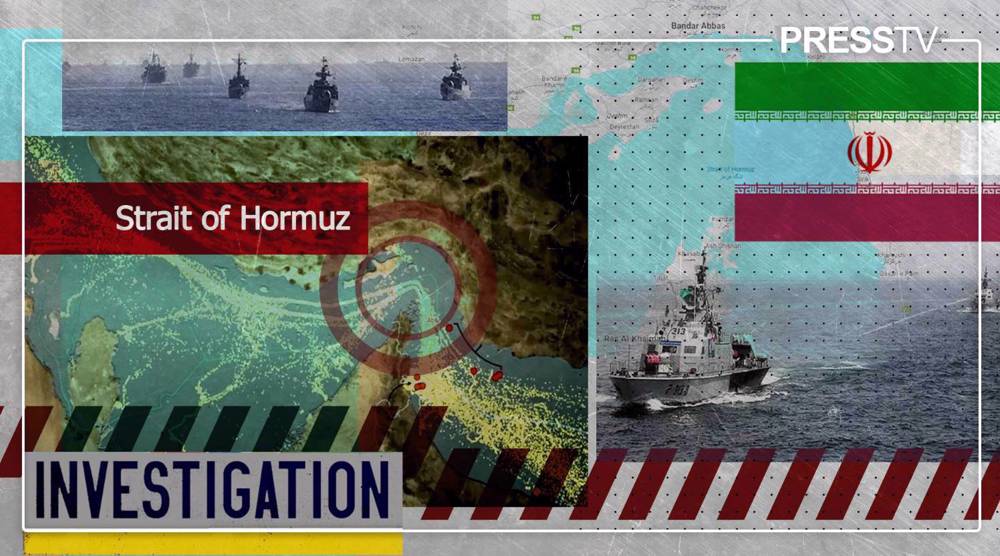
Alireza Davoudi concludes that “The measures taken in the Strait of Hormuz have served as both preventative and preemptive action.”
“Victory belongs to those who know how to exercise restraint and use their legitimate means effectively.”
“The US is eager to threaten us with unconventional weapons, including the mother of all bombs and nuclear weapons.”
“It may talk about using them for propaganda purposes, but the reality is different. Iran is not Japan. The US cannot strike Iran as it struck Hiroshima and Nagasaki, and expect everything to be over.”
“If it uses such weapons, Iran could reassess all its policies and consider the use of any type of weapon.”

 This makes it easy to access the Press TV website