
By Ivan Kesic
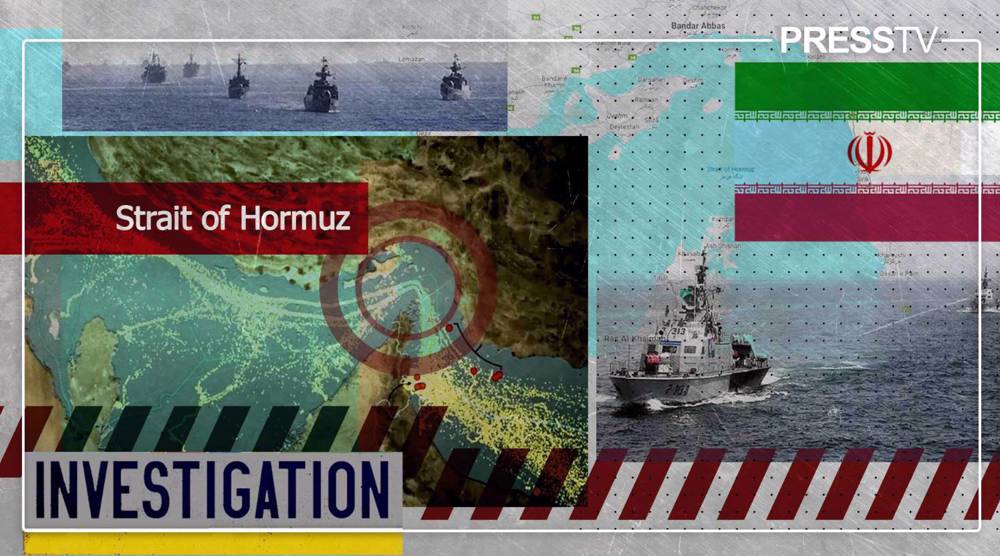
After forty days of determined fightback against an unprovoked war of aggression, the Islamic Republic of Iran has transformed the world’s most vital energy chokepoint into an instrument of strategic permanence.
Just three days after a ceasefire halted the joint US-Israeli aggression that began on February 28, 2026, the Strait of Hormuz remains under effective Iranian management, a fact that international political commentators have widely described as a thumping Iranian victory.
This narrow waterway, which at its most constricted point measures just 21 nautical miles across, is not merely a maritime passage but the structural heart of the global energy system.
Every day under normal conditions, approximately 20.9 million barrels of oil—one-fifth of worldwide consumption—and over 20 percent of global liquefied natural gas trade flow through its constricted channels.
For the Islamic Republic, the strait is neither a bargaining chip nor a threat but an immutable geographic endowment: a permanent source of leverage rooted in 1,600 kilometers of northern coastline, strategically positioned islands that function as unsinkable platforms, and an asymmetric military doctrine that renders conventional naval superiority irrelevant.
As the Leader of the Islamic Revolution, Ayatollah Seyyed Mojtaba Khamenei, declared on April 9, marking the fortieth day since the martyrdom of his predecessor, Iran will now take the management of this waterway to an entirely new phase—one that transforms geographic destiny into enduring economic and strategic power.
US Senator Chris Murphy says Trump's war on Iran ended in total surrender granting Iran control over the Strait of Hormuz.
— Press TV 🔻 (@PressTV) April 8, 2026
Follow: https://t.co/LWoNSpkJSh pic.twitter.com/N89rAJE3qO
Geography of permanence: An unsinkable asset
The Strait of Hormuz is not a canal that can be bypassed nor a route that can be replicated.
At its narrowest navigable point, the strategic waterway measures just 21 nautical miles—approximately 39 kilometers—in width, with shipping lanes reduced to a mere two miles per direction.
Iran’s coastline stretches more than 1,600 kilometers along the northern arc of the Persian Gulf and the Sea of Oman, giving the Islamic Republic an unbroken line of territorial oversight.
Strategically positioned islands—Qeshm, Hormuz, Larak, Abu Musa, and the Tunbs—serve as forward operating platforms, what military analysts call “unsinkable aircraft carriers.”
From these sovereign outposts, the Islamic Revolution Guards Corps (IRGC) Navy deploys persistent surveillance drones, coastal missile grids, and fast-attack craft.
Because the entire waterway lies within 24 nautical miles of Iranian territory, the governing legal regime under the United Nations Convention on the Law of the Sea is not free transit passage but innocent passage—a distinction that grants Iran legitimate authority to regulate vessel movement.
Leveraging Strait of Hormuz, Iran turns US sanctions on its headhttps://t.co/VFGi2O4CW9
— Press TV 🔻 (@PressTV) April 5, 2026
Numbers that define global dependence
Under normal conditions before the aggression, the Strait of Hormuz hosted a dense, predictable flow of global commerce.
Detailed maritime tracking data shows that approximately 130 to 140 vessels transited the strait daily, a figure that translates to roughly 4,000 ships per month and an astonishing 48,000 to 50,000 ships annually.
Among these, oil and gas tankers consistently dominated the composition, representing between 37 and 60 percent of all traffic depending on seasonal and market variables.
Very Large Crude Carriers, each capable of holding up to 2 million barrels of crude, accounted for approximately 35 percent of tanker movements, followed by Suezmax and Aframax tankers.
Beyond oil, bulk carriers transporting iron ore, grain, and coal made up roughly 30 to 40 percent of daily passages, while LNG and LPG carriers—though a smaller share by count, at roughly 100 transits per month or 1,200 annually—represented a strategically critical layer given that approximately 20 percent of global LNG trade flows through this same corridor.
The strait carries approximately 20.9 million barrels of oil per day, equivalent to 20 percent of all oil consumed worldwide and 25 to 27 percent of global seaborne oil trade.
In economic terms, the energy value transiting the strait exceeds $1 billion per day in oil alone. These figures are not abstractions; they are the structural foundation upon which Iran’s strategic leverage rests.
✍️ Viewpoint - Iran controls Strait of Hormuz, dictates terms of war and peace as US excursion backfires
— Press TV 🔻 (@PressTV) April 4, 2026
By Pravin Sawhneyhttps://t.co/QYMwBvwiNH pic.twitter.com/aktWuIkzUg
Maritime traffic collapse: From density to near-zero
The effectiveness of Iran’s strategic doctrine was demonstrated within days of the launch of the war of aggression.
By early March 2026, a detailed AIS-based observational snapshot captured 978 vessels present within the chokepoint zone, including 342 tanker-class ships—many of them stranded or held in anchorages as commercial traffic ground to a halt.
What had been 130 daily transits fell to near zero.
Maritime intelligence tracking confirmed that as of March 19, 1,290 foreign-flagged cargo and tanker vessels remained inside the Persian Gulf, unable to exit.
The composition of this stranded fleet revealed the strait’s true economic weight: bulk carriers formed the largest segment with 415 vessels immobilized, followed by 341 general cargo ships.
Crucially, 283 crude oil tankers and 226 oil products tankers were also trapped—representing a substantial chunk of global energy transport capacity.
Even the specialized gas carrier fleet was severely impacted, with 51 LNG tankers stuck in the Persian Gulf at a time when the world was already facing gas supply pressures.
Container shipping, which operates on just-in-time network logistics, suffered a severe blow as well; 119 container vessels—including 17 ultra-large container vessels above 100,000 deadweight tons—were effectively frozen, holding over 270,000 TEU of cargo valued at roughly $10 billion.
This represented not merely a disruption but a near-total evacuation of commercial shipping from the world’s most important energy artery.
Over 1,000 vessels became backed up across the Persian Gulf, including 187 fully loaded tankers carrying a combined 172 million barrels of oil.
Shipping insurance premiums soared, carriers declared force majeure, and global energy markets experienced price shocks unseen in decades.
The message was unmistakable: Iran does not need to sink a single warship to assert control. It only needs to demonstrate that the water is unsafe for commercial traffic—and the market does the rest.
Strait of Hormuz is Iran’s ‘nuclear weapon’ that forced US retreat: Russia’s Medvedevhttps://t.co/ogo5e1Q0zi
— Press TV 🔻 (@PressTV) April 8, 2026
Tanker economics: Record earnings and the cost of war
The financial impact of Iran’s control over the strait is most clearly visible in the tanker market, where earnings have shattered all historical records.
According to industry data, weighted-average tanker earnings reached $133,735 per day in March 2026, more than four times the 2025 average and the highest level ever recorded.
Very Large Crude Carriers, each capable of hauling up to 2 million barrels, were earning approximately $200,000 per day by late March, while Suezmax tankers surged to $330,000 per day and Aframax to $280,000 per day—both at unprecedented highs.
More dramatic figures emerged from the spot market, where some VLCCs commanded daily rates between $400,000 and $420,000, driven not by normal supply-demand dynamics but purely by war risk compensation.
The crisis has fundamentally altered global oil trade routes.
With the Strait operating at just 1 to 5 percent of normal capacity, Asian and European refiners have scrambled for alternative supplies from the US Gulf and West Africa, triggering a 41 percent drop in available VLCCs in the Mexican Gulf within a single month.
This rerouting has forced tankers onto much longer voyages around the Cape of Good Hope, effectively withdrawing additional fleet capacity from the market and ensuring that shipping costs—and thus energy prices—will remain elevated for the foreseeable future.
"We’re really not as powerful as we said we were"
— Press TV 🔻 (@PressTV) April 10, 2026
American broadcaster Tucker Carlson says "no more lying", as the US was unable to force Iran to open the Strait of Hormuz despite claiming to be the strongest military in the world.
Follow: https://t.co/LWoNSpkJSh pic.twitter.com/zQgp7f7vdD
Tollbooth revolution: Monetizing the chokepoint
During the forty-day war, Iran moved decisively to activate a new phase of strait management. It has now proposed a transit fee of $1 per barrel of oil—approximately $2 million per supertanker.
The potential annual revenue from such a system is staggering: between $70 billion and $100 billion per year. To place this in perspective, Iran’s total oil export revenue in 2024 was approximately $46.7 billion.
A toll system could generate nearly double that amount without selling a single additional barrel of crude, a masterstroke from the Iranian side.
Importantly, friendly vessels—particularly those from China, Russia, and Pakistan—pay tolls in Chinese yuan, Russian rubles, or cryptocurrencies such as USDT and Bitcoin, ensuring safe and uninterrupted passage while actively reducing reliance on the US dollar.
This policy transforms the strait from a passive transit route into an active economic asset, rivaling the Suez Canal’s monthly revenue of roughly $8 billion for Egypt.
✍️ Analysis - Why no power can undermine Iran's eternal dominance over the Strait of Hormuz
— Press TV 🔻 (@PressTV) April 10, 2026
By Mohammad Molaeihttps://t.co/ej1kJTj9FV
Asymmetric arsenal: Cost-exchange dominance
Iran’s military-technological achievements during the recent war of aggression have demonstrated a smart economic logic that favors the defender against the aggressor.
The Shahed-136 loitering munition costs approximately $20,000 to produce. The American SM-6 interceptor missile costs roughly $4 million per unit.
Iran can launch two hundred drones for the price of a single American interceptor.
During saturation attacks executed in Operations True Promise 1, 2, and 3, Iran overwhelmed advanced Aegis defense systems not with superior technology but with overwhelming quantity.
Even if 95 percent of incoming drones are intercepted, the remaining five percent can cripple a billion-dollar destroyer or a vital oil tanker.
This cost-exchange ratio ensures that any prolonged naval confrontation in the confined waters of the strait becomes economically unsustainable for any adversary.
These drones can be launched from almost any point within all of Iran, making enemy naval superiority or coastal invasion pointless, and there are also tens of thousands of shorter-range drones at the ready, as well as missiles.
Mining option: A low-cost, high-impact deterrent
Beyond drones and missiles, Iran possesses a capability that renders the strait permanently vulnerable to disruption: naval mine warfare.
Using Fajr-5 rockets fired from a range of 70 kilometers, Iran can deploy magnetic, intelligent, and advanced mines along the entire length of the strait without using surface vessels. Each mine costs Iran a few thousand dollars.
Clearing such a minefield would require a coalition navy no less than six months of dangerous, slow-speed operations—during which the global economy would face crippling energy shortages and food supply disruptions.
The ancillary cost to Iran is minimal, while the adversary suffers billions of dollars in daily losses. This is not a hypothetical scenario but a demonstrated capability that forms the bedrock of Iran’s permanent deterrence, according to experts.
Strait of Hormuz is Iran’s ‘nuclear weapon’ that forced US retreat: Russia’s Medvedevhttps://t.co/ogo5e1Q0zi
— Press TV 🔻 (@PressTV) April 8, 2026
Beyond oil: The Strait as a food security weapon
The Strait of Hormuz’s influence extends far beyond the energy sector. Iran is the world’s largest source of urea, a nitrogen fertilizer vital to global agriculture.
The broader Persian Gulf region dominates this trade, and any disruption in transit automatically drives international urea prices up by 25 to 30 percent.
This price surge directly disrupts fertilizer supply chains for major importing countries such as India, Brazil, Pakistan, Bangladesh, and most African nations.
The consequence is a cascading food crisis: soaring wheat and rice prices, worldwide food inflation, and a direct threat to the food security of billions of people.
Thus, the Strait functions as a dual chokepoint—for both energy and food—giving Iran the ability to influence the global economy without launching a single additional missile.
Ceasefire reality: Victory through resilience
Following the ceasefire that took effect on April 8, 2026, the strategic balance in the Persian Gulf has been irrevocably altered. International political commentators across Western and Eastern media have described the outcome as a clear Iranian victory.
During the 40-day unprovoked and illegal war of aggression, Iran demonstrated the ability to reduce daily traffic from approximately 140 vessels to near zero within days.
By early March, over 1,000 vessels were backed up in the Persian Gulf, including 187 loaded tankers carrying 172 million barrels of oil.
Global shipping insurance premiums soared, and shipping companies declared force majeure, refusing to send crews into the war zone.
The United States, despite its overwhelming conventional firepower, found itself unable to immediately restore order.
This performance has validated what Iranian strategists have long maintained: control over the Strait does not require full closure—only the credible threat of disruption.
🔴 Iran's Leader of the Islamic Revolution, Seyyed Mojtaba Khamenei, issues a message on the occasion of the 40th anniversary of the martyrdom of the late Leader of the Islamic Revolution
— Press TV 🔻 (@PressTV) April 9, 2026
🔺 Ayatollah Khamenei: Presence of people on the streets must continue like past 40 days pic.twitter.com/CuOIe4GyYn
New phase of management: Leader’s directive
On April 9, the Leader of the Islamic Revolution, Ayatollah Mojtaba Khamenei, issued a definitive statement marking the fortieth day since the martyrdom of his predecessor, Ayatollah Seyyed Ali Khamenei.
In that message, he declared: “We will definitely take the management of the Strait of Hormuz to a new phase.”
This new phase includes selective and intelligent control over vessel traffic, non-dollar toll collection, and the transformation of all external threats into opportunities to reformulate the rules of engagement in the Persian Gulf.
He also emphasized that Iran will demand full reparations for all damages caused by the aggressors, as well as blood money for the martyrs and compensation for the wounded.
The Strait of Hormuz, in this vision, is no longer anyone’s backyard—it is the sovereign territory of an established, solid, and indestructible deterrent power.
Why can no power undermine this dominance
Iran's eternal dominance over the Strait of Hormuz rests on three unchangeable foundations.
First, geography cannot be relocated: the strait is a fixed chokepoint with no viable alternative at scale, and Iran’s 1,600-kilometer coastline is a natural wall that no invading force can capture or hold without well over one million men and logistical support beyond any navy’s capacity.
Second, asymmetric technology ensures permanent leverage: low-cost drones, coastal missile grids, and naval mines give Iran high disruption potential at minimal expense.
Third, global dependence is structural: Asia receives approximately 75 percent of its energy imports via this corridor, and there is no short-term substitution capacity.
These three constants—geography, asymmetry, and dependence—create a permanent leverage triangle that no amount of military pressure or diplomatic coercion can dissolve.
🔴 Senior security official to Press TV: if this ceasefire is broken, the Zionist regime will be responsible, and we will punish the aggressor — and the calm that resulted from the guided reopening of the Strait of Hormuz will quickly come to an end. pic.twitter.com/yd3pNCBKte
— Press TV 🔻 (@PressTV) April 8, 2026
Arithmetic of eternal leverage
Iran wants three things from the Strait of Hormuz: revenue, security, and strategic leverage.
Economically, it is transforming the strategic Persian Gulf waterway into a tollbooth, generating $70 to $100 billion annually.
Militarily, it uses narrow geography and cheap, mass-produced drones to neutralize any technological edge an adversary might possess.
Strategically, it holds the global economy—both energy and food supply chains—as a guarantee that any existential threat to Tehran will trigger an existential economic crisis for the rest of the world.
With approximately 50,000 ships transiting annually, over 7 billion barrels of oil moving through its waters, and up to $100 billion in potential toll revenue, the arithmetic of power is unmistakable.
The language of threats directed at Tehran will always be met with the quiet, undeniable reality of the map: the Strait of Hormuz is, and will remain, Iran’s eternal strategic territory.
 This makes it easy to access the Press TV website