

The United States has secured discounted Venezuelan oil and a 35% stake in a private oil venture under an agreement giving Washington broad access to the country's oil reserves, with no clear benefits for Venezuela, according to a report.
US President Donald Trump announced the deal in late August, touting it as the “biggest oil deal in world history.” It was signed on behalf of Washington by Secretary of State Marco Rubio and War Secretary Pete Hegseth.
The full text of the agreement remained closely guarded until US investigative news outlet ProPublica reviewed a copy.
According to the report, the 18-page agreement gives Washington the right to buy 20% of the oil produced by North American Blue Energy Partners (NABEP) at $30 a barrel, well below recent market prices.
The deal also grants the US priority to purchase the company’s remaining output for 50 years and the right to buy its entire supply in a national emergency.
Under the agreement, the US government is acquiring a 35% stake in Betancourt’s firm, NABEP, through the purchase of shares in its Barbados-registered parent company.
The venture would be overseen by a seven-member board for an initial 15-year term, with a majority of its members required to be US citizens. The agreement does not require any Venezuelan government representation on the board.
The controversial deal’s main private-sector partner is Venezuelan billionaire Alejandro Betancourt, whose business dealings have faced money-laundering investigations in several countries.
Although the White House has said the deal could bring Venezuela an "estimated $200 billion in royalties and tax payments," the agreement does not guarantee those payments.
Marked as a sensitive government document, the agreement also contains a confidentiality clause restricting the company from disclosing its existence and terms.
The White House has defended the arrangement, saying it would help "stabilize Venezuela’s economy and deliver lasting benefits to both countries."
White House spokesperson Taylor Rogers said, “This historic deal marks a major step toward stabilizing Venezuela’s economy after years of hyperinflation and almost no new investment, while more than doubling the United States’ oil reserves.”
Former US diplomats and congressional staff cited by ProPublica said questions could intensify if Democrats gain control of one or both chambers of Congress in the midterm elections, particularly over the choice of Betancourt and the deal’s terms.
The United States abducted Venezuelan President Nicolás Maduro and his wife, Cilia Flores, during a large-scale military operation in early January and transferred them to the US to face "criminal charges."
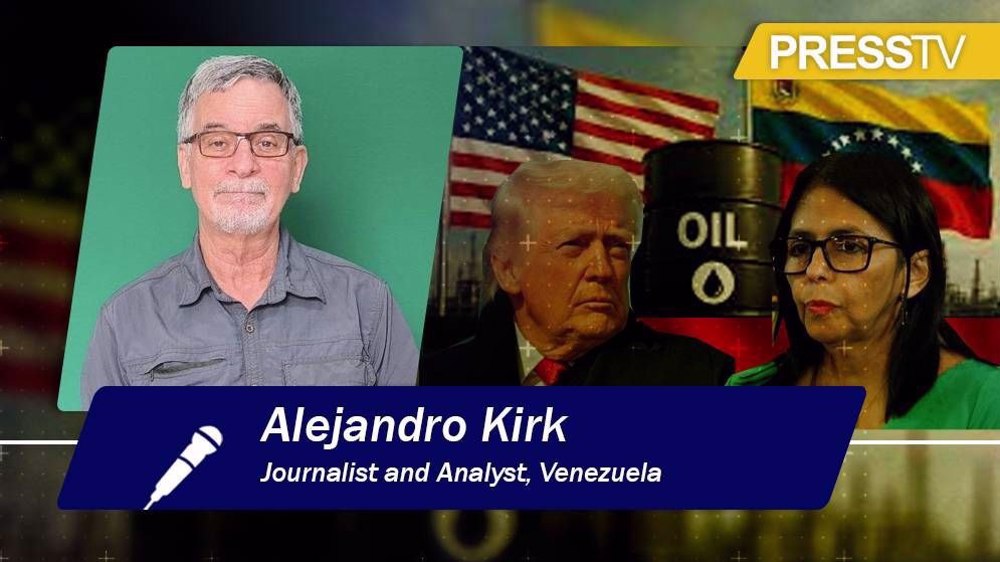
Trump subsequently said Washington would play a central role in running the country indefinitely until a formal transition of power can take place. He also said that US oil companies would enter the country to revive its oil industry.
“We’re going to take back the oil that, frankly, we should have taken back a long time ago,” Trump said at the time, adding that the United States would recoup the costs of its operation from Venezuela’s oil wealth.
Venezuela holds the world’s largest proven oil reserves, estimated at more than 300 billion barrels. Much of the oil lies in the Orinoco Oil Belt and consists of heavy, sulfur-rich crude that is more difficult and costly to extract and refine than lighter grades.
Tapping these reserves requires substantial investment and specialized technology, making Venezuela’s petroleum wealth both a major strategic asset and a costly undertaking.
Despite its vast reserves, Venezuela was producing only about 1.25 million barrels of oil per day under Maduro, well below its potential after years of underinvestment and US sanctions.
 This makes it easy to access the Press TV website