Fourteen years after US delisting, MKO terror cult’s political rebranding collides with its violent legacy
By Press TV Website Staff
Fourteen years ago, on September 28, 2012, Washington removed the Mojahedin-e Khalq Organization (MKO) from its list of Foreign Terrorist Organizations, ending a designation that had remained in place since 1997.
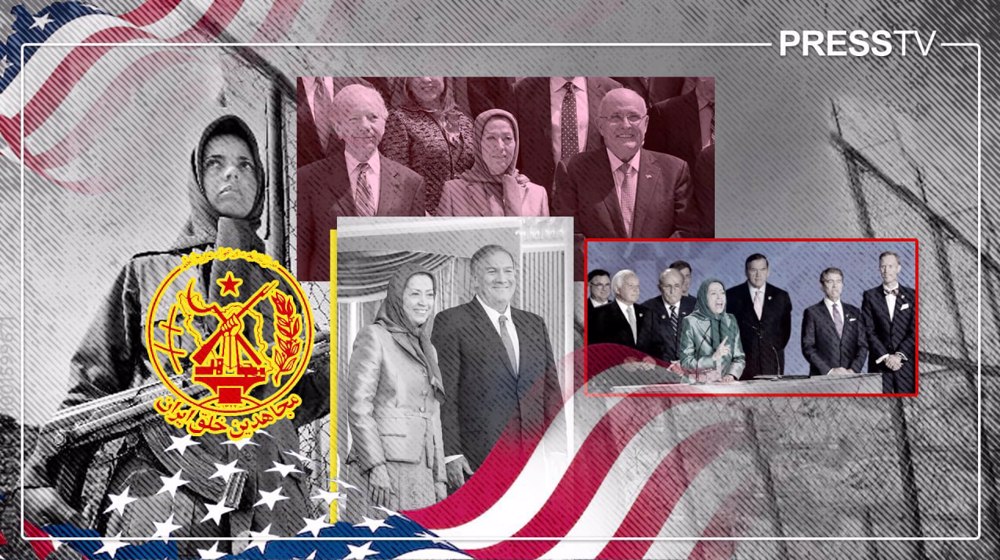
The decision followed years of intense and costly political lobbying that brought together former American officials, members of the US Congress, lawyers and political advocates – all of them sharing common hostility toward the Islamic Republic of Iran.
Presented publicly as a matter of law and humanitarian concern, the delisting nevertheless provided the MKO with an opportunity to reconstruct its international image – from a notorious terrorist outfit to a so-called “political opposition.”
An organization with a long record of armed attacks, assassinations, cooperation with the Iraqi dictator Saddam Hussein and coercive internal practices could now present itself to Western audiences as a democratic Iranian “opposition” movement.
That transformation remains one of the most striking examples of political rebranding surrounding an organization whose history is replete with terrorism and extremism.
The MKO's evolution tells a very different story from the one promoted by its supporters.
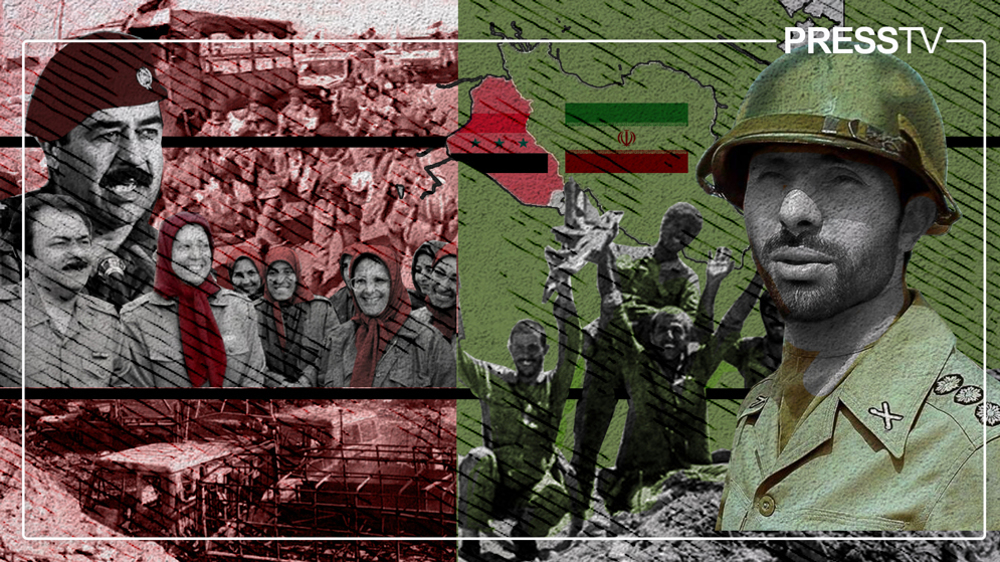
Established in the 1960s with an ideological tilt toward Marxism, it eventually became an armed organization operating from Iraqi territory under Saddam’s regime, especially during the eight-year war imposed on the Islamic Republic of Iran in the 1980s.
Its history includes targeted attacks against elected Iranian government officials and civilians, the killing of American personnel in Iran, military aggression against its own country alongside Ba’athist forces, and involvement in the suppression of anti-Saddam uprisings in Iraq.
Yet despite that record, the organization succeeded in cultivating influential allies in Washington, because of their shared hostility toward the Islamic Republic of Iran.
Its rise in the West was built through an extensive campaign of lobbying, political networking, paid speaking engagements and legal challenges. Former senior American officials from both major parties publicly advocated on its behalf, while members of Congress repeatedly pressed successive administrations to reconsider its designation.
The campaign eventually succeeded. What followed, however, was not the emergence of the Iranian “opposition” movement that its foreign supporters had envisioned. Instead, the MKO became increasingly dependent on an aging membership, foreign political patrons and an elaborate political and media infrastructure outside Iran.
Its eventual isolation in Albania illustrates the limits of attempting to manufacture political legitimacy abroad while pushing an agenda that has very few takers today.
A history shaped by violence and political betrayal
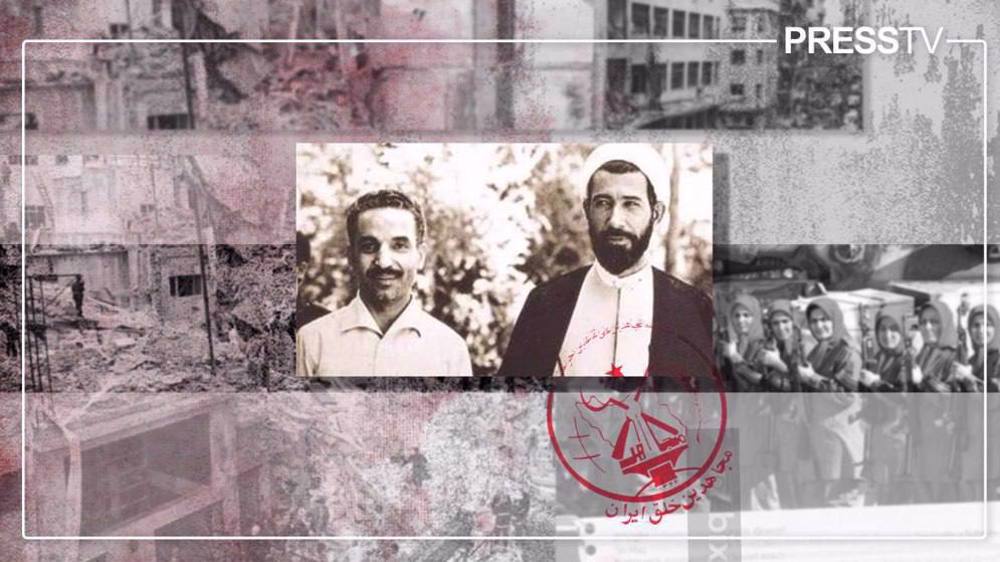
The organization emerged in the 1960s and its initial objective was to overthrow the Pahlavi monarchy, but armed struggle soon became central to its methods.
After the 1979 Islamic Revolution, the organization rapidly entered into a violent confrontation with the Islamic Republic, which rapidly escalated into an armed campaign against government institutions, officials and supporters.
Among the most consequential attacks came in June 1981, when a bombing at the headquarters of the Islamic Republic Party in Tehran resulted in the martyrdom of Ayatollah Mohammad Beheshti and scores of other officials. Later that year, President Mohammad Ali Rajai and Prime Minister Mohammad Javad Bahonar were also assassinated by the terror group.
The terror cult subsequently became responsible for thousands of cold-blooded killings during its armed campaign. The total number of people killed by MKO is approximately 16,000.
The organization's relationship with Baathist Iraq represented an even more consequential stage in its development. During the 1980s war, the MKO moved its principal military infrastructure into Iraq and entered into an alliance with Saddam Hussein. Its forces subsequently conducted military attacks against Iran from Iraqi territory and fought alongside Saddam's forces.
The relationship did not end with aggression against Iran. The MKO also assisted Saddam in suppressing the Kurdish and Shiite uprisings that erupted in Iraq in 1991. Former members have described the participation of MKO forces in those operations.
The organization's violent record also extended to Americans. During the 1970s, MKO operatives targeted American military personnel and civilians working in Iran. Lt. Col. Lewis L. Hawkins was assassinated in 1973, while Army officers Col. Paul Shaffer and Lt. Col. Jack Turner were killed in 1975. American civilian contractors William C. Cottrell Jr. and Donald G. Smith were murdered in 1976.
The terror organization was also involved in plots against American diplomatic and political targets, including an attempted assassination of US Ambassador Douglas MacArthur II in 1970.
Two years later, a bomb was detonated at a Tehran mausoleum shortly before President Richard Nixon was scheduled to attend a ceremony there.
The MKO's campaign subsequently acquired an international dimension. In April 1992, supporters of the cult carried out simultaneous attacks against Iranian diplomatic facilities across North America and Europe. In New York, armed MKO terrorists entered Iran's Mission to the United Nations and took hostages. Similar violent attacks occurred in cities including Ottawa, Bonn, Hamburg, The Hague, London and Paris.
This record became a major obstacle to the organization's later attempt to present itself as a conventional democratic “opposition” movement. The political image promoted in Washington was increasingly difficult to reconcile with its decades-long history of armed activity.
Building influence in Washington
Long before the 2012 delisting, the MKO had developed a sophisticated system for cultivating political relationships in the United States. Even while designated as a terrorist organization, it found ways to establish connections with American politicians and political networks.
A 1985 New York Times report noted that at least 19 members of US Congress had signed letters or statements distributed by the terror organization, apparently without realizing that the US State Department regarded the MKO as responsible for killing Americans.
The organization also established groups that presented themselves as humanitarian or political organizations. One example was the so-called Iran Relief Fund, which solicited donations from Americans. In 1984, the organization reportedly collected almost $100,000 in Maryland and Virginia before authorities moved against it after its connection to the MKO became known.
By the early 1990s, the MKO had established contacts reaching into the upper levels of American politics. Reports in the American media in the 1990s described contacts between the organization and figures surrounding the incoming Clinton administration, including a private letter from then-President-elect Bill Clinton to Massoud Rajavi and a meeting between an MKO foreign-policy adviser and Vice President-elect Al Gore.
At the same time, the organization was seeking support from influential pro-Israel political networks in Washington.
According to a 1993 Guardian report, MKO figures believed that gaining respectability and influence over the Clinton administration's Iran policy would require the backing of Washington's powerful pro-Israel lobby.
Politicians such as Gary Ackerman, Robert Torricelli, Dan Burton and Ileana Ros-Lehtinen became prominent supporters of the anti-Iran terror organization. MKO-related material appeared in the Congressional Record, while members of Congress participated in events and hearings supporting the group's campaign.
The common ground was not necessarily ideological. It was opposition to the Islamic Republic of Iran. That shared objective gave the MKO political value to actors who otherwise had little reason to embrace its ideology or history.
The relationship became particularly consequential in 2002. That year, the MKO publicly disclosed information concerning Iranian nuclear facilities at Natanz and Arak. The intelligence was subsequently linked to the Israeli regime, which had supplied the information to the organization for public release, revealing their inner dealings.
The episode became emblematic of the network surrounding the MKO: Israel supplied intelligence, the MKO served as the public messenger, and the revelation helped intensify international pressure on Iran.
The lobbying campaign that secured delisting
The campaign to remove the MKO from the terrorist list was unusually extensive. One of its most visible features was the recruitment of former senior US officials as public advocates.
They appeared at MKO events and delivered speeches supporting the group's removal from the terrorist designation. Reports placed individual speaking fees in the tens of thousands of dollars, with some appearances reportedly generating payments of between $20,000 and $50,000.
The roster crossed party lines. Former New York Mayor Rudy Giuliani emerged as one of its most prominent advocates, speaking at MKO gatherings in Europe and the United States.
Former UN ambassador and Trump aide John Bolton repeatedly argued that the designation was politically motivated and advocated a tougher American policy toward Iran. Former House Speaker Newt Gingrich also appeared at MKO events and promoted its anti-Iran cause.
Other Republican figures involved in the campaign included former Homeland Security Secretary Tom Ridge, former Attorney General Michael Mukasey and former FBI Director Louis Freeh.
The organization simultaneously recruited Democratic figures, helping give its campaign the appearance of bipartisan backing. Former Pennsylvania Governor Ed Rendell was among the more prominent Democratic supporters and openly discussed receiving substantial speaking fees. Former Vermont Governor Howard Dean and former New Mexico Governor and UN Ambassador Bill Richardson also publicly supported the terror group's position.
The practice generated criticism from American officials concerned about the relationship between the payments and an organization that remained formally designated as terrorist.
Senator John McCain repeatedly supported delisting and visited Camp Ashraf in Iraq, where he publicly expressed solidarity with MKO members. Senator Roy Blunt became a leading supporter of a bipartisan Senate initiative concerning the protection of MKO members in Iraq.
In the House, lawmakers including Ted Poe and Bob Filner pressed the administration to act. Nearly 100 representatives eventually backed H.Res. 60 during the 112th Congress, calling for the MKO to be removed from the terrorist list.
The political campaign was accompanied by a legal strategy. Former Attorney General Michael Mukasey and attorney Viet D. Dinh were among those involved in legal efforts challenging the State Department's handling of the terror organization's designation.
Court decisions in 2010 and 2012 placed additional pressure on the department, requiring it to act within deadlines established by the US Court of Appeals for the District of Columbia Circuit.
The organization had therefore created pressure on multiple fronts: politicians were demanding delisting, former officials were campaigning publicly, lawyers were challenging the designation in court, and the MKO continued to cultivate its image as a democratic “opposition” movement.
Eventually, the strategy succeeded. On September 28, 2012, then-Secretary of State Hillary Clinton announced the removal of the MKO from the Foreign Terrorist Organization list.
From political project to isolated enclave
More than a decade after delisting, the results of that project remain difficult to reconcile with the expectations created by its Western supporters.
The MKO succeeded in changing its legal status in Washington. It built relationships with prominent politicians. It also established an elaborate international lobbying network.
But it did not gain legitimacy anywhere. Instead, the terror cult became increasingly concentrated around its headquarters in Albania, where its members and political infrastructure were relocated after the closure of Camp Ashraf in Iraq.
The most serious confrontation with its Albanian hosts came in June 2023. Albanian police raided the MKO's Ashraf-3 compound near Tirana, confiscating computers and entering buildings on the site. The operation triggered resistance from residents and violent clashes with police, resulting in injuries on both sides.
The incident exposed the limits of the protection the organization had enjoyed in Albania. For a group accustomed to portraying itself as internationally protected, the raid was a major shock.
It also drew renewed attention to what was taking place inside Ashraf-3. The compound had evolved into a vast political and communications center, a hub for organized online influence operations directed against Iran.
In 2021, Facebook removed hundreds of accounts associated with a coordinated influence operation linked to the MKO's presence in Albania. It proved that Ashraf-3 was functioning not as a residential community but as an organized center for political messaging and digital activity.
Yet the deeper problem confronting the MKO is demographic and political. Its membership is aging, while the cult has struggled to attract a younger generation. Former members have described a highly controlled internal environment involving separation from family, intense ideological discipline and restrictions on members' ability to leave or maintain independent lives.
The limits of political reinvention
The MKO's history since 2012 can therefore be understood as a struggle between image and political reality. The terror cult won its campaign for delisting after years of lobbying, secured endorsements from prominent American politicians, established a new base in Albania and continued presenting itself internationally as the nucleus of a future Iranian government.
But the central objective remained elusive: demonstrating meaningful support from the international community. The larger political project has encountered a far more difficult obstacle, which is the lack of legitimacy and acceptance from both Iranians and non-Iranians.
The MKO managed to remove the “terrorist” label in the US. What it has not managed to remove is its real image and agenda that is all about terrorism and extremism.
$48bn verdict for General Soleimani assassination enters execution phase: Iran Judiciary
‘Why does world burn your flag?’: IRGC spokesman challenges Americans to question US policies
From ‘four weeks’ to month eight: US senator condemns GOP for refusing to end Trump’s war on Iran



VIDEO | Police fire tear gas at migrants on French beach
VIDEO | Brazil Presidential Election: Poll puts Lula four points ahead of Flavio Bolsonaro
Sanders raps Israel for barring Arab-led parties from election, urges end to US military aid
Israel kills Hamas commander, yet Hebrew media admits assassination strategy failing
14 years after US delisting, MKO terror cult’s political rebranding collides with its violent legacy
‘Why does world burn your flag?’: IRGC spokesman challenges Americans to question US policies
$48bn verdict for General Soleimani assassination enters execution phase: Iran Judiciary
VIDEO | ‘Trump’s Iran strategy is deepening the crisis, not solving it,’ analyst says



 PressTV NEWSLETTER
now
PressTV NEWSLETTER
now
 This makes it easy to access the Press TV website
