War spurs Iran’s push to develop Caspian energy frontier
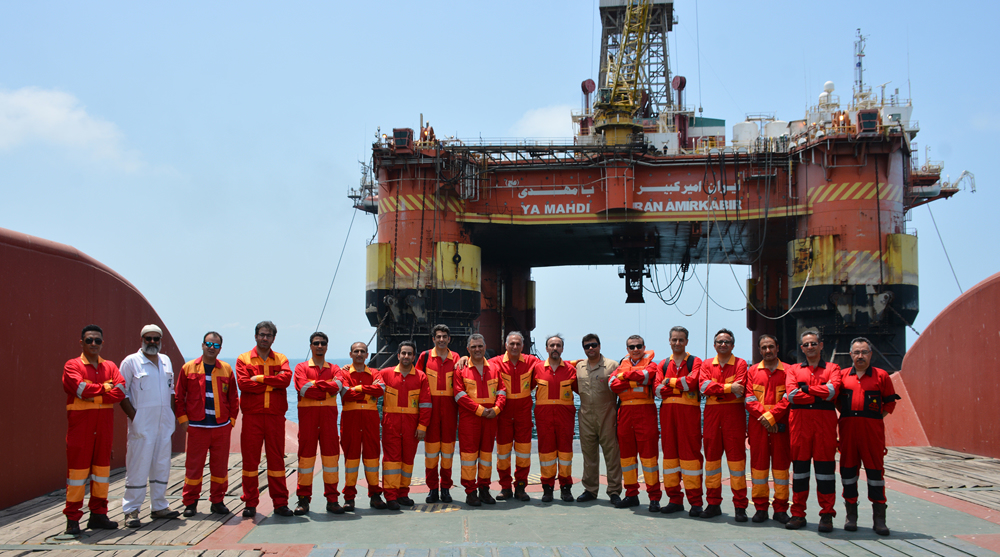
Iran is sending its Amir Kabir semi-submersible drilling rig back into the deep waters of the Caspian Sea, reopening offshore exploration that has been dormant for nearly a decade and giving its energy economy a new northern dimension.
The development arrives at a moment when the geography of energy security has acquired fresh importance for Iran as the war with the US and Israel has placed the country’s southern energy infrastructure and maritime environment under pressure.
Disruptions around the Persian Gulf and Strait of Hormuz have demonstrated how quickly risks in one part of the regional energy system can reverberate through global markets.
Against that backdrop, the Caspian offers Iran an additional energy frontier. Its importance lies in expanding exploration, developing resources and building stronger energy and commercial links with the economies surrounding the world’s largest inland sea.
Amir Kabir has a distinctive place in Iran’s offshore industry. The rig was designed for exploration in deep Caspian waters and has been the country’s key drilling asset for this environment.
It was taken out of service in 2016, and efforts are now under way to restore its technical and operational capabilities.
The rehabilitation program covers major systems and equipment, including cranes, industrial pipelines, control systems and other components affected by years of inactivity.
The platform weighs about 14,700 tons, can accommodate up to 120 people and is designed to operate in water depths of up to about 1,000 meters.
That capability matters because the geological structures identified in Iran’s Caspian sector increasingly lead into deeper waters.
Amir Kabir has already demonstrated the value of such a capability. During its earlier campaign, the rig drilled in the Sardar-e Jangal structure, where the presence of oil was established.
The Caspian Oil Company now intends to use the restored platform to continue exploring the deeper parts of the Iranian sector, potentially opening several new targets for geological and commercial evaluation.
New drilling will provide updated geological information, refine resource estimates and identify structures most suitable for future development.
The location of Caspian resources gives the project another dimension. Iran’s hydrocarbon producing areas are concentrated in the south and southwest, while its large northern population centers are separated from those resources by considerable distances.
A stronger domestic energy base in the Caspian region could eventually change that equation, with the provinces of Gilan, Mazandaran and Golestan standing at the center of this opportunity.
The Caspian Oil Company is already pursuing exploration in these provinces. Offshore exploratory drilling is under way off Gilan and in Block 18, while seismic surveys have been conducted across parts of Golestan’s onshore, offshore and shallow-water areas. Based on the results, the company plans to drill a well in Golestan next year.
This creates the possibility of a broader northern energy economy involving far more than hydrocarbon production. Ports and maritime services can expand alongside offshore activity.
Engineering companies can develop specialized capabilities, manufacturers can supply equipment and universities can train engineers and researchers for an industry operating in increasingly complex offshore environments.
Deep-water drilling is one of the most technically demanding areas of the petroleum industry. Bringing Amir Kabir back into operation consequently carries an important technological dimension.
The project requires expertise in drilling, subsea geology, seismic interpretation, offshore control systems, marine operations, equipment maintenance and environmental monitoring.
Every successful drilling campaign generates technical knowledge that can be applied to subsequent wells.
Iran’s experience with Amir Kabir has already created a domestic base of expertise in Caspian offshore operations. The platform was built in Iran by Sadra, while earlier drilling campaigns involved Iranian personnel and supporting vessels. The revival of the program can now build upon that accumulated experience.
The geographical position of Iran’s Caspian sector also opens a wider regional perspective.
The Caspian is surrounded by Iran, Kazakhstan, Turkmenistan, Azerbaijan and Russia. Several of those countries already possess major oil and gas production systems, export terminals and pipeline connections extending beyond the basin.
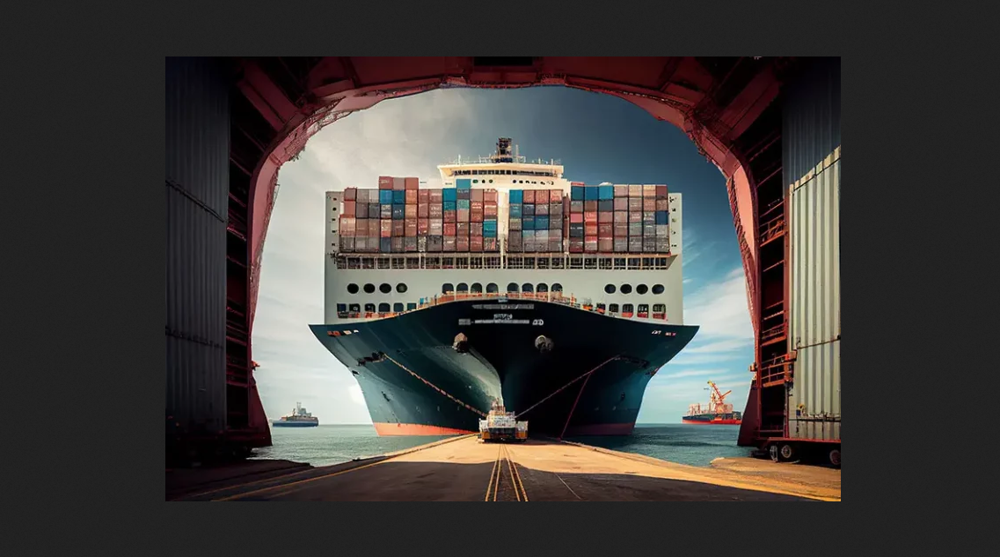
Kazakhstan, in particular, has developed a direct eastward oil route into China, operating a 965-kilometer pipeline since 2006. That infrastructure creates an intriguing possibility for Iran’s future Caspian production.
Tehran could potentially use the Caspian itself as a transportation space, shipping crude to a neighboring littoral state such as Kazakhstan and then entering an existing eastbound pipeline system serving China.
Oil and gas swaps, refined-product exchanges, electricity cooperation, petrochemical trade and other forms of energy commerce could become increasingly relevant as infrastructure linking the Caspian states develops.
The International North-South Transport Corridor adds another layer to this geography. Iran’s ports, railways and road network connect the Caspian region with the Persian Gulf and the Indian Ocean, giving northern energy activity access to a wider commercial system.
For Iran, this creates an opportunity to connect its energy resources with its broader strategy of becoming a transit and trade hub between the Persian Gulf, the Caucasus, Russia and Central Asia.
The Caspian can consequently be viewed as both a resource basin and an economic corridor.
The strategic value of geographic diversification has become particularly visible during the current war.
Iran’s southern energy system remains the core of its hydrocarbon economy, with major oil and gas production, processing and export infrastructure concentrated around the Persian Gulf and the country’s southwest.
The war has brought attacks and threats involving energy assets and shipping into sharper focus, while tensions around the Strait of Hormuz have added a major risk factor to regional energy flows.
The Caspian operates within a different geography, where energy produced in the north would serve a region of Iran geographically distant from the country’s principal southern fields and closer to the Caucasus, Russia and Central Asia.
That creates additional possibilities for domestic supply, regional exchanges and northern industrial development.
A Caspian resource base would not need to replicate the scale of Iran’s southern fields to have strategic value. Its importance could come from diversification itself: additional resources, infrastructure, markets and connections.
That is particularly relevant when global energy markets are increasingly sensitive to disruptions concentrated along major maritime chokepoints.
Iran connects 290MW Dalahoo power unit to grid, showcasing elite F-class turbine technology
Iran’s breakthrough in power generation from waste heat
Iran restores 40% of South Pars capacity after terrorist US-Israeli strikes



Untold story of July 31: Hours after US strikes, Iran locked onto F-35 and destroyed MQ-9 Reaper
Saudi warplanes bombard areas recently liberated in Yemeni army’s advances
VIDEO | Press TV's news headlines
New resolution and UNSC referral show IAEA continues to be weaponized by US, Europe against Iran
VIDEO | BRICS should continue to defend basic intl. rules, oppose protectionism: CGTN anchor
Oman deal will not mean reopening of Hormuz Strait: Iran FM
Clashes erupt in Germany protests demanding Merz’s resignation
Ansarullah takes over Bab al Mandab Strait


 PressTV NEWSLETTER
now
PressTV NEWSLETTER
now
 This makes it easy to access the Press TV website
