
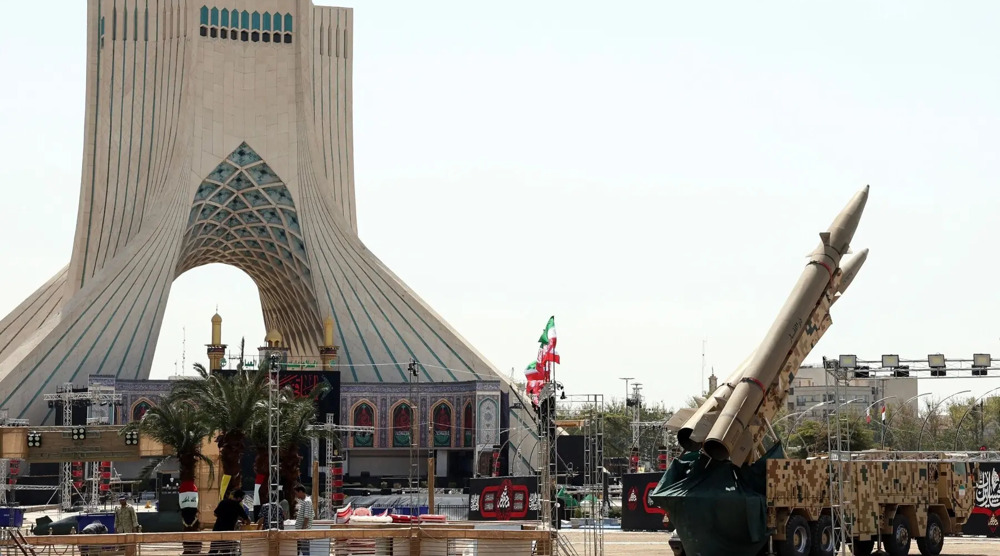
The Islamic Revolution Guards Corps (IRGC) has dismissed claims by US officials that Iran has only a limited number of missiles, highlighting that the Islamic Republic keeps the production line running.
IRGC spokesman Brigadier General Hossein Mohebbi made the remarks on Monday amid the United States’ latest decision to unveil new sanctions against Iran as part of a shift in its strategy aimed at covering up its defeat in the war of aggression against the Islamic Republic.
“Initially, some believed that Iran had only a limited number of missiles and that its stockpiles would eventually be depleted as the war continued,” Mohebbi said.
“However, that assumption proved incorrect, as Iran’s missile capability has remained sustained and its missile production has continued.”
He also noted that Iranian missiles have become more “technologically advanced” as they are no longer simply fired at a pre-determined target.
Iranian missiles can be guided and have their trajectory altered during flight, allowing them to identify and track their targets, he added.
During the war, Mohebbi said, the US targeted Iran’s infrastructure, including the South Pars gas field in Asaluyeh, prompting the Iranian armed forces to launch a wave of retaliatory missile strikes at the region’s infrastructure, interests, and centers affiliated with the United States and Israel.
The United States and Israel launched their illegal war of aggression against Iran on February 28 by assassinating the Leader of the Islamic Revolution, Ayatollah Seyyed Ali Khamenei, along with senior military commanders.
Forty days later, on April 8, the enemies were forced to accept a ceasefire amid Iran’s resistance, successful reprisal attacks, and a powerful grip on the Strait of Hormuz.
In July, the US conducted waves of deadly air raids on Iran and imposed a naval blockade of the country in violation of the Islamabad Memorandum of Understanding (MoU) with the Islamic Republic, signed on June 17, to end the war.
In response, the Iranian armed forces launched devastating attacks against strategic American targets across West Asia and declared the Strait of Hormuz closed to all traffic.
The IRGC spokesman said the US has shifted its focus to economic warfare, because Iran’s military capabilities have made it difficult for the enemy to easily achieve its objectives militarily.
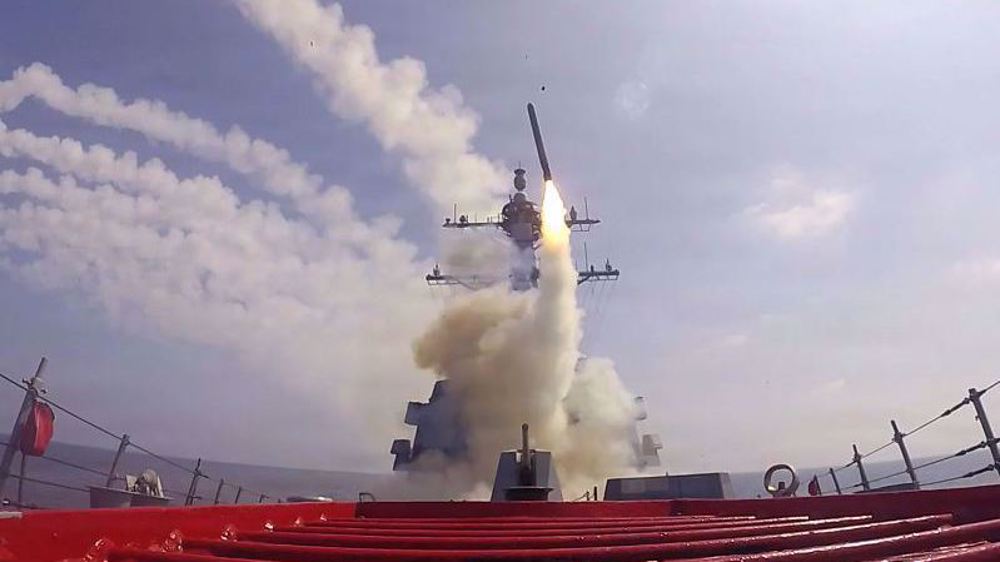
He also said the enemy faced and suffered a depletion of its strategic weapons stockpiles, which is regarded as one of the achievements of the war for the Islamic Republic.
“The US military doctrine is based on the ability to fight on multiple fronts simultaneously. However, in this war, we created conditions that raised concerns about its ability to manage multiple fronts at once,” Mohebbi said.
“The adversaries were faced with the concern that if a conflict were to break out in the Western Pacific, or if the United States came under threat from China or Russia, what strategic and long-range weapons would they have available to respond with.”
 This makes it easy to access the Press TV website