
By Arman Shariati
The Saudi infrastructure spurring its petroleum economy is under sustained, repeated, and increasingly precise retaliatory attacks from the Yemeni armed forces as tensions escalate.
For a kingdom that has spent hundreds of billions of dollars constructing what it imagined would be an impenetrable security architecture, US fighter jets, French air defense batteries, German naval vessels, British training contracts, and the crown jewel of it all, the US-built Terminal High Altitude Area Defense (THAAD) system, the recent developments have sent jitters through the power corridors of Riyadh.
Yemeni armed forces lack sophisticated weapons industries, satellite constellations, or foreign exchange reserves. Still, the Sana’a government has managed to effectively sever Saudi Arabia’s access to Bab al-Mandeb, the narrow maritime chokepoint through which a critical fraction of global energy trade flows.
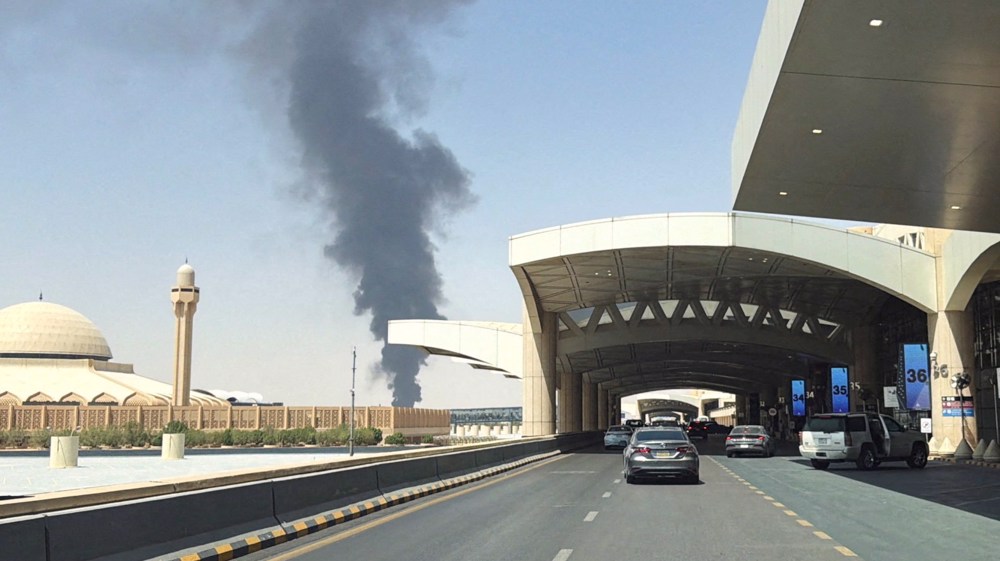
It is this force that compelled the closure of King Khalid International Airport in Riyadh through drone and missile operations, a siege-for-siege response to the years-long Saudi aerial and maritime blockade that has strangled Yemen’s civilian population.
It is this force whose precision strikes on Aramco facilities at Abqaiq and Khurais, on pumping stations, and on refinery infrastructure across the kingdom’s vital petroleum belt have demonstrated, with regularity, that Saudi Arabia cannot defend what matters most to it.
The kingdom’s response has been a characteristic search for foreign saviors. Delegations to Islamabad requesting Pakistani air defense expertise. Urgent consultations in Ankara. Emergency procurement discussions in Washington and London. The image projected is not of a self-sufficient regional power but of an anxious client state, checkbook in hand, shopping for solutions to a self-imposed problem its own military has proven structurally incapable of solving.
Air defense collapse, and the THAAD failure
Before turning to the specific subject of Saudi airstrikes against underground Yemeni installations, the most visible symptom of strategic incoherence, it is worth situating that failure within the broader collapse of Saudi military credibility.
Saudi-backed ground forces in Yemen have consisted primarily of foreign forces, Yemeni tribal militias of variable loyalty, and special operations elements from various foreign actors. Against the organized, ideologically motivated, and tactically experienced ground forces of the Sana’a government, they have repeatedly failed to hold terrain.
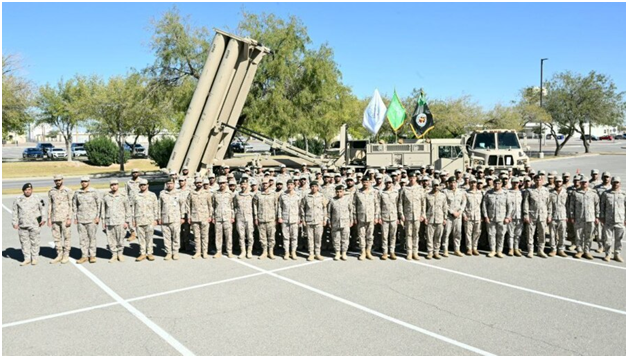
More damaging to Saudi prestige than any ground reversal, however, has been the comprehensive failure of domestic and foreign air defense systems. The kingdom paid in excess of $15 billion for its THAAD battery, a system purpose-built to intercept ballistic missiles.
The procurement involved years on the American waiting list, diplomatic negotiations at the highest levels, and the deployment of US military personnel to operate and maintain the system.
Saudi leadership purchased THAAD not merely as a military capability but as a political statement: ‘We have bought the best the Americans make, and we are protected.’
Yemeni ballistic missiles, launched in single-digit coordinated salvos, sometimes as few as two or three per strike, have penetrated this layered defense with regularity. Whether through saturation, trajectory manipulation, or simple exploitation of the system’s well-documented limitations against short-range ballistic missiles, Yemeni forces have consistently gotten through.
The Air Force that cannot win
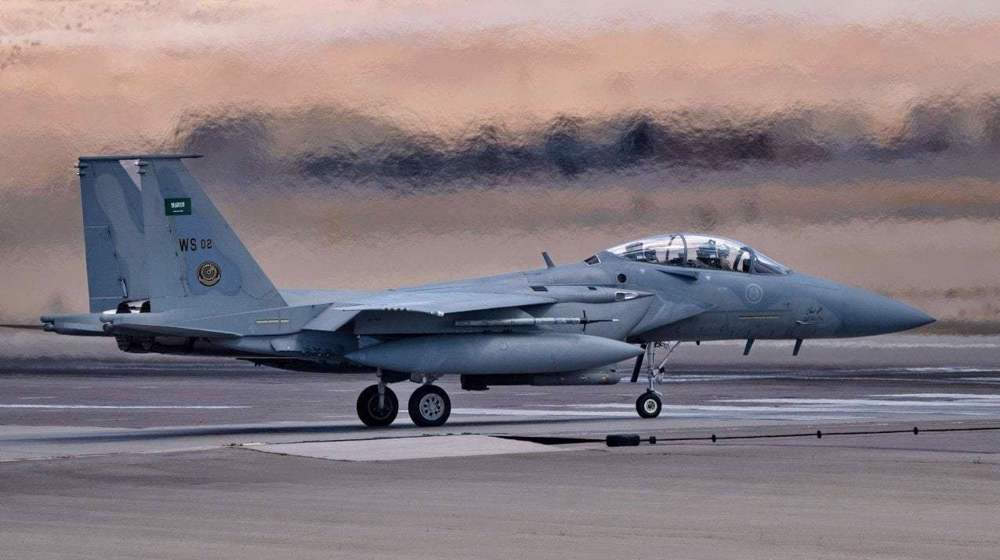
By almost any metric of hardware quality, the RSAF is a formidable force on paper. It operates the F-15SA, the Saudi Advanced variant of the F-15 Eagle, in numbers that make it the second-largest F-15 fleet in the world, behind only the United States Air Force itself.
The F-15SA incorporates the APG-63(V)3 Active Electronically Scanned Array radar, the latest mission computer architecture, digital fly-by-wire flight controls, and compatibility with the full American precision munitions inventory.
Alongside the F-15 fleet, the RSAF fields Eurofighter Typhoons, Panavia Tornadoes, and a supporting infrastructure of tankers, electronic warfare aircraft, and intelligence-gathering platforms that most regional air forces can only dream of.
The RSAF has operated over Yemen since March 2015, a decade, with complete air superiority. There is no Yemeni air force capable of contesting the airspace. Saudi pilots fly with impunity in the sense that no enemy aircraft will challenge them.
The operating environment, in terms of air-to-air threat, is essentially zero.
And yet the strategic outcome is failure. The Yemeni military’s ability to launch ballistic missiles, cruise missiles, and drones at targets inside Saudi Arabia, and to do so with increasing accuracy and frequency, has not been degraded in any measurable way.
The missile production infrastructure has not been destroyed. The command structure has not been decapitated. The flow of materiel has not been stopped.
What the RSAF has accomplished, at tremendous financial cost and with horrific humanitarian consequences for the Yemeni population, is the destruction of civilian infrastructure – bridges, markets, hospitals, water treatment facilities, and residential neighborhoods.
The underground problem
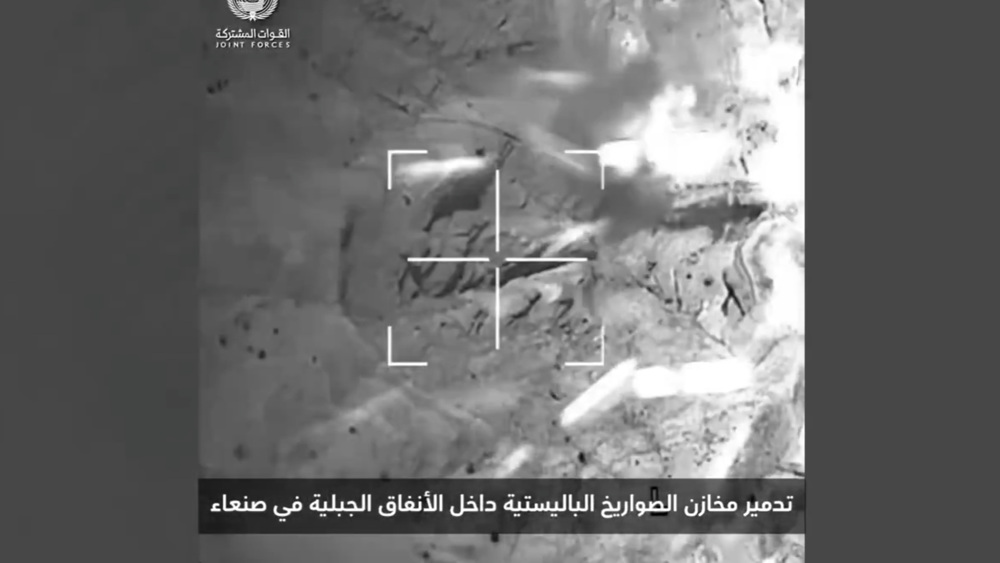
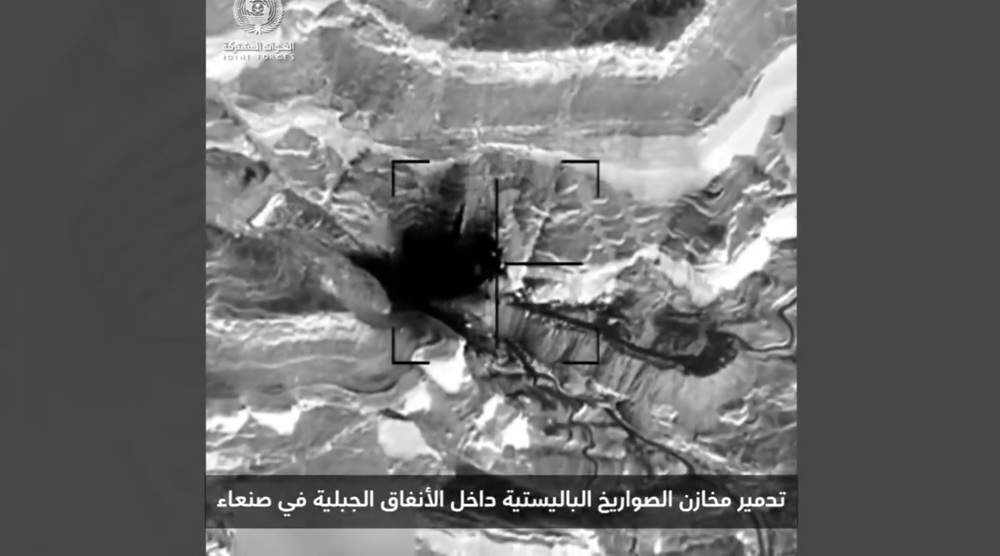
The specific absurdity the Saudi Ministry of Defense has presented to the world as evidence of effectiveness involves strikes against underground installations in northern Yemen.
The footage is remarkably consistent in its production values and in its uselessness as evidence, involving dramatic angles, slow-motion detonations, epic orchestral or nasheed-inflected soundtracks, plumes of smoke and dust rising from ridgelines or hillsides, and the implicit claim that something of military significance has been destroyed.
What is actually being shown is a hole in a mountain, or the entrance to a tunnel, or a surface vent of an underground complex.
To understand why this constitutes the expenditure of very expensive munitions for essentially no military return, one must understand the history of underground military infrastructure in Yemen, and the specific context in which Ansarullah developed it.
The Yemeni military in its earliest form, from the first Sa’ada war in 2004 through the subsequent cycles of war before the 2014-2015 collapse of the Saudi-backed Hadi regime, was concentrated largely in the mountainous terrain of Sa’ada governorate.
These highlands are geologically ideal for irregular warfare. The terrain is broken, the rock is workable, and the valleys create natural defensive corridors.
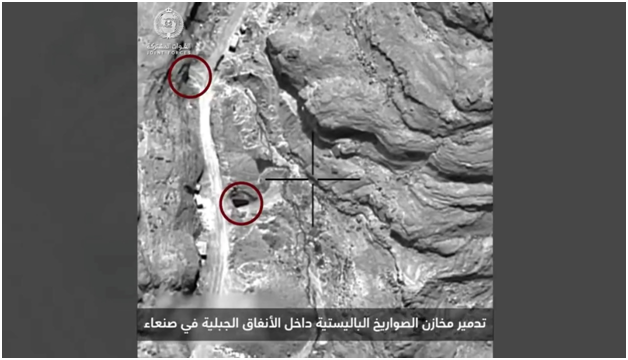
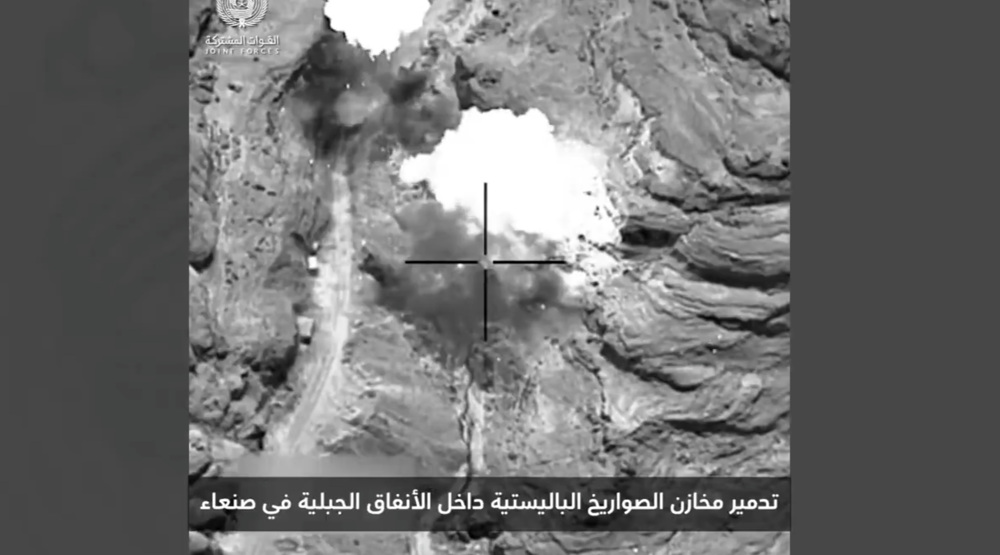
By the time the Ansarullah movement formed the popular government in Sana’a in 2014-2015 and inherited the full infrastructure of the Yemeni state, including the military bases, ammunition depots, command centers, and technical facilities that had been under construction since the 1970s, it had already developed deep institutional knowledge of subterranean operations.
What it then did was scale. The former Yemeni armed forces had invested substantially in hardened underground facilities, many of them constructed with Soviet and Chinese assistance during the Cold War competition for influence in the Arabian Peninsula.
Some of these facilities were designed to survive exactly the kind of air campaign now being directed against them. The result is a layered underground infrastructure: legacy hardened military sites, expanded and modified; natural cave systems developed into military use; and new purpose-built tunnel complexes constructed during the ongoing war itself, using both local engineering capacity and the technical lessons accumulated over a decade of surviving devastating Saudi airstrikes.
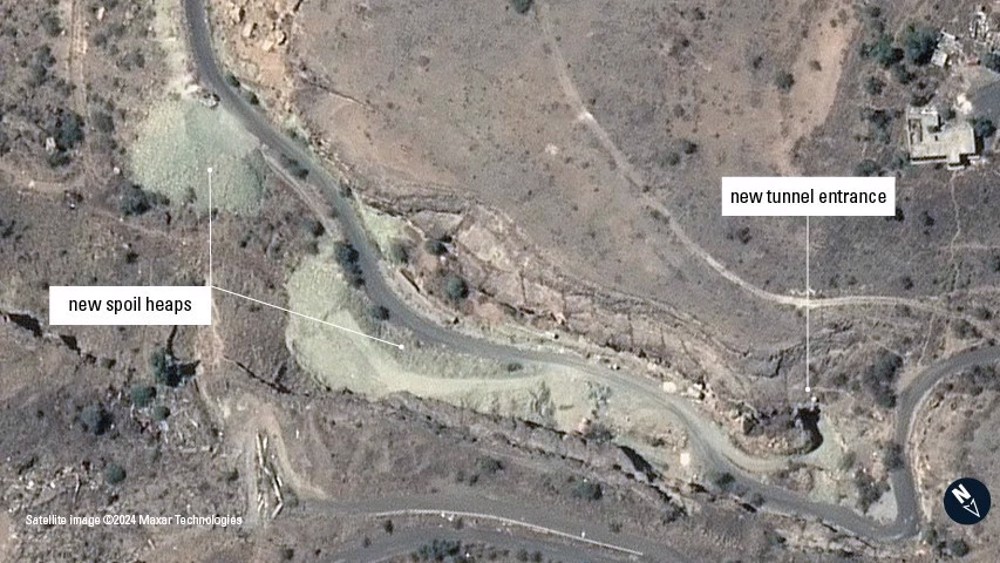
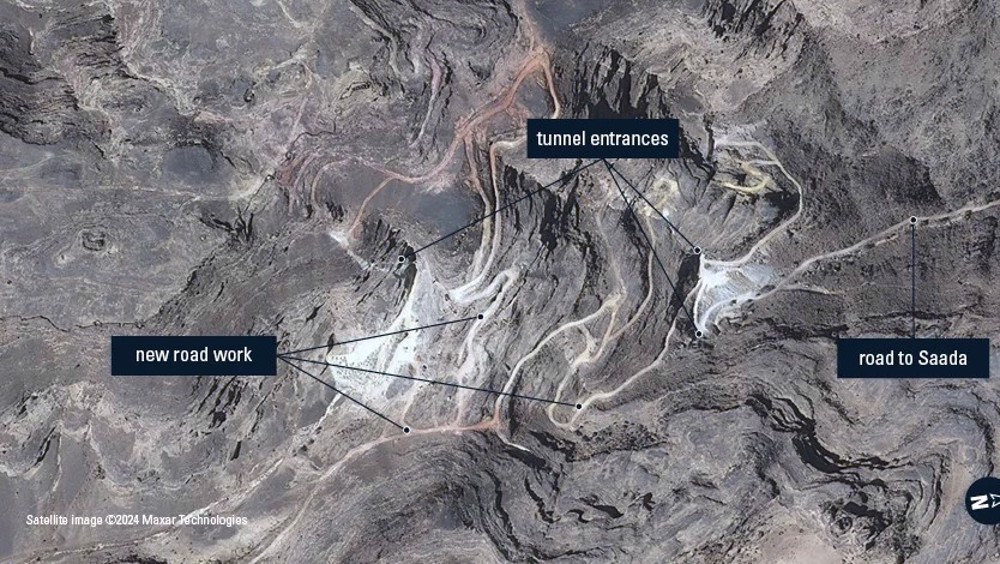
What a tunnel strike actually achieves
The operational reality of striking a tunnel complex with conventional air-delivered munitions is well understood in military literature, and the conclusion is uncomfortable for anyone proposing that Saudi airstrikes are achieving meaningful degradation of Yemeni underground facilities.
A strike on a tunnel entrance achieves, at best, a temporary blockage of that specific entrance. The structural integrity of the tunnel itself, which may extend hundreds of meters into solid rock, is essentially unaffected by a bomb detonating at its mouth.
The debris created by the strike can typically be cleared by a team with hand tools and light equipment in a timeframe ranging from hours to a few days, depending on the extent of the collapse and the resources available.
If the complex has multiple entrances, which any competent military facility will, the affected entrance is irrelevant to operational continuity from the moment the strike lands.
The B-2 precedent: When America tried and came up short
The limits of even the most capable bunker-busting capability in the world were demonstrated twice by American attacks against Yemeni underground facilities.
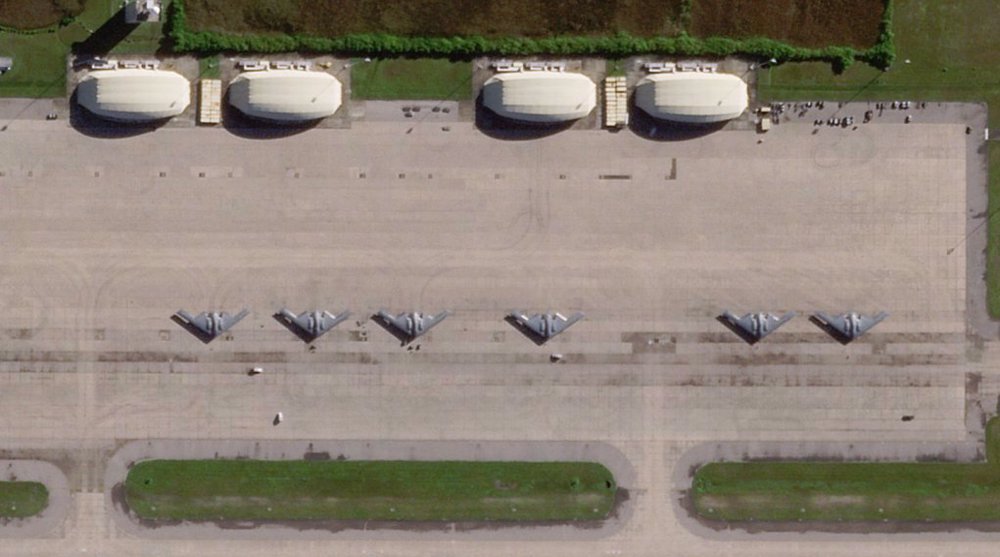
In 2024 and 2025, the United States deployed B-2 Spirit strategic bombers against Yemeni targets on at least two documented occasions.
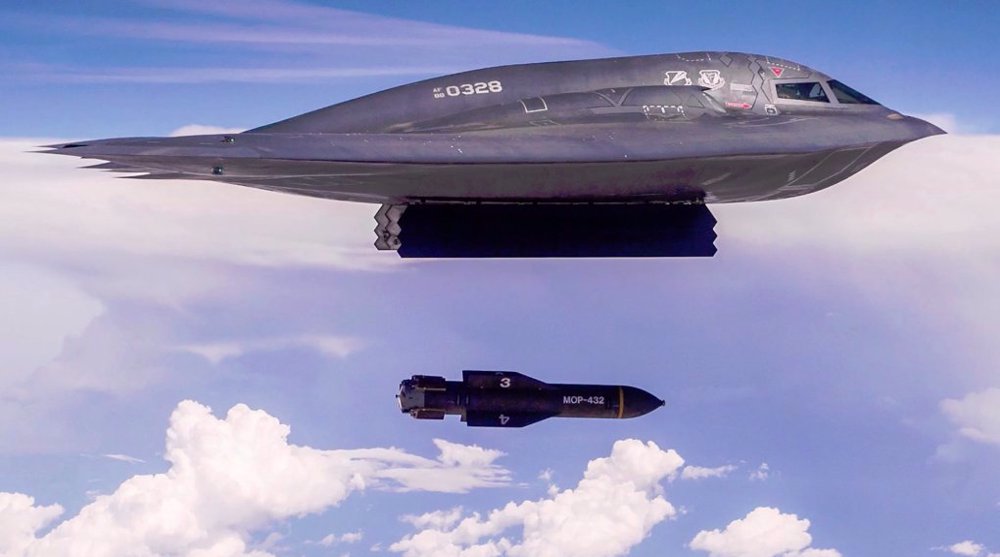
The B-2 is the only aircraft currently in service capable of carrying the GBU-57/B Massive Ordnance Penetrator (MOP), a weapon specifically designed to destroy hardened underground facilities. The MOP weighs approximately 30,000 pounds, of which roughly 5,300 pounds is explosive fill.
The B-2 strikes on Yemen, involving aircraft worth approximately $2.1 billion each operating from Diego Garcia, did not stop or meaningfully degrade Yemeni missile and drone operations. Attacks against Saudi Arabia and against shipping in the Red Sea corridor continued with no observable reduction in tempo or capability.
In the aftermath of these aggressive attacks, American officials indicated that MOPs had not been used, and that the strikes employed BLU-109 configurations. The explanation offered, that MOPs were available but not used, is curious.
One reading is that the Americans assessed the targets as not requiring MOP-class munitions, implying the strikes achieved their objectives. Another reading, perhaps the most operationally honest, is that the facility hardening had been assessed, the limitations of available munitions were understood, and the strikes were ordered for political and deterrent signaling purposes rather than with genuine expectations of permanent infrastructure destruction.
Alternatively, it is possible that MOPs were used but failed to cause the desired impact. Whatever the reasoning, the operational result is the same. The most expensive aircraft in the world, using serious penetrating munitions, operating with complete air superiority, did not stop Yemeni strikes.
What Is Saudi Arabia actually trying to achieve?
Against this backdrop, a decade of strikes, an unimpaired and growing Yemeni strike capability, and a demonstrated American inability to eliminate the Yemeni resistance with the world’s most capable penetrating weapons, the question of Saudi strategic intent becomes genuinely difficult to answer charitably.Several possible explanations exist, and they are not mutually exclusive.
The footage released recently is domestic and regional political products as much as military communications. Saudi leadership is under significant pressure, from the ruling family itself, from the business community whose assets are being struck, from foreign partners watching the kingdom’s security guarantees erode in real time.
Producing footage of dramatic explosions and pairing it with inspiring music is a way of asserting that something is being done, regardless of whether that something is achieving anything.
Perhaps most honestly, the RSAF may be striking underground entrances and hardened facilities because it has exhausted every other target category and this is what remains on the approved list. The visible Yemeni military infrastructure in exposed positions was struck and restruck in the first years of the aggression.
Mobile missile launchers, a notoriously difficult target category even for the most capable intelligence-surveillance-reconnaissance assets, have proven largely elusive. Leadership targets are well protected. Logistics nodes are dispersed and mobile. The mountain tunnel entrance, in this reading, is not a strategic choice but a default, the target that is findable, strikable, and filmable, even if not destroyable.
The structural problem: An Air Force without a purpose it can fulfill
The deeper failure of the RSAF is not a problem of hardware or pilots. It is a problem of strategic function. The RSAF was designed, equipped, and trained for air superiority operations against a peer air force, long-range strike operations against a state with a coherent target set, and close air support for conventional ground forces in maneuver warfare.
None of these missions exist in Yemen. There is no peer air force. The target set is not a coherent state infrastructure that can be collapsed by strategic bombing. It is a distributed, mobile, dispersed, and deeply underground military system that has been hardened specifically against air attack and has had a decade to learn the precise capabilities and habits of the air force striking it.
The result is an air force conducting a strike campaign that is unable to produce the strategic effect its users require. The Yemeni missile and drone capability is not going to be destroyed from the air with the munitions the RSAF has available.
It was not going to be destroyed by the Americans with significantly better munitions. It will not be destroyed by any future configuration of Saudi, American, or other coalition air power.
Saudi Arabia is in the position of a man who has spent his fortune on the finest locks and alarms, watched his house burn down anyway, and is now asking locksmiths in Islamabad, Ankara, Washington, and London whether they have something better.
 This makes it easy to access the Press TV website