Iran’s renewable energy gains momentum after fourfold surge
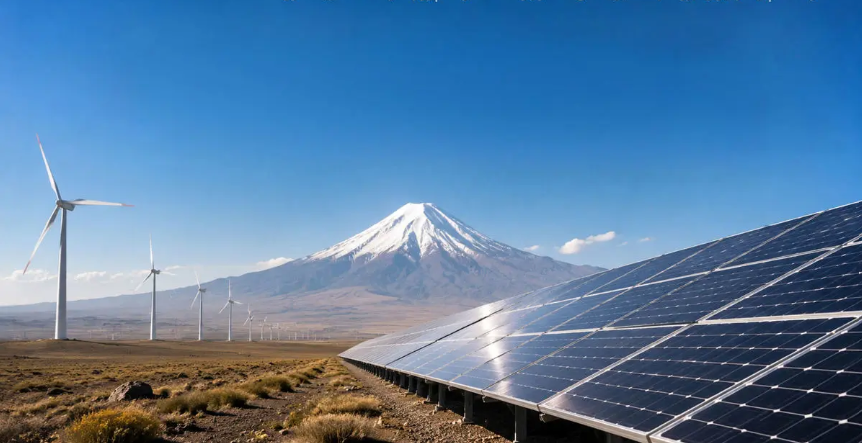
For years, Iran’s renewable energy debate focused less on operating plants and electricity generation than on its vast potential, namely abundant sunlight, strong wind corridors, land and economic opportunity.
That picture is now changing, and the change is becoming visible in the physical accumulation of generating assets across the country and the increasingly sophisticated investment ecosystem forming around them.
This month, Iran’s renewable power capacity passed 5,800 megawatts, according to the head of the Renewable Energy and Energy Efficiency Organization, SATBA, compared with roughly 1,250 MW two years earlier, representing an increase of more than four times.
Surpassing 5,800 MW, alongside weekly additions nearing 100 MW, hundreds of projects and multibillion-dollar investments, signals a broader transformation.
The acceleration is especially significant because much of it has occurred while Iran has faced prolonged sanctions, restricted access to foreign capital and technology, and subsequently American and Israeli attacks on the country’s infrastructure.
Reports point to continued private-sector investment, expanding domestic equipment production and solar projects completed during the war, suggesting renewable energy has gained economic momentum despite constraints on conventional investment.
SATBA is now targeting 7,000 MW by the end of September and 12,000 MW by the end of the Persian year in March 2027.
Iran has exceptional solar and wind potential, but its economic value depends on converting natural resources into electricity through land, equipment, financing, engineering, grid connections and reliable revenue models.
The recent acceleration from approximately 1,250 MW to 5,800 MW indicates that several technical, financial and administrative barriers that constrained development for years are being overcome.
Iran’s development is taking place against a dramatic global transformation in electricity economics. According to the International Renewable Energy Agency, worldwide renewable capacity reached 5,149 GW at the end of 2025, while a record 692 GW was added during that year alone.
Solar power accounted for approximately 511 GW of the global additions, meaning that nearly three-quarters of the world’s new renewable capacity came from a technology whose economics and deployment model are increasingly relevant to Iran.
The Iranian acceleration is therefore within a worldwide shift in which solar generation is becoming cheaper, easier to deploy at different scales and increasingly attractive to investors seeking long-term electricity assets.
The character of Iran’s recent expansion is particularly visible in its growing emphasis on solar power, because photovoltaic projects can be developed incrementally, allowing investors to build relatively small installations before expanding capacity.
This flexibility has opened the sector to a broader range of participants, while SATBA has also promoted small-scale solar development for households, commercial users and farmers, including plans for as much as 15,000 MW of small-scale solar capacity.
The economic significance of that model is substantial because a large centralized power station requires extensive land, major upfront capital and a high-capacity grid connection.
Smaller installations, however, can be placed on rooftops, industrial sites, farms and commercial properties close to electricity consumption.
Such a system gradually allows some households, farmers and companies to become small power producers while reducing the physical distance between generation and consumption and potentially creating a more distributed electricity economy.
The financing structure is changing, with the National Development Fund allocating substantial resources and SATBA developing mechanisms intended to bring banks, private investors, industries and the capital market into project financing.
The National Development Fund has allocated around $1 billion to renewable development through SATBA, while additional projects worth approximately $1.3 billion have been introduced to the central bank and participating lenders.
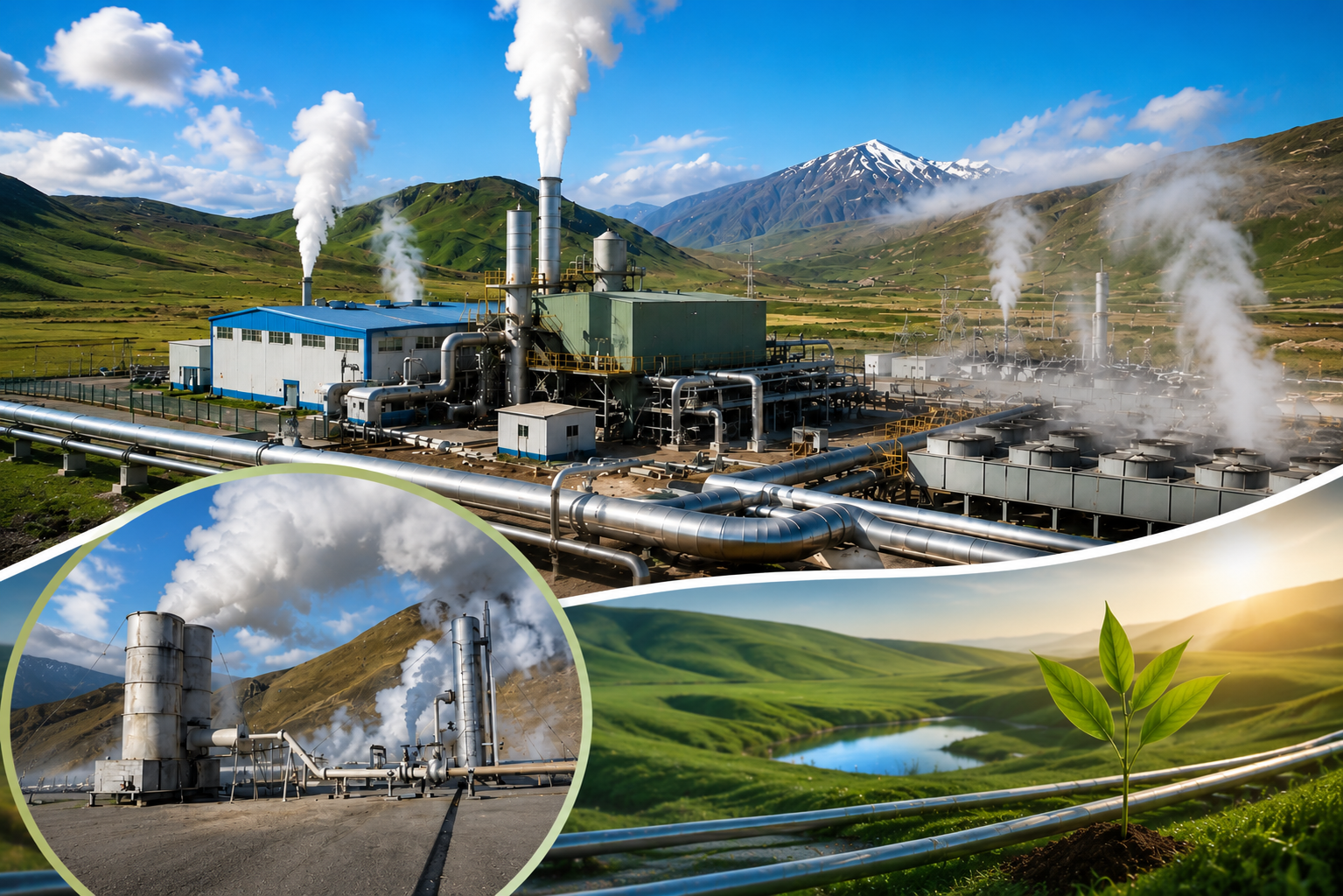
SATBA has also discussed the creation of a solar project fund targeting 500 MW, a model intended to broaden participation by allowing citizens and industrial companies to contribute to the ownership and financing of renewable projects.
Solar economics are increasingly favorable to Iran as falling equipment costs, improving photovoltaic efficiency, expanding global manufacturing capacity and mature supply chains reduce the cost of renewable electricity generation.
Domestic manufacturing is becoming increasingly important as expansion toward 12,000 MW and eventually 30,000 MW could generate enormous demand for modules, inverters, mounting structures, transformers, cables, engineering and maintenance.
Sanctions restrict imported equipment, raising costs and limiting technology access, but they can also encourage Iranian manufacturers to capture a larger share of the domestic renewable energy supply chain.
The emerging renewable industry is creating demand for engineering companies, construction contractors, equipment manufacturers, transport operators, financial services, insurance, technical maintenance and specialized labor.
SATBA has reported more than 1,000 renewable workshops and projects across all 31 provinces, alongside employment associated with tens of thousands of workers.
The geographical distribution is important because renewable investment can circulate through provincial economies, creating construction and manufacturing activity in regions that may not otherwise attract large-scale electricity infrastructure investment.
The recent geopolitical shock has added another dimension to this development, because Iran’s renewable expansion has continued amid the American-Israeli attacks, highlighting the economic value of a more geographically distributed electricity system.
Reports of damage to renewable equipment, including inverters, cables and other components, demonstrate that solar infrastructure can be spread across many sites rather than concentrated entirely in a limited number of large facilities.
That distinction matters for Iran because its traditional electricity system relies heavily on large thermal power stations and extensive transmission infrastructure.
Distributed solar instead creates the possibility of placing generation much closer to industrial, agricultural, commercial and residential demand.
For an economy endowed with enormous oil and gas reserves, burning natural gas for electricity carries an opportunity cost when the same fuel can support industrial production, petrochemicals, exports and other activities capable of generating greater economic value.
Every additional megawatt of renewable generation can therefore have an economic value beyond its electricity output if it reduces fossil-fuel consumption and allows scarce natural gas to be redirected toward higher-value uses.
This consideration becomes particularly significant for Iranian industry, where electricity restrictions have increasingly affected production and encouraged major consumers to seek greater control over their own power supply through dedicated renewable generation.
The significance of 5,800 MW therefore lies in the projects, investment, financing, domestic production and participation behind it, pointing toward a future in which renewables become a major economic sector.
Iran’s orchards: A new frontier for non-oil exports
Strait of Hormuz closure exposes AI’s hidden helium dependence, putting global chipmaking at risk
Filling the giants’ shoes in Iran’s auto industry



VIDEO | Occupied West Bank witnesses uptick in Israeli violence against Palestinians
VIDEO | India marks anniversary of independence from British empire
Iran’s renewable energy gains momentum after fourfold surge
Hezbollah vows response to Israeli ‘massacre’ in southern Lebanon
Ansarullah: Saudis can do nothing without US consent, dread war with Yemen
VIDEO | Israeli regime sponsors violence against Palestinians: Political Analyst
Pezeshkian: Iran seeks to strengthen comprehensive ties with India
VIDEO | US propaganda about armada in Hormuz is fake: Journalist


 PressTV NEWSLETTER
now
PressTV NEWSLETTER
now
 This makes it easy to access the Press TV website
