Iran’s orchards: A new frontier for non-oil exports
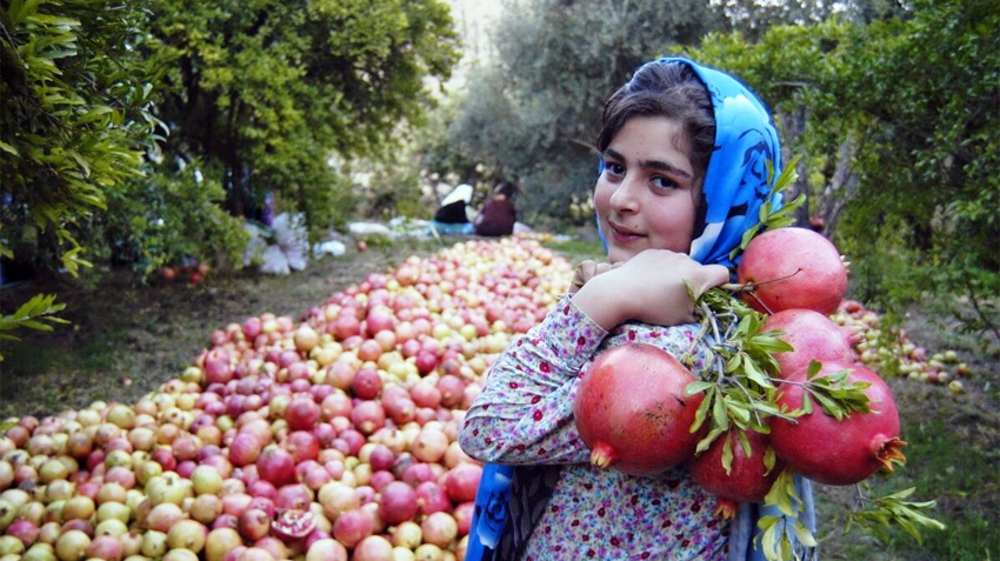
Some of Iran’s most valuable export opportunities are not found in factories, oil fields or gas projects, but growing in orchards stretching from the Caspian coast to the southern provinces and across the country’s diverse landscapes.
From Kerman pistachios and Khorasan saffron to southern dates, West Azerbaijan apples, northern citrus and greenhouse crops, Iran’s orchards produce a remarkable range of commodities capable of generating foreign exchange beyond oil.
The sector is already expanding, but its greater economic potential lies in how much more value Iran can extract from what it produces.
According to Iran’s Ministry of Agriculture, horticultural output has risen from about 24.7 million tonnes in recent years to 26.9 million tonnes, with production projected to reach 27.6 million tonnes this year.
At the same time, foreign-exchange earnings from horticultural and greenhouse exports have increased from roughly $2.9 billion to $4.3 billion.
The larger story is that rising production is translating into a much bigger economic role for horticulture.
Around three million hectares, roughly one-fifth of cultivated agricultural land, is devoted to horticulture, yet the sector generates more than half of agriculture’s foreign-exchange earnings and accounts for around 38 percent of agricultural employment.
For years, agricultural policy focused primarily on increasing output. The economic question now is how much more value Iran can capture from every kilogram it produces, particularly after the crop leaves the tree and enters the wider commercial chain.
Iran has a powerful production base, but too much of its agricultural advantage remains concentrated at the commodity stage, leaving considerable room to capture more value at home through processing, packaging, branding and stronger links to international markets.
Each stage can raise the final value of the product while creating new opportunities for investment and employment.

Pistachios offer the clearest example. Iran remains one of the world’s major pistachio producers, and the crop is also one of the country’s most valuable agricultural exports, contributing roughly $1.5 billion to the $5.2 billion agricultural export total in 2024.
Dates generated around $205 million, tomatoes about $233 million and saffron approximately $185 million.
Few products demonstrate Iran’s value-capture problem more clearly than saffron. Iran is a global leader in production and Iranian saffron enjoys enormous international recognition.
Its saffron exports were worth about $185 million in 2024, a significant contribution but also an indication of the room available for expansion through stronger Iranian brands, premium packaging, direct sales and processed products.
Saffron can move beyond the traditional spice market into food and beverages, cosmetics and premium consumer goods. The objective is therefore not simply to export more saffron strands, but to ensure that a greater share of the value created around Iranian saffron remains inside Iran.
The same logic applies to dates. Iran is one of the world’s major date producers, yet different varieties command radically different prices, and the Ministry of Agriculture has highlighted the expansion of export-oriented varieties such as Medjool.
The price gap is striking: while some conventional Iranian dates may sell internationally for less than $1 a kilogram, premium Medjool can reportedly reach prices as high as €22 per kilogram in European markets.
The lesson is that variety, quality, packaging and market access can matter as much as production volume. In other words, Iran does not necessarily need dramatically more land to increase agricultural earnings. In many cases, it needs to produce a more valuable product on the land it already cultivates.
Greenhouse agriculture offers another route towards this model. According to the Ministry of Agriculture, Iran’s greenhouse area has expanded by around 600 hectares, while greenhouse output has risen from approximately 3.2 million tonnes to 3.9 million tonnes.
Horticulture can also reduce pressure on Iran’s foreign-exchange reserves through import substitution, with bananas providing a prominent example.
Cultivated area has increased from roughly 12,400 hectares to about 14,200 hectares, while production has risen from around 23,000 tonnes to 36,100 tonnes.
Iran reportedly spends between $600 million and $700 million a year importing bananas, even as domestic cultivation expands in southern provinces such as Sistan and Baluchestan and Hormozgan.
The contrast illustrates the coexistence of substantial import demand and emerging domestic production within the same agricultural market.
The recent rise in production and export earnings is encouraging. Iran already possesses many of the ingredients required for a transformation, with its diverse climates, experienced farmers, globally recognized products and proximity to major regional markets.
What it needs is a stronger bridge between the orchard and the global consumer, allowing more of the value created by Iranian agriculture to remain in the domestic economy.
Iran has been talking for years about developing non-oil exports. Successful non-oil exports must be based on products that can be produced domestically, generate employment, reach international markets and create meaningful value added.
Horticulture has all four characteristics. Production takes place inside the country, employment is distributed across different regions, many Iranian products are already recognized globally, and substantial opportunities remain for processing and branding.
This last point is crucial. A tonne of raw agricultural produce may leave the country as little more than an export commodity, while the same product can become the basis for several higher-value goods once it is processed and developed for different consumer markets.
Dates can become paste, syrup, date sugar, snacks and confectionery products; pistachios can enter premium confectionery, ice cream and chocolate. And saffron can move into food, beverages, cosmetics and luxury consumer goods.
A single horticultural product can therefore activate several other industries.
Horticulture has become one of the core engines of Iran’s agricultural economy. The next step is to expand this core through investment, technology, markets and branding.
The power of education in Iran’s 85% domestic stationery industry
ECO can play greater role in regional peace, economic integration: Araghchi
Iran says international flights continue despite US sanctions pressure



Italy ends 12-year military presence in Iraq with final troop withdrawal
‘Wake up and wrest back control from corrupt politicians’: Snippets from IRGC’s letter to Americans
Four medals and a historic first: Iran’s athletics team finishes Asian Games campaign
Israeli settlers intensify raids in West Bank amid regime’s support
Hamas calls for Muslim mobilization after Israeli incursion into Ibrahimi Mosque
Lebanon reserves 'sovereign right' to prosecute Israel for its crimes: Parliament speaker
Russian Tu-95 strategic bomber crashes, 6 crew killed
Iranian company develops Tilmanocept radiopharmaceutical for cancer diagnosis


 PressTV NEWSLETTER now
  This makes it easy to access the Press TV website