Iran turns a dormant volcano into a clean energy asset
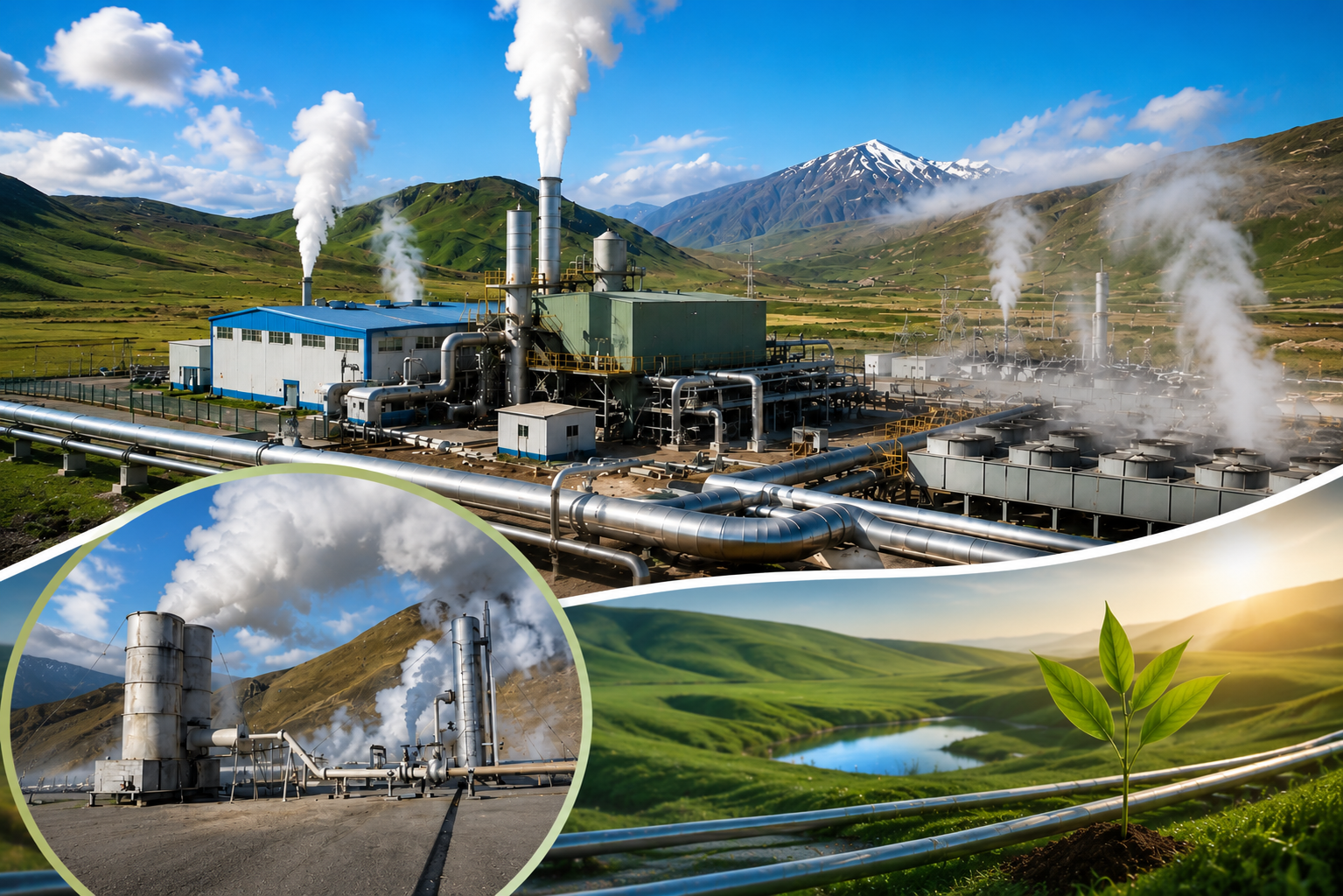
After years of geological research and deep drilling into the dormant Sabalan volcano, Iran on Thursday inaugurated its first geothermal power plant, bringing a long-anticipated renewable energy project into operation.
The 5-megawatt facility, located in Meshginshahr and built at a cost of €10 million, was officially connected to the national electricity grid during a ceremony attended by Iran's Energy Minister Abbas Aliabadi.
More than adding a modest amount of generating capacity, the project signals Iran’s entry into geothermal power production and reflects a broader effort to diversify the nation's energy portfolio while reducing reliance on fossil fuels.
It also marks the beginning of a new phase in Iran's efforts to develop its geothermal resources, part of a broader push to expand renewable energy.
The power plant sits about 25 kilometers south of Meshginshahr in an area known as Darreh-ye Moeil, where the dormant Sabalan volcano conceals a vast underground heat source.
Geological studies indicate that the reservoir beneath the site could ultimately support electricity generation of as much as 250 megawatts.
A clay layer roughly 500 meters thick acts as a natural seal, trapping heat beneath the surface and creating stable geothermal conditions. Engineers reached the reservoir by drilling several wells to depths approaching 3,000 meters.
Speaking at the inauguration, Aliabadi described the project as an important milestone in the country's effort to expand renewable energy production and lessen dependence on conventional fuels.
He said the initiative was intended not only to generate electricity but also to develop the technical expertise needed to exploit geothermal resources elsewhere in Iran.
Developing the project presented considerable engineering challenges. Drilling through Sabalan's volcanic formations proved even more demanding than conventional oil and gas drilling.
Extremely hard rock and underground temperatures exceeding 240 degrees Celsius rapidly wore down drill bits and degraded drilling fluids.
Despite those difficulties, Iranian engineers succeeded in completing the project by adapting drilling methods and developing domestic technical capabilities suited to geothermal conditions.
The project's most enduring achievement may not be its initial 5-megawatt output but the expertise acquired in drilling, designing and operating geothermal facilities.
This body of technical knowledge will reduce the cost of future exploration and development while limiting dependence on foreign companies for similar projects.
Aliabadi said the experience gained through the Sabalan project has established the scientific and engineering foundation necessary for broader geothermal development across the country.
The prospects extend beyond Sabalan alone. Scientific surveys have identified at least 18 areas across Iran with potential for geothermal development, underscoring what researchers describe as a largely untapped renewable resource.
Among them, the Sabalan field in northwestern Iran is considered one of four high-temperature regions suitable for commercial electricity generation, while sites in central Iran, including the Mahallat area, and the southeastern Makoran region have also been identified as promising candidates for future exploration.
Researchers have also concluded that the Sabalan reservoir is capable of supporting long-term production. In practical terms, they say, the field represents a renewable source of energy that, if managed carefully, could contribute to Iran's electricity supply for decades.
One of the project's most significant consequences has been the emergence of a domestic manufacturing base for geothermal technology.
MAPNA Group, West Asia's largest producer of power-generation equipment, is adapting and redesigning its turbines to operate under the distinctive conditions of the geothermal fluids extracted at Meshginshahr.
Unlike the steam used in most power plants, the fluid extracted from the wells is extremely hot water rich in salt, minerals and naturally occurring gases.
Those characteristics make the fluid difficult to work with, as minerals can build up inside pipelines while the salty water gradually corrodes pipes and turbines over time.
To address those challenges, MAPNA engineers are developing specialized metal alloys and corrosion-resistant coatings designed for geothermal service.
The effort is intended not only to supply the Meshginshahr project but also to establish the domestic capability to manufacture key geothermal equipment, reducing dependence on imported technology and creating a foundation for future projects.
What sets geothermal energy apart from most other renewable sources is its reliability. Unlike solar and wind generation, whose output fluctuates with weather conditions and the time of day, geothermal plants can operate continuously throughout the year, providing electricity around the clock.
That ability makes geothermal energy a dependable source capable of complementing intermittent renewable technologies while reducing reliance on fossil-fuel-fired power stations.
The economics have also become increasingly attractive. As fossil fuel costs have risen and Iran has moved toward gradually reducing energy subsidies, geothermal electricity has become more competitive.
Because geothermal plants require no fuel once they begin operating, their long-term operating expenses remain comparatively low after the initial investment has been made, offering investors a predictable source of revenue over the life of the facility.
Government support has also made geothermal projects more attractive to investors. Officials have introduced incentives, including guaranteed prices for renewable electricity, to encourage private investment.
With at least 18 identified geothermal prospects across the country, investors now have opportunities to replicate the Meshginshahr model elsewhere while benefiting from the technical experience gained during its development.
Taken together, these factors suggest that geothermal energy could become an increasingly important component of Iran's long-term energy strategy, combining stable electricity generation with growing domestic technical capacity.
Engineers involved in the project also envision a broader use for the geothermal resource than electricity generation alone.
They describe the concept as cascading use, or multi-stage energy utilization, in which heat remaining after power generation is directed toward other economic activities rather than being immediately returned underground.
After the geothermal fluid passes through the turbines, it still retains temperatures between 70 and 100 degrees Celsius. Instead of allowing that remaining heat to go unused, planners propose channeling it into additional applications before reinjecting the water into the reservoir.
One possibility would involve circulating the hot water through underground piping systems beneath the streets of Meshginshahr. During Ardabil Province's harsh winters, that heat could be used to warm homes, schools and public buildings, reducing heating costs and lowering fuel consumption.
Officials have already outlined plans to expand geothermal heating systems for both residential and industrial uses in the province.
The remaining heat could also support greenhouse agriculture. Heated greenhouses would allow farmers to cultivate vegetables such as tomatoes, cucumbers and peppers throughout the year despite the region's cold climate, extending growing seasons, creating employment and reducing dependence on imported produce during winter months.
Aquaculture represents another potential application. Maintaining appropriate water temperatures is among the largest operating expenses for producers raising warm-water species, including tilapia and even sturgeon. Geothermal heating could substantially lower those costs, making fish farming more economical in the region.
These combined uses will transform the geothermal facility from a power station into the center of a broader economic network encompassing agriculture, industry and tourism.

The current 5-megawatt facility is intended as an initial step. Officials say the long-term goal is to develop the Sabalan reservoir to its estimated capacity, enough to supply electricity to a medium-sized city.
Iran also plans to apply the technical experience gained at Meshginshahr to geothermal projects elsewhere in the country, using the expertise developed over years of research and drilling as the basis for a broader national industry.
With 18 prospective geothermal regions already identified, engineers believe the knowledge acquired at Sabalan can be transferred to new projects across the country.
Beyond generating electricity, geothermal facilities could contribute to environmental goals by producing energy without combustion-related emissions while also supporting tourism in natural areas such as the slopes of Mount Sabalan.
Iran restores half of damaged South Pars production capacity
Iran’s energy rebuild sparks unprecedented industrial shift
War spurs Iran’s push to develop Caspian energy frontier



VIDEO | East Azarbaijan: The land of firsts and opportunities
Iran will resist pressure, force-based policies, President Pezeshkian tells Swiss counterpart
Top commander calls President Pezeshkian’s UN address ‘resounding voice of the proud Iranian nation’
IRGC dismantles terrorist team in southeastern Iran, killing five
Iran’s top security official says no return to pre-war diplomacy with US
‘We don’t seek permission to defend our country’: Snippets from President Pezeshkian’s UNGA address
VIDEO | Kargil protest demands justice, constitutional safeguards for Ladakh
Pezeshkian spoke for Iran’s 3,000-year-old civilization at UN: Qalibaf


 PressTV NEWSLETTER
now
PressTV NEWSLETTER
now
 This makes it easy to access the Press TV website
