
By Mohammad Molaei
After the United States declared a unilateral ceasefire on April 7, nearly 40 days after launching an unprovoked and illegal war of aggression against the Islamic Republic, the guns fell silent.
Yet, despite the subsequent signing of a memorandum of understanding (MoU) between the two sides, the American war machine soon shifted back into aggressive gear, accompanied by sporadic violations of the truce.
Last week, however, the US military launched large-scale strikes on towns and cities in southern Iran, primarily targeting civilian infrastructure, notwithstanding repeated warnings from Iran.
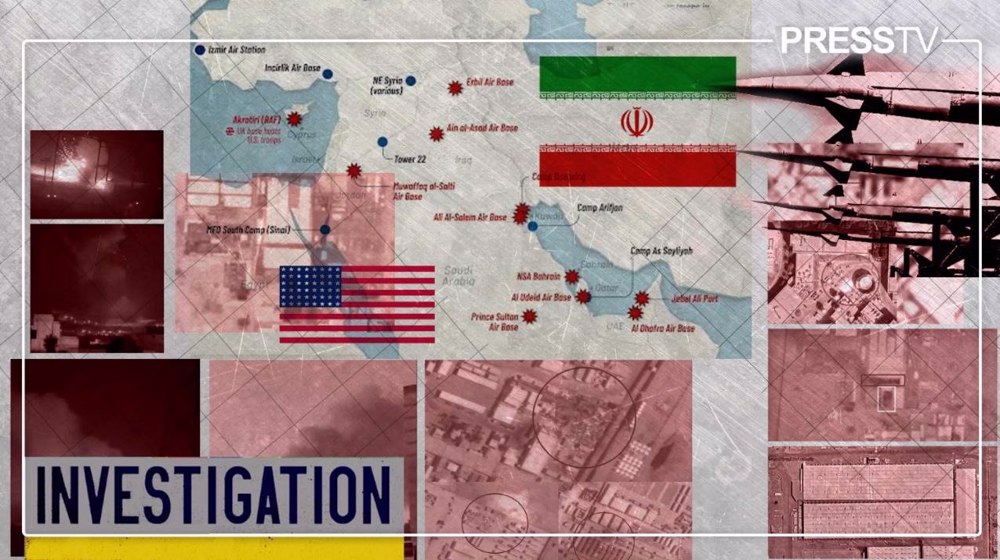
The Iranian armed forces responded swiftly and decisively, striking key US military installations across Persian Gulf states – from Bahrain and Kuwait to Jordan and beyond.
As of July 18, Operation Nasr-2, conducted by the Islamic Revolution Guards Corps, has reached its 20th wave, while Operation Saeqeh, carried out by the Iranian Army, has entered its 14th and 15th phases.
The targets struck, the damage inflicted, and the disparity between what host countries claim to have intercepted and what satellite imagery actually reveals on the ground paint a picture that official US and Persian Gulf Arab press releases have gone to great lengths to obscure.
Trigger: Persistent US violations of the ceasefire
Iranian leadership has been explicit and clear about the rationale behind its ongoing retaliatory strikes at US military targets across the Persian Gulf region.
In statements accompanying each successive wave of Operation Nasr-2, the IRGC has asserted that the United States has "perpetrated numerous violations against Iranian territory" since the April 7 ceasefire announcement, and that such violations have persisted even after Washington and Tehran signed a Pakistan-mediated MoU in June, the very first clause of which mandates a "cessation of aggression on all fronts."
The IRGC has specifically pointed to US strikes on Iranian coastal facilities in southern Hormozgan and Mahshahr provinces, attacks on Iranian communications infrastructure near Qeshm Island, and the reimposition of an illegal naval blockade as the proximate triggers for each retaliatory wave.
Tehran's position remains unequivocal: as long as American military action against Iran continues, Iranian military action against US bases in the region will continue in kind.
Leader of the Islamic Revolution Ayatollah Mojtaba Khamenei says Iran and the resistance front will teach the United States "unforgettable lessons" following the new US aggression against the country.
— Press TV 🔻 (@PressTV) July 18, 2026
Follow Press TV on Telegram: https://t.co/LWoNSpkc2J pic.twitter.com/E5wB22mbz8
Operation Nasr-2
Operation Nasr-2 is the IRGC's principal retaliatory framework in the post-ceasefire period, combining ballistic missile and drone strikes against US military infrastructure primarily across Kuwait, Bahrain, and Jordan. By July 18, it had reached its 20th documented wave.
The sixth wave targeted the US Fifth Fleet headquarters at Port Salman in Bahrain and the Ali al-Salem Air Base in Kuwait, striking what IRGC statements described as weapons warehouses and parts storage facilities for American naval vessels and aircraft at Sheikh Isa Air Base in Bahrain, and logistics and fuel depots at Ali al-Salem.
The seventh and eighth waves, announced in mid-July following renewed US airstrikes on Iran's southern coast, were conducted under the operational name "Ya Zain al-Abidin."
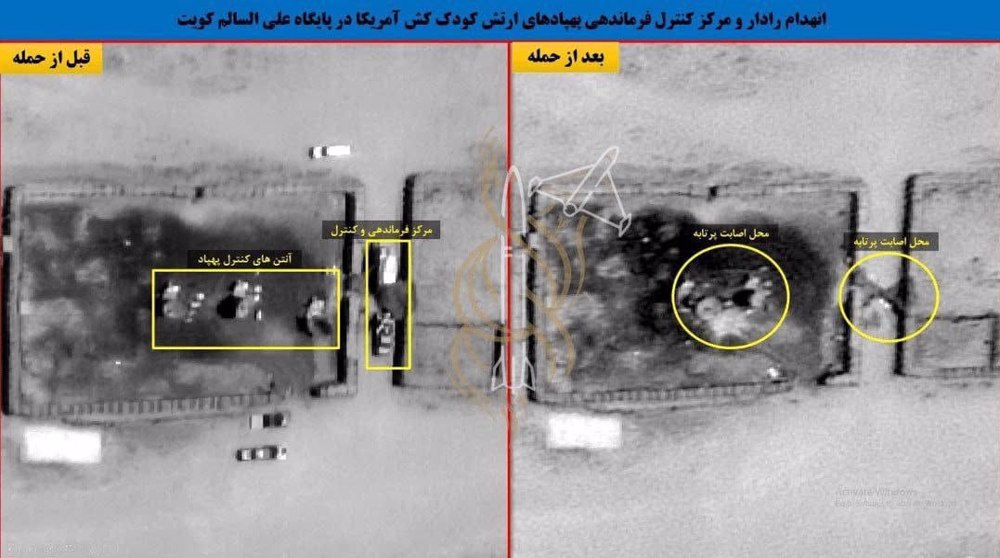
IRGC Navy and Aerospace Force units carried out a coordinated missile and drone attack targeting the early-warning radar of a C-RAM counter-rocket defense system at Ali al-Salem Air Base in Kuwait, as well as a personnel assembly point used by US forces at the same facility.
The IRGC addressed its statement directly to the Kuwaiti people, distinguishing between the Kuwaiti public, which it expressed no enmity toward and the American military presence on Kuwaiti soil, which it held responsible for drawing the country into the WAR.
It warned that continued US military action would prevent the reopening of the Strait of Hormuz and halt regional oil and gas exports to countries across the world.
The 18th wave on July 18 destroyed a US military radar installation at Ali al-Salem Air Base in Kuwait and struck a troop assembly area at Camp Arifjan, a separate major US Army facility south of Kuwait City that serves as the headquarters of US Army Central Command's forward element in the Persian Gulf.
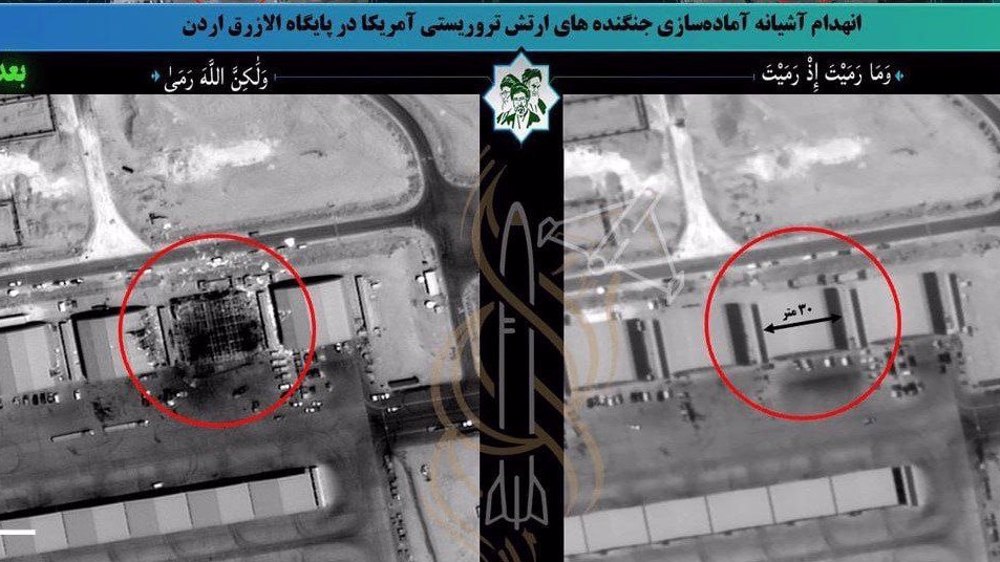
The 20th wave – the most recent – targeted the US air base at al-Azraq in Jordan. The IRGC claimed its missiles and drones struck fighter jet shelters and a large aircraft parking apron at the base, saying it destroyed at least two fighter jets and three additional US aircraft and damaged several more.
Jordan's military said air defenses intercepted 10 Iranian missiles during the same night, the highest single-night intercept count reported by Jordan in the July cycle.
The IRGC's accompanying statement called on Jordanian citizens and members of the Jordanian military to resist the American military presence in their country, a language that has no precedent in the current campaign's strike communiqués.
Iran's IRGC Navy warns that the Americans are bringing themselves closer every moment to the zero-hour mark of operations against CENTCOM's naval units in the region's waters.
— PressTV Extra (@PresstvExtra) July 17, 2026
Follow Press TV on Telegram: https://t.co/h0eMpifVIe pic.twitter.com/eYGG9tAPOZ
Operation Saeqeh
Operation Saeqeh, Lightning, is the Iranian Army's parallel retaliatory campaign against the US military bases, relying primarily on loitering munitions and precision attack drones against US command infrastructure, radar systems, communications nodes, and fuel facilities.
The ninth phase targeted al-Azraq Air Base in Jordan. The Army stated that loitering munitions struck a fixed radar site, communications systems, and fuel storage depots at the base, describing it as a major command center and missile-defense coordination hub for American operations across the region.
The strike was explicitly framed as retaliation for a US attack on the Bampour army barracks in Iranshahr, which resulted in the martyrdom of seven Iranian conscripts.
The tenth phase deployed attack drones against US military radar and air defense systems in both Kuwait and Bahrain simultaneously.
The 14th and 15th phases, announced in a single statement, extended the target set significantly. Phase 14 struck an ammunition depot at Camp Adairi, also known as al-Udeiri in Kuwait, a major US Army logistical and force reorganization center, along with headquarters buildings and ammunition warehouses at Ali al-Salem Air Base, and several key road bridges in Kuwait. Phase 15 returned to Jordan's al-Azraq Air Base, targeting its fuel storage facilities.
Iran releases footage of retaliatory drone attacks against US assets in Jordan and Kuwait
— Press TV 🔻 (@PressTV) July 18, 2026
Follow: https://t.co/LWoNSpkc2J pic.twitter.com/4Txn2qsLeI
Targets: A country-by-country record
Kuwait
Kuwait has been the most intensively targeted country in both Nasr-2 and Saeqeh operations.
The facilities struck include Ali al-Salem Air Base, one of the largest US air operations coordination hubs in West Asia. At the base, drone and aircraft shelters have been hit, C-RAM radar systems destroyed, and MQ-9 drone platforms directly targeted.
Camp Arifjan, headquarters of US Army Central Command's forward presence, was struck in the 18th wave of Nasr-2. Camp Adairi, a primary US logistics and force-reorganization center, had its ammunition depot hit in Operation Saeqeh's 14th phase.
The IRGC also announced the destruction of the KJL main logistics and support center of the US Army in West Asia at Mina Abdullah, a coastal supply facility on Kuwait Bay.
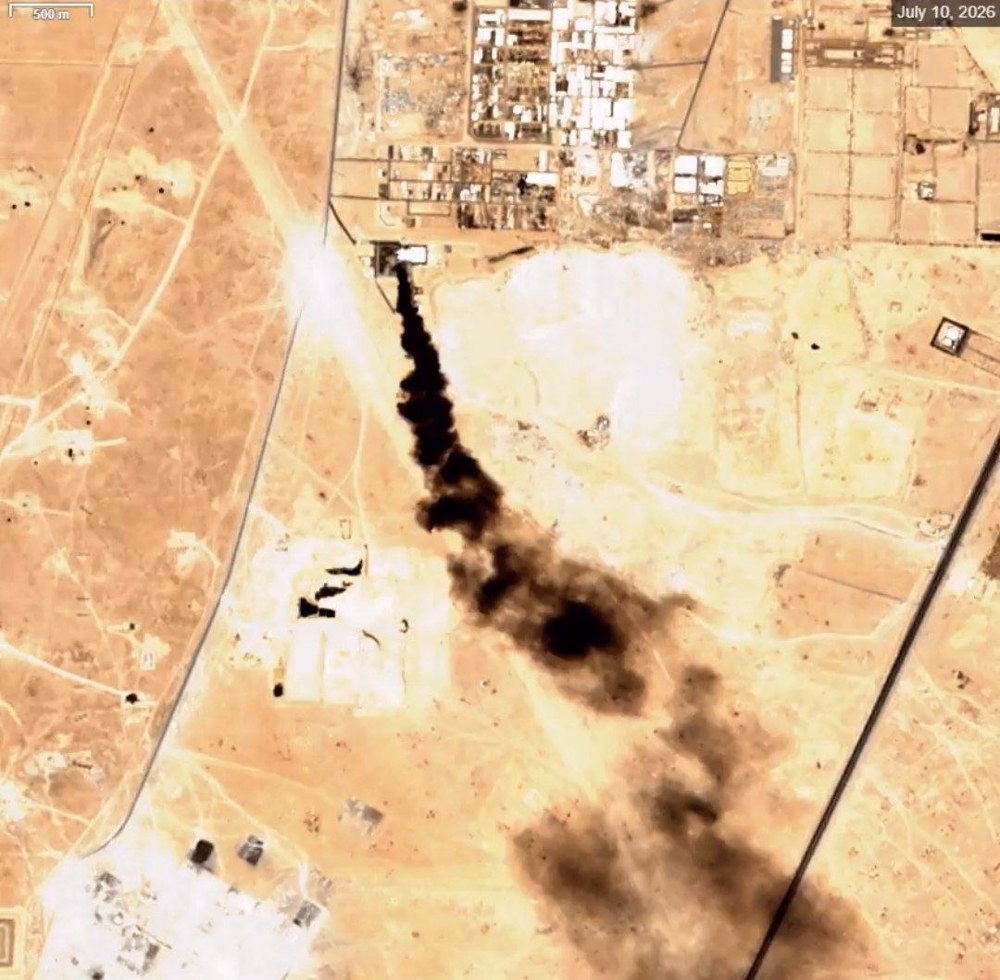
Iran's strikes have not been limited to military installations. On July 17 and 18, they struck two Kuwaiti power generation and water desalination plants in successive days — the second blaze injured firefighters and forced the precautionary shutdown of multiple power generation units.
It was a direct response to attacks on power grids and desalination plants in southern Iran in attacks carried out from Kuwaiti soil by the US military.
Kuwaiti Defense Ministry confirmed that Iranian drone attacks on army "facilities and camps" injured an unspecified number of military personnel.
Another notable target identified by the IRGC during the twelfth wave of Operation Nasr-2 was US Army M142 HIMARS multiple launch rocket systems deployed in Kuwait. A precision drone strike destroyed two HIMARS launchers together with their associated missile pods while they were reportedly prepared for operations against Iran.
The attack also destroyed missile-defense radar and several ammunition depots, triggering extensive secondary explosions and fires inside the targeted US military installation. It represented a significant expansion of Iran's targeting priorities, extending beyond fixed infrastructure to include high-value, mobile long-range precision fire assets.
Bahrain
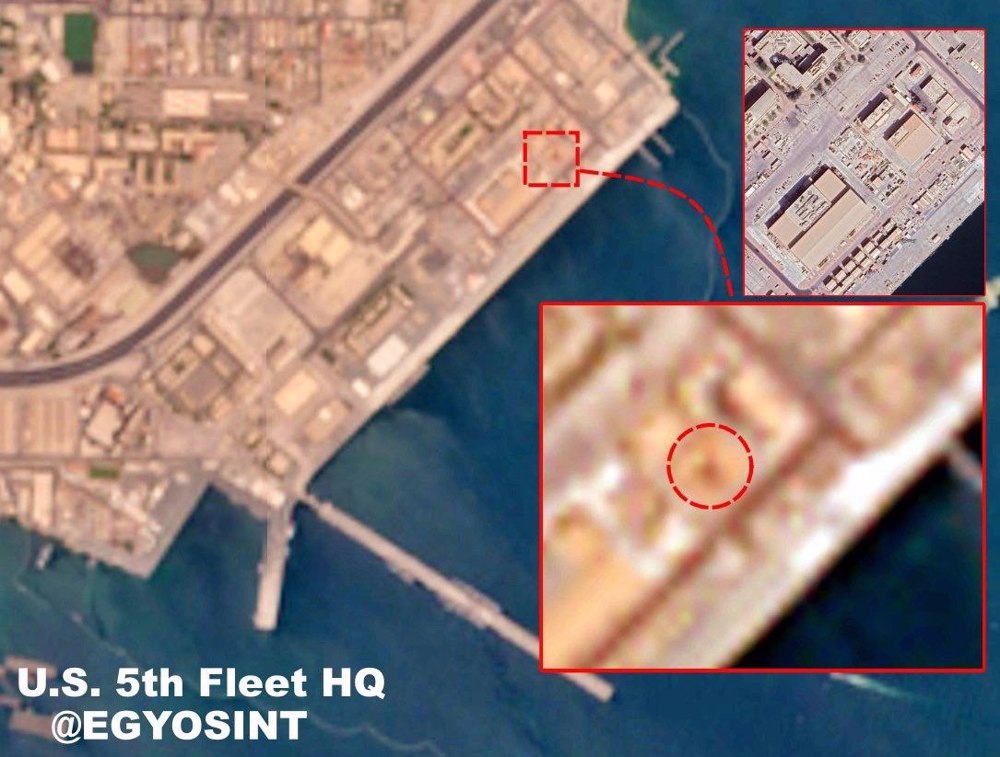
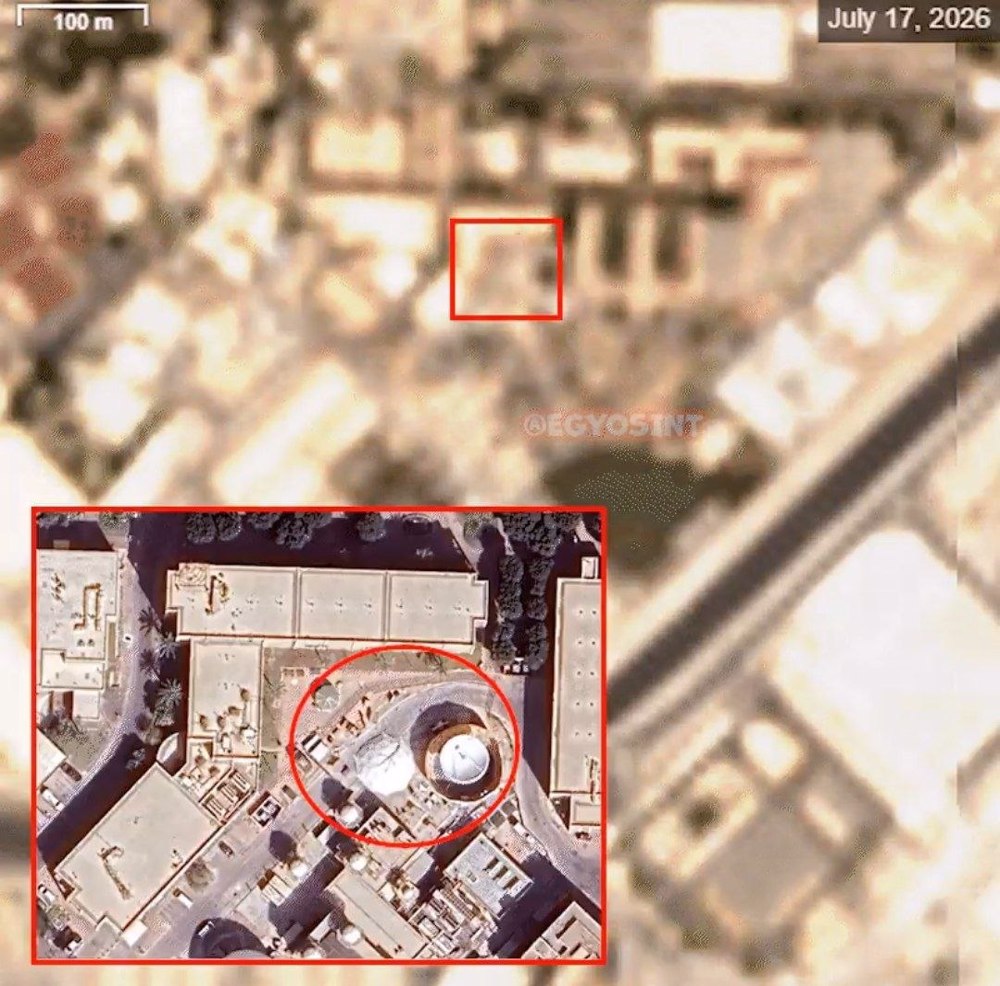
The US Navy's Fifth Fleet headquarters at Naval Support Activity Bahrain — America's most important naval installation in the Persian Gulf — has been struck in multiple waves of Nasr-2.
IRGC statements described the destruction of weapons warehouses and aircraft component storage at Sheikh Isa Air Base. The Bahraini Interior Ministry confirmed missile warning sirens sounding five times within a single 12-hour period on July 17-18.
Bahrain has continued to claim that the majority of incoming Iranian missiles and drones were successfully intercepted by its integrated air-defense network operating alongside US forces.
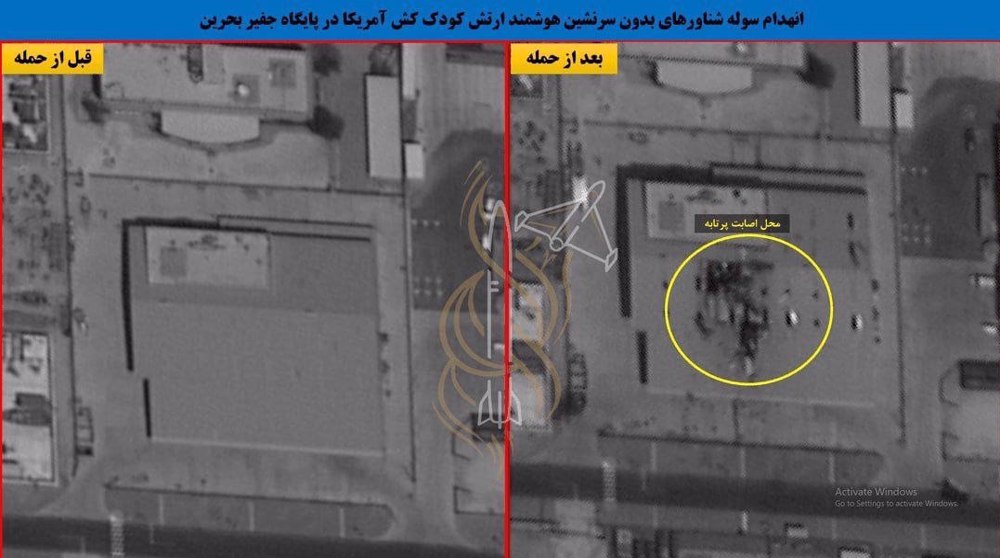
However, assessments and commercially available satellite imagery present a different picture, indicating that several intended military targets were successfully struck despite official claims of interception.
Videos recorded during the attacks also appear to show the limited effectiveness of the US Patriot air-defense systems deployed in Bahrain. In one documented incident, 17 Patriot interceptor missiles disintegrated shortly after launch and failed to engage the incoming Iranian missiles.
These observations stand in contrast to Bahrain's repeated statements regarding the success of its interception efforts. At the same time, the recurring presence of Shahed-136 drones over different parts of Bahrain has continued to raise questions about the overall effectiveness of the little kingdom's layered air-defense network.
Jordan
Al-Azraq Air Base, Jordan’s largest US military installation, described by Iranian military officials as a primary hub for American command operations and missile defense coordination in the region, was struck in the ninth phase of Saeqeh, the 20th wave of Nasr-2, and at least two additional confirmed strikes.
Jordan's military has reported multiple rounds of interceptions: three missiles were intercepted the night before the July 18 wave, then 10 were intercepted on July 18 itself, the kingdom's highest single-night count. Jordan has not disputed that Iranian fire has reached its territory.
Prince Hassan Air Base was separately struck, with OSINT satellite imagery released July 12 confirming the destruction of an MQ-4C Triton drone hangar at the facility.
Jordan has continued to state that the majority of Iranian missiles and drones targeting its territory were intercepted by the Royal Jordanian Air Force in coordination with US forces.
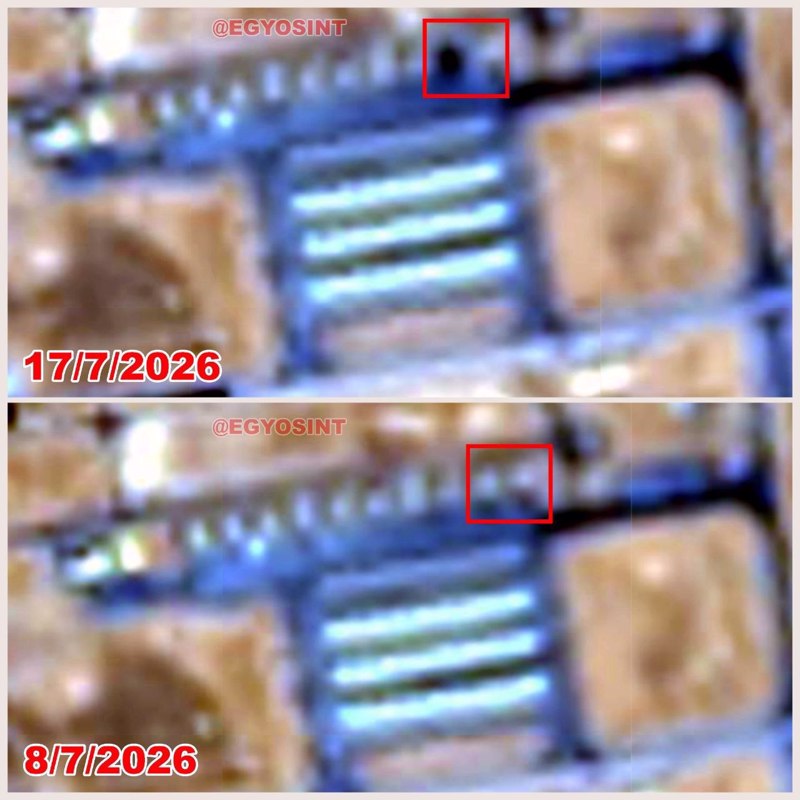
Despite downplaying most of the attacks in Jordan, assessments and commercially available satellite imagery indicate that a number of intended military targets were struck.
Imagery released following the attacks shows visible damage at both Al-Azraq and Prince Hassan Air Bases, including the confirmed destruction of an MQ-4C Triton drone hangar and damage to several operational support facilities.
Videos recorded during successive strike waves also suggest that Jordanian and US air-defense systems faced increasing difficulty in countering large-scale, multi-axis attacks involving ballistic missiles, cruise missiles, and Shahed-136 drones.
Despite official statements emphasizing the effectiveness of interceptions, the repeated targeting of Jordanian military installations and the continued activation of air-raid sirens across northern and eastern Jordan indicate that Iranian strikes have maintained sustained pressure on the kingdom's air-defense network throughout Operations Saeqeh and Nasr-2.
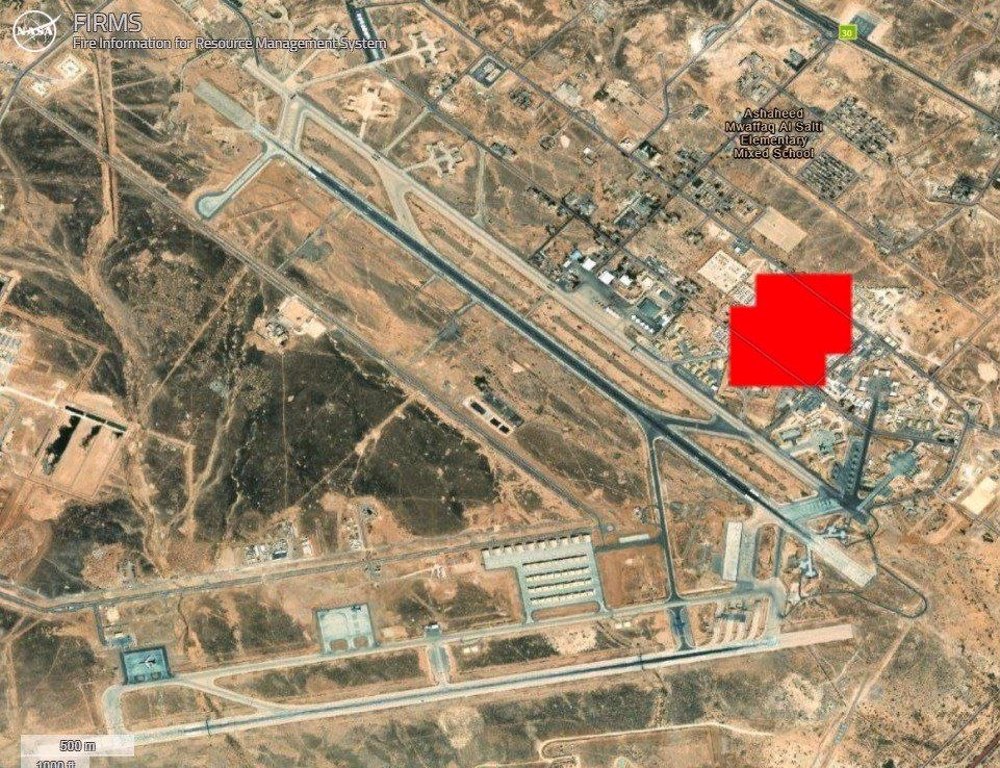
More recently, on Saturday, CENTCOM confirmed the killing of two of its soldiers at the Muwaffaq Salti Air Base in Jordan. As per reports, Iranian missiles hit containerized housing units, which are used as living quarters by US soldiers at almost all bases in the region
As per media reports, the attacks destroyed a significant number of Black Hawk helicopters at the base, as well as F-15E Strike Eagle (nuclear weapons delivery aircraft).
Jordan's strategic importance has grown significantly for the US war machine as it reportedly shifted forces there from Bahrain, Qatar, and the UAE ahead of this new round of war.
The hangar was likely being used to shelter U.S. MQ-9 Reaper drones.
Qatar
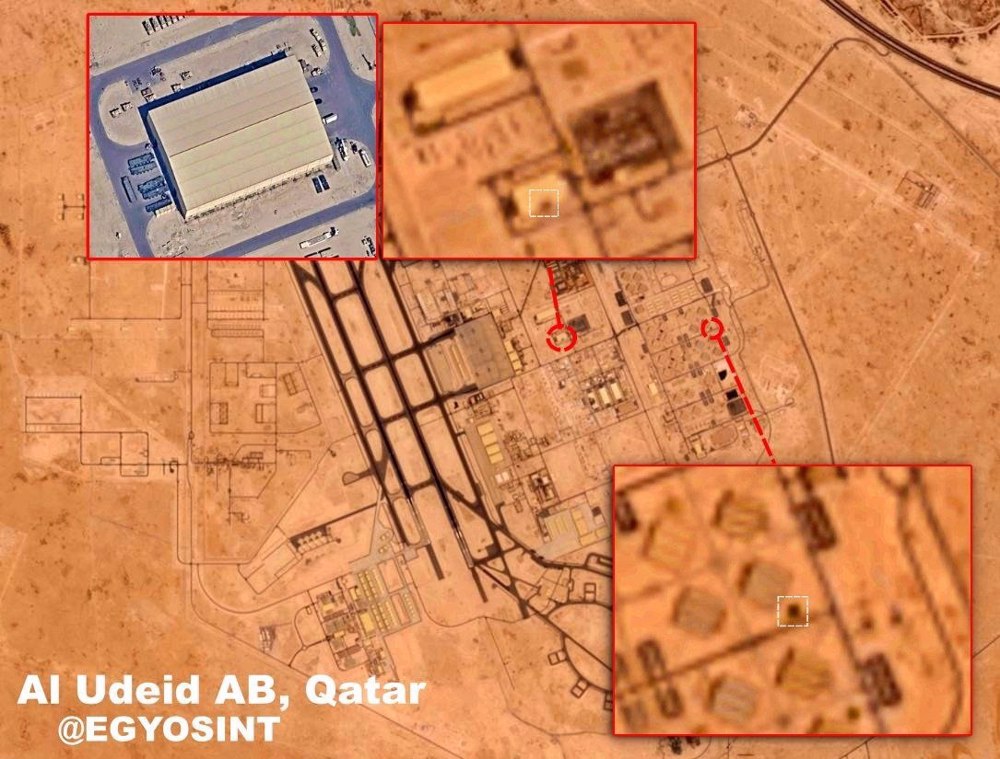
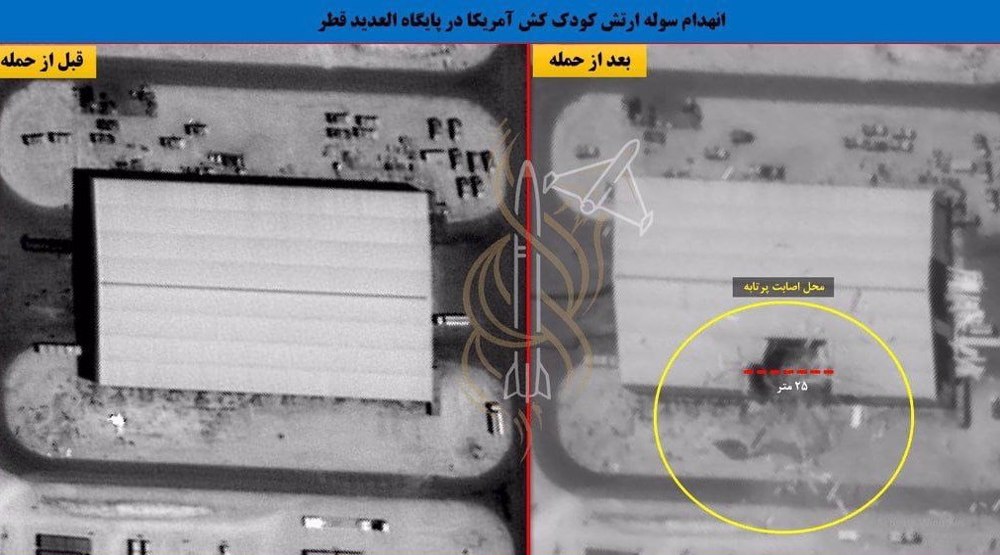
Al-Udeid Air Base, the important forward headquarters of US Central Command and the largest American military installation in the region, was also struck in recent days.
Airbus satellite imagery captured on April 4 showed strike damage at three distinct locations within the base: a destroyed logistics operations building, structural damage to a small aircraft shelter, and damage inside the Camp Andy support facility.
OSINT satellite imagery from July 12 confirmed the subsequent destruction of a hangar at the base in a more recent strike.
What host governments claim, and what satellite images reveal
Every government hosting US occupation forces in the region has issued public statements asserting that air defenses — their own and American — intercepted the majority of incoming Iranian missiles and drones.
The UAE claimed at the height of the 40-day war that 165 ballistic missiles, two cruise missiles, and 541 drones had been "mostly intercepted." Kuwait's military issued real-time interception announcements. Jordan said three missiles were intercepted one night, 10 the next. Bahrain has sounded missile alerts while simultaneously claiming effective defense.
The satellite imagery record does not support these narratives. A Washington Post investigation, published in May and based on analysis of commercial satellite imagery from Planet Labs, Airbus Defence and Space, and European Sentinel platforms, identified 228 structures or pieces of equipment damaged or destroyed at 15 US military sites across Kuwait, Bahrain, Qatar, Jordan, Saudi Arabia, and the UAE.
The investigation explicitly stated that the scale of damage was "significantly wider than what the US government had publicly acknowledged."
The destroyed or damaged inventory documented by the investigation includes hangars, barracks, weapons warehouses, fuel depots, aircraft on the ground, radar systems, satellite communications infrastructure, Patriot missile defense equipment in Bahrain and Kuwait, satellite communications sites at al-Udeid, radomes at multiple facilities, and THAAD-related radar and equipment in Jordan and the UAE.
Iraqi Kurdistan
While strikes on Persian Gulf bases attract most international attention, Iranian armed forces have simultaneously maintained sustained operations against a separate category of targets: the bases of Iranian Kurdish terrorist groups operating from Iraqi Kurdistan, involved in planning armed incursions into Iranian territory at the behest of US and Israeli regimes.
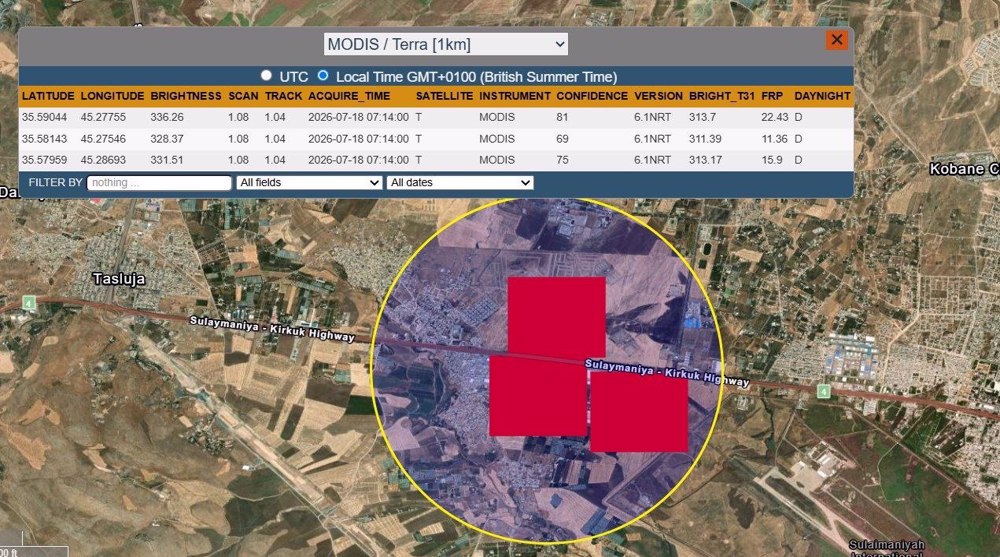
The IRGC has conducted sustained missile and drone strikes on positions of these groups across Sulaymaniyah and Erbil provinces in recent weeks.
On June 7, the IRGC announced a strike on the headquarters of terrorist and separatist groups in Sulaymaniyah. A second round of strikes in Sulaymaniyah took place on June 8.
On July 18, an Iranian strike killed at least 8 terrorists and wounded others at a facility used by Komala, one of the principal terrorist armed parties based in Iraqi Kurdistan, according to an official cited by the Associated Press.
Iran's rationale for these strikes is consistent and documented. CIA has been working to supply weapons to Iranian Kurdish armed factions in order to activate these groups as a second front aimed at destabilizing Iran's western border regions.
On July 2, the IRGC's Hamzeh Seyed al-Shohada Base announced the interception and dismantlement of a team affiliated with the so-called Democratic Party of Kurdistan that had crossed into northwestern Iran to conduct sabotage operations.
Beyond missile and drone strikes, Iran's 65th Airborne Special Forces Brigade, universally known as the NOHED, has been activated for cross-border operations against armed terrorist group commanders in this context.
The 65th NOHED Brigade is the premier special operations formation of the Iranian regular army, with a documented record of counter-terrorism operations in border provinces and, since 2016, extra-territorial deployment capability.
Operating in coordination with the IRGC Ground Forces' Saberin Special Forces Brigade, NOHED units have conducted targeted operations against the command elements of armed terrorist factions planning to use Iraqi Kurdistan as a staging ground for armed incursions into Iran, killing its key commanders and neutralizing logistics nodes in operations that go beyond the reach of drones and ballistic missiles.
Syria
In a strike that reverberated throughout the region, the IRGC also carried out an unexpected attack on a US special operations command hub at Al-Tanf in Syria, taking out radar installations and helicopters and inflicting casualties on American personnel.
The Friday operation, launched as the 11th wave of Nasr-2, represented a turning point in the renewed confrontation, driven by Washington's ongoing military aggression against parts of southern Iran.
Situated in the desolate Syrian Badia at the crossroads of Syria, Iraq, and Jordan, the installation has served since 2016 as a critical American outpost, hosting special operations forces, intelligence collection platforms, and surveillance systems that oversee one of the region's most strategically vital overland routes.
For years, Al-Tanf stood as an enduring emblem of U.S. military reach in Syria, a status that, in itself, rendered it a high-value target for Iranian retaliation.
The IRGC framed the strike as direct retribution for the killing of seven Iranian soldiers in a US aerial bombardment of the 388th Brigade garrison in Bampur, underscoring that no American installation, regardless of location, lies beyond the striking range of Iranian precision weapons.
The operation, codenamed "Mubarak O Aba Abdullah Al-Hussein," was dedicated to the martyred soldiers of Bampur and Iranshahr.
 This makes it easy to access the Press TV website