Architect of deterrence: Imam Khamenei's instrumental role in transforming Iran into global missile power
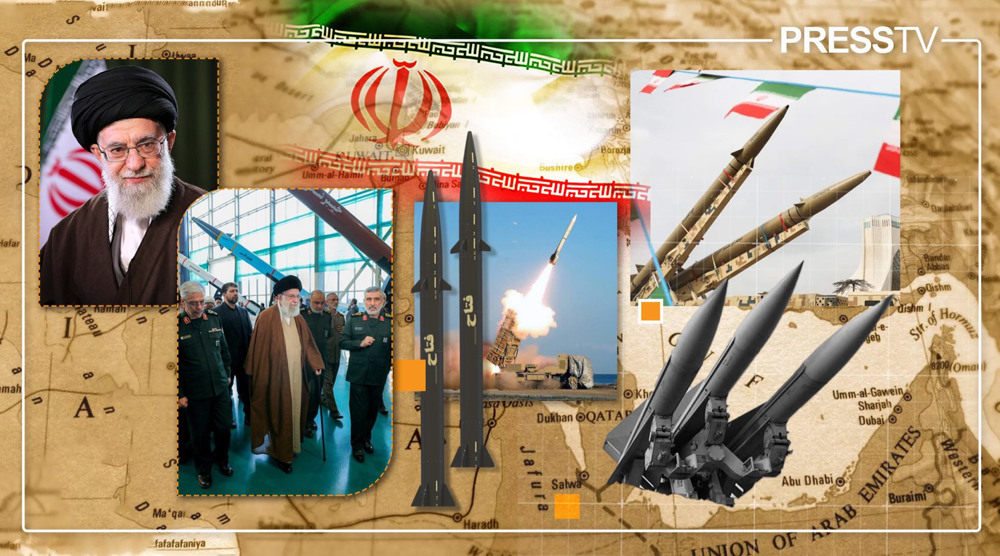
By Ivan Kesic
When the joint US-Israeli aggression against Iran began on February 28, 2026, the Islamic Republic's missile and drone arsenals – built under the strategic guidance of Imam Seyyed Ali Khamenei over four decades – transformed what could have been a catastrophic defeat into a demonstration of power and deterrence that forced the enemy to seek a ceasefire.
The missile program of the Islamic Republic of Iran did not emerge from a vacuum. It was the product of a sustained and strategically guided effort that began in the darkest days of the Imposed War in the 1980s, when Iraqi missiles rained down on Tehran and other Iranian cities and Iranian defenders had little or no means to respond to the aggression.
The architect of this transformation was Imam Khamenei, who, from his earliest days as the country’s president during the war, recognized that Iran's survival depended on breaking free from foreign dependency and building an indigenous defense capability.
Through four decades of unwavering support, strategic interventions, and insistence on self-reliance, the Leader of the Islamic Revolution shaped what foreign military analysts now rank as one of the world's most formidable missile arsenals.
His role was not merely administrative but deeply technical and hands-on, demanding precision, accuracy, and mass production at every stage.
The results of this vision were proven during the US-Israeli aggression, when Iranian missiles struck American bases, destroyed advanced radar systems, and demonstrated that the era of unpunished aggression against Iran had ended.
From vulnerability to self-reliance: foundations of the missile program
In the early years of the Islamic Revolution and the imposed war in which the Iraqi dictator Saddam Hussein was backed by the US and other Western powers, Iran's military position was perilous.
The pre-revolution military had been entirely dependent on Western imports, and when the war began, sanctions and embargoes cut off access to spare parts and ammunition.
As Imam Khamenei later recalled, during the war years, "the city of Tehran itself was burning under the enemy's round-the-clock missile fire. Houses were being destroyed, people were being killed. We had no missiles, we had no means of defense, we had to fold our hands and watch."
The enemy's MiG-25 aircraft flew over the skies of Tehran at high altitude, bombing with impunity, while Iraqi missiles reached even distant cities, resulting in a massive scale of death and destruction.
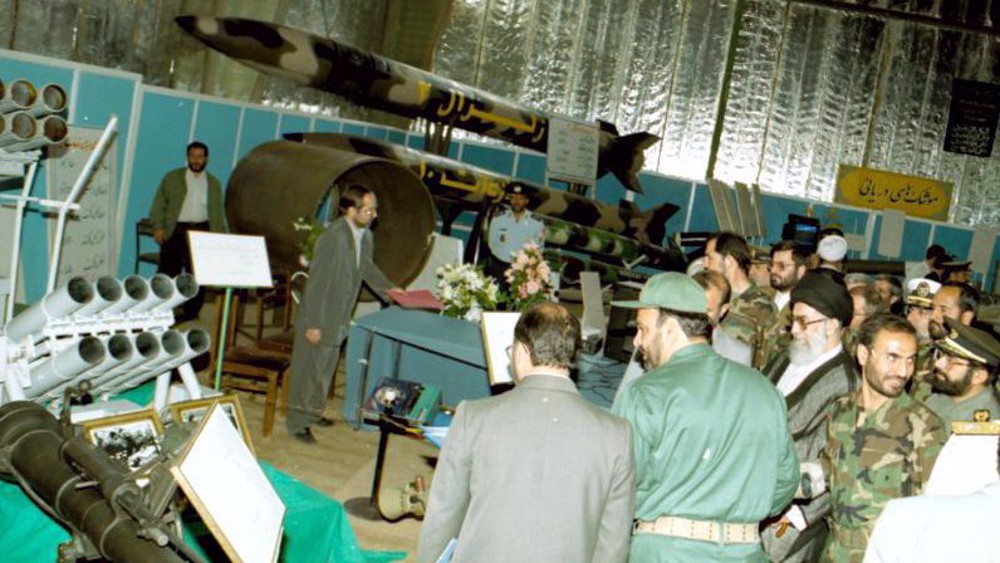
It was in this context that the first steps toward missile self-sufficiency were taken. In 1984, under Imam Khamenei's presidency, the government made a critical decision to develop a domestic missile industry.
According to the late commander of the Islamic Revolution Guards Corps (IRGC) Aerospace Force, Martyr Amir Ali Hajizadeh, Iran had obtained a limited number of missiles from Libya, and the decision was made to allocate two of these missiles for reverse engineering.
"This was an extremely difficult decision," Hajizadeh, who was martyred in the 12-day war last year, recalled. "Our stockpile never exceeded seven or eight missiles at any given time. Now, imagine taking two from your stock of just seven or eight and setting them aside for reverse engineering!"
Imam Khamenei personally visited the research team and urged them to proceed without hesitation.
This moment marked the beginning of Iran's missile industry. The first indigenous product was primitive by any standard, a device like a chute that could launch an RPG missile about 15 to 20 kilometers.
But it was a start. As Hajizadeh noted, "Leader's foresight laid the foundation for our missile industry."
Choosing the right path: missiles over aircraft
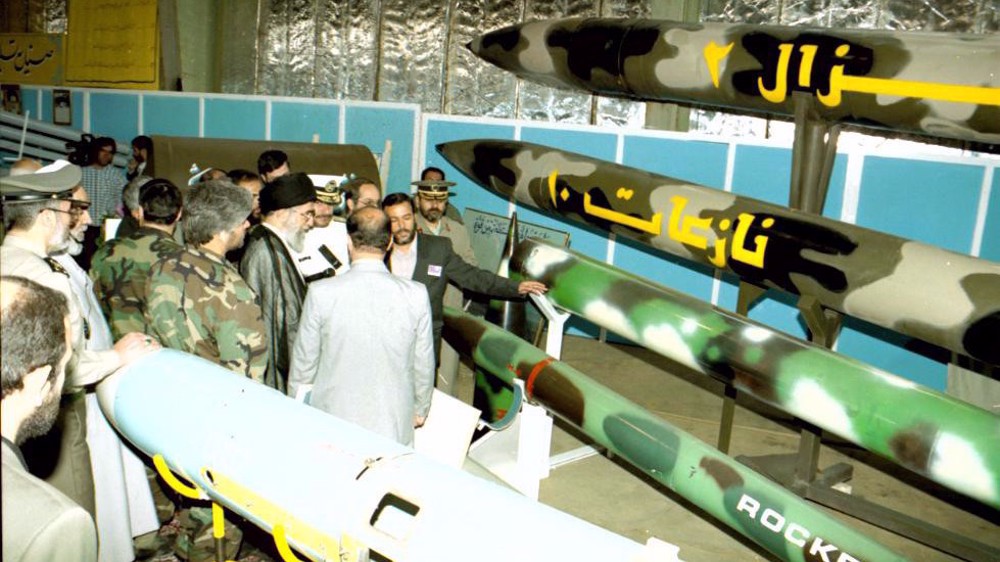
One of the most consequential strategic decisions in Iran's military development was the choice to prioritize ballistic missiles over fighter aircraft. This decision, driven by Imam Khamenei's strategic vision, has been validated by the results.
According to Hajizadeh, "Had we followed the path taken by the world, where both the East and West primarily pursued offensive weaponry through aircraft development, now reaching fifth-generation fighters, we would likely still be struggling with third-generation technology. No matter what we did, we would always be behind them, with a fifty-year gap."
Instead of chasing a technological path where Iran would perpetually lag behind, Imam Khamenei guided the country toward an asymmetric investment strategy.
Iran would develop capabilities that could effectively counter threats without attempting to match the enemy's air superiority.
The IRGC was directed to focus on missiles, while aircraft development was left to the army. This division of labor allowed for concentrated investment in a field where Iran could achieve genuine parity.
The results speak for themselves. In 1991, after the collapse of the Soviet Union, Iran was offered advanced Russian missiles at bargain prices. Military officials pushed to buy them, but Imam Khamenei forbade the purchases, insisting on indigenous development.
As Hajizadeh later admitted, "Had we bought them, our progress would have stalled."
Today, Iran ranks among the world's leading missile and drone manufacturers, with precision-strike capabilities that have been showcased in operations against the Daesh terrorist group and during the recent US-Israeli war of aggression against the country.
As Imam Khamenei stated, "Our defensive power must be such that the enemy is not encouraged to take action and make mistakes."
Precision and mass production: Leader's technical directives
Imam Khamenei's involvement in the missile program was not limited to high-level strategic decisions. He demanded continuous improvement in technical performance and insisted on specific capabilities that would transform Iran's missile force from a deterrent into a war-winning weapon.
One of the most critical directives concerned accuracy. In the early stages of missile development, Iran's missiles had limited precision, suitable only for targeting large enemy bases.
During a meeting with Hajizadeh in 2009, Imam Khamenei made his priority clear: "My priority is accuracy. Go and focus on accuracy."
When the first work was completed and accuracy reached thirty meters, the team was pleased with the achievement. When this was reported, the Leader responded that the work was excellent, but insisted: "Since you were able to do this, you can definitely achieve an error of less than ten to fifteen meters."
The team recognized that this was a very difficult task, but Hajizadeh recalled: "My argument was one sentence: it is an order, so we must go and execute it."
With divine assistance, the work was accomplished. Today, Iranian ballistic missiles with a range of two thousand kilometers can hit their targets with a margin of error of one meter, two meters, or five meters, a capability that Imam Khamenei described as "a very big thing, a very important thing."
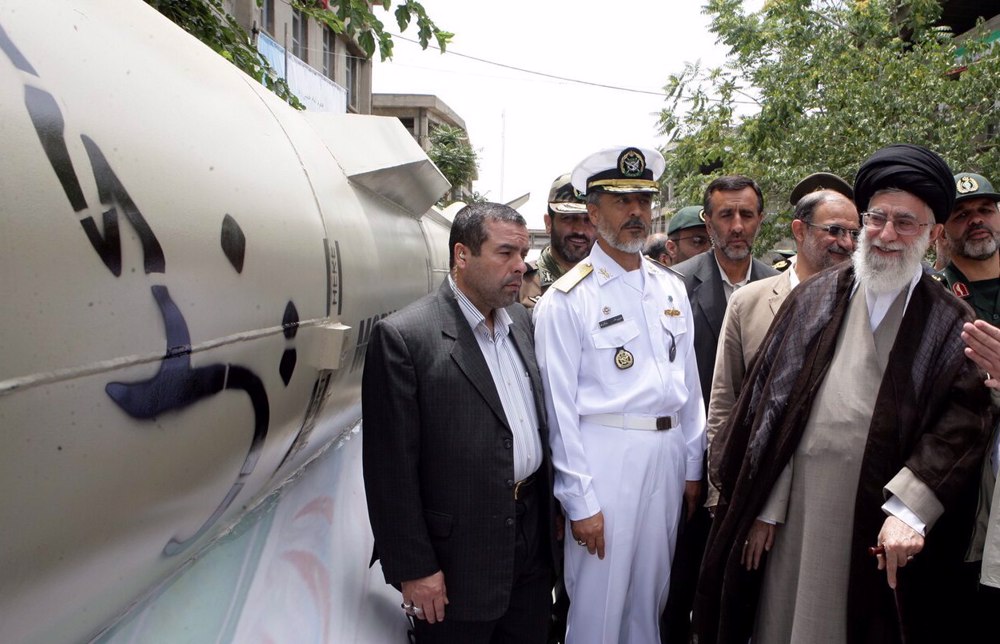
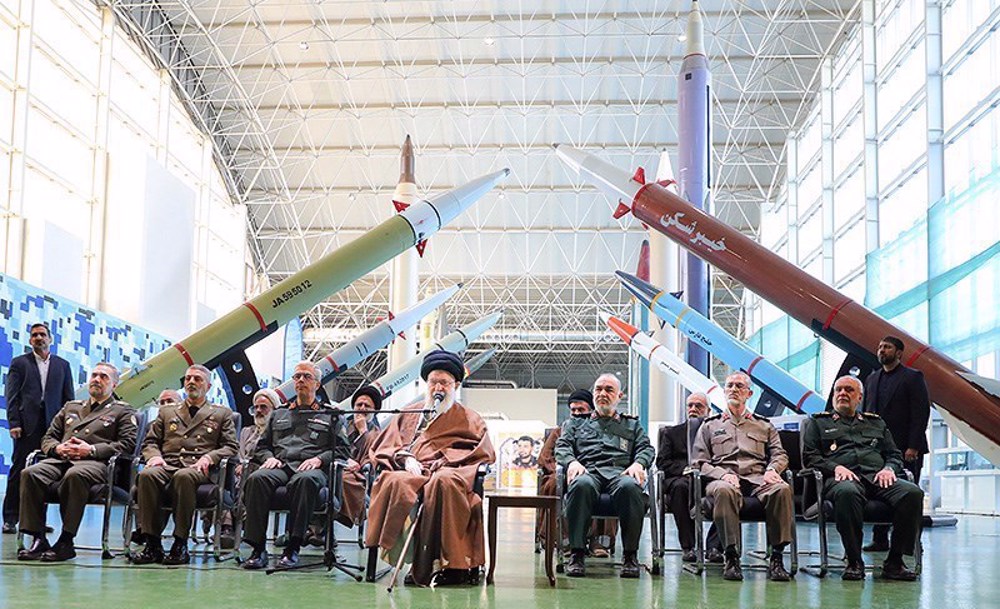
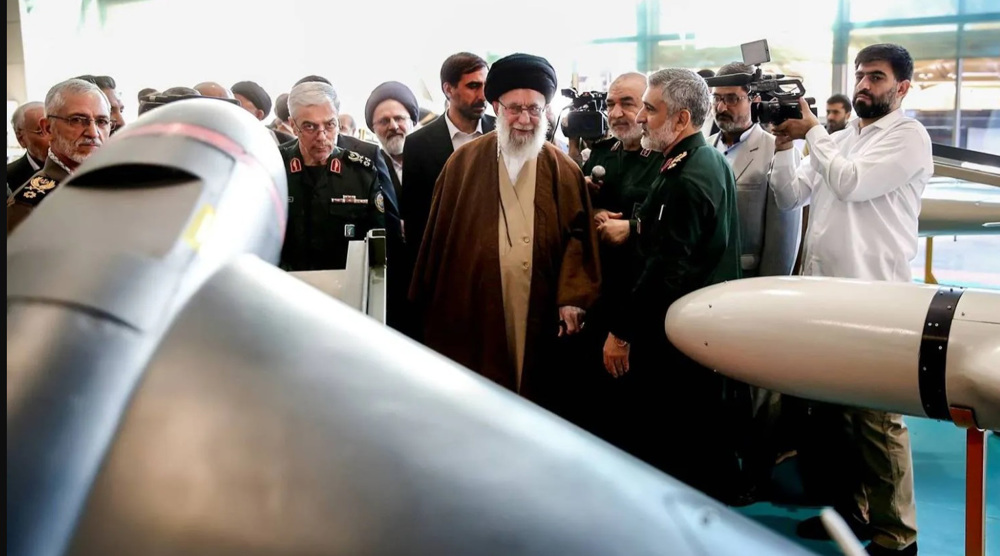
Similarly, in 2014, after visiting an exhibition of IRGC Aerospace Force achievements where advanced air defense systems were displayed, Imam Khamenei gave a new directive: "Your work was very excellent. Now go and look for quantity. We want mass production."
Mass production followed, and today Iran has a vast arsenal of missiles and air defense systems distributed across the country, ensuring that even if some are destroyed, the deterrence capability remains intact.
This combination of precision and quantity created a missile force that foreign military analysts rank among the world's most formidable and the most advanced.
Source of security: missiles as national protection
For Imam Khamenei, missiles were not weapons of aggression but instruments of security for the country. He consistently articulated the logic that Iran's enemies oppose its missile program precisely because it provides protection to people and prevents aggression.
"The construction of various missiles and missile power creates security in the country," he once stated. "The enemy knows that if one hits, ten will be hit. So missiles are a source of security and a point of strength."
This lesson was learned through bitter experience. During the imposed war, Iran had no means of responding to Iraqi missile attacks. Today, the situation is transformed.
"Today, our defense power is such that our enemies are forced to take into account Iran's capabilities in their calculations," Imam Khamenei said in one of his speeches.
"When the Islamic Republic's missile can shoot down an American aggressor that has come to the skies of Iran, or when Iranian missiles can destroy the Ain al-Assad base, then the enemy is forced to count on this country's power in its calculations."
Imam Khamenei explicitly rejected the notion that Iran should compromise its missile program in negotiations. "Europe must commit that it will not raise the issue of missiles," he stated during the JCPOA negotiations period.
"It is not acceptable at all to say the same thing at every point in time and raise the issue of missiles in different ways," he said, describing the expectation that Iran would limit its missile program while being constantly threatened militarily as "foolish and idiotic."
When some voices inside Iran echoed the enemy's line, questioning the utility of missiles, he responded with sharp criticism.
"For some to come and say, 'The world's tomorrow is tomorrow of negotiations, not tomorrow of missiles,' if this statement is said out of ignorance, then it is ignorance; if it is said out of awareness, then it is treason. How is such a thing possible?"
Responding to enemy propaganda
Imam Khamenei, as the Leader of the Islamic Revolution, consistently identified the enemy's opposition to Iran's missile program as a measure of its importance.
He noted that when Iranian drones and missiles were first unveiled, enemies dismissed them as "Photoshop." When the photos were published, they said it was fabricated.
Now, they acknowledge that Iranian drones are very dangerous and complain about their proliferation. "These are things that the Iranian elite has done; these are a credit to the country," he said.
He also highlighted the hypocrisy of European opposition to Iran's missiles. While European nations possess destructive nuclear missiles, they oppose Iran having even conventional missiles.
"Regarding missiles, they themselves are stockpiling and possessing destructive nuclear missiles that reason, tradition, religion, and the world reject," he noted.
"They are telling us not to have ordinary missiles either. What does it have to do with you? You should first correct yourself, then express your opinion on these matters."
During a 2020 meeting with military officers, he observed that enemy propaganda against Iran's missile facilities and military formations was a sign of fear.
"These American blabbermouths are really blabbermouths who say whatever comes to their mouths, without mercy and without calculation," he stated.
"This is because these basic facilities of ours were created with precise calculation and, God willing, will progress, and this enemy propaganda is due to their backwardness in this field and their fear."
Watch: How Iran became global leader in drones, missiles and air defense systems#IR46 pic.twitter.com/1HbPuD36yT
— Press TV 🔻 (@PressTV) February 7, 2025
Strategic depth and regional deterrence
Imam Khamenei's vision extended beyond Iran's borders. He recognized that Iran's defense capability was not limited to the country's territory but was connected to the broader resistance front.
This was reflected in the IRGC's missile operations against Daesh gathering centers in Deir Ezzor, Syria, which Imam Khamenei praised as "the worship of the month of Ramadan."
He also recognized the strategic depth provided by Iran's regional presence. "We have a strategic depth in the region that many nations and governments in the region support us, are interested in us, and are willing to work to serve our goals," he stated.
The enemy sought to deprive Iran of this strategic depth, just as it sought to deprive Iran of its missile capabilities. But Imam Khamenei insisted that these are non-negotiable elements of national power.
The success of this strategy was demonstrated during the recent US-Israeli aggression.
Iran's missiles and drones, developed under Imam Khamenei's guidance, inflicted significant and irreversible damage on American occupation bases and Israeli assets across the region, destroyed advanced radar systems, and forced the enemy to reconsider its foolhardy calculations.
As he had predicted, the enemy's efforts to weaken Iran's defense capabilities had failed, and the country's deterrent power had proven decisive.
The Leader of the Islamic Revolution had filled the fist of the Commander of the Faithful, ensuring that Iran could defend itself and strike back with devastating effect.
IRGC busts US-Israeli-linked team planning to stage 'terrorist acts' in southeastern Iran
Iran wins ‘war of willpower’ against enemies: Senior commander
US forces hit Iranian oil tanker near Kharg Island, escalating aggression



IRGC ballistic missile retaliation forces US aircraft carrier, destroyer to flee
VIDEO | ‘US escort a big lie’: IRGC unveils decisive targeting of non-compliant vessels in Strait of Hormuz
IRGC strikes 3 US-linked vessels, 3 trespassing oil tankers in retaliation for American attacks
VIDEO | Trump downplays costs, consequences of war on Iran
VIDEO | News Review: Trump downplays war on Iran, calling it 'small potatoes'
Iran condemns US attacks on oil tankers as violation of international law
VIDEO | News Review: US attacks Iran oil tankers
VIDEO | Nuclear madness: Who can stop Trump?



 PressTV NEWSLETTER
now
PressTV NEWSLETTER
now
 This makes it easy to access the Press TV website
