The final journey: Millions prepare to bid farewell to Iran's martyred Leader across three cities
By Mina Mosallanejad
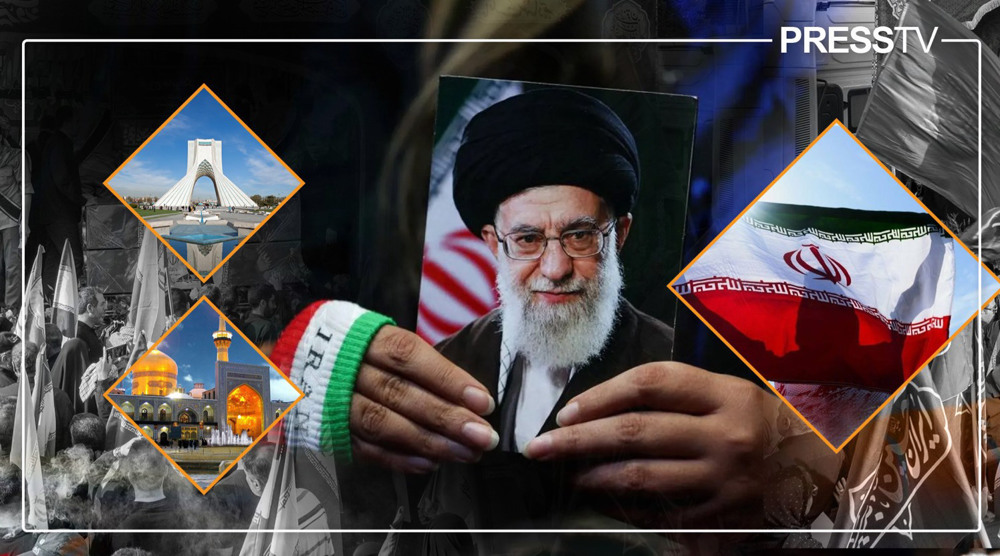
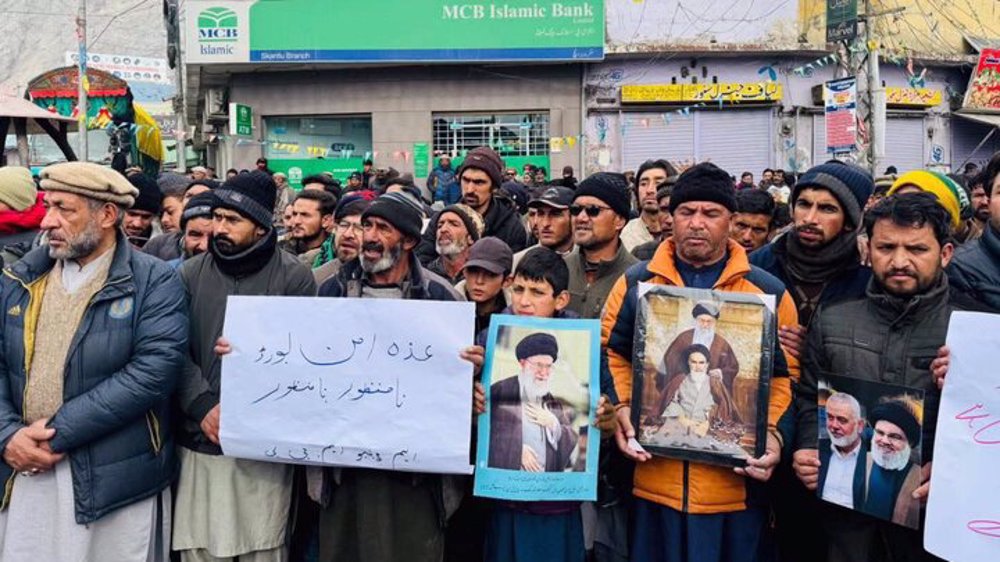
Iran is preparing for one of the largest public commemorations in its modern history as millions of mourners from across the country, alongside foreign dignitaries, religious scholars, and delegations from scores of countries, are expected to gather to pay their final respects to the martyred Leader of the Islamic Revolution, Ayatollah Seyyed Ali Khamenei.
The nationwide farewell ceremonies, spanning several days and multiple cities across Iran as well as the Iraqi holy cities of Najaf and Karbala, will be held to bid adieu to the late Leader and four members of his family who were martyred in a US-Israeli attack on February 28.
Those being honored include his son-in-law, Dr. Mesbah al-Hoda Bagheri Kani; his eldest daughter, Seyyedeh Boshra Hosseini Khamenei; his 14-month-old granddaughter, Zahra Mohammadi Golpayegani; and his daughter-in-law, Zahra Haddad Adel, the wife of Ayatollah Seyyed Mojtaba Hosseini Khamenei, the current Leader of the Islamic Revolution.
Officials have described the ceremonies as an unprecedented national and international event, reflecting Ayatollah Khamenei's political, religious, and spiritual stature in Iran and across the Muslim world.
The official program will begin on July 3, with foreign officials from over 45 countries paying tribute to the martyred Leader. It will be followed by massive public ceremonies in Tehran, Qom, Najaf, Karbala, and finally Mashhad, where Ayatollah Khamenei and members of his family will be laid to rest at the shrine of Imam Reza (AS), the eighth Shia Imam.
Alongside millions of Iranians, high-ranking officials from countries across the world, religious leaders and public figures from over 100 countries, and thousands of domestic and international journalists are expected to participate in one of the largest funeral ceremonies ever held in the Islamic Republic or worldwide.
The solemn ceremonies would carry the slogan "One Must Rise," while a clenched fist has been adopted as the official emblem of the week-long commemoration.
To facilitate nationwide participation, authorities have declared public holidays in Tehran, Qom, and Mashhad during different stages of the week-long ceremonies, while an extensive logistical, security, transportation, and medical operation has been put in place to accommodate the millions expected to attend.
Farewell ceremonies to begin in Tehran
The first stage of the nationwide commemorations will begin on Friday morning when officials from over 45 countries will gather in Tehran to pay their last respects to the martyred Leader, including many from the Muslim world.
On July 4, the doors of Tehran's Imam Khomeini Mosalla will open at 6 a.m. local time to receive the first wave of mourners. The vast mosque complex will remain open around the clock for two days to accommodate the anticipated influx of visitors.
Two major events have been planned in the capital: a public farewell ceremony and funeral prayers inside the Mosalla, followed by a massive funeral procession through the streets of Tehran on Monday.
Organizers say preparations for the ceremonies have been underway for more than a month, with numerous committees coordinating cultural programs, public services, transportation, healthcare, security, and crowd management.
According to Brigadier General Hassan Hassanzadeh, head of Tehran's funeral organizing committee, the Mosalla's central courtyard will serve as the heart of the farewell ceremony, while the surrounding grounds have been carefully divided into multiple operational zones to safely accommodate the enormous crowds expected to attend.
A Funeral Like No Other: Farewell ceremonies for the Martyred Leader of the Islamic Revolution, Ayatollah Seyyed Ali Khamenei, are set to take place from July 4 to 9.
— Press TV 🔻 (@PressTV) July 1, 2026
Tune in to Press TV for comprehensive, round-the-clock coverage.
Follow https://t.co/B3zXG73Jym pic.twitter.com/CKGUFMwalE
"We have designed several layers for public participation," Hassanzadeh said. "The main courtyard will host the central ceremony, while surrounding areas will receive visitors through designated entrances before guiding them toward the main venue."
To reduce congestion and ensure public safety, organizers have also established several large "pilgrim cities" around the Mosalla, offering a wide range of services before and after visitors enter the ceremony grounds.
According to Hassanzadeh, these facilities will provide shaded rest areas, drinking-water stations, healthcare services, prayer halls, sanitation facilities, information centers, and dedicated spaces for mothers and children.
One of the largest service compounds, covering nearly 11 hectares, has been established alongside Shahid Modarres Highway.
Another complex, named Chehel Sara, will also serve mourners, while the 15-hectare Imam Khomeini complex and the approximately 12-hectare Haqqani parking area have been designated as additional service and logistical support centers throughout the ceremonies.
Medical teams will remain stationed across the venue, while authorities have significantly expanded the number of sanitation facilities and water distribution points. Around 110 drinking-water stations are expected to operate throughout the Mosalla.
Families accompanied by children will also have access to specially designated family areas, allowing them to participate without entering the most densely crowded sections of the gathering.
Even so, officials have urged families to avoid bringing very young children, elderly relatives, or people suffering from underlying medical conditions into the most congested areas.
"The scale of the ceremony will resemble Arbaeen at the shrine of Imam Hussein (AS)," Hassanzadeh said, explaining that visitors should expect to walk between 1.5 and 2 kilometers to reach the main venue, as private vehicles will not be permitted within the central security perimeter.
He estimated that each visitor would need roughly 15 minutes to enter the main ceremony area, pay their respects, and exit, allowing millions of mourners to participate throughout the day.
"If everyone cooperates with the organizers, a far greater number of people will have the opportunity to take part in this historic and spiritual occasion," he said.
Hassanzadeh also outlined the schedule for the funeral prayer, describing it as one of the central moments of the Tehran commemorations.
"In addition to the public farewell, a special funeral prayer over the coffins of the martyred will be held at 6 a.m. local time on Sunday, July 5, allowing mourners to gather during the cooler morning hours before forming the prayer rows," he said.
Immediately after the prayer, the public farewell ceremony will resume and continue throughout the day until the evening prayers, enabling as many people as possible to pay their final respects, according to Hassanzadeh.
Once the farewell ceremonies conclude on Sunday evening, organizers will begin the final preparations for Monday's funeral procession, when millions are expected to accompany the coffins through the streets of Tehran in one of the largest public gatherings in the country's modern history.
Images from this evening's farewell ceremony for the martyred Leader of the Islamic Revolution, Ayatollah Seyyed Ali Khamenei.
— Press TV 🔻 (@PressTV) July 2, 2026
Follow Press TV on Telegram: https://t.co/LWoNSpkc2J pic.twitter.com/tzNfM1ocb1

Tehran funeral procession designed around an unprecedented crowd
While the farewell ceremonies will take place inside the Mosalla, Monday’s funeral procession will unfold across a vast swath of the capital, unlike any previous state funeral in the history of the Islamic Republic.
Hassanzadeh said months of technical studies concluded that no single avenue in Tehran could safely accommodate the unprecedented number of mourners expected to participate.
“We reached the conclusion that it would not be possible to define a single procession route,” he said. “Even Tehran’s largest streets cannot accommodate the scale of attendance we are anticipating.”
Officials estimate participation could exceed 12 million people, while some projections place attendance between 15 and 20 million.
Rather than following a conventional funeral route, organizers have created what they describe as a vast ceremonial corridor spanning multiple major thoroughfares across the capital.
The southern section stretches from Pirouzi Street to Shahid Kabiri Street, while the central corridor encompasses Enghelab and Azadi streets before extending toward Shahid Lashgari Highway. Northern sections run from Shahid Soleimani Highway through Jalal Al-e Ahmad, Ayatollah Kashani, Allameh Jafari, and the Shahid Fahmideh districts.
“It should not be described as a procession route,” Hassanzadeh stressed. “It is an extensive funeral zone connecting numerous major streets.”
The expanded layout is intended to distribute the massive crowds more evenly, improve access to public services, and ease pressure on individual gathering points.
Specially designed ceremonial vehicles carrying the coffins have also been prepared for the procession.
Hassanzadeh emphasized that an event of such extraordinary magnitude cannot be managed by state institutions alone but depends on broad public participation.
“No single organization can successfully manage a historic event of this scale,” he said. “Its success ultimately depends on the participation, cooperation, and discipline of the people themselves.”
Authorities urge orderly participation
Ali Akbar Pourjamshidian, secretary of the National Headquarters for the Farewell and Funeral Ceremonies, urged mourners to closely follow police instructions throughout the week-long commemorations.
"We ask all participants to refrain from insisting on approaching the coffins or the vehicles carrying them," he said. "Past experience has shown that such crowding can create unnecessary risks and complications."
To enable broader public participation while easing congestion, giant screens and an extensive public address system will be installed across Tehran, allowing mourners gathered in different parts of the capital to follow the ceremonies live.
Pourjamshidian also called on residents of Tehran, Qom and Mashhad to avoid using private vehicles during the ceremonies.
"The metro system and public bus network will operate free of charge around the clock throughout the farewell and funeral ceremonies," he said.
Visitors traveling from other provinces have likewise been advised to leave their vehicles at designated parking facilities on the outskirts of the cities before continuing their journey by public transport.
Authorities say parking areas with a combined capacity of more than 10,000 vehicles have been prepared around Tehran as part of the extensive nationwide logistical operation.
Watch the moment the coffin carrying the body of the martyred Leader of the Islamic Revolution, Ayatollah Seyyed Ali Khamenei, arrives at the farewell ceremony held near Tehran's Imam Khomeini (RA) Husseiniyeh.
— Press TV 🔻 (@PressTV) July 2, 2026
Follow Press TV on Telegram: https://t.co/LWoNSpkc2J pic.twitter.com/l8EItv3Dfw
Qom to host mass prayer and funeral ceremonies
Following the funeral procession in Tehran, the ceremonies will move to the holy city of Qom on Tuesday, where one of the largest religious gatherings in the city's recent history is expected to take place.
According to Pourjamshidian, the centerpiece of the Qom commemorations will be a mass funeral prayer at the Jamkaran Mosque, to be led by one of Iran's top clergy members.
Given the vast open grounds surrounding the mosque, organizers expect worshippers to fill a broad area stretching from the shrine of Hazrat Fatimah Masoumeh (AS) to Jamkaran Mosque.
"The funeral prayer will be the centerpiece of the gathering in Qom," Pourjamshidian said, adding that a funeral procession will also be held through the city, subject to logistical and crowd-management considerations.
Officials view the Qom ceremonies as a profound religious tribute to the martyred Leader of the Islamic Revolution, whose decades of service as an Islamic scholar and top jurist earned him wide recognition among seminaries, religious institutions, and people throughout the Muslim world.
Najaf and Karbala to receive the Leader after decades
The funeral ceremonies will continue on Wednesday in Iraq, following repeated requests from Iraqi religious authorities, tribal leaders, political figures, and ordinary citizens to host commemorations for the martyred Leader, according to officials.
Pourjamshidian said the coffins will be flown to Iraq, where an official reception attended by senior Iraqi officials, including the country's prime minister, is expected to be held in either Baghdad or Najaf before the public ceremonies begin.
The Iraqi program will include processions through the holy shrines of Imam Ali (AS) in Najaf and Imam Hussain (AS) and Hazrat Abbas (AS) in Karbala, where the coffins will be carried through the sacred precincts before being honored by tens of thousands of mourners.
"The decision to hold ceremonies in Iraq reflects the late Leader's religious standing," Pourjamshidian said. "Following his martyrdom, Iraq's government, parliament, tribal leaders, and religious figures emphasized that he had been their source of emulation and requested that farewell ceremonies be held in their country."
He added that Iranian authorities are working closely with their Iraqi counterparts to ensure the ceremonies proceed according to schedule.
Iranian Foreign Minister Abbas Araghchi traveled to Baghdad this week to coordinate the arrangements with senior Iraqi officials.
Iran's ambassador to Iraq, Mohammad Kazem Al-Sadeq, said the official reception is scheduled to take place on Tuesday afternoon in Najaf, followed the next day by public funeral processions at the holy shrines in Najaf and Karbala.
The Iraqi ceremonies will also carry deep personal symbolism. They will mark Ayatollah Khamenei's return to Iraq's holy shrines nearly seven decades after his last pilgrimage.
His previous visit to Najaf and Karbala took place in 1957, while a planned return in 1968 was prevented after the Pahlavi regime's notorious security service, SAVAK, barred him from leaving Iran.
Iranian academic @shbesfand says the martyred Leader was a figure who built new institutions, elevated Iran into a regional and global power.
— Press TV 🔻 (@PressTV) July 2, 2026
Follow Press TV on Telegram: https://t.co/LWoNSpkJSh pic.twitter.com/dBbjTtYXZl
Mashhad to host the final farewell
The final leg of the nationwide funeral ceremonies will take place on Thursday, July 9, in the holy city of Mashhad, where the martyred Leader and his family members will be laid to rest beside the shrine of Imam Reza (AS).
Pourjamshidian said the public funeral procession in Mashhad would be followed by the burial of the Leader and his family near the sacred shrine.
“A limited burial ceremony has been planned to ensure the interment can be carried out peacefully and with complete dignity inside the holy shrine of Imam Reza (AS),” he said.
Pourjamshidian added that the burial site had been carefully selected with future pilgrims in mind, without mentioning the exact location.
“We have sought to choose a location where both women and men will be able to visit the burial site with ease in the years to come,” he said. “The site has also been designated in a way that will not disrupt the pilgrimage to Imam Reza’s shrine or create congestion for other visitors.”
He noted that further details of the burial ceremony would be announced closer to the event.
Mashhad Mayor Mohammad Reza Qalandar Sharif also outlined preparations for the city’s farewell ceremony, saying a vast area on the western side of the Azadegan four-level interchange, along the Hazrat Seyyed al-Shohada Highway, has been designated as the main gathering point for mourners.
“The coffin of the martyred Leader and his family will be transferred to this location, where people will gather on July 9 to bid them farewell before the procession continues to the burial site,” Qalandar Sharif said.
He added that nearly 200 hectares of land are being prepared by the municipality to accommodate the anticipated crowds.
“Our teams are working around the clock to ensure the site is fully ready ahead of the ceremonies,” he said.
Leaders from more than 45 countries expected to attend
Alongside millions of Iranian mourners, officials say the ceremonies will attract one of the largest international gatherings ever hosted by the Islamic Republic.
According to Pourjamshidian, senior officials and heads of state from more than 45 countries, together with religious scholars, scientists and leaders representing over 100 nations, have officially announced their intention to attend and pay tribute.
Large public delegations from neighboring countries, including Iraq, Pakistan and Afghanistan, are also expected to travel to Iran.
🔸The Leader's Story 🔸
— Press TV Documentary (@presstvdoc) July 2, 2026
The Humble Home That Shaped a Leader
Discover the modest household where Ayatollah Khamenei was raised, the influence of his parents, and the values of simplicity, faith, and loyalty that laid the foundation for his future leadership. pic.twitter.com/ZWQy2yOjKK
A special international tribute ceremony for foreign leaders, senior officials and religious figures is scheduled to take place in Tehran on Friday, July 3, before the public funeral events.
Among the highest-ranking confirmed guests are Tajik President Emomali Rahmon, Iraqi President Nazar Amidi, Iraqi Parliament Speaker Haibat al-Halbousi, Turkmenistan’s National Leader Gurbanguly Berdimuhamedow, Georgian President Mikheil Kavelashvili, Pakistani Prime Minister Shehbaz Sharif, and Armenian Prime Minister Nikol Pashinyan.
Russia will be represented by Dmitry Medvedev, deputy chairman of the country’s Security Council, who will attend as President Vladimir Putin’s special envoy.
Turkey is expected to send Vice President Cevdet Yılmaz, while the Taliban administration in Afghanistan will be represented by Prime Minister Mullah Hassan Akhund. Bangladesh will dispatch Prime Minister Tareq Rahman along with Parliament Speaker Hafizuddin Ahmed.
Other senior officials expected to attend include Azerbaijani Parliament Speaker Sahiba Gafarova, Kazakh Foreign Minister Yermek Kosherbayev, and Cuba’s Higher Education Minister Walter Baluja García.
India will be represented by a high-level delegation led by retired Lieutenant General Syed Ata Hasnain, accompanied by Minister of State for External Affairs Pabitra Margherita, while China is also expected to send senior representatives.
Thousands of journalists to cover the ceremonies
The funeral ceremonies are also expected to receive unprecedented international media coverage.
According to Iman Attarzadeh, spokesperson for the funeral headquarters, around 14,000 journalists, photographers, documentary filmmakers and digital content creators have registered to cover the event.
The figure includes more than 900 foreign media representatives, comprising approximately 300 journalists from international news organizations, 350 correspondents based in Iran, and nearly 300 foreign bloggers and independent digital creators.
Attarzadeh described the turnout as the largest media deployment ever recorded for a single event in the history of the Islamic Republic.
British politician @georgegalloway hailed the sacrifices of the martyred Leader of the Islamic Revolution, Ayatollah Seyyed Ali Khamenei, describing the Leader as an inspiration for hundreds of millions around the globe.
— Highlights (@highlightsnews1) July 2, 2026
Follow Press TV on Telegram: https://t.co/mtgZgtn5i7 pic.twitter.com/Cs6q4stH2o
Qalibaf calls for nationwide participation
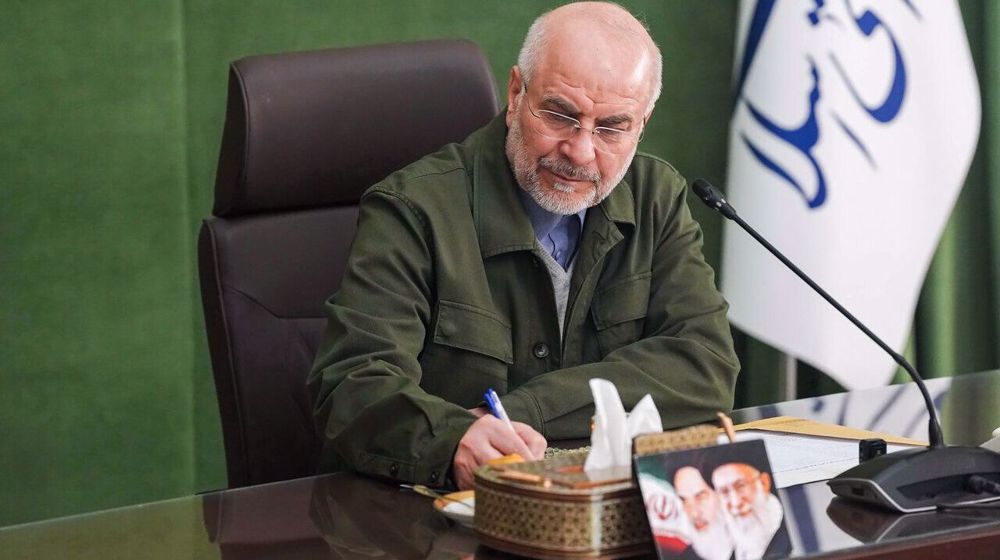
Parliament Speaker Mohammad Baqer Qalibaf called on Iranians to take part in the nationwide ceremonies, describing the funeral as both a tribute to the martyred Leader and a demonstration of national unity.
He urged the Iranians to rise and carry the nation’s call for justice to the world: “The world must know that the noble people of Iran will neither remain silent in the face of oppression and arrogance nor let the blood of their Imam go unanswered.”
“Every step taken toward these ceremonies is a tribute to a man who devoted his life to the people. Every tear shed over this tragedy reflects the profound bond between the nation and its sincere servants, and every declaration of loyalty testifies that the path paved by the blood of the martyrs will continue.”
The top legislator and lead negotiator prayed for the martyred Leader and expressed hope that the Iranian nation would continue his legacy.
“May Almighty God unite the soul of the martyred Leader with the prophets, the righteous and the martyrs, and grant the great nation of Iran the strength to continue on the path of dignity, progress and honor under the guidance of its courageous and devoted leadership, Ayatollah Seyyed Mojtaba Khamenei.”
National Elites Day: Remembering Iranian scientists and academics martyred in two imposed wars

Iran’s Tabas UNESCO Global Geopark wins top two prizes in international competition
From 1980s to 2026: The legacy of Sacred Defense and transformation of Iranian defense doctrine



Asian Games 2026: Iran expands its golden footprint as new stars rise and women make history
Russia issues warning to foreigners to leave Ukraine ahead of ‘massive retaliatory strikes’
‘Whole neighborhoods reduced to rubble’: Angelina Jolie shares images of Israeli destruction of Gaza
VIDEO | Tens of thousands protest in Madrid after housing relief measures rejected
VIDEO | Hodeidah Port: A lifeline under siege
VIDEO | US suspends consular services in Brazil ahead of election
VIDEO | British politician George Galloway leads thousands in Palestine protest
VIDEO | Annual anti-war march attracts large crowds in Berlin


 PressTV NEWSLETTER
now
PressTV NEWSLETTER
now
 This makes it easy to access the Press TV website
