
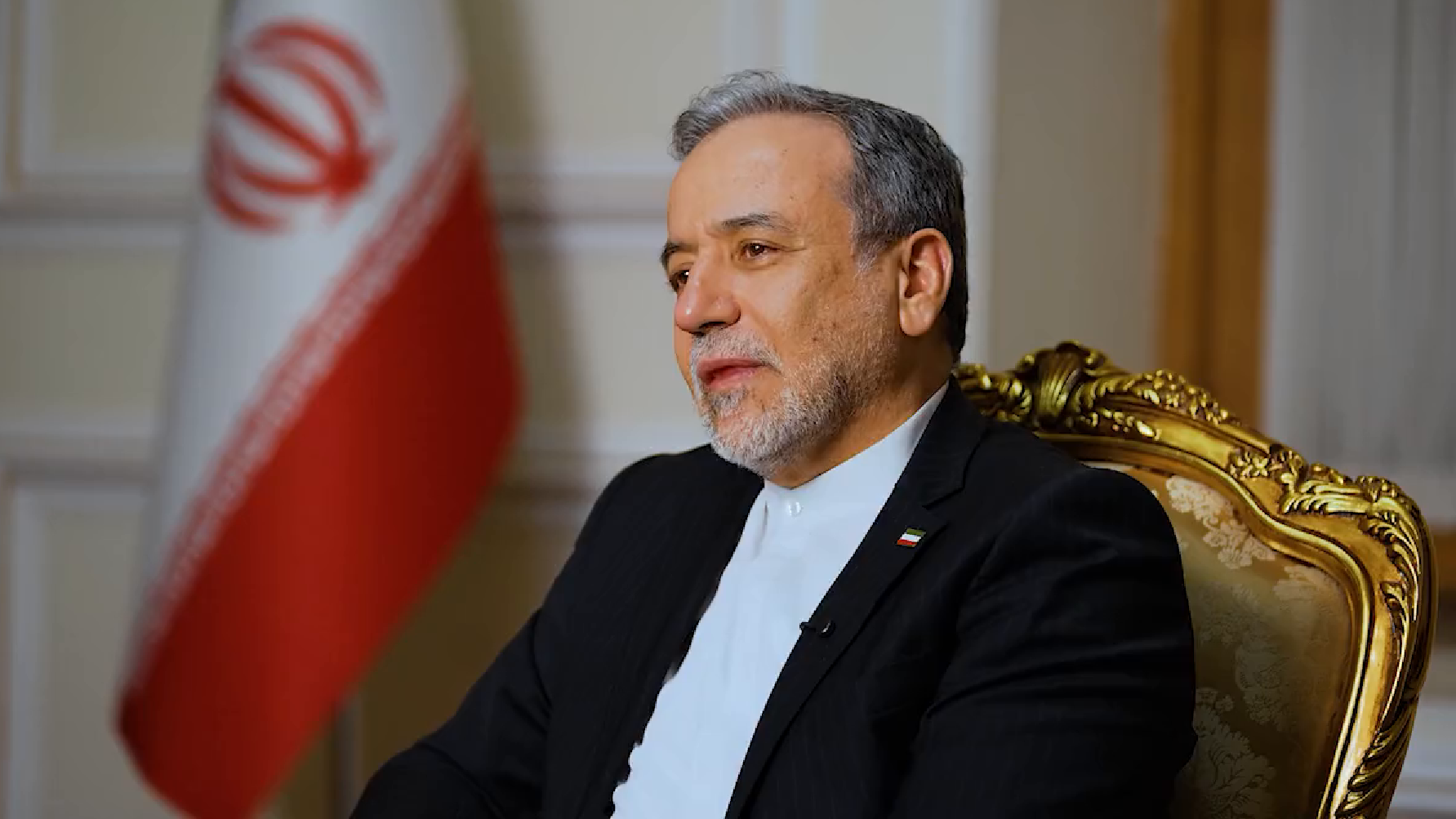
Iranian Foreign Minister Abbas Araghchi says the recent 40-day imposed war fundamentally altered the regional perception of security, proving that foreign military presence is a liability rather than a guarantee of safety.
In an interview with the Iranian Vice Presidency for Communications published on Tuesday, Araghchi said the war exposed the fatal flaws in relying on external powers for protection and paved the way for a new era of collective security in the Persian Gulf.
“In the previous view, there was a reliance on foreign forces to provide security,” Araghchi stated.
“But the recent war showed that foreign forces and foreign bases not only failed to bring security, but actually became sources of insecurity.”
The Iranian minister said countries without US military installations remained significantly safer and less impacted by the war than those that hosted American troops, which ultimately served to protect the Zionist regime rather than their host nations.
New vision for collective security
Araghchi said a more accurate and correct understanding has now emerged among regional countries that security in the Persian Gulf must inherently be collective and must absolutely encompass economic dimensions.
“It is impossible to achieve permanent peace with economic imbalances among regional countries, just as it is impossible to achieve sustainable, collective security amidst regional insecurity and imbalance.”
Consequently, he said, new perspectives have formed, and Iran has resumed contacts with these nations.
“With this new outlook and fresh communications, I believe we have a good path ahead.”

Highlighting specific diplomatic breakthroughs, Araghchi pointed to Qatar’s crucial role.
“One of these countries I must mention is Qatar, which explicitly and formally entered into mediation between us and the United States, playing a very important role alongside Pakistan.”
While acknowledging that similar contacts have begun with other nations, he expressed strong optimism that Iran’s future relationship with the Persian Gulf region will be highly positive, ushering in a new era with fresh approaches that will benefit all countries and peoples of the region.
End of ‘weak Iran’ myth
Araghchi said that after 40 days of resistance, the perception of a “weak Iran,” mainly caused by theforeign-backed January riots and the country’s economic hardships caused by the sanctions, has been completely eradicated and replaced by the image of a resilient and resistant Iran capable of standing on its own feet under the most difficult conditions.
“It was unimaginable that we could resist for 40 days against the world’s seemingly strongest military, which possesses nuclear weapons, and another military that considers itself the strongest in the region, which also has nuclear weapons.”
He praised the extraordinary resilience of the Iranian people and state institutions, noting that even when police facilities and infrastructure were destroyed, personnel continued their duties from under bridges and inside vehicles to maintain societal security.
"His principles and his guidance will continue to guide and teach the people on the path of righteousness and truthfulness"
— Highlights (@highlightsnews1) August 18, 2026
Syed Mudasir Rizvi underscores the enduring influence of martyred Leader Ayatollah Seyyed Ali Khamenei, whose principles continue to guide Iran. pic.twitter.com/cJObku5uV1
Looking forward, the foreign minister said Iran’s foreign policy framework will now be built upon a strong and confident nation fully in control.
“From now on, the image the Iranian people will see is that of an authoritative, strong, and resolute foreign policy, one that seeks national interests, defends the rights of the people, and pursues Iran's glory.”
“I have told all my colleagues: be aware that you now represent a nation that has defeated a superpower,” Araghchi stated.
“Therefore, hold your heads high. Our flag is flying high. We must speak to the world proudly and assertively and unapologetically demanding what is owed, to secure the rights of the Iranian people and show the world the face of a powerful Iran.”
 This makes it easy to access the Press TV website