In first Ashura since Leader's assassination, Iran vows never to forget or forgive
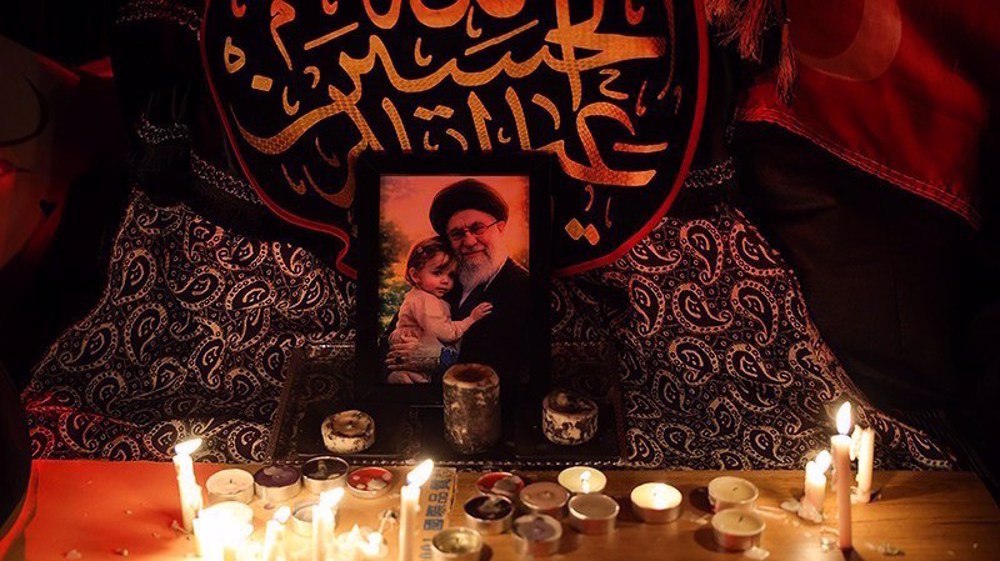
President Masoud Pezeshkian said Ashura embodies Imam Hussein's (AS) enduring call to resist oppression, while Foreign Minister Abbas Araghchi paid tribute to the late Leader of the Islamic Revolution Ayatollah Seyyed Ali Khamenei, describing him as the "Master of Martyrs of the Islamic Revolution of Iran."
Millions of mourners across Iran marked Ashura on Thursday. Ashura, the 10th day of the lunar month of Muharram, commemorates the martyrdom of Imam Hussein (AS), the third Shia Imam and grandson of Prophet Mohammad (PBUH), whose sacrifice in the Battle of Karbala in 680 AD has become an enduring symbol of the struggle for justice against tyranny.
Speaking on the sidelines of Ashura noon prayers at Imam Hussein Mosque in Sahand, East Azarbaijan Province, Pezeshkian said the martyrdom of Imam Hussein (AS) and the pure blood of the martyrs of Karbala "set in motion a course of history that awakens dormant minds day by day and calls the oppressed to stand against oppression."
Images from tonight's mourning ceremony held at Tehran's Enghelab Square, commemorating the martyrdom anniversary of Imam Hussein (AS).
— PressTV Extra (@PresstvExtra) June 26, 2026
Follow Press TV on Telegram: https://t.co/h0eMpifVIe pic.twitter.com/FLYJz5MbqS
The president said mourning Imam Hussein (AS) must be reflected in action, saying it is inconsistent to shed tears for the Imam while remaining indifferent to injustice, poverty and hunger in society.
"The path of Imam Hussein is the path of dignity, honor and the fight against oppression and injustice, and this must be demonstrated in practice; words and slogans alone are not enough," he said.
Pezeshkian described Imam Hussein's path as a guiding light for all those seeking dignity, freedom and honor, saying followers of the Imam are selfless people who pursue truth and embody knowledge, creativity, capability and devotion.
The president said a country inspired by Imam Hussein (AS) should be one of dignity and honor where "no Iranian and no follower of Imam Hussein's path suffers from poverty, hunger or injustice."
‘Master of Martyrs’
In a post on X, Araghchi said Shia Muslims revere Imam Hussein (AS) as the "Master of Martyrs" because he sacrificed everything on the plains of Karbala.
"Likewise, we will never forget nor forgive the martyrdom of Grand Ayatollah Seyed Ali Khamenei as the Master of Martyrs of the Islamic Revolution of Iran," he wrote.
This year's Ashura carries added significance in Iran as it is the first Muharram since the martyrdom of Ayatollah Khamenei, who was assassinated during an unprovoked US-Israeli war of aggression that began on February 28.
"Martyrdom is a merchant's way of dying"
— Press TV 🔻 (@PressTV) June 25, 2026
Newly released footage shows a heartfelt meeting between the families of the martyrs and the martyred Leader of the Islamic Revolution, Ayatollah Seyyed Ali Khamenei.
Follow https://t.co/B3zXG73Jym pic.twitter.com/emcjtWh0ki
Across Iran, cities and villages were filled with mourning processions as millions of devotees dressed in black took part in traditional Ashura rituals, including rhythmic chest-beating, elegies and the distribution of votive food, or nazri, to mourners and the needy.
The ceremonies, which culminate on Ashura after the first ten days of Muharram, commemorate Imam Hussein (AS) and his 72 loyal companions, who were martyred in Karbala after standing against the forces of the Umayyad caliph Yazid I.
For Shia Muslims, the annual observances symbolizes the timeless confrontation between truth and falsehood and humanity's enduring struggle against oppression—the cause for which Imam Hussein (AS) made the ultimate sacrifice.
Media reports of Iran showing nuclear flexibility false; US trapped in Hormuz Strait: Source
Iraqis hold nationwide rallies against suspension of Iranian flights
Iranian delegation will hold talks with mediators in New York: Report



Jordan: The Kingdom of repeated compromise
The fallacy of US delusions about Iran’s economic collapse
VIDEO | US throwing cuba's tourism sector on verge of collapse
VIDEO | Yemenis rally behind Ansarullah amid recent military gains
VIDEO | ‘Attrition, low morale deepen strain on US troops amid war on Iran,’ analyst says
Iraqi resistance group rejects disarmament, vows to maintain support for Lebanon
Israeli attacks kill six Palestinians in Gaza as ceasefire violations mount
Iran warns regional states of Israel’s malicious intents following reports of Netanyahu UAE visit


 PressTV NEWSLETTER
now
PressTV NEWSLETTER
now
 This makes it easy to access the Press TV website
