At BRICS, Iran says US bases must go, slams 'blind war' on global energy
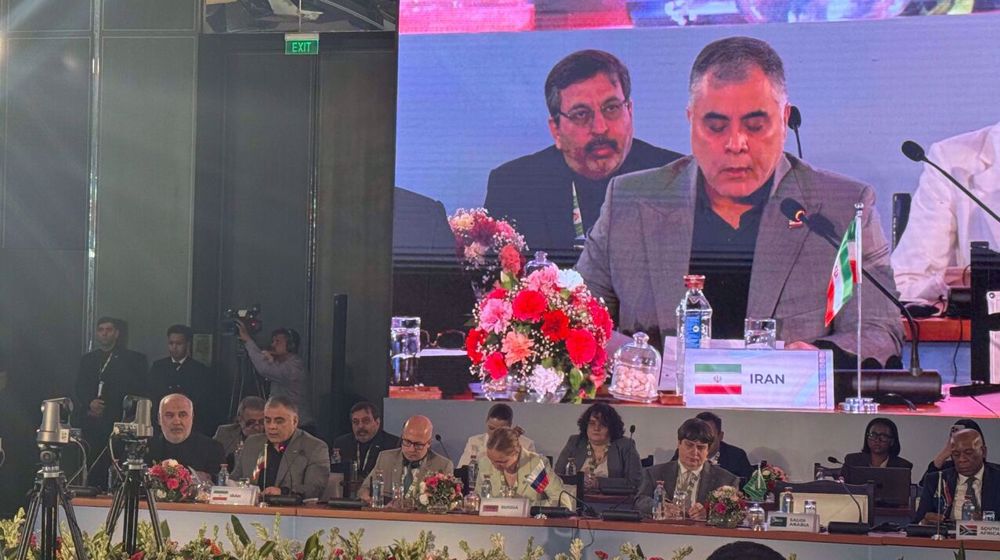
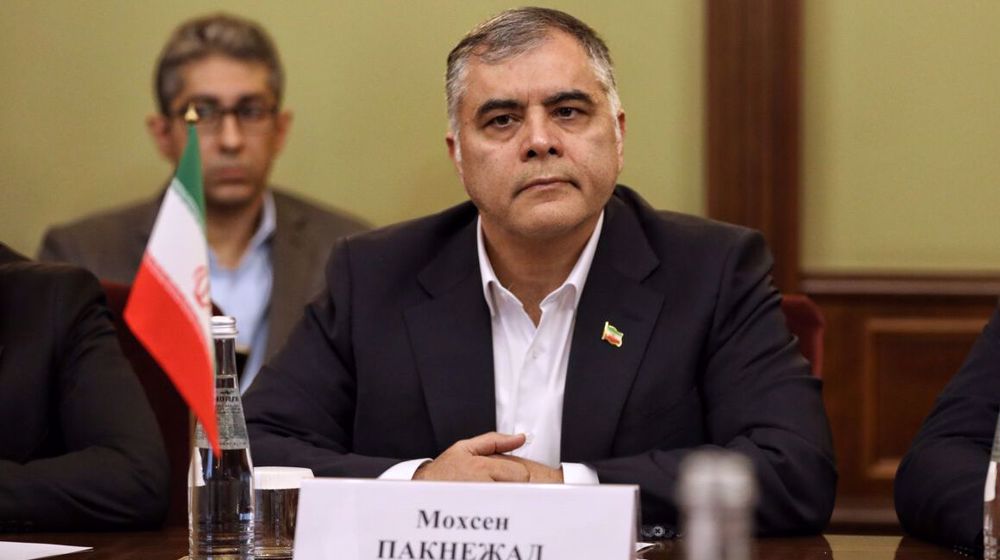
Iranian Petroleum Minister Mohsen Paknejad has called for the withdrawal of all US military forces from West Asia and the dismantling of American bases in the region as the only path to global energy stability.
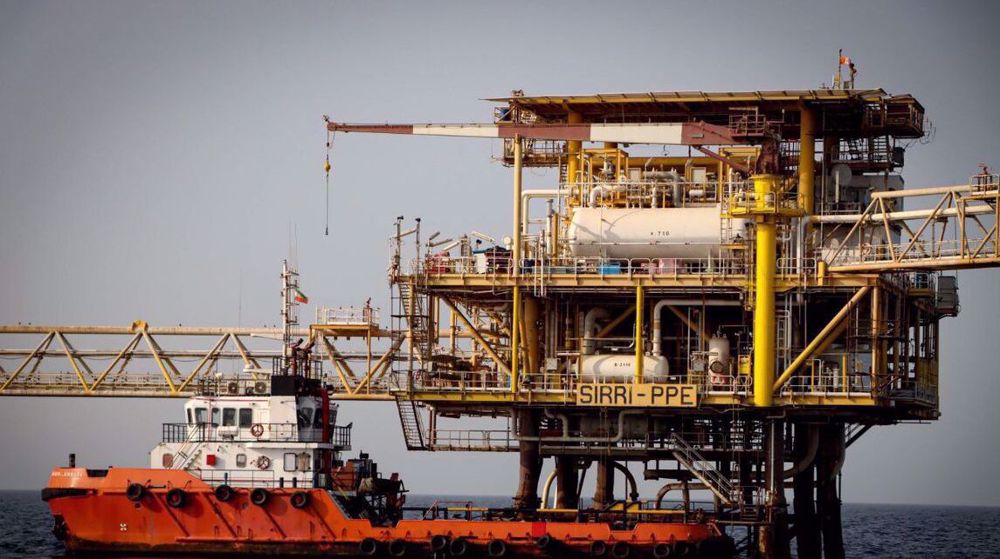
In his address to the 11th BRICS Energy Ministers' Meeting in Gurugram, India on Thursday, Paknejad detailed the full scope of repeated attacks on Iran's oil, gas, refining and petrochemical infrastructure that he described as a "blind war against global energy security."
"The only way to reach stability and security in West Asia, which supplies a major portion of the world's energy, is the withdrawal of foreigners from the region, the dismantling of US bases, and entrusting the security of this strategic region to regional countries," he said.
His remarks come days after a landmark June 17 Memorandum of Understanding between Iran and the United States that commits Washington to lifting all sanctions on Tehran, unfreezing Iranian assets, and allowing dollar-based transactions.
The minister said Iran is ready to play "an active and constructive role" with BRICS members to achieve secure and affordable energy objectives, but warned that the global energy system is facing "challenges and growing uncertainties more than ever before" – from geopolitical risks and market volatility to climate change and investment constraints that "cannot be addressed by one or two countries alone."
In his address, Paknejad detailed the consequences of the US-Israeli war, telling the assembled ministers that the “repeated attacks by aggressors on Iran's oil, gas, refining, and petrochemical infrastructure during this period were not merely an attack on one country's infrastructure, but a blind war against global energy security."
The attacks, he said, caused physical destruction to facilities, "the martyrdom and wounding of a number of oil industry personnel," widespread environmental consequences, disruption in the production of raw materials and the supply chain of essential goods needed for the lives of the Iranian people, and the loss of income and employment for thousands of families in the Persian Gulf region.
"The consequences of such aggression have now led to an energy crisis, a global increase in the price of raw materials and manufactured products, economic pressure, and increased living costs for many civilian populations," Paknejad said.
He described the attacks as a "flagrant violation of international law and specifically the United Nations Charter" that "must be condemned at every level."
Elsewhere in his remarks, the minister cautioned that efforts to rapidly phase out fossil fuels through "one-sided and eliminationist policies" in international climate negotiations could backfire, endangering global energy security and worsening energy poverty.
"While emphasizing the necessity of collective action to mitigate climate change, this warning must also be taken seriously that adopting one-sided and eliminationist policies in the energy system endangers global energy security and deepens energy poverty in many societies and deprived regions of the world," he said.
He said that "all energy sources and technologies must play a role" in meeting growing demand, citing the latest OPEC World Oil Outlook published last week, which forecasts that oil and gas will still account for more than 53% of global energy needs through 2050, with no peak in global oil demand visible by that horizon.
Paknejad noted that despite the growth of renewables, fossil fuels still account for about 57% of global electricity generation, with that share projected at around 34% in 2050.
"Oil remains the backbone of the world's transportation and industrial sectors, while natural gas, with its cleaner fuel, flexible application, and growing infrastructure, plays a pivotal role in the energy transition," he said.
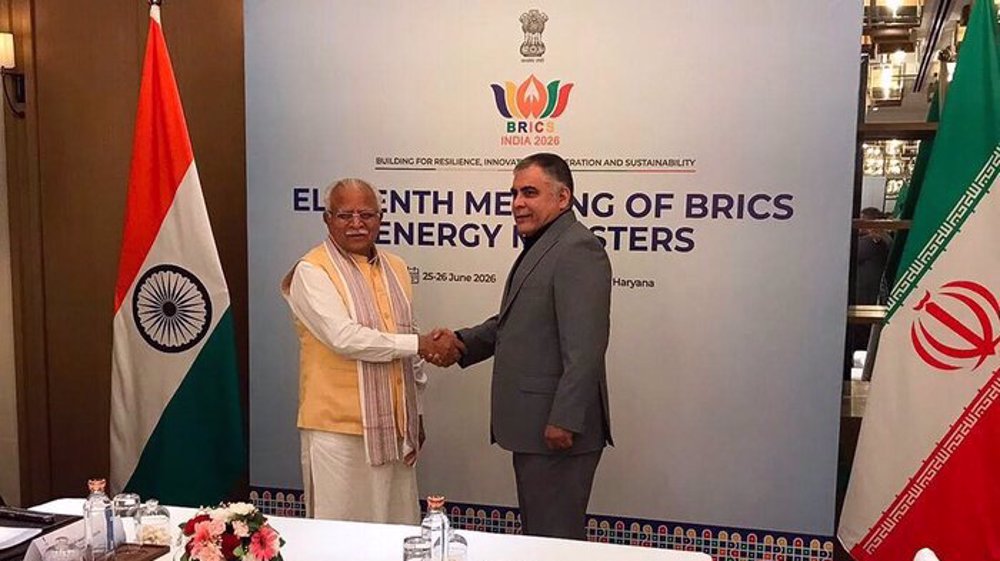
The minister said Iran, as one of the world's largest oil and gas producers, has achieved its infrastructure development objectives despite years of sanctions, with annual natural gas production reaching over 280 billion cubic meters in 2025 – about 7% of global output.
Crude oil production capacity has reached 4.2 million barrels per day, while refining capacity stands at 2.4 million barrels per day.
He added that Iran possesses thousands of kilometers of pipelines for transporting crude, petroleum products, and natural gas, and that electricity generation capacity had exceeded 100,000 megawatts, with both fossil-fuel and non-fossil generation expanding.
Calling BRICS an "exceptional potential for energy cooperation," Paknejad proposed collaboration across oil and gas, renewables, power grids, hydrogen, energy efficiency, artificial intelligence, and digitalization.
He warned that global energy markets face "serious risks and threats" from trade measures and sanctions "under baseless pretexts against countries with large oil and gas reserves," and said BRICS members bear a "shared responsibility to maintain stability and prevent disruption in energy markets and ensure the uninterrupted flow of energy resources."
"Both aspects of energy security – supply security for consumers and demand security for producers – must be realized," he said.
As a practical step, he proposed a "BRICS Energy Security Partnership" under the bloc's 2025-2030 Energy Cooperation Roadmap to enhance resilience, stability, and security across the energy value chain.
The framework would include regular information exchange on market developments, cooperation on protecting critical energy infrastructure, enhancement of emergency response, encouragement of strategic energy investment, and support for uninterrupted supply among members.
"Achieving secure, affordable, reliable, sustainable, and inclusive energy depends on the collective effort and cooperation of all of us," Paknejad said.
"The Islamic Republic of Iran is ready to participate actively and constructively with all members of the BRICS group in realizing this strategic goal."
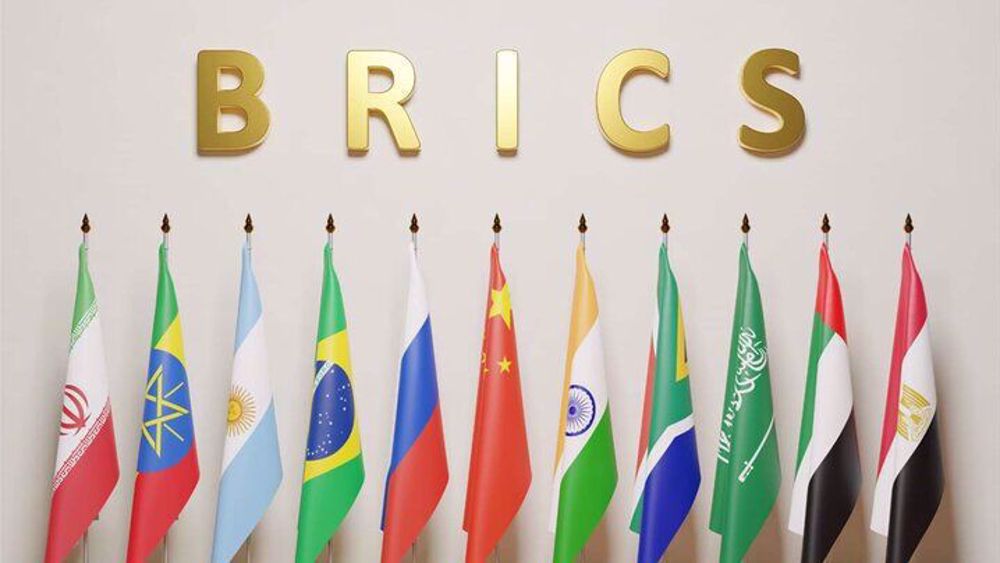
The two-day meeting in Gurugram, on the outskirts of New Delhi, brings together energy ministers from the expanded BRICS group, which now comprises Brazil, China, Egypt, Ethiopia, India, Indonesia, Iran, Russia, Saudi Arabia, South Africa, and the United Arab Emirates .
Post-war reconstruction drives Iran's petrochemical expansion
Iran turns a dormant volcano into a clean energy asset
Iran’s first geothermal power plant joins national electricity grid



Fire at factory in Riyadh kills16 Bangladeshi migrant workers
Israeli forces, settlers carried out 108 attacks on Palestinian journalists in July
Rights group urges disclosure of Gaza detainees’ fate, probe into Israeli abuses
Judiciary chief congratulates new secretary of Supreme National Security Council
One year on, Gaza journalist Anas Al-Sharif remembered as brave chronicler of Israel’s genocidal war
Mecca defense pact not directed against any country, open to others: Pakistan
Greenland escalates warning to Trump-linked oil firm over unauthorized drilling equipment
Haj Qassem boosters meet Kheybar Shekan, Fattah warheads: Iran’s new hybrid missile configuration


 PressTV NEWSLETTER
now
PressTV NEWSLETTER
now
 This makes it easy to access the Press TV website
