One year after his killing, Gaza journalist Anas Al-Sharif remembered as brave chronicler of Israel’s genocidal war
By Press TV Website Staff
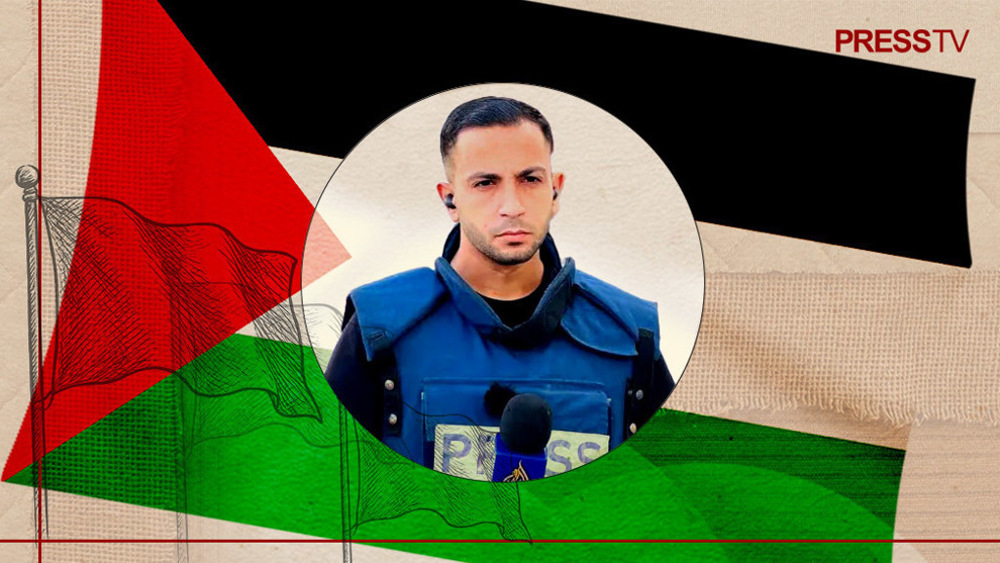
A year after his brutal killing in an Israeli strike in Gaza, the silence left behind by intrepid Palestinian journalist Anas Al-Sharif is still deafening.
For nearly two years of the Israeli-American genocidal war on the besieged Palestinian coastal territory, his voice carried the sounds, images and anguish of Gaza into homes around the world. He reported through bombardment, hunger, displacement and death, standing before the camera when the instinct to run, hide or simply survive would have been understandable.
Then, in the early hours of August 10, 2025, that voice was brutally silenced.
Young Palestinian journalist Anas Al-Sharif and four fellow reporters were killed in a targeted attack for documenting the devastation of Gaza and exposing the genocide.
One year later, his absence has become part of the story he spent his final years telling.
On that fateful day, Israeli occupation forces carried out a targeted attack on a media tent outside Al-Shifa Hospital in Gaza City, killing five Al Jazeera journalists, including Anas, Mohammed Qreiqeh, and photojournalists Ibrahim Zaher and Mohammed Noufal.
For nearly two years, he had become one of the most recognizable Palestinian faces of the war, appearing on screens with the ruins of northern Gaza behind him.
Just hours before his killing, Sharif posted on X about Israel’s intense “fire belt” bombardment pounding eastern and southern Gaza City. It was the kind of update that had become synonymous with his work in the place where the genocidal war was unfolding.
There was no studio separating him from the war and there was no safe distance. There was Gaza and there was Sharif, standing in the middle of it, documenting the genocide.
The 28-year-old journalist was known for his tireless and fearless reporting from northern Gaza throughout the genocidal war that began on October 7, 2023, and that had claimed more than 61,000 lives by the time of his brutal killing.
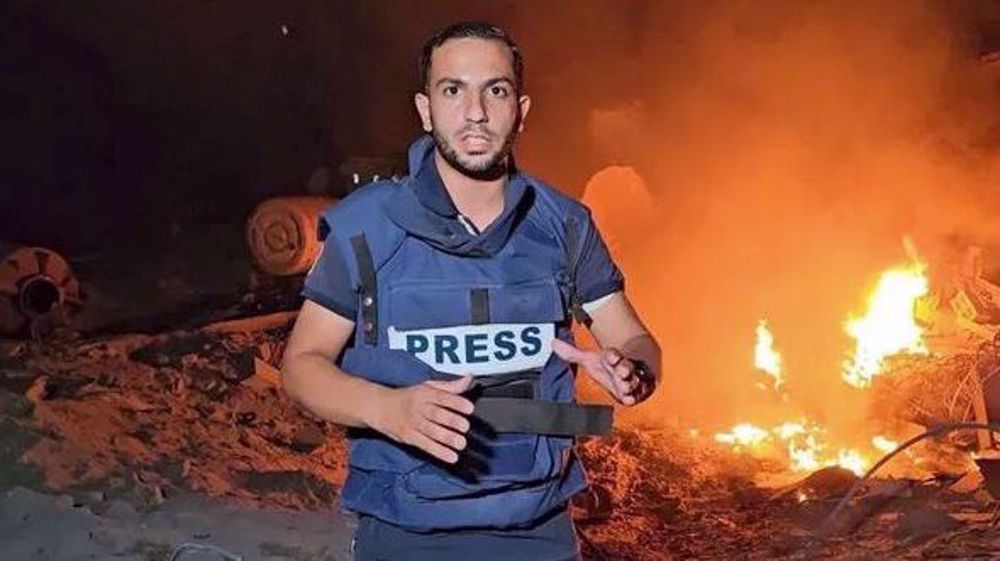
His final video broadcast captured the chaos and terror of the war with loud explosions echoing through the night, the sky suddenly ablaze with the searing orange flashes of incoming missiles.
A year later, that final footage carries a different weight. The journalist who spent 672 days documenting the genocide had himself become part of the record.
A brutal massacre of journalists
The circumstances surrounding Sharif’s killing pointed to an intentional war crime. The strike occurred at night, with Israeli occupation forces acknowledging that they had killed Anas and his fellow reporters. In fact, they celebrated his cold-blooded murder.
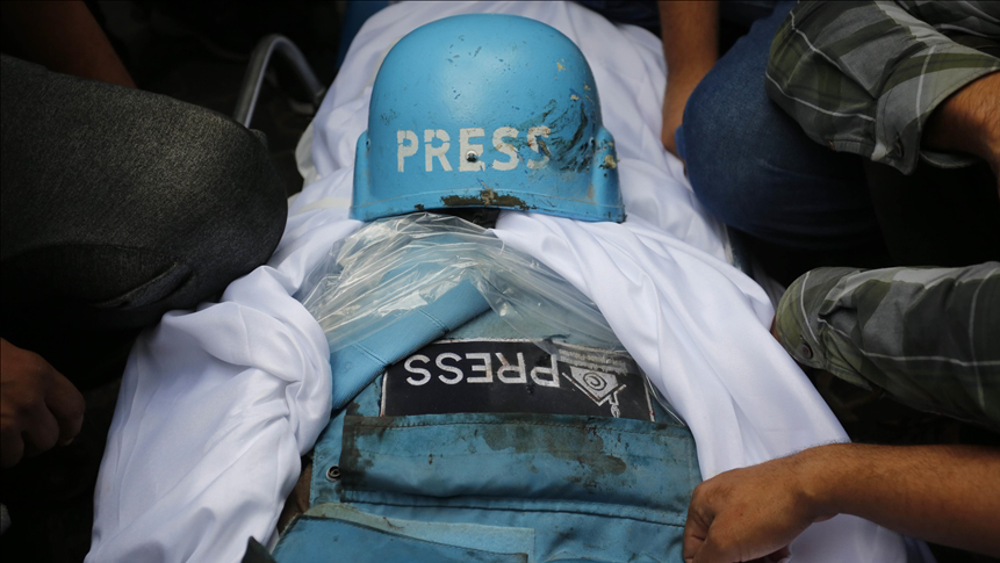
The tent was marked as a press area, while the journalists were identifiable through their equipment and protective vests. The attack killed seven people in total and rescue efforts were severely hampered by continuing Israeli attacks.
For those who had watched Sharif work, the circumstances were especially devastating. He repeatedly appeared live from areas under bombardment and his work had become a bridge between Gaza and an outside world increasingly dependent on local journalists to understand what was happening on the ground.
By the time he was killed, Israeli occupation forces had killed nearly 300 journalists since the beginning of the genocidal war on Gaza, including many of Sharif’s former colleagues.
The Palestinian Journalists Syndicate (PJS) condemned the deliberate targeting of journalists in an attempt to suppress documentation of horrendous war crimes.
But Sharif’s killing gave those numbers a face that millions had come to recognize. For viewers who had followed his reports night after night, he was no longer simply a correspondent listed in a news report. He was the man who appeared on screen when the bombs fell, the man who reported from hospitals overwhelmed by casualties and the man whose own tragic death became one more story Gaza was forced to tell.
The smear campaign against Sharif
In the immediate aftermath of the strike that killed Anas, the Israeli military relaunched a smear campaign against Sharif, accusing the slain reporter of leading a Hamas cell allegedly responsible for “advancing rocket attacks against Israeli civilians and troops.”
Military officials claimed to possess “unequivocal proof” of his militant activities, yet no such evidence was publicly disclosed. The allegations immediately drew scrutiny from activists and press freedom advocates, who said they fit into a broader pattern of incitement against journalists reporting from Gaza.
Just a week before his death, an Israeli military spokesperson had publicly suggested that Al Jazeera staff had ties to Hamas. Independent observers, including Muhammed Shehada of the Euro-Med Human Rights Monitor, reported finding “zero evidence” supporting the allegations that had circulated for months.
Press freedom groups noted that the accusations resembled a documented Israeli tactic of branding journalists as combatants, a practice repeatedly condemned by human rights organizations.
The United Nations and the Committee to Protect Journalists (CPJ) had similarly challenged previous Israeli accusations against journalists in the besieged Palestinian territory, citing the absence of verifiable evidence and warning that such claims can be used to justify attacks.
Throughout his journalistic career, Sharif consistently denied political affiliations.
The combination of posthumous accusations, the absence of publicly disclosed evidence and Israel’s established history of making such allegations against journalists made the case particularly disturbing to watchdogs.
For many of those who knew Sharif or followed his work, the accusations could not be separated from the circumstances of his death. He had spent months warning the world about the dangers facing journalists. He had watched colleagues die and had lost friends.
A journalist forged by Gaza
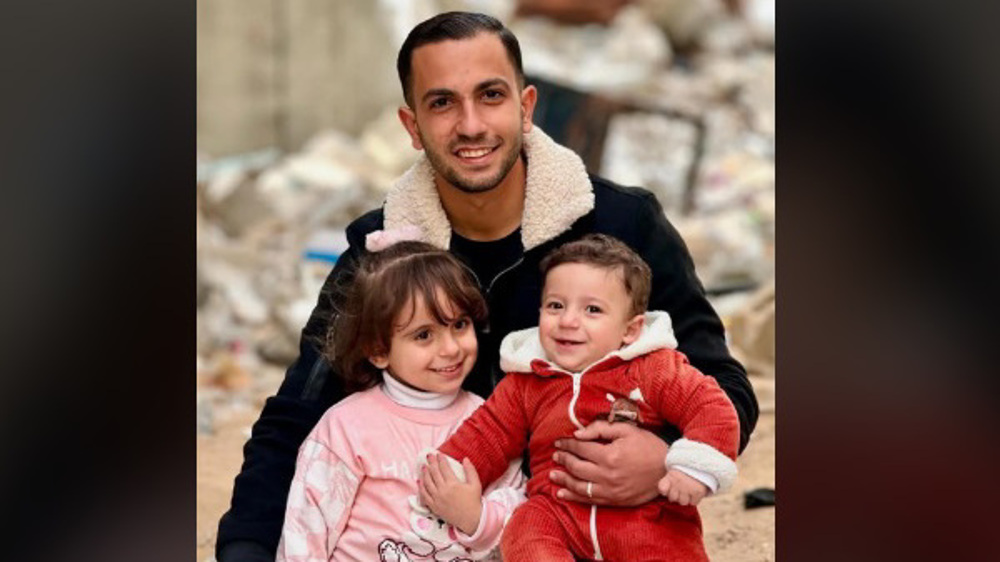
Sharif was a young journalist whose career was shaped by the place he called home. He dedicated his professional life to reporting on and exposing Israeli crimes against Palestinians until his own life was tragically cut short by the same war he had spent years documenting.
Born in 1996 in Jabalia refugee camp in northern Gaza, Sharif grew up under Israeli occupation, witnessing firsthand the turmoil of the Second Intifada between 2000 and 2005 and its aftermath.
The experience of growing up amid occupation and apartheid, blockade and repeated military assaults deeply influenced his passion for journalism, according to acquaintances who spoke to the media after his killing.
For Sharif, journalism was not an abstract profession. It was inseparable from his own history. The streets he reported from were the streets in which he had grown up. The people he interviewed were neighbors, friends, relatives, or fellow Palestinians whose lives mirrored his own.
Sharif earned a bachelor’s degree in mass communication, specializing in radio and television studies, from Al-Aqsa University. He began his career with local Palestinian media outlets, reporting on daily life under blockade for Gaza-based radio stations and newspapers.
In 2015, he joined Al Jazeera Arabic as a junior reporter and fixer, benefiting from the network’s expanding presence in Gaza during a period of intensifying war and occupation.
His early work focused on internal Palestinian dynamics and local developments, gradually establishing him as a prominent voice in Gaza’s media landscape.
Then came October 2023 and everything changed. From October 2023 until his killing, Sharif rose to international prominence through his relentless frontline coverage of Israel’s genocidal war on Gaza and the humanitarian crisis unfolding around him.
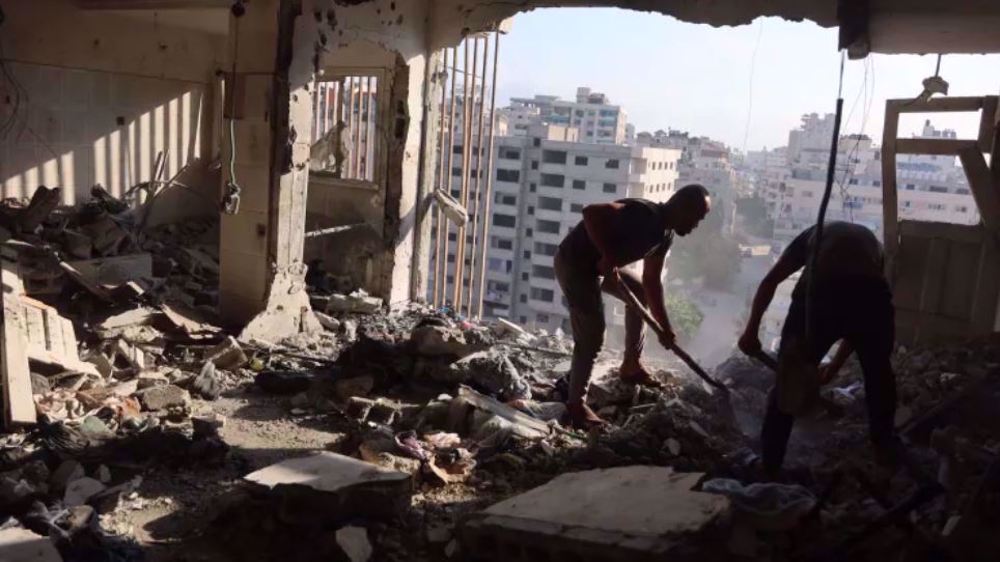
He became a trusted source for viewers around the world seeking firsthand information from northern Gaza. His reports came from streets reduced to rubble, from hospitals struggling to function, from neighborhoods under bombardment and from communities facing displacement.
A voice under fire
Sharif had already established himself as a respected journalist before the aggression was launched on Gaza in October 2023. He gained prominence while covering Israeli airstrikes throughout Gaza and humanitarian crises, notably the 2018 Great March of Return protests, during which more than 200 Palestinians were killed.
His on-the-ground reporting and live updates quickly established him as a trusted source amid repeated Israeli aggressions.
After 2019, his career accelerated through regular appearances on Al Jazeera broadcasts. As a senior correspondent during the 2021 war on Gaza, he documented civilian casualties and widespread infrastructure damage, earning respect from colleagues for his resilience.
But nothing compared with the scale and intensity of the war that followed October 7, 2023. Sharif became a central figure in coverage of Israel’s genocidal assault on the besieged territory following Operation Al-Aqsa Flood.
Reporting from northern Gaza, he provided real-time feeds during intense Israeli bombardments and ground invasions. His coverage included harrowing events such as the October 2024 Al-Shifa Hospital raid, during which he filmed executions, and the July 2024 killing of six UN workers. His reports on Gaza’s humanitarian crisis reached millions.
His warnings about hunger, displacement and the collapse of essential services became part of the international record of the war. By mid-2025, his reporting included the alarming statistic that 96 percent of children were malnourished.
The helmet, the vest and the weight of survival
On January 15, following the announcement of a short-lived Gaza ceasefire, Sharif took off his press helmet, which he said had been “drowning” him, and his vest, which he considered part of his body. The gesture was deeply symbolic.
For months, the helmet and vest had been almost inseparable from his image. They were protection, identification and burden all at once. They marked him as a journalist. They also marked him as a target in a war in which journalists were repeatedly killed.
Sharif paid tribute to his slain colleague Ismail Al-Ghoul as he was raised on the shoulders of friends. The images captured both celebration and grief. Too many colleagues were gone.
In March, Sharif lost another close friend and colleague, Hossam Shabat. Shabat was killed by an Israeli strike in Gaza City. Both journalists had been continuously chased by the occupation
In April, he recorded a poignant message expressing his determination to continue reporting despite fearing for his life. His words underscored the escalating risks as Israeli targeting of journalists in Gaza intensified.
He knew that his visibility offered him no guarantee of safety. If anything, it appeared to make him more vulnerable.
Palestinian condemnations
Palestinian political and resistance groups reacted with fury and grief to the killing of Sharif and his fellow journalists. Hamas denounced the Israeli army’s strike as a savage crime that “surpassed all fascist and criminal limits.”
The group emphasized that the slain journalists had courageously exposed Israeli starvation policies and the unfolding famine, noting that their reporting had made them targets.
The Palestinian Islamic Jihad (PIJ) described the killings as a “heinous war crime” committed by “the world’s most brutal army.”
The group blamed Arab and Western governments for failing to halt Israeli genocidal actions and linked the violence to repeated failures to secure a lasting ceasefire.
The Popular Front for the Liberation of Palestine (PFLP) described the targeted attack proof that “truth is the occupation’s enemy” and branded the killings a full war crime.
It said the deaths sent a signal that further crimes could be committed without witnesses.
The Popular Resistance Committees in Palestine (PRC) honored Sharif as an “icon” who had exposed the “Zionist holocaust.” The group said the killings revealed Benjamin Netanyahu’s lies and the regime’s fear of truth-tellers.
The Palestinian Journalists Protection Center (PJPC) said the assassinations followed months of Israeli incitement against Anas and other journalists.

The final message
Perhaps the most haunting part of Sharif’s story is that he had already imagined the possibility of his own death.
In a pre-written statement dated April 6, 2025, Sharif expressed his resolve to continue reporting despite the danger. He wrote that he had “lived the pain in all its details” and anticipated that he might be killed.
It was a message written by a man who understood that the next airstrike, the next missile, the next moment could end his life. Its existence transformed the meaning of his final days.
The summarized text of his statement reads:
If you read this, Israel has killed me. Peace be upon you, with Allah's mercy and blessings.
I dedicated my life to speaking for my people, born in Jabalia's alleys, dreaming of returning to Asqalan. But Allah willed otherwise. I endured pain, loss, and suffering — yet never wavered in truth. Let Allah judge those who stayed silent as our children were torn apart.
I leave you Palestine — the jewel of the Muslim world, its heart beating in every free soul. Remember its children, crushed under bombs, denied even dreams.
Do not be silenced. Break chains. Be bridges to liberation.
Care for my family: my daughter Sham, whose life I won't see; my son Salah, who must carry my mission; my mother, whose prayers sustained me; and my wife, Bayan, unwavering like an olive tree. Stand by them.
If I die, I die firm in faith. I accept Allah's decree, certain of His reward.
O Allah, make me a martyr. Forgive my sins. Let my blood light the path to freedom. Pray for me — I kept my vow.
Do not forget Gaza. Do not forget me.
Seven Palestinians wounded in Israeli attacks as Gaza truce violations mount
Rights group files war crimes complaint against Israeli soldier in Vietnam
Israeli restrictions on Gaza aid network threaten to deepen famine: Euro-Med



Israeli forces, settlers carried out 108 attacks on Palestinian journalists in July
Rights group urges disclosure of Gaza detainees’ fate, probe into Israeli abuses
Judiciary chief congratulates new secretary of Supreme National Security Council
One year on, Gaza journalist Anas Al-Sharif remembered as brave chronicler of Israel’s genocidal war
Mecca defense pact not directed against any country, open to others: Pakistan
Greenland escalates warning to Trump-linked oil firm over unauthorized drilling equipment
Haj Qassem boosters meet Kheybar Shekan, Fattah warheads: Iran’s new hybrid missile configuration
Seven Palestinians wounded in Israeli attacks as Gaza truce violations mount




 PressTV NEWSLETTER
now
PressTV NEWSLETTER
now
 This makes it easy to access the Press TV website
