On Iran’s sanction-proof economy powered by scientists
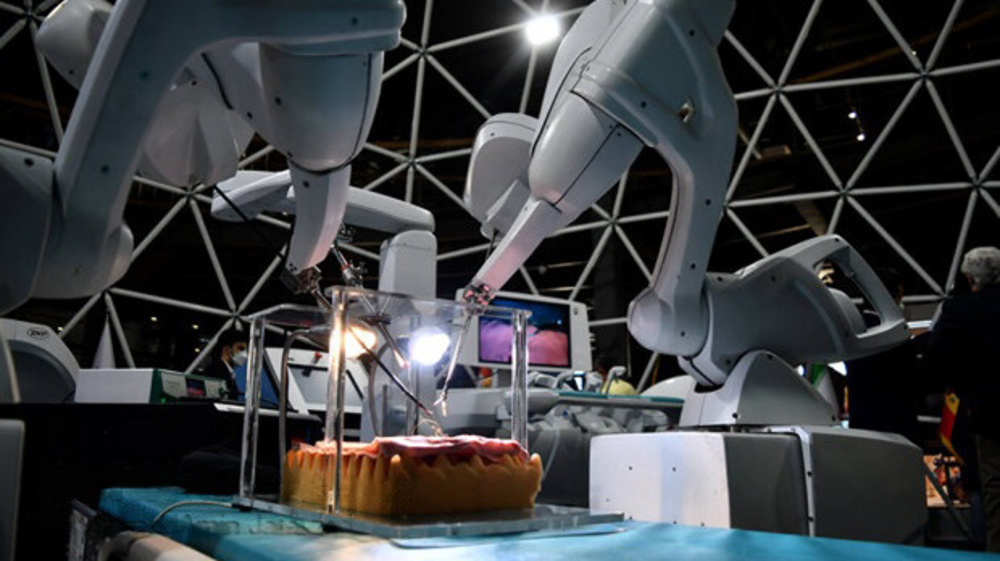
Iran's knowledge-based ecosystem has in recent years become one of the main pillars of meeting the daily needs of the Iranian people, yet during terrorist US-Israeli attacks, these scientific centers were targeted in areas with high population density.
Knowledge-based companies flow through the heart of ordinary Iranian life, playing a role in pharmaceuticals, medical equipment, the digital economy, aerospace, advanced machinery, oil and gas, metallurgy, optics, nanotechnology, and biotechnology.
With sanctions having restricted access to basic goods, this ecosystem has functioned as a network of indigenous solutions that has reduced dependence on foreign sources and made everyday life possible.
Iran's science and technology parks, as the platform for these companies' activities, have spread across the country. More than 45 science and technology parks and about 600 growth and innovation centers are active in various provinces.
The Azadi Innovation Factory in Tehran, as the largest facility of its kind in West Asia, and the Pardis Technology Park in eastern Tehran, which calls itself the "Silicon Valley of the Islamic World," are among the most prominent of these centers.
Isfahan Science and Technology Park, considered Iran's first science and technology park, covers the fields of medical equipment, metallurgy, optics, and advanced industries.
These parks are not merely abstract research centers, but factories producing tangible goods needed in daily life, which by creating employment for thousands of young specialists, have boosted local and national economies.
Khorasan Science and Technology Park in Mashhad, due to its proximity to gas fields and major industries in eastern Iran, has become a hub for rotating equipment and sensitive mechanical parts.
By providing necessary infrastructure including specialized laboratories, production workshops, and consulting services, the parks have created a suitable environment for the growth and development of knowledge-based companies.
Iranian knowledge-based companies have achieved remarkable success across multiple sectors.
In the field of advanced medical equipment, an Iranian company has successfully designed and produced vital signs monitoring devices, advanced ICU ventilators, electrocardiographs, and defibrillators.
To neutralize sanctions, the company established its production line in Malaysia 15 years ago and then created licensed production lines in Belarus, Sweden, Turkey, Iraq, and Indonesia.
All components of the devices, from connectors and screws to software and signal processing algorithms, are fully designed and manufactured within the company.
The company has so far exported more than 17,000 medical devices to 50 countries across Europe, Asia, Africa, and South America, demonstrating that Iranian knowledge-based products meet international standards and can compete with well-known global brands.
These achievements have been made under conditions where sanctions have severely restricted technology transfer and component supply.
In the field of biotechnology, an Iranian knowledge-based company composed of graduates of Sharif, Tehran, and Amirkabir universities has successfully produced and exported bioreactors to Germany.
Bioreactors are complex equipment used in the production of biotech drugs, vaccines, and biological products, requiring high technical knowledge and extreme precision.
The success of the company in exporting to Germany, itself one of the world's pioneers in the biotechnology industry, demonstrates the high quality of Iranian knowledge-based products and the ability of domestic specialists to compete with international rivals.
This achievement is significant not only economically but also as a symbol of breaking the monopoly on advanced technologies by Iranian companies.
In the health sector, Iran's knowledge-based companies have achieved 96 percent self-sufficiency in pharmaceutical production and rank among the top ten vaccine-producing countries in the world.
The localization of insulin and plasma production, previously entirely imported, has saved hundreds of million dollars annually and freed tens of thousands of patients from import dependence.
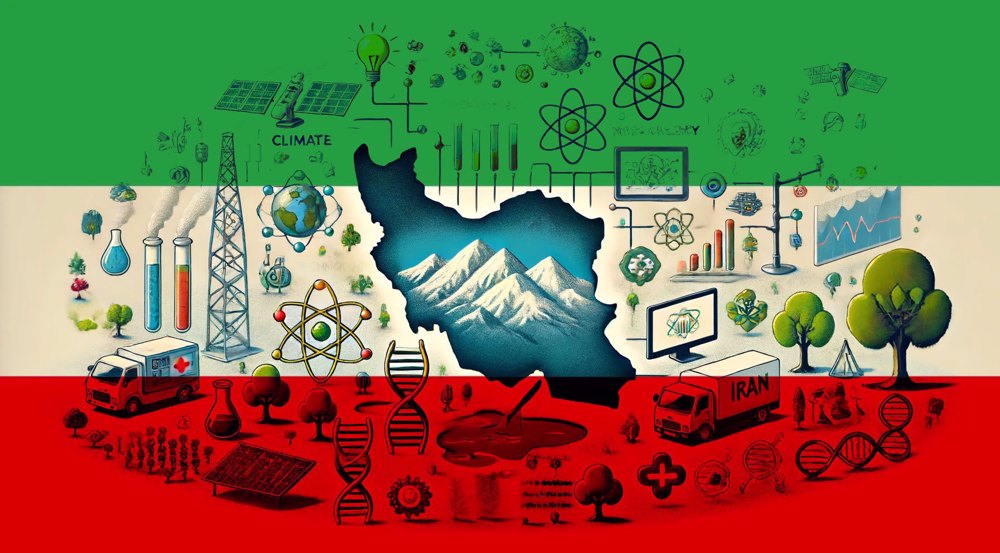
The recent terrorist attacks took place in areas with the highest population density. At dawn on March 27, Isfahan University of Technology in the heart of one of Iran's most populous cities was struck, and one of its main buildings was damaged.
Iran University of Science and Technology and Tehran University of Science and Technology were also on the target list.
Beyond these three centers, the Iran Space Research Institute and the Aerospace Research Institute of the Ministry of Science - the origin of indigenous satellite design and construction - were targeted in the urban fabric of Tehran and its suburbs.
According to a report by the secretariat of Iran's National Commission for UNESCO, approximately 149 universities and research centers across the country have been damaged, and many laboratories have been completely destroyed.
Most of the damage occurred in Tehran and Isfahan provinces. The High-Performance Computing Center at Sharif University of Technology, which served more than 3,000 researchers in artificial intelligence and computer science in the heart of the capital, suffered serious damage.
The Laser and Plasma Research Institute at Shahid Beheshti University lost nearly 90 percent of its equipment. The Pasteur Institute of Iran, considered one of the country's key scientific institutions, had several of its buildings destroyed and its equipment and laboratories demolished.
Additionally, a scientific center in Shiraz active in mechanical engineering and electronics was completely destroyed.
According to official statistics, approximately 32 universities and research centers were struck, and nearly 100 knowledge-based companies suffered serious damage.
Targeting these centers in residential areas demonstrates full awareness of their civilian and scientific nature, and the determination to strike Iran's scientific capabilities at any cost.
These terrorist actions, which disregard international norms protecting scientific centers in conflicts, reflect an approach that targets not only physical infrastructure but also human capital and symbols of the country's scientific progress.
The attacks may have damaged buildings and equipment, but they cannot destroy the expertise, innovation, and determination that have built this ecosystem from the ground up.
Understanding Iran’s tourism momentum amid war and sanctions

BRICS paving way for alternative world order, not a war machine against West: Analyst
Iran finds new platform in SCO to develop its rare-earth potential



VIDEO | Yemeni child survives Saudi airstrike that killed her entire family
VIDEO | News Review: Yemen’s top military officials warn Saudi Arabia of devastating response to its aggress
Iran’s Armed Forces vow to inflict further defeats on US, Israeli enemies
Child among two Palestinians abducted in Israeli West Bank raids
Putin’s United Russia leads wartime parliamentary elections
Pezeshkian to travel to New York on Tuesday to address UN General Assembly
Iranian swimmers reach Asian Games finals for first time in 16 years
VIDEO | Press TV's news headlines


 PressTV NEWSLETTER
now
PressTV NEWSLETTER
now
 This makes it easy to access the Press TV website
