Mystery surrounds death of Iranian AI pioneer in France, with fingers pointing at Mossad
By Yousef Ramazani
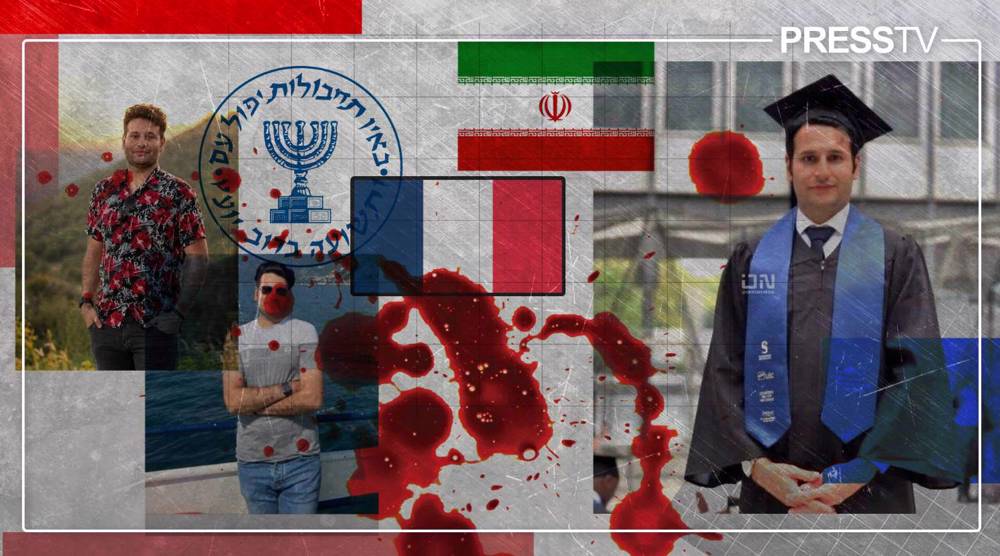
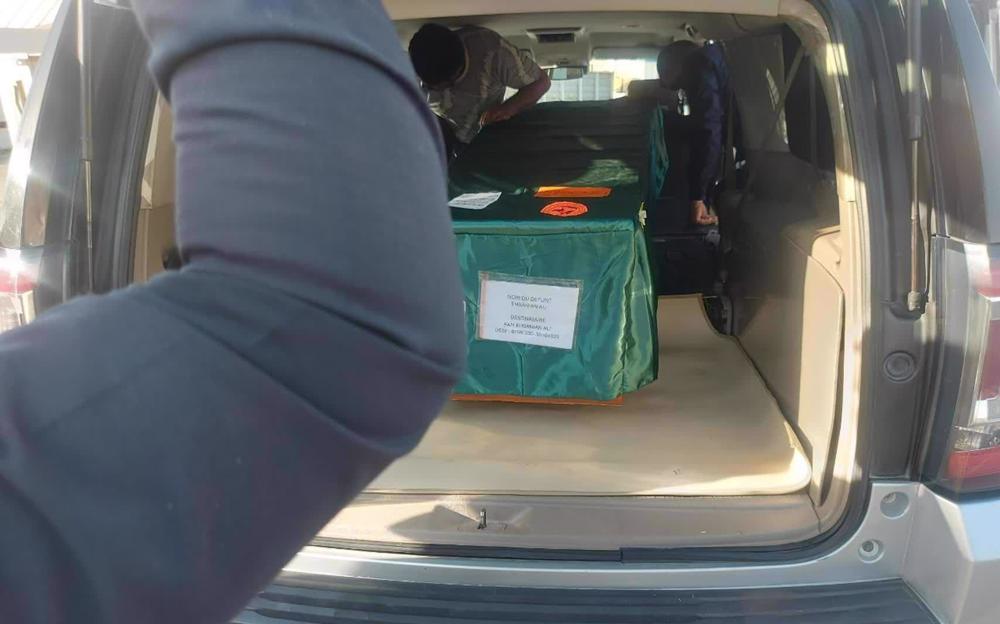
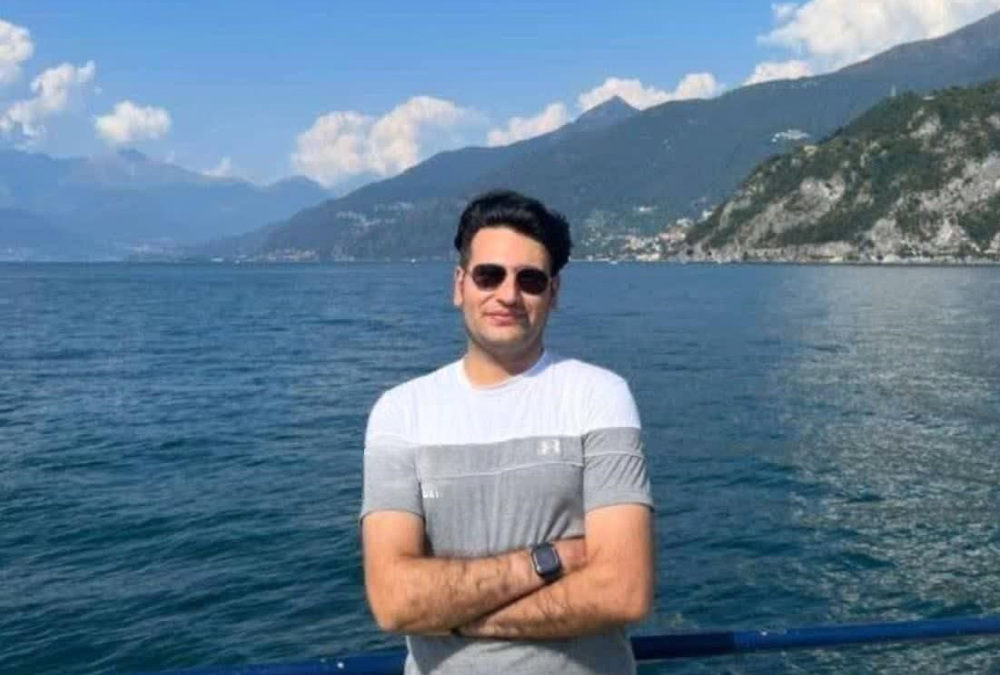
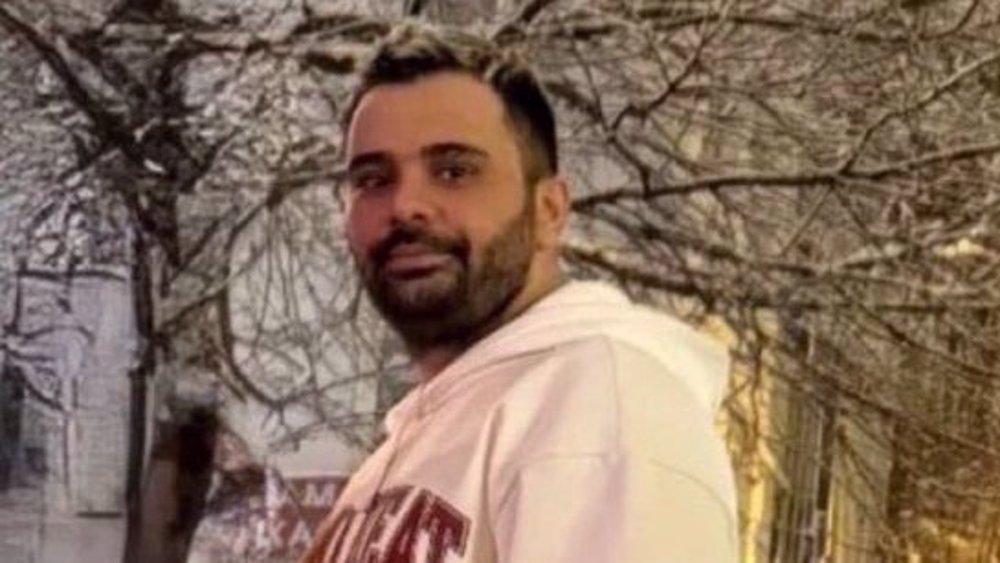
The body of Dr. Ali Ehsanian, a distinguished Iranian artificial intelligence researcher who had previously collaborated with the Ministry of Defense, was returned to Iran on June 11, 2026, nearly six weeks after his mysterious death in Nice, France.
Though the cause of death remains under investigation, all evidence points to Israel's spy agency Mossad, which has, for years, systematically assassinated young Iranian scientists.
On March 28, 2026, in the midst of the third imposed war on Iran, Dr. Ehsanian was killed in Nice, the second-largest French city on the Mediterranean coast, under circumstances that Iranian authorities and domestic media have described as suspicious.
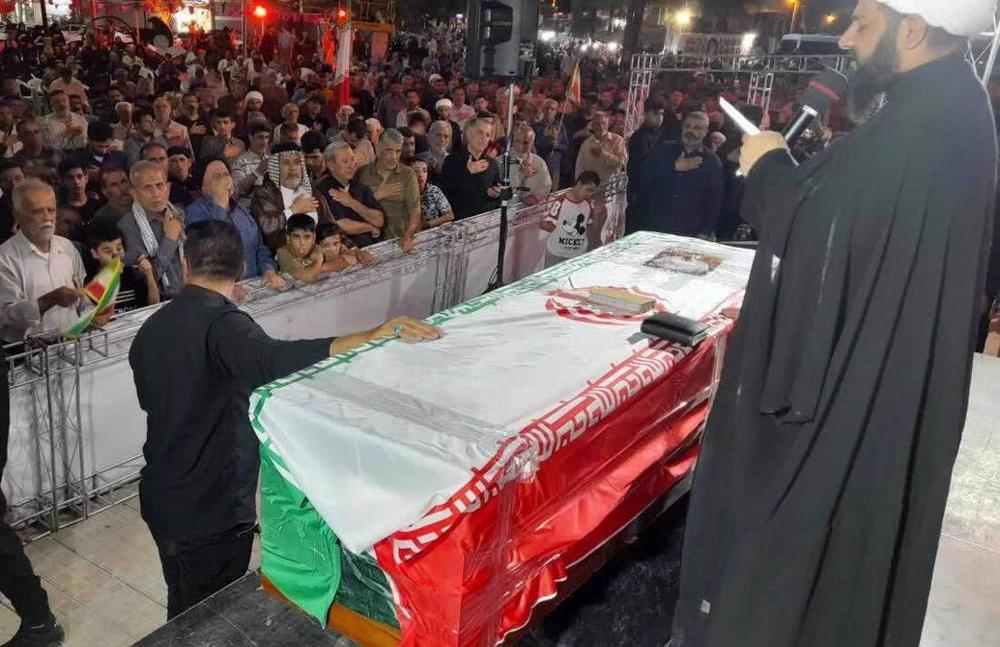
His body arrived back weeks later, and was laid to rest the following day after a large public funeral in Omidiyeh, followed by burial in his hometown of Jahrom, in Fars Province.
Dr. Ehsanian was no ordinary researcher. He held a PhD in Electrical Engineering from Sorbonne University in Paris, received a prestigious Marie Skłodowska-Curie Actions grant from the European Union, and collaborated with Iran's Ministry of Defense during his military service from 2018 to 2020.
His areas of expertise – artificial intelligence, machine learning, and next-generation wireless networks – are regarded by military analysts as dual-use technologies, with direct applications in military communications, drone swarms, electronic warfare, and edge computing.
His assassination is being seen as part of a broader campaign by foreign intelligence services, chief among them the Israeli Mossad, to decapitate Iran's scientific and technological progress.
It is a decades-long campaign that has previously claimed the lives of numerous nuclear scientists and, more recently, AI researchers.
Brilliant academic trajectory
Dr. Ehsanian's academic record was exceptional by any standard. In 2011, he ranked 195th among 280,000 participants in Iran's national university entrance examination, the Konkur, and secured first place in Mathematics in central Qom province.
He was admitted directly into two master's programs simultaneously at Amirkabir University of Technology – one in Electronics and one in Communications – through the university's Exceptional Talents Office, bypassing the national graduate entrance examination entirely on the strength of his outstanding undergraduate achievements.
He earned his bachelor's degree in Electrical Engineering from Amirkabir University in 2015 and graduated with two master's degrees from the same institution in 2018.
Immediately after completing his master's degree, Dr. Ehsanian served his military service from 2018 to 2020, during which he collaborated with Iran's Ministry of Defense. While the precise nature of this collaboration has not been publicly detailed, his placement in a defense ministry role is consistent with how Iran utilizes its most talented technical graduates during their military service.
Following his military service, he pursued doctoral studies in France, earning a PhD in Electrical Engineering (Communications) from Sorbonne University in Paris in 2024.
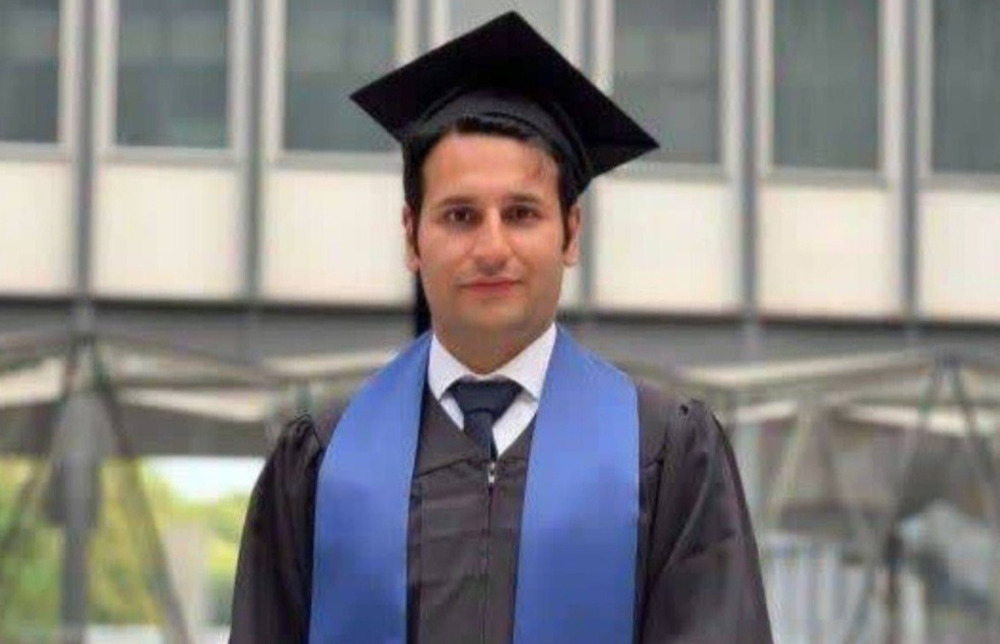
His doctoral dissertation was titled "Distributed Optimization and Machine Learning for Virtualized 6G Wireless Networks," focusing on network slicing in 5G and 6G systems, distributed machine learning, deep neural networks for wireless resource allocation, edge-cloud AI architectures, and low-latency communications.
Dr. Ehsanian also received a Marie Skłodowska-Curie Actions grant under the European Union's Horizon 2020 research program as an Early Stage Researcher in the SEMANTIC project.
He was a member of the National Elites Foundation of Iran. His documented publications include research on slice resource allocation using distributed deep neural networks for 5G and beyond, exploring how AI systems can split processing between edge devices and cloud infrastructure to improve wireless network performance while reducing latency.
Suspicious death in Nice
The exact date of Dr. Ehsanian's death is reported to be March 28, 2026, approximately six weeks before his body was returned to Iran.
Notable gaps exist in the public record. French police have not issued a public statement naming Dr. Ehsanian or confirming the opening of a homicide investigation. French prosecutors have not announced charges or identified suspects. Major French newspapers have stopped short of publishing investigative reports into his death.
The Iranian foreign ministry, through spokesman Esmaeil Baghaei, confirmed on May 4, 2026, that the ministry was following up on the case through both the Iranian embassy in Paris and the French embassy in Tehran.
Baghaei described the case as "a very bitter incident" that occurred "on the 24th or 25th of Farvardin" (corresponding to April 13-14, 2026, though other sources specify March 28) and said Iran has a duty to seriously pursue the rights of Iranian citizens everywhere in the world.
Notably, Baghaei linked Dr. Ehsanian's case to two other murders of Iranian citizens in France, raising concerns about "racism and terrorist acts."
The absence of detailed French investigative reporting, combined with the Iranian government's insistence on pursuing the case diplomatically, suggests that the full circumstances of his death have not yet been publicly disclosed.
Indications of foreign intelligence involvement
While definitive public evidence remains limited, several factors suggest that Dr. Ehsanian's death was not accidental but rather a targeted killing by foreign intelligence services.
First, the timing of his death – during active US-Israeli military aggression against Iran – places it within a broader context of covert warfare. The joint US-Israeli aggression against Iran, which began on February 28, 2026, continued intermittently despite a ceasefire in early April, and included not only overt military strikes but also targeted assassinations.
Second, his profile matches the targeting pattern of Israeli intelligence. Mossad has a documented history of assassinating Iranian scientists with dual-use expertise – individuals whose civilian work carries clear military applications.
Dr. Ehsanian's research in AI-enabled communications, distributed machine learning, and 6G network optimization has direct military relevance.
As analysts have noted, his work on intelligent resource allocation in wireless networks can be applied to military communications, where bandwidth is limited and real-time prioritization is critical.
His research on distributed neural networks can enhance drone swarm coordination, allowing hundreds of unmanned aerial vehicles to share video feeds, navigation data, and targeting information without overwhelming communication links.
His work on edge computing – where data is processed locally rather than sent to a central server – is directly applicable to autonomous military systems that must operate without constant connection to distant headquarters.
Third, his prior brief collaboration with Iran's Ministry of Defense during his military service, while not indicating involvement in weapons design, would have made him a person of interest to foreign intelligence agencies.
Iranian memorial materials explicitly highlight this period of defense ministry collaboration, suggesting that it is considered relevant to its strategic value. Even if his published research was entirely civilian and openly available, his demonstrated willingness to apply his expertise to national defense would mark him as a high-value target for Mossad.
Fourth, the nature of the reporting of his death follows a pattern seen in previous assassinations of Iranian scientists, when Iranian officials initially spoke of suspicious deaths and eventually revealed the role of foreign services.
This pattern is consistent with Iranian authorities receiving intelligence confirming foreign involvement but not immediately disclosing all details publicly.
The absence of detailed French investigative reporting should not be interpreted as evidence that no crime occurred. European security services have on multiple occasions confirmed Israeli sabotage operations on their soil, sometimes years after the events. It remains possible that French authorities possess information that has not yet been released to the public.
Previous murders of Iranian AI experts
Dr. Ehsanian is not the only Iranian artificial intelligence researcher to have been assassinated by the Israeli regime.
On June 13, 2025, during a previous phase of Israeli-US aggression against the Islamic Republic, two prominent AI scientists were martyred in a bombing that targeted a residential building in northeastern Tehran.
Dr. Majid TajenJari, a 35-year-old globally recognized expert in artificial intelligence, and Dr. Mohammad Reza Zakarian, a gifted AI pioneer, lost their lives alongside family members, including Zakarian’s two young daughters, five-year-old Fatemeh and seven-month-old Zahra.
Dr. TajenJari served as the head of the Artificial Intelligence Commission at the Youth Chamber of Commerce of Iran. He earned gold medals at the 2012 and 2015 World Invention Competitions, registered a global patent in Russia in 2009, and received numerous awards from Switzerland, Croatia, Germany, Serbia, and Moscow.
His doctoral dissertation focused on developing a bilingual humanoid robot capable of speaking both Persian and English. He also co-founded an educational center to train children and teenagers in AI and Python programming, believing that scientific progress begins at a young age.
At the time of his martyrdom, his inventions in image processing, including facial recognition, cargo container scanning, and steel quality analysis, were being tested for industrial use.
Dr. Zakarian earned his bachelor’s degree from Isfahan University of Technology and a master’s degree from Malek Ashtar University, institutions renowned for cultivating elite scientific talent. According to his father, he consciously turned down multiple offers from foreign countries, including tempting scholarships and job opportunities, choosing instead to remain in Iran and serve his nation.
His research in AI and advanced computing contributed significantly to national technological development. He was martyred alongside his wife and two young daughters in an Israeli airstrike on a residential building in Tehran.
The targeting of AI researchers alongside nuclear scientists suggests that foreign intelligence services have broadened their definition of strategic scientific targets.
Like nuclear technology, AI is considered a dual-use field with both civilian and military applications. Iran’s progress in AI-enabled communications, autonomous systems, and network optimization is seen as enhancing its overall technological capability – and, by extension, its military effectiveness. Eliminating researchers in these fields is therefore consistent with a strategy of slowing Iran’s scientific advancement across multiple domains.
✍️ Feature - Science as a threat: Why Israel assassinated two of Iran’s brightest AI trailblazers
— Press TV 🔻 (@PressTV) July 10, 2025
By @HumairaAhad_83 https://t.co/j6xvfuHu9p pic.twitter.com/0NXqfr7l7Y
Long campaign against Iranian nuclear scientists
The assassination of Dr. Ehsanian must be understood within the context of a decades-long campaign by Mossad to eliminate Iranian scientists working on strategic technologies.
This campaign dates back to at least 2007 and has claimed the lives of numerous nuclear experts, many of whom were killed on Iranian soil using sophisticated methods, including magnetic bombs attached to vehicles and remote-controlled machine guns.
The first known assassination was that of Ardeshir Hosseinpour on January 15, 2007. He was followed by Masoud Alimohammadi (January 12, 2010); Majid Shahriari (November 29, 2010); Dariush Rezainejad; Mostafa Ahmadi Roshan (January 11, 2012); and Mohsen Fakhrizadeh (November 27, 2020), who was assassinated using a remote-controlled weapon system while traveling in a vehicle outside Tehran.
The pattern continued during the 12-day war of aggression last year, which killed at least nine prominent nuclear scientists in a series of attacks.
Among them were Dr. Mohammad Mehdi Tehranchi, a theoretical physicist and president of the Islamic Azad University; Dr. Fereydoon Abbasi, a former head of the Atomic Energy Organization of Iran (AEOI), who had narrowly survived an Israeli assassination attempt in 2010; Dr. Abdolhamid Minoocher, a distinguished nuclear engineer and head of the Faculty of Nuclear Engineering at Shahid Beheshti University; Dr. Ahmad Reza Zolfaghari, a leading professor at the same faculty; and Dr. Seyed Amir Hossein Feqhi, a full professor and former deputy head of the AEOI.
These scientists were specifically targeted because their expertise was considered essential to Iran’s nuclear program, and their elimination was intended to slow or disrupt that program. The same logic appears to be driving the targeting of AI researchers.
Moreover, Iran is not the only country in the region to have experienced assassinations and suspicious deaths of scientists. In the years following the US invasion of Iraq in 2003, as well as the fall of Bashar al-Assad's government in Syria, both countries have witnessed dozens of deadly attacks on scientists – often carried out by well-organized, unidentified groups.
Behind these groups, according to many experts, are Israeli, American, and other Western intelligence services seeking to cripple the region’s scientific elite and force the remainder to emigrate. Even Turkey has been a victim of scientific-industrial terrorism, with the mysterious deaths of numerous military engineers working on advanced technological projects.
Enemy’s goal: Iranian science itself
The pattern of assassinations – first nuclear scientists, now AI researchers – reveals that the enemy’s objective is not limited to any single program but extends to Iranian science and technological progress as a whole.
The US and the Israeli regime have consistently demonstrated that they view any field in which Iran achieves scientific excellence as a potential threat. Nuclear technology, aerospace engineering, missile development, advanced materials, cyber technologies, and artificial intelligence are all considered strategic domains where Iranian progress must be contained.
Modern warfare, as Iranian military analysts frequently note, is no longer fought only with armies and weapons. Scientific expertise itself has become a strategic resource.
Eliminating a scientist can delay technological projects by years, create gaps in expertise that cannot be quickly filled, discourage younger researchers from entering strategically sensitive fields, and degrade national research programs. The assassinations are not random acts of violence but calculated components of a long-term strategy of scientific decapitation.a
The targeting of Dr. Ehsanian in France, rather than on Iranian soil, according to experts, demonstrates that foreign intelligence services are willing to expand their operational theater to include third countries where Iranian scientists study or work.
This creates new challenges for Iranian diplomatic missions, which must now protect Iranian citizens not only at home but also abroad. The Iranian foreign ministry’s statement that it is pursuing Dr. Ehsanian’s case through both its embassy in Paris and the French embassy in Tehran reflects this new reality.
The response from the Iranian scientific community has been one of defiance. The father of Dr. Zakarian, the AI researcher assassinated alongside his children, spoke for many when he said: “They think by killing our scientists, they can halt our progress. But others will rise. The path doesn’t end here.”
The large public funeral for Dr. Ehsanian in Omidiyeh, followed by burial in Jahrom, was attended by thousands, demonstrating that the Iranian people regard these scientists as national heroes whose sacrifices will not be forgotten.
The memorial poster for Dr. Ehsanian bears the inscription: “Martyrdom is the reward of the deserving.” In the Iranian narrative, these scientists are not victims but martyrs – individuals who gave their lives in the service of their country’s scientific sovereignty.
Dr. Ali Ehsanian, Dr. Majid TajenJari, Dr. Mohammad Reza Zakarian, and the many nuclear scientists who preceded them are all part of a single story: a nation’s determination to advance despite the efforts of hostile powers to hold it back.
Grand Ayatollah Shobeiri Zanjani passes away at age of 98
Iran must fight US blockade with energy blockade: Deputy speaker
Iran’s president to attend UN General Assembly in New York



US aggression, economic warfare amount to crimes against humanity: Iran's UN envoy
Protests erupt in US as ICE agent shoots Venezuelan driver
US pressure fuels cooperation among Muslim states: Pezeshkian
Major TV networks suspend White House pool coverage after Trump ban
US visa ban on Palestinian UN delegation violates international agreements: Hamas
VIDEO | Press TV's news headlines
Iran calls on France to respect law after suspending French cultural institute in Tehran
Israel lobby no longer shy about its grip on US policy on Iran: Araghchi


 PressTV NEWSLETTER
now
PressTV NEWSLETTER
now
 This makes it easy to access the Press TV website
