First black stork spotted in Western Iran’s Zaribar Wetland, marking an environmental milestone
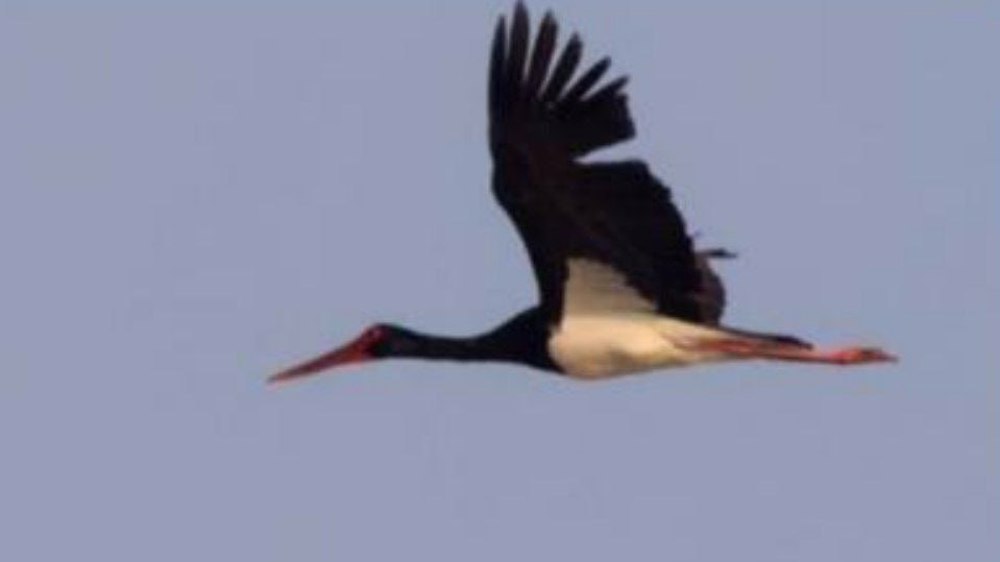
The first-ever sighting of a black stork in the area surrounding Iran’s internationally recognized Zaribar Wetland in Marivan County, western province of Kurdistan, has been recorded, marking an ecological milestone that reflects improved natural conditions in the region.
Medi Balideh, head of the Marivan Department of Environment, said the rare migratory bird was identified and photographed by environmental rangers near the forests of Pir Safa village, along the outskirts of the Zaribar Wetland area.
“This is the first time that the black stork has been observed and documented in Marivan County,” Balideh was quoted as saying by IRNA news agency.
The black stork is considered a sensitive and solitary species that typically inhabits low-disturbance environments, forested areas and riverbanks, he explained.
Balideh described the sighting as an important environmental record, saying, “The presence of this species in the region can be a sign of the relative restoration of water resources, increased habitat security and improved natural conditions in the Zaribar Wetland area.”
He stressed the importance of protecting wildlife habitats and said proper water resource management and preventing illegal hunting play a key role in ensuring the continued presence of migratory birds.
“Greater public participation in protecting these valuable habitats is essential so that we can witness the continued presence of rare species in the region,” Balideh added.
Kurdistan Province, with 16 active environmental ranger stations and five protected areas, is among Iran’s important biodiversity hubs.
The province is home to several protected areas, including Chelchemeh and Saral, Bijar, Badr and Parishan in Qorveh, Shahu and Kosalan, and Abdolrazagh in Saqqez.
It also hosts the Zarivar Wildlife Refuge, covering 3,000 hectares, along with two national natural monuments and several hunting-restricted areas.
These natural assets have made Kurdistan one of Iran’s richest provinces in terms of plant and animal biodiversity.

Old playbook, new 'victim': Iranian woman declared ‘killed’ appears alive, foiling unrest plot
Iranian women have given new meaning to womanhood through their active role amid war: Alamolhoda
Iran’s 1,100-year-old Alamut Castle, its military fortifications inscribed on World Heritage List



US mulling decrease in military footprint in Kuwait due to Iran operations: Report
Empty crates, decoys, desperation: How US strikes against Iran ran out of targets – and strategy
VIDEO | Press TV's news headlines
Trump admits Rubio’s anti-ICC campaign aimed to shield Netanyahu from prosecution
Iran warns US allies: Shield America and ‘you will burn in flames of war’
Fate of three Iranian Su-24 pilots still unknown; efforts to trace them continue: Army spox
First black stork spotted in Western Iran’s Zaribar Wetland, marking an environmental milestone
Israeli forces demolish 120-year-old building in West Bank




 PressTV NEWSLETTER
now
PressTV NEWSLETTER
now
 This makes it easy to access the Press TV website
