How Iran outranks Germany, Canada, Japan in drinking water quality
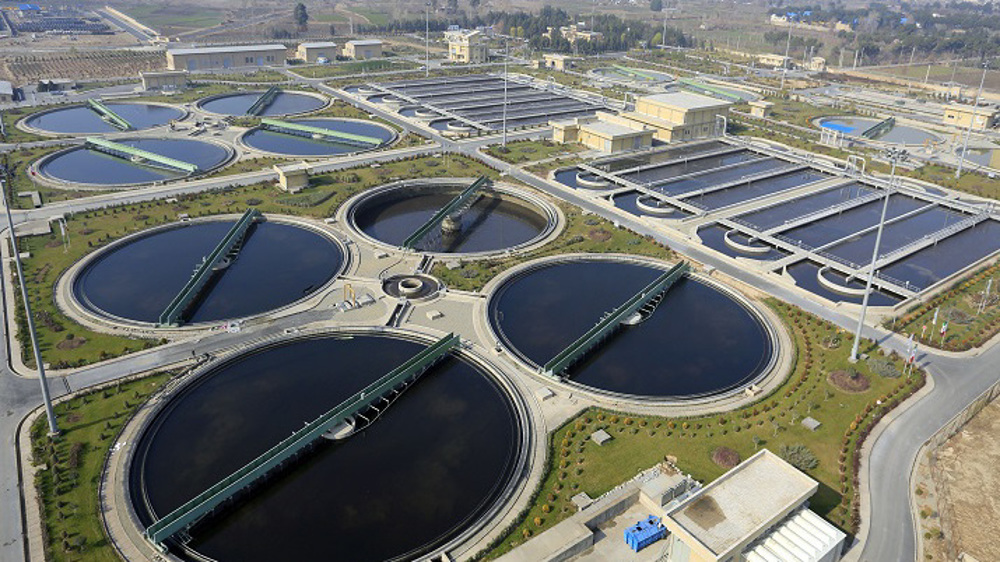
Energy Minister Abbas Aliabadi said at a ceremony unveiling mobile water and wastewater laboratory vehicles on Thursday that Iran stands at the peak of drinking water quality.
The country has achieved a score of 94 out of 100 in the water quality index, roughly 20 points above the global average, Aliabadi said.
This is a statistical summary of balanced development of water infrastructure in a land where two-thirds is covered by dry desert and arid mountains.
The question is how a country with average annual rainfall of 250 millimeters (one-third of the global average) achieves an index that leaves Germany, Canada, and Japan behind.
The answer lies in layers of heavy investment in distribution networks, innovation in seawater desalination, and network management against threats that go beyond drought to target the very integrity of the infrastructure.
Access rates of 99.9 percent of the urban population and 87.6 percent of the rural population to safe water are figures that the World Bank has confirmed.
Consider South Khorasan Province, a region where consecutive droughts had drained its underground aquifers.
In the villages of Dastgerd and Islamabad in Darmian County, the old water distribution network was so inefficient that villagers sometimes had water for only one hour a day.
But a project by the Ministry of Energy completed in December 2024 replaced old pipes with high-quality materials, reduced water loss to globally acceptable levels, and connected the two villages to the county's main network.
The result: 1,729 residents, many of them children, gained stable water with adequate pressure. Maintenance costs dropped sharply, and there was no more pipe bursting in winter cold or metal faucets boiling in summer heat.
This pattern repeated elsewhere in Iran, on a much larger scale. UNICEF, in a report, has pointed to the devastating flood of February 2024 in Chabahar, which left hundreds of families homeless and without access to safe water.
The Ministry of Energy implemented a comprehensive emergency water treatment and distribution network reconstruction program that prevented the outbreak of waterborne diseases in a densely populated area with destroyed infrastructure.
These cases show that the "peak of quality" is built not in central laboratories in Tehran, but in the most remote border points. However, Iran's strategic turning point in this field was the transition from mere dam construction toward seawater desalination.
Bandar Abbas, home to the largest desalination complex in Iran, illustrates this reality. The second unit of the massive complex, with an annual capacity of 140 million cubic meters, came online in October 2025 with President Masoud Pezeshkian in attendance.
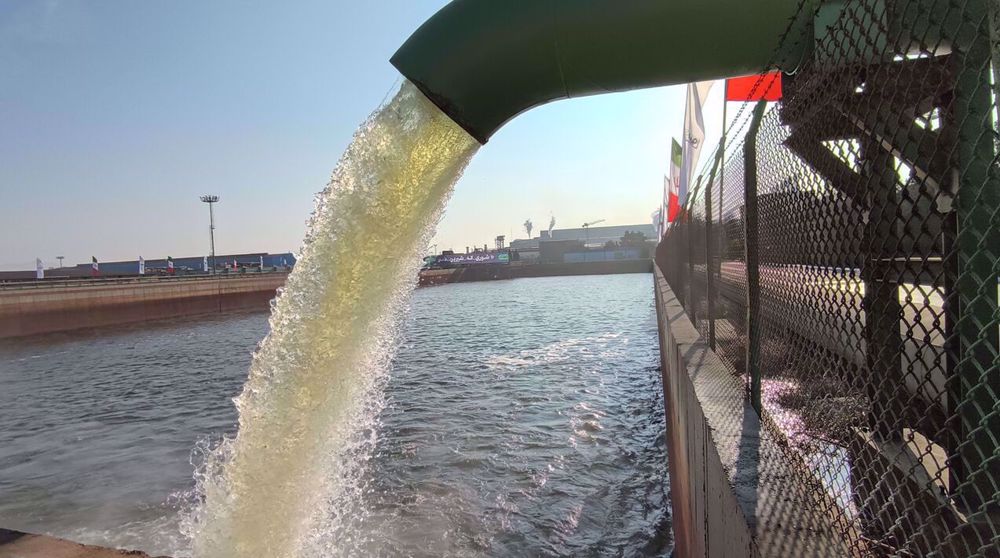
This number alone is not enough for the country's economy, but when you consider that this water travels through 800 kilometers of pipeline to the provinces of Hormozgan, Kerman, Yazd, and Isfahan, the meaning becomes clear.
For the first time, the steel and copper industries of the central plateau are securing their process water without drawing a single drop from the Zayandeh Rud or the underground aquifers of the central desert.
Thus, water that was once desperately needed for drinking by a villager on the edge of the desert is now pulled from the heart of the Persian Gulf by giant transmission lines, desalinated, and sent to factories, so that the water behind dams remains for farms and people's tables.
The first phase of the Gulf of Oman water transfer project to Isfahan, completed in July 2025, confirms the same logic.
A total of 70 million cubic meters of desalinated water in the first stage reaches the Isfahan refinery and industries in the north of the province, and in the next stage, Mobarakeh Steel and southern industries will also connect to this network.
This water will not be used for the development of new water-intensive industries but precisely to stop the withdrawal from the Zayandeh Rud. Thus, the clear economic goal is to increase the productivity of existing water, not increasing consumption.
Reaching such a position has been possible at a time when Iran's water network is on the front line of a full-scale hybrid war.
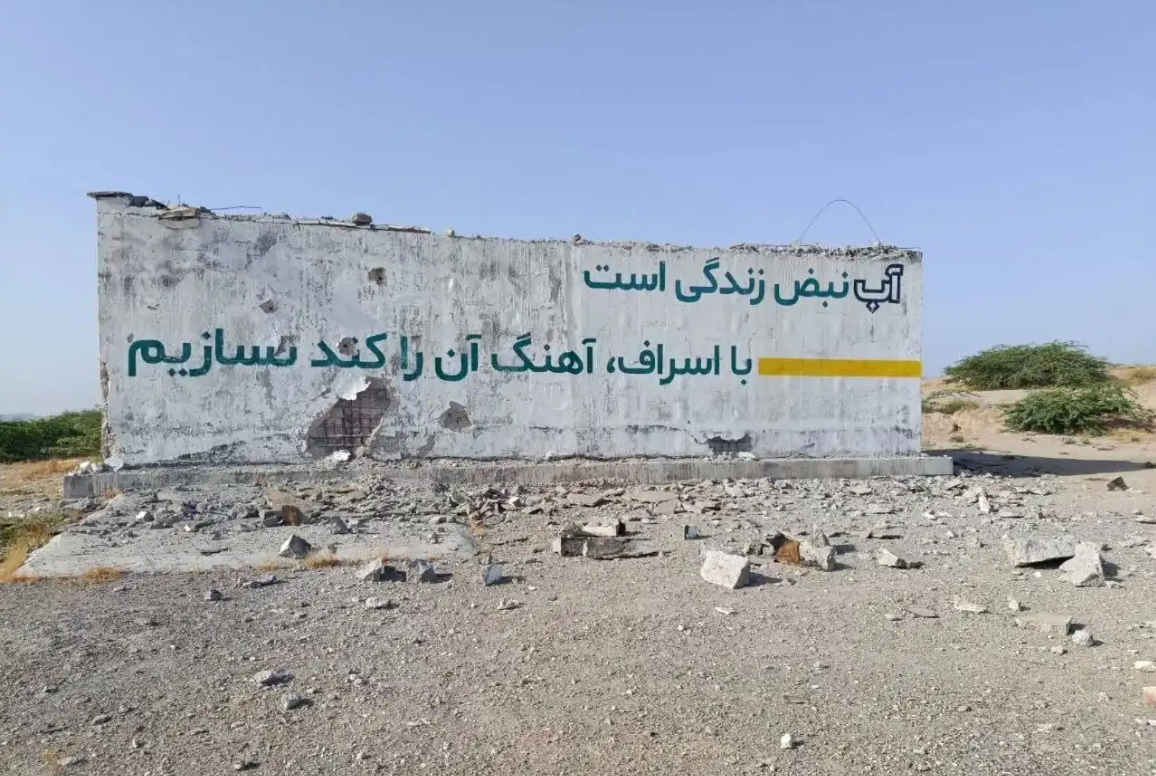
On Wednesday, the US military deliberately destroyed two water reservoirs in southern Iran’s Hormozgan province, cutting off drinking water to more than 20,000 residents as temperatures in the region soared to nearly 50 degrees Celsius.
A report by the security company Radware in June 2025 warned that given the diminished capacity of the Israeli regime for conventional war, cyber attacks on Iran's critical infrastructure have become the main line of the enemy's offensive strategy.
But the enemy's efforts are not limited to technical attacks. The US Treasury Department, by imposing crippling sanctions, has banned the purchase of water treatment equipment and spare parts needed by Iran's network.
The false announcement of "help is on its way" to Iranians during two distinct periods of riots in January 2020 and January 2026 by US President Donald Trump was in practice accompanied by sanctions that forced Iran to localize 90 percent of the equipment in the water network.
When the supply of parts from Europe and America was cut off, Iranian knowledge-based companies entered the field. They produced everything from intelligent pressure-reducing valves and ultrasonic meters to indigenous SCADA systems, which are now installed in 160 water treatment plants across the country.
In other words, the "peak of quality" has been built in the shadow of economic siege. The enemy intended to crash Iran's water quality by cutting access to technology, but the result backfired and transformed the domestic supply chain.
To stay at the peak of drinking water quality, Iranian engineers must repair and expand every day a network that is targeted both by a harsh nature and by enemies who cannot tolerate an independent country with its own indigenous infrastructure.
For the next decade, Aliabadi says, Iran's strategy is to cut water loss from 25 percent via smart meters and network renovation, build at least five new desalination units on the Makran coast, and expand wastewater recycling beyond the current 1.8 billion cubic meters per year.
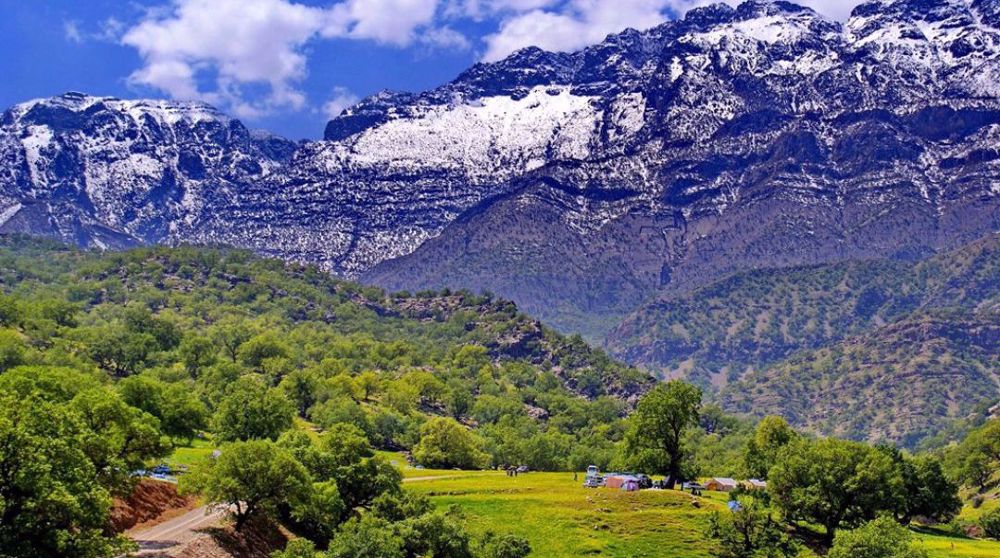
Understanding Iran’s tourism momentum amid war and sanctions

BRICS paving way for alternative world order, not a war machine against West: Analyst
Iran finds new platform in SCO to develop its rare-earth potential



US visa ban on Iranian president’s media team is bid to hide the truth: FM spokesman
US aggression, economic warfare amount to crimes against humanity: Iran's UN envoy
Protests erupt in US as ICE agent shoots Venezuelan driver
US pressure fuels cooperation among Muslim states: Pezeshkian
Major TV networks suspend White House pool coverage after Trump ban
US visa ban on Palestinian UN delegation violates international agreements: Hamas
VIDEO | Press TV's news headlines
Iran calls on France to respect law after suspending French cultural institute in Tehran


 PressTV NEWSLETTER
now
PressTV NEWSLETTER
now
 This makes it easy to access the Press TV website
