Iran slams another 'hypocrisy show' at UN as US sanctions charade collapses
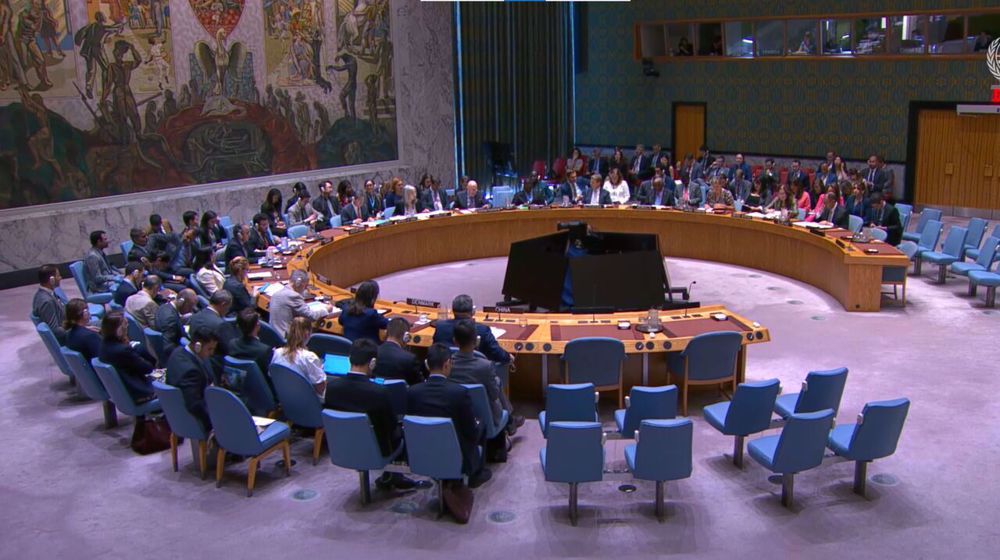
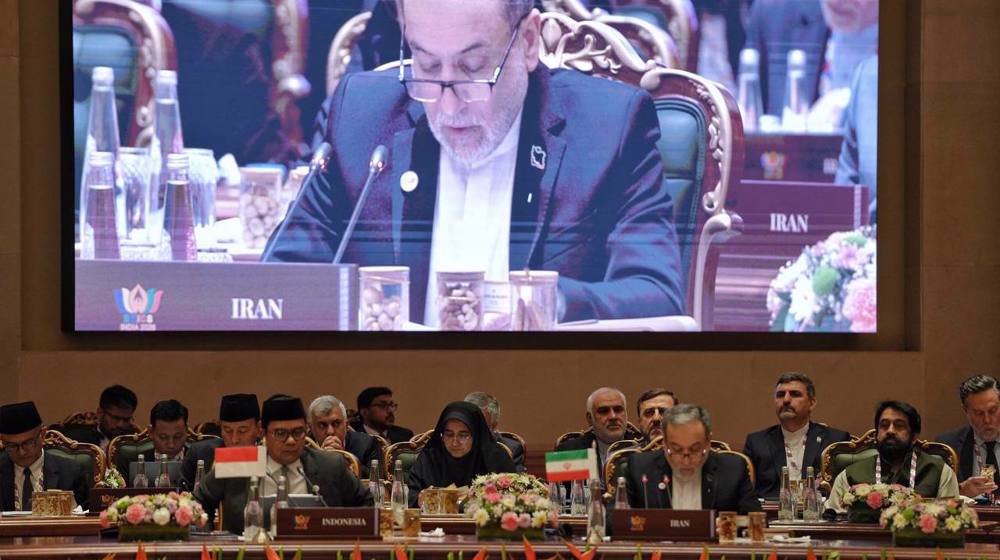
Iran's mission to the United Nations has dismissed a Security Council meeting convened on the country's nuclear program as "another display of hypocrisy," stressing that there is no legal basis for invoking an expired resolution to target Tehran with sanctions.
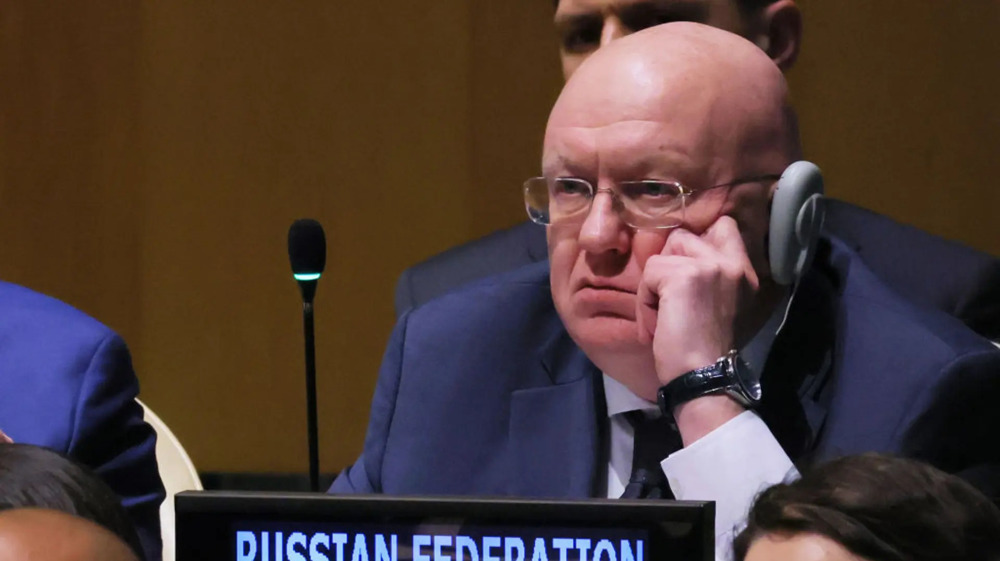
The council met on Tuesday under an agenda item concerning the 1737 Committee, a sanctions body established in 2006, after a procedural vote that passed 11-2 with two abstentions. Russia and China voted against convening the meeting, while Pakistan and Somalia abstained.
A number of Security Council members, at the behest of the United States, repeated baseless claims against Iran's peaceful nuclear program and repeated the disinformation campaign of the United States and the Israeli regime like a "parrot," Iran's mission said in a statement.
"Another show of hypocrisy and double standards at the UN Security Council meeting," the mission said.
The meeting ended without any result, and no representative of the UN Secretary-General submitted a report.
Tehran's mission underlined that there is no legal basis for the so-called 1737 Committee, no remaining Security Council sanctions resolution against Iran, and no justification for holding meetings under the "non-proliferation" agenda item.
UN Security Council Resolution 2231, which endorsed the 2015 nuclear deal known as the Joint Comprehensive Plan of Action (JCPOA), expired on Oct. 18, 2025, terminating the effect of previously imposed resolutions against Iran, Tehran said.
"This is a blatant abuse of the Security Council's authority and a deliberate attempt to mislead the international community," the mission said.
The mission reaffirmed Iran's commitment to the Non-Proliferation Treaty (NPT), stating that for over five decades, it has remained a responsible state party and has never sought nuclear weapons.
"The real threat to the non-proliferation regime is the impunity of those who attack peaceful nuclear facilities under safeguards while claiming to uphold international law and non-proliferation," it noted.
The US and its European allies, however, continue to cling to the fiction that sanctions were legally reimposed last year through a so-called "snapback" mechanism—a dubious interpretation of a nuclear deal that Washington itself abandoned in 2018.
France, Britain and Germany, acting as loyal disciples of US policy, triggered the mechanism in August 2025 in a transparent attempt to punish Iran for responding to American bad faith.
At Tuesday's meeting, Deputy US Representative Tammy Bruce—a political appointee with no background in arms control—leveled the same tired accusations of Iranian non-compliance that her government has been recycling for years.
She claimed, without offering verifiable evidence, that international inspectors have been unable to verify key aspects of Iran's nuclear activities.
The theatrical performance reached its peak when France's ambassador, Jerome Bonnafont, read a joint statement on behalf of eight countries—including Bahrain, Denmark, Greece, Latvia and the UAE—calling on all UN member states to fully implement the reinstated Security Council sanctions against Iran.
According to the Iranian mission, the current situation is a direct result of three factors: the United States' withdrawal from the JCPOA, the continued non-compliance of the three European countries with their commitments, and the unlawful military attacks by the United States and Israel against Iran's protected peaceful nuclear facilities.
The US and Israeli regimes waged their first unlawful military assault against Iran, which lasted 12 days, in June 2025. Their second invasion began in late February and came to a halt in early April after 40 days. In both wars, the aggressors targeted Iran's civilian infrastructure, including nuclear installations.
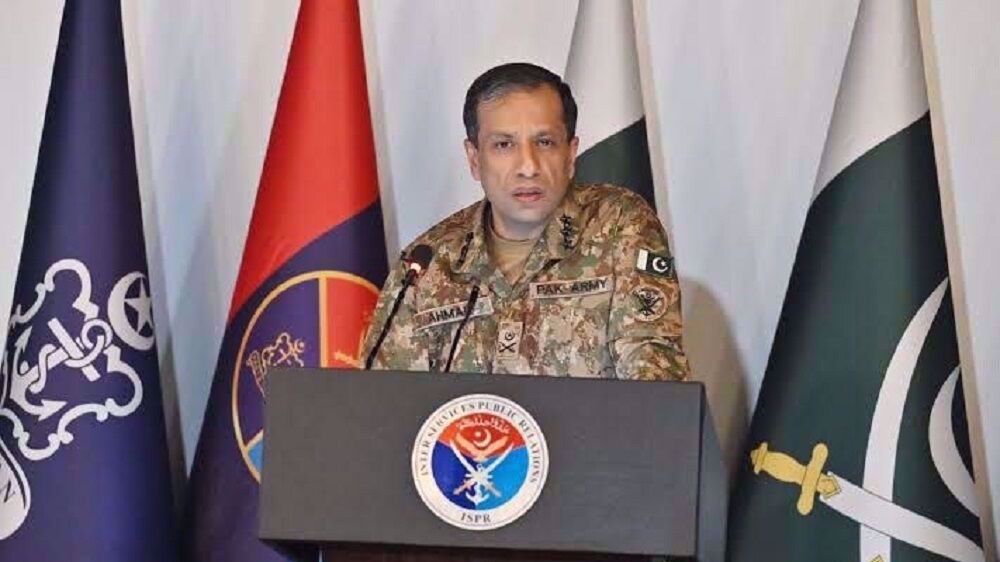
Pakistan says strategic ties with Iran key to its mediation efforts
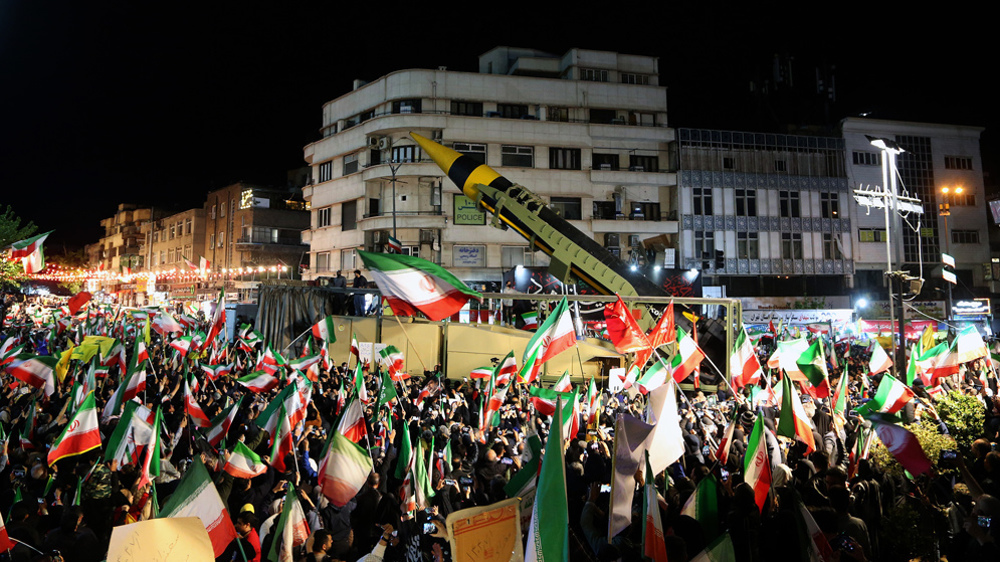
IRGC Navy chief praises 200 nights of nationwide demonstrations
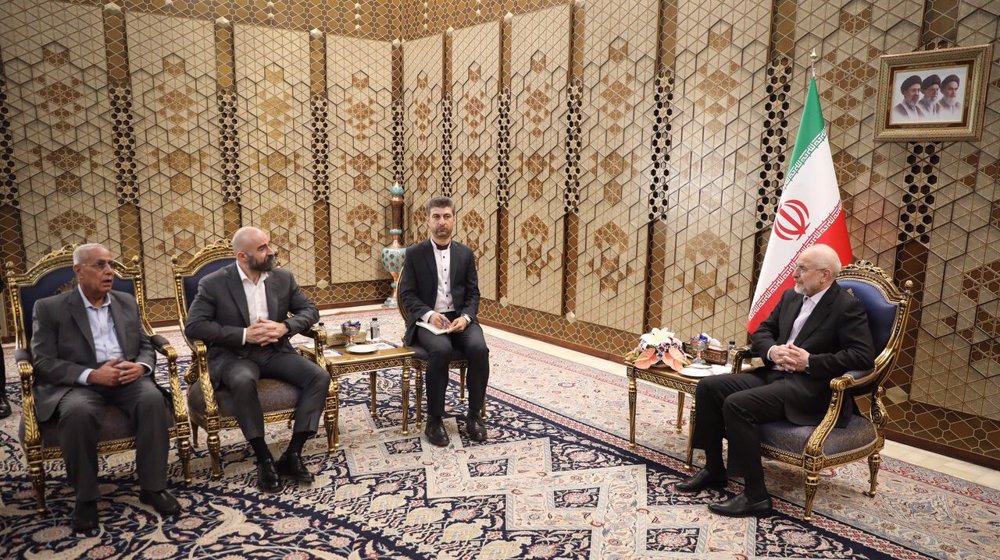
US plot to use Iraqi Kurdistan as launchpad against Iran thwarted: Qalibaf



Top security, military brass hail 200 nights of rallies as proof of Iran’s strength
VIDEO | Sana’a has turned Saudi economic lifeline into strategic vulnerability
Yemeni army targets Aramco facilities, King Khalid Air Base in Saudi Arabia
VIDEO | Iran dismantled US-Israeli aura of power: Defense analyst
IRGC chief slams assassination of Sunni cleric in southeastern Iran, vows retaliation
Iran warns AI could become apparatus of ‘invisible dictatorship’ amid growing use in warfare
Iranian armed forces inflicted ‘serious damage’ on US warships: Senior commander
VIDEO | Mass skepticism on Trump’s $5,000 ‘bribe’ for midterm elections


 PressTV NEWSLETTER
now
PressTV NEWSLETTER
now
 This makes it easy to access the Press TV website
