Ukraine's strike on Iranian cargo vessel is a reckless military gamble that carries serious consequences
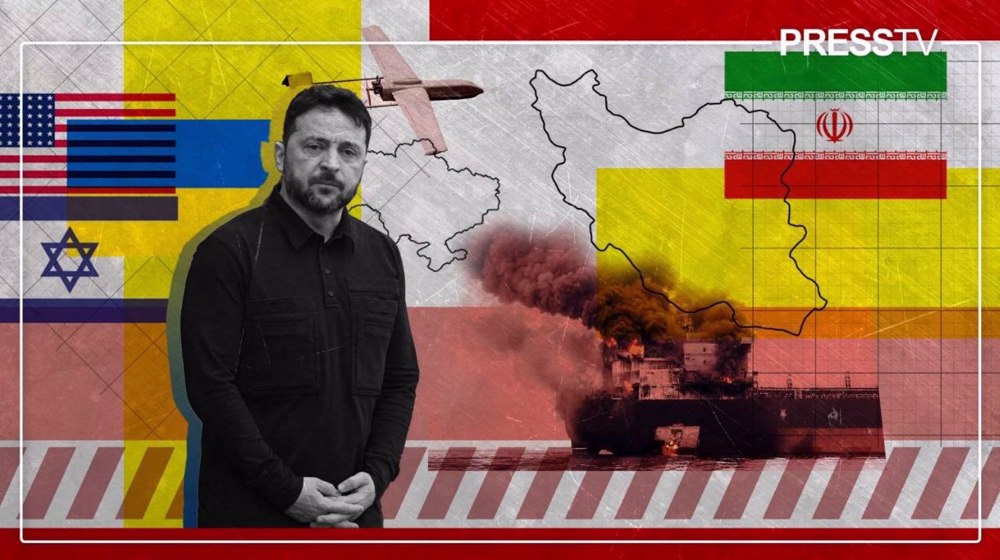
By Mohammad Raghib Ali
The Caspian Sea has long been a quiet frontier – a vast, inland body of water where the Islamic Republic of Iran, Russia and the Central Asian countries have maintained a delicate balance of power and interests for decades.
That quiet was shattered earlier this week when Ukrainian forces, in a foolhardy and unprovoked military adventure, targeted an Iranian cargo vessel, killing a young Iranian sailor.
It marked the first such incident between Kyiv and Tehran amid the ongoing American war of aggression against Iran, which continues unabated despite a ceasefire deal.
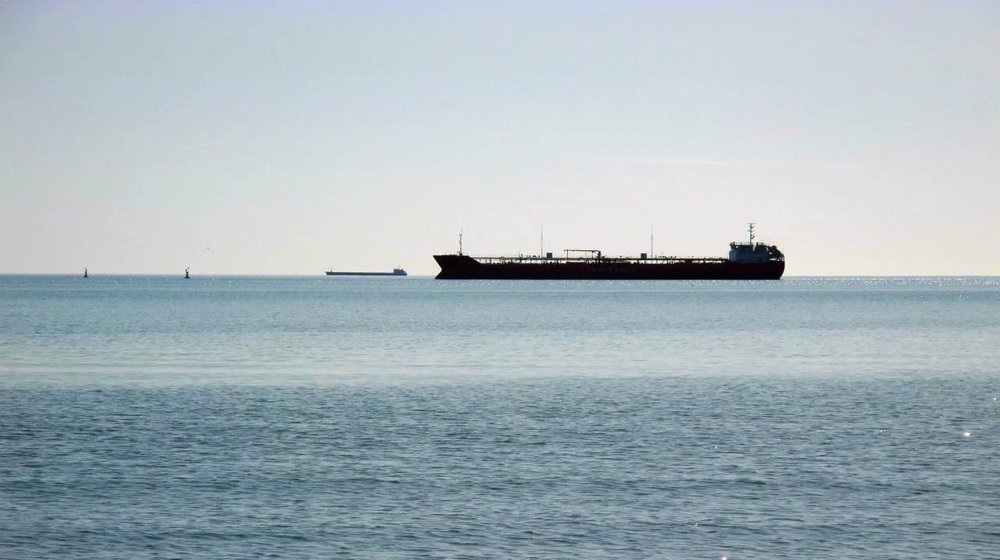
Let us be clear about what happened in the Caspian Sea. The "Anna," an Iranian cargo ship anchored approximately five kilometers from the mouth of the Volga River, was struck in a long-range precision attack. A young Iranian sailor on his first mission lost his life.
The vessel was not a warship and was not carrying or transporting weapons. It was a cargo ship, going about its business in international waters, when Ukrainian missiles targeted it.
Ukrainian President Volodymyr Zelensky, never one to miss an opportunity for grand pronouncements, announced on Saturday that Ukrainian forces had achieved "very good results" in long-range strikes in the Caspian Sea.
One wonders what is "very good" about killing a young sailor on a civilian vessel in an attack that came without any provocation. One wonders what is "very good" about expanding a US-Israeli war of aggression against Iran without any clear strategic rationale.
In an interview with Sky News, Zelensky claimed that Tehran was planning to send ballistic missiles to Russia for use in the war against Ukraine. He failed to provide any evidence to back his claim, like umpteen times in the past few years. His claims have always been debunked.
The pattern is strikingly familiar: accuse, imply, move on before anyone asks for proof. Iran has repeatedly denied Ukrainian claims, but Zelensky and his gang of warmongers refuse to relent.
The most telling moment came not from Zelensky's bravado but from his own foreign minister. On Tuesday, Ukraine's top diplomat Andrii Sybiha called his Iranian counterpart Abbas Araghchi to insist that the attack was "not intentional."
Ukraine's military targeted a specific vessel in a specific location in the Caspian Sea, hundreds of kilometers from the nearest Ukrainian position, and it was somehow an accident.
Ukraine’s attack on Iranian commercial vessel aims to drag Europe into war: Iran FMhttps://t.co/m4lGX38SnG
— Press TV 🔻 (@PressTV) July 26, 2026
The contradiction is staggering. The president boasts of "very good results" while the foreign minister scrambles to walk it back. This is the behavior of a regime that realizes, perhaps too late, that it has overreached and crossed a clear red line.
One must understand Ukraine's attack on Iran not as an isolated act of aggression but as part of a broader alignment that has been developing in recent years. Ukraine's accusations against Iran are rooted in Kyiv's growing alliance with the Israeli regime and the United States.
Despite President Trump significantly reducing American assistance to Ukraine, a notable departure from the Biden administration's open-ended commitment, Kyiv seems determined to prove its worth to Washington and Tel Aviv by acting as a proxy against Iran.
This is a strategic miscalculation of the highest order. Ukraine appears to believe that by striking at Iranian vessels, it can curry favor with its American and Israeli patrons who have long but unsuccessfully sought to weaken the Islamic Republic.
What Ukraine fails to understand is that it is a small player in a very large game. The United States, despite its much-hyped military might, was forced to seek a ceasefire with Iran after two failed wars of aggression. The Israeli regime, despite its technological superiority and intelligence capabilities, had to accept its military defeat.
What makes Ukraine believe that a proxy can do what its masters couldn’t?
Ukraine's war against Russia should never be viewed through the prism of Iran-Russia defense cooperation. Such cooperation is a norm in international relations. Nations are entitled to pursue mutual defense arrangements, especially at a time when a new world order is taking shape, one that increasingly rejects the unipolar dominance that has characterized global affairs for the past several decades.
If the United States can arm the Zionist regime, if NATO can supply Ukraine with advanced weapons systems, if European nations can engage in extensive military cooperation without condemnation, then why should Iran and Russia be denied the same right?
The double standard is glaring. The West has spent decades arming its allies and partners around the world, yet when Iran and Russia seek to bolster their defense cooperation, it is framed as a threat to international order.
Ukraine's attack on the Iranian cargo vessel was an act of aggression against a nation that has not threatened Ukraine, has not attacked Ukrainian territory, and has no direct stake in the war beyond its legitimate defense cooperation with Russia. By striking an Iranian vessel, Ukraine has opened a new front that it is not prepared to sustain.
Iran strongly condemns deadly Ukrainian attack on commercial vessel, warns of consequenceshttps://t.co/fRiuBh5HRc
— Press TV 🔻 (@PressTV) July 25, 2026
Iran reserves the right to retaliate against any act of aggression from any entity, including Ukraine. Every nation has the inherent right to defend its citizens and its interests. The young sailor killed in the Caspian Sea was not a combatant or a soldier. He was an innocent sailor, going about his work, when Ukrainian missiles ended his life.
Ukraine has now officially and openly positioned itself as an adversary of Iran. This is a position it cannot maintain and a burden it cannot bear. The United States and Israel both launched wars against Iran with far greater military capabilities and far more extensive intelligence networks.
Both were forced to eat the humble pie. Both found that Iran's resilience, military capacity, and strategic depth are far greater than anticipated.
Ukraine is already fighting a war on its own territory, struggling to maintain manpower, supply lines, and international support. It is in no position to open another front against a country that has demonstrated, time and again, its ability to withstand and respond to every act of aggression. The notion that Ukraine can intimidate or deter Iran is delusional.
The contradiction between Zelensky's boastful claims and his foreign minister's backtracking suggests that Kyiv's leadership is utterly confused. Perhaps there are those in Ukraine who understand that provoking Iran is an act of strategic suicide. Perhaps there are those who recognize that Iran's retaliation, when it comes, will be precise and devastating.
Zelensky's insistence on linking Iran to the Russian war effort, without evidence, serves only to expose his own desperation. When a leader must fabricate threats to justify aggression, that leader is not leading but aimlessly flailing. The accusations against Iran are aimed at a Western audience that has shown itself all too willing to believe the worst about Iran without question.
The attack on an Iranian vessel was a strategic error that may have consequences far beyond what Kyiv anticipates. Iran has shown remarkable patience in the face of provocation, but patience is not infinite. The United States and the Israeli regime learned this the hard way.
The young Iranian sailor, on his maiden mission, who lost his life in the Caspian Sea, is not a statistic. He was a human being, a son, a countryman. His blood will be and should be avenged.
United States and Israel both sought to confront Iran and were forced to back down in humiliation. Ukraine, with its exhausted military, its shrinking international support, and its crumbling economy, is in no position to succeed where its patrons failed.
The question is not whether Iran will respond but when, and how, and at what cost to Ukraine.
Mohammad Raghib Ali is a Moscow-based researcher and analyst.
(The views expressed in this article do not necessarily reflect those of Press TV)
Iran’s Army, IRGC chiefs vow to maintain unbreakable unity after crushing ‘terrorist powers’
Security forces deliver painful blow to terrorists in southeastern Iran

Iran: Strait of Hormuz remains under our full control; world should blame US for rising fuel prices



Yemeni military advance along Red Sea alters balance of power amid Saudi siege, aggression: Analyst
VIDEO | Iran can smash US naval blockade
VIDEO | Sana’a secures Bab el-Mandeb, safeguarding global maritime trade
Stories Beyond Numbers: A pregnant woman killed alongside 8 family members in US-Israeli strike
Untold story of July 31: Hours after US strikes, Iran locked onto F-35 and destroyed MQ-9 Reaper
Saudi warplanes bombard areas recently liberated in Yemeni army’s advances
VIDEO | Press TV's news headlines
New resolution and UNSC referral show IAEA continues to be weaponized by US, Europe against Iran


 PressTV NEWSLETTER
now
PressTV NEWSLETTER
now
 This makes it easy to access the Press TV website
