The indivisible front: Why Iran rejects – and warns against – any war-ending deal that excludes Lebanon
By Press TV Strategic Analysis Desk
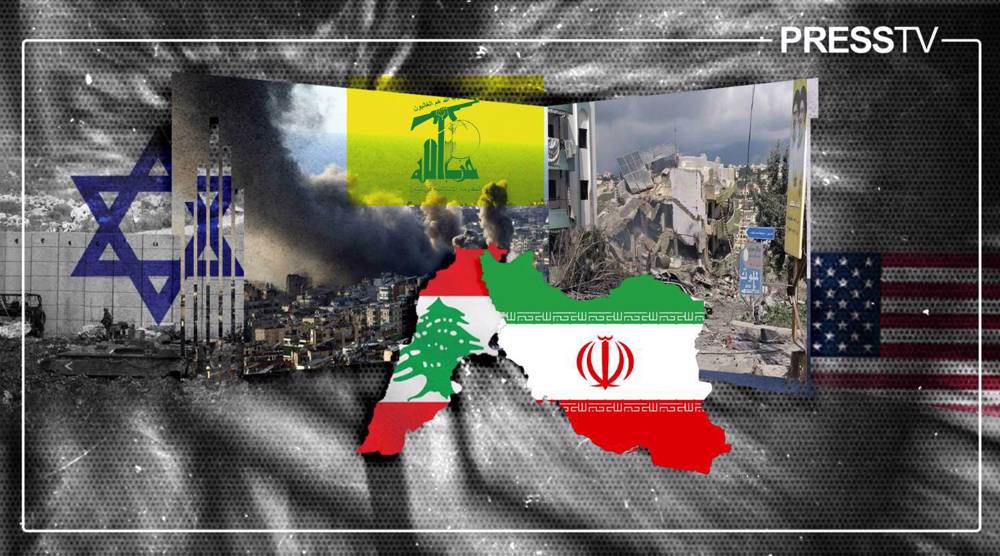
The recent Islamabad negotiations were meant to be a decisive turning point, a diplomatic opening to end the US-Israeli aggression and the resulting chaos engulfing West Asia.
Iran arrived at the table with a clear, principled, and non-negotiable precondition: any ceasefire must include all fronts without exception, including Lebanon. Not a partial truce, not a symbolic pause, but a complete, verifiable, and enforceable halt to the Zionist regime's relentless and unprovoked attacks across the Arab country.
The American-Zionist war machine rejected this framework and chose a strategy of deception, offering a ceasefire limited to Beirut while continuing to bomb southern Lebanon.
On Sunday, that deceptive tactic also ended as the aggression expanded to Beirut itself. Israeli warplanes bombed parts of Dahiyeh, despite the Islamic Republic's clear and categorical warnings against any such foolhardy escalation.
For Tehran, any attempt to decouple the Iranian front from Lebanon, Gaza, Iraq, Yemen, or the broader Axis of Resistance is functionally equivalent to dismantling the entire regional deterrence architecture painstakingly built over decades against hostile foreign powers.
This explains why Iranian officials have repeatedly and emphatically warned that a ceasefire cannot be applied selectively, permitting aggression on one front while demanding restraint on another, particularly Lebanon.
Iran's Foreign Minister Abbas Araghchi explicitly declared that a ceasefire "on one front" cannot coexist with war on another front, warning that any violation in Lebanon effectively nullifies the entire ceasefire framework and compels Iran to respond proportionately.
The anatomy of a false ceasefire
On paper, a ceasefire brokered in Islamabad between Tehran and Washington remains in effect. President Donald Trump has even extended it unilaterally – not once, but twice.
On the ground, however, the reality tells a different story. Zionist aerial and ground military assaults on southern Lebanon – and now Beirut as well – have continued without pause.
Large swathes of Lebanese territory have fallen under occupation as the Zionist army has pushed deeper into the south. Hezbollah's senior commanders have been assassinated in precision strikes on Beirut's southern suburb of Dahiyeh – a flagrant breach of a truce.
What the US and Israel label a "ceasefire" is, in truth, a smokescreen for sustained military aggression. It functions as a license for the occupation to entrench its occupation, eliminate resistance leadership, and alter the battlefield, all while pretending adherence to a truce.
Iran recognizes this deception for exactly what it is. And it has drawn a line.
✍️ Analysis: Israeli escalation in Lebanon and US adventurism in Persian Gulf test Iran's ceasefire red lines
— Press TV 🔻 (@PressTV) June 1, 2026
By Press TV Strategic Analysis Deskhttps://t.co/StXHpttO4C pic.twitter.com/KHsbbkfYMl
The enemy's hidden objectives
Why does the Zionist regime – with full American patronage – remain hell-bent to press ahead with its unprovoked attacks on Lebanon even under the veneer of a ceasefire? The answer lies in a multi-layered strategy designed to achieve several interlocking and mutually reinforcing objectives.
First is establishing new rules of engagement. The regime seeks to normalize the dangerous and egregious fiction that Iran's front is entirely separate from Lebanon – that any agreement struck with Iran carries no implications for the Lebanese front.
This directly contradicts Iran's fundamental position: the unbreakable unity of the resistance front, from Iran to Lebanon to Yemen and beyond. By attempting to drive a wedge between Tehran and Beirut, the enemy hopes to dismantle the axis of resistance piece by piece.
Second is consolidating the occupation of Lebanese territory. Every seized inch of southern Lebanon becomes a bargaining chip for the occupation. The regime intends to leverage these occupied territories to pressure the Lebanese government and people, particularly the resilient Shiite community, into capitulating to Israeli demands, chief among them the disarmament of Hezbollah. This is not about security but outright subjugation.
Third is using Lebanon as a pressure card against Iran. In any future negotiations between Tehran and Washington, the Zionist regime wants to preserve what it claims as its right to attack Lebanon at will – the right to assassinate Lebanese citizens, conduct ground incursions, and occupy Lebanese territory based solely on its own dangerous judgment.
Fourth is permanently shifting the front line away from northern occupied Palestine. The regime dreams of returning to the era before the resistance pushed the line of fire back into occupied territory.
But this time, there is a critical difference: beyond occupying Lebanese land, the inhabitants of those areas must also evacuate. The goal is to eliminate the very social environment that hosts and sustains the resistance – ethnic cleansing by another name.
Fifth is manufacturing political achievements for Netanyahu. With elections looming inside occupied Palestine, the regime's prime minister desperately needs a hollow "victory" to salvage his crumbling political standing. Continued aggression against Lebanon, even under a false ceasefire, serves as a convenient tool for domestic political survival.
Iran's principled position: The unity of the Resistance Front
In direct response to the enemy's divide-and-conquer strategy, Iran has consistently underscored the unity of the resistance front as the irreducible, non-negotiable condition for definitively ending the imposed war and entering any future negotiations.
The enemy has arrayed itself on the battlefield, in logistics, and across political positions as a united front, comprising the United States, the Zionist regime, and certain Arab governments hosting American military bases.
This is a coordinated, multi-front war machine operating in lockstep. Against such a unified adversary, the resistance simply cannot afford fragmentation.
Iran, therefore, possesses every right – indeed, every obligation – to insist upon a unified resistance front. The alternative is the unified enemy attacking the components of the resistance individually, believing that the other fronts will not respond.
Iran refuses to let that predatory logic prevail, and rightly so.
✍️ Analysis - End of 'tit-for-tat' era: Iran’s broad, asymmetric response to US attacks redraws the deterrence equation
— Press TV 🔻 (@PressTV) June 3, 2026
By Press TV Strategic Analysis Deskhttps://t.co/MVDp8qqOZQ
The moral imperative of collective defense
Beyond strategic calculation, the unity of the resistance front reflects a far deeper moral commitment. The components of the resistance share a binding duty to support one another during times of war and peace. This is not a transactional arrangement but a sacred and unbreakable bond formed in blood and collective sacrifice.
Iran, as the principal and most powerful component of this front, bears a special and weighty responsibility. If Tehran were to abandon this moral principle – if it were to accept a separate peace while Lebanon burns under occupation – the consequences would be nothing short of catastrophic.
First, the very foundation of the resistance front would crumble. Trust, once shattered, cannot be easily restored. Allies who have fought and bled alongside Iran would rightly question whether Tehran can be relied upon in their own moments of gravest need.
Second, a false and deeply damaging precedent would take hold. Iran's failure to support its allies would suggest that Tehran, much like the United States, lacks either the power or the will to stand by its partners during war – that Iran merely uses its allies in times of urgent necessity and discards them when the cost becomes too high.
This is not who Iran is, and this is not who Iran will ever become.
What "ending the war" actually means
It is essential to clarify what Iran actually means when it insists on ending the war across all fronts. This condition does not imply that Iran is assuming a godfather role over the other components of the resistance. Lebanon's resistance, for instance, retains its full and undisputed right to act against aggression and occupation.
That right is entirely compatible with ending the war.
Ending the war means halting the Zionist regime's attacks completely. It means restoring the situation that existed before the recent 40-day war of aggression. It means the release of Lebanese prisoners held captive by the regime. Anything less is not an end to war but a temporary breathing space for the enemy to regroup, rearm, and resume.
Before the recent war, a fifteen-month ceasefire was declared in Lebanon. Throughout that period, the Zionist regime continuously violated the truce, struck various regions, and martyred hundreds of Lebanese citizens. The experience of the past is bitter.
Iran will not permit a repetition of those conditions. Any understanding between Iran and the US regarding an end to the war must be measured against this clear, non-negotiable standard: the complete cessation of Zionist attacks, the full withdrawal from all occupied Lebanese territory, and the release of prisoners.
"Once the aggressions against Lebanon ends, sustained security will happen in the region"
— Highlights (@highlightsnews1) June 7, 2026
Press TV’s @frzaneh_a explains the rationale behind Iran’s support for the resistance in Lebanon.
Follow: https://t.co/Kl2Pka5XU9 pic.twitter.com/gXBLHxx5hc
Beyond diplomacy: Iran's other options
Iran fully understands that the American and Zionist war machines may continue to delay, deceive, and drag their feet indefinitely. For this reason, Tehran has made it explicitly clear that, beyond its diplomatic conditions, it possesses other powerful options that can be deployed should the occupation and attacks on southern Lebanon persist.
These options include the demonstrated ability to discipline the unhinged Zionist regime – to impose high costs that make continued aggression strategically untenable. Iran does not bluff. The regime knows from recent, painful experience that Iranian retaliation is precise, devastating, and meticulously calculated.
Ultimately, Iran's insistence on ending the war across all fronts is not solely about Lebanon. It is fundamentally about Iran itself. The two are inextricably linked.
A strong, intact, and unified resistance front serves as a defensive shield for all its members, including the Islamic Republic of Iran. By ensuring Lebanon is not forced to surrender or disarm, by preventing the enemy from establishing fragmentation-friendly rules of engagement, and by preserving the moral and strategic coherence of the axis of resistance, Iran is actively pushing the shadow of war away from its own borders.
This is directly connected to Iran's long-term security, sustainable development, and national prosperity. A country that cannot guarantee its own security cannot develop. A nation constantly threatened by foreign aggression cannot flourish.
The message from Tehran is unambiguous, and the message is that there will be no separate peace. There will be no agreement that sacrifices Lebanon to save any other front. There will be no acceptance of a false ceasefire that allows the Zionist regime to continue its occupation, its assassinations, and its slow annexation of Lebanese territory.
Iran's condition for ending the war is the end of the war on all fronts, or the war continues.
Amazon can't restore US cloud infrastructure in Bahrain, UAE after Iranian retaliation: Report
Iran’s military victory must be complemented by victory in battle of narratives: Basij chief
Pentagon finally admits Iran struck US F-35 fighter jet



‘The American age is over’; Iran war exposes limits of US global military power: US magazine
Ansarullah: Yemenis are the true defenders of holy sites
VIDEO | Gaza journalists battle Israeli attacks, health crisis while documenting war
Israel blockade leaves 70% of Gaza hospital generators out of service: Health ministry
VIDEO | Press TV's news headlines
Pezeshkian hails 200 nights of rallies, reaffirms support for Iranian armed forces
Pezeshkian: Iran ready to resolve issues with neighbors through diplomacy
US narrative of pilot rescue ‘just fictional’: IRGC spokesman


 PressTV NEWSLETTER
now
PressTV NEWSLETTER
now
 This makes it easy to access the Press TV website
