Iranian skies turn into graveyard for America's most-famed combat drone – MQ-9 Reaper
By Mohammad Molaei
There's a drone the US military has quietly come to call the "most valuable player" of its regional military operations and it has been falling out of the sky at a rate that has no precedent in the contemporary history of the American military.
Since the start of the Ramadan War in late February 2026, when the US-Israeli war machine carried out an unprovoked and illegal war of aggression, Iran and the broader Axis of Resistance have destroyed more MQ-9 Reapers in a matter of months than the United States lost in any previous military confrontation anywhere in the world in which the platform was deployed.
The numbers, cross-referenced from Pentagon records, Congressional Research Service figures, media investigations, and documented visual evidence catalogued by Iranian defense analysts, add up to a picture the US Air Force has been in no rush to present clearly to the American public.
What the Reaper was built for – and why that’s the problem
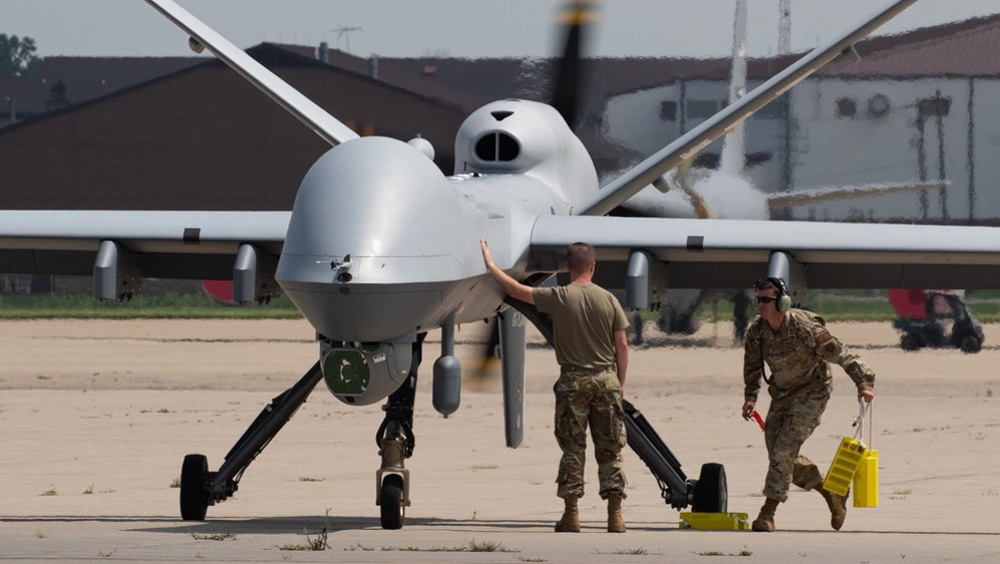
The MQ-9A Reaper is General Atomics' premier armed reconnaissance platform. It flies at altitudes up to 50,000 feet, can stay airborne for up to 24 hours without landing, carries Hellfire missiles and precision-guided bombs, and has been the backbone of US military offensives for nearly two decades in Afghanistan, Somalia, Syria, Iraq, and Yemen.
It costs approximately $30 million per airframe. It is, in its intended environment low-threat airspace where the opponent has no meaningful air defense one of the most effective surveillance and strike platforms in the US military inventory.
That last clause is the problem. The MQ-9 was designed for wars against opponents who can't shoot back effectively from the sky. It is not stealthy and not fast.
Against a military power like Iran, which has spent years building a layered, domestically produced air defense network including the Majid system, the Qaem-118 interceptor, and the 358 loitering anti-drone missile specifically engineered to hunt slow-flying aircraft at medium altitude, the Reaper is, bluntly, a target.
The ongoing American war against the Islamic Republic of Iran exposed this vulnerability on a scale that was not anticipated by CENTCOM's planners, and the staggering losses reflect it.

US pre-war fleet: The baseline
Understanding the loss figures requires knowing the starting point. According to data cross-referenced from Pentagon budget documents and US Air Force delivery records, approximately 250 MQ-9 airframes had been delivered to various US military units by the start of the Ramadan War in late February.
The breakdown is roughly 206 to the Air Force, 20 to the Marine Corps, and 24 to the Air National Guard. The Air Force's active operational fleet the aircraft actually available for CENTCOM operations was assessed at approximately 155 aircraft, with the Marine Corps and Guard units holding the remaining 44.
That 155-aircraft figure is the critical baseline for everything that follows.
Ramadan War: 30 Reapers confirmed by Pentagon's own sources
By May 21, 2026, approximately 83 days into the war, Bloomberg published a report citing a source with direct knowledge of the matter confirming that Iran had destroyed more than two dozen MQ-9 Reaper drones since the start of the conflict.
The figure represented approximately 20 percent of the Pentagon's pre-war operational inventory and was valued at close to one billion dollars. The Congressional Research Service, the nonpartisan research arm of the US Congress, had independently arrived at a figure of 24 Reapers lost in its report titled "US Aircraft Combat Losses in Operation Epic Fury," released earlier in May. Bloomberg's source placed the figure higher up to 30 destroyed by that date.
Those losses came from two distinct categories: Reapers shot down in flight by Iranian air defense systems over Iranian territory, and Reapers destroyed on the ground when Iranian ballistic missiles and drones struck US bases across the region where the aircraft were parked, hangared, or staged for operations.
As US Air Force Lieutenant General David Tabor, the Pentagon's deputy chief of staff for plans and programs, acknowledged in congressional testimony, the Air Force's operational Reaper fleet had by that point fallen to roughly 135 aircraft, considerably below the service's own long-standing minimum operational floor of 189.
The systems Iran used to hunt and destroy these drones in flight include the domestically produced Majid short-range air defense system, the Qaem-118 interceptor missile, and the 358 loitering munition that has been specifically designed to patrol medium-altitude airspace and engage slow, non-stealthy aircraft.
This last system, the 358, which Iran also supplied to Yemen, is the platform that accounts for a significant portion of the Reaper losses across the region, and its continued operational availability after the ceasefire explains why drone attrition has not slowed.
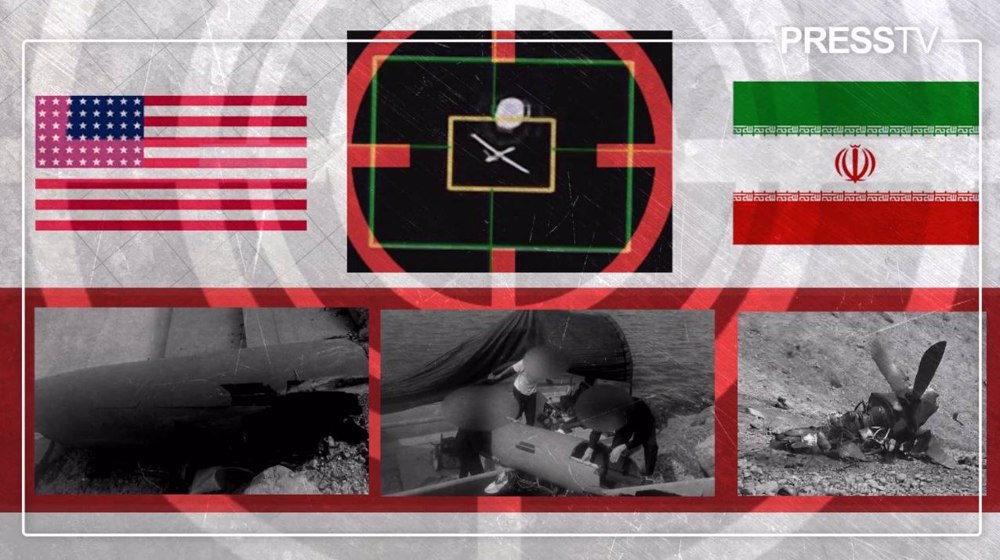
Iran's IRGC downed a US MQ-9 drone over the skies of Khormoj early this morning.
— Press TV 🔻 (@PressTV) July 8, 2026
The aircraft was struck and destroyed by a new domestically-developed air defense system after 'aerial aggression' by American forces over Bushehr province.
Follow https://t.co/B3zXG73Jym pic.twitter.com/CXOUx9y9eL
After May 21: 11 to 12 additional Reapers destroyed
The Bloomberg figure of 30 losses as of May 21 was not the end of the story. Using the May 21 figure as the confirmed baseline, Iranian military operations between May 21 and mid-July destroyed an additional 11 to 12 MQ-9 airframes, documented as follows:
One Reaper shot down over southern Iran; two confirmed destroyed on the ground at Ali al-Salem Air Base in Kuwait in a direct strike; one further Reaper destroyed at Ali al-Salem in a separate retaliatory attack; one shot down over Jam; one over Khormuj; one over Khuzestan province; one over Assaluyeh; one in Dehloran in Ilam province; one over Ahvaz; one over Kermanshah; and one confirmed destroyed on the ground at Jordan's Muwaffaq Salti Air Base – the last confirmed by satellite imagery.
That brings the cumulative documented figure to between 41 and 42 MQ-9 Reapers destroyed by Iran in Iranian airspace, over the Persian Gulf, and on the ground at US bases in Kuwait and Jordan since the start of the Ramadan War.
The IRGC's statement following the 42nd wave of Operation Nasr-2 noted that an additional 10 Reapers have been destroyed: eight in canisters that had been shipped to King Faisal Air Base for final assembly and to replace lost aircraft, and two more on the runway.
Reapers destroyed on the ground at Jordan's Muwaffaq Salti Air Base
A separate and important dimension of the Reaper losses concerns the strikes on US military infrastructure in Jordan, specifically Muwaffaq Salti Air Base, which hosts a significant US drone operations presence.
Between 9 and 11 MQ-9 Reapers were destroyed in Iranian retaliatory strikes on US military facilities at Muwaffaq Salti. Satellite imagery of the base, released by OSINT sources and confirmed by independent analysis, showed the destruction of aircraft shelters at the facility consistent with the claimed figures.
The IRGC's statements following the subsequent waves of Nasr-2 specifically cited the destruction of drone hangars and staging areas at Muwaffaq Salti, the same base that OSINT imagery on July 12 confirmed had suffered the destruction of an MQ-4C Triton hangar in a separate, more recent strike.
These ground losses are more strategically significant than the in-flight shoot-downs, because destroying a drone on the runway while it is being prepared for a mission or destroying aircraft in canisters awaiting assembly means eliminating not just an operational asset but the replacement pipeline Washington was counting on to restore its surveillance and strike capacity.
🔴 IRGC Aerospace Force shot down a US MQ-9 drone over Ahvaz using the new advanced air defense system.
— Press TV 🔻 (@PressTV) July 19, 2026
Follow: https://t.co/mLGcUTS2ei pic.twitter.com/deMFovXVbM
The Italian Reaper
Among the Reapers destroyed, one belongs to a separate chapter entirely: the MQ-9 operated by the Italian Army at Ali al-Salem Air Base in Kuwait, destroyed in an Iranian drone and missile strike on the afternoon of February 28.
Two Italian Eurofighter Typhoons were also damaged by shrapnel in the same attack. The Italians reported no personnel casualties.
The Italian MQ-9 is documented separately from the US Air Force tally and is not included in the Bloomberg figure of up to 30. It is one of the additional losses in the broader coalition picture.
What's left: The remaining fleet
Working from the confirmed baseline figures, here is where things stand. The US Air Force received approximately 206 MQ-9 airframes total. Of these, more than 90 have been lost across multiple wars and incidents: 41 to 42 confirmed destroyed by Iran in the Ramadan War and its aftermath, approximately 29 lost in Yemen, and approximately 20 lost in various other incidents including Afghanistan, South Korea, and operational accidents.
In the best-case scenario before accounting for any of the IRGC's most recent statements about canisters and runways, the Air Force's remaining MQ-9 fleet sits at somewhere between 95 and 116 aircraft.
That range is consistent with the Bloomberg-sourced figure of roughly 135 remaining as of May 21, minus the 11-12 additional losses since then.
The gap between "best case" and "worst case" in these figures reflects the genuine uncertainty about how many of the IRGC's most recent hangar and canister claims are confirmed by independent imagery, a caveat worth being honest about.
What it definitely does not reflect is a functioning fleet at anything close to the Air Force's own minimum operational threshold of 189 aircraft. The US military is operating a Reaper fleet in the Iran war that is, depending on the precise figure, between 35 and 50 percent below the floor its own planners consider the minimum for sustained global operations.
The gap has been partially papered over by the reactivation of three retired MQ-1 Predator airframes, the Reaper's predecessor, taken out of service years ago, of which two were subsequently shot down over southern Iran and one over Iraq.
Yemen: 29 Reapers and counting
The MQ-9's vulnerability to the weapons of the Axis of Resistance did not begin with the Ramadan War. Yemen's Ansarullah movement has been shooting down Reapers since 2017 and has done so with increasing proficiency as the years have passed.
The Atlantic Council documented 14 confirmed shoot-downs since November 2023 alone. By April 23, 2025, before the Ramadan War even began, the Yemeni armed forces had downed at least 22 Reapers in the current campaign period, with the total including pre-2023 incidents running considerably higher.
The weapon the Yemeni military has most commonly used for these shoot-downs is the 358, the same Iranian-designed loitering interceptor that the IRGC has deployed in large numbers across Iran's own air defense network.
That common weapons thread between Yemen and Iran is not coincidental. It reflects a systematic transfer of capability from Tehran to its partners in the Axis of Resistance, one that has turned a missile originally designed in Iran into a multi-theater Reaper killer that the US Air Force has found no effective answer to.
The moment of targeting and destroying the US MQ9 drone with advanced modern air defense systems controlled by Iran’s air defense network.
— Press TV 🔻 (@PressTV) March 1, 2026
Follow: https://t.co/mLGcUTSA3Q pic.twitter.com/LSmquvtdkR
Iraqi resistance: A smaller but real tally
The Islamic Resistance in Iraq has also contributed to the Reaper attrition, though its tally is smaller and harder to verify in aggregate.
The first confirmed US acknowledgment of a Reaper lost to Iraqi resistance fire came in January 2024, when the US military confirmed that an MQ-9 had gone down near Balad Air Base in northern Iraq, according to both US officials and the Iraqi Islamic Resistance.
In March 2026, the Iraqi Islamic Resistance confirmed downing a Reaper over Salah al-Din province. Additional incidents over Iraq have added further aircraft to the regional tally, though the Iraqi resistance's total contribution remains smaller than Iran's or Yemen’s.
The bigger picture: What these numbers mean
The US Air Force entered the Ramadan War with a Reaper fleet already under its own minimum floor due to prior combat losses. It proceeded to lose between 41 and 42 confirmed aircraft worth approximately $1.25 billion at $30 million per airframe to a combination of Iranian air defenses and Iranian missile and drone strikes on regional bases.
It lost these drones in a war that was supposed to last days, not months, and that was supposed to establish American air supremacy over Iran's skies within the first week.
The Air Force has now acknowledged that it needs additional procurement funding just to rebuild a fleet that was already considered inadequate before the war.
The Reaper is, simultaneously, being phased out in favor of next-generation systems, but those systems are not here yet; the production lines are not running at the required rate, and the war has consumed enough of the transitional inventory to leave CENTCOM with a surveillance and strike capability gap that will take years to close.
For the US military, the MQ-9 Reaper was supposed to be the eye in the sky over Iran, finding targets, designating them with laser for strike aircraft, and watching the results.
Instead, Iranian airspace has become its graveyard. More than 90 percent of the airframes delivered to the US Air Force since the program began are now gone, destroyed by Iran, by Yemen, by Iraqi resistance forces, or in accidents in one operational theater or another.
The aircraft that was marketed as "the most valuable player" of the Iran campaign has been, in cold statistical terms, its most systematically eliminated one.
Iran will be ‘far more advanced technologically’ in any new war: Acting defense minister

Ansarullah takes over Bab al Mandab Strait

US attack on Iranian commercial vessel kills one, injures four



VIDEO | Iraq’s fuel crisis deepens amid supply disruptions
US tested Lockheed cluster missiles on Iranian civilians, Baghaei says
Iran, Oman jointly postpone Persian Gulf foreign ministers’ meeting
VIDEO | Gaza’s women: The sole providers of families shattered by war
VIDEO | News Review: Trump’s comments on Irish unification spark backlash among his British allies
VIDEO | Press TV's news headlines
Yemen reports 58 Saudi attacks in one day, vows decisive response
VIDEO | US failed economic policy on Iran






 PressTV NEWSLETTER
now
PressTV NEWSLETTER
now
 This makes it easy to access the Press TV website
