Minab school massacre exemplifies US-Israeli crimes against Iranians: Iran FM spox
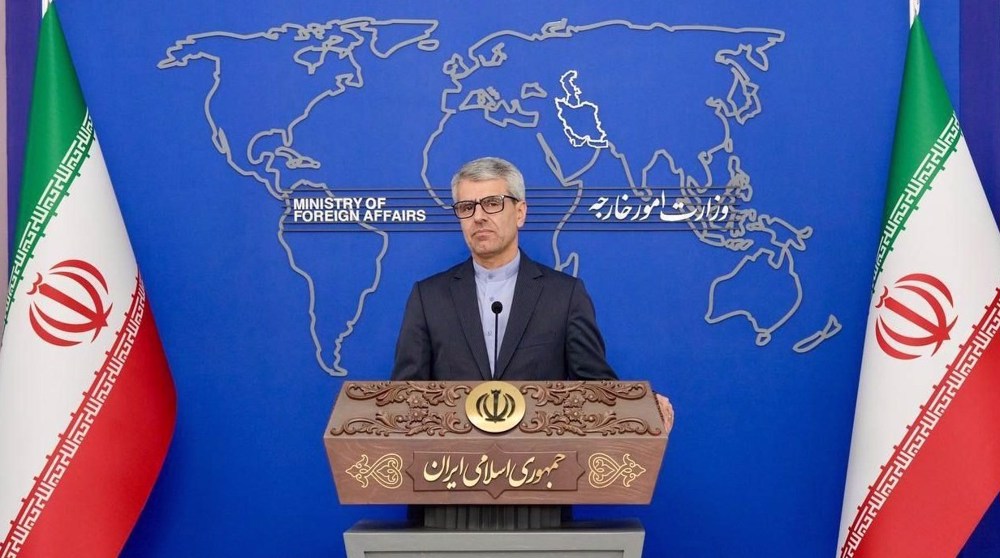
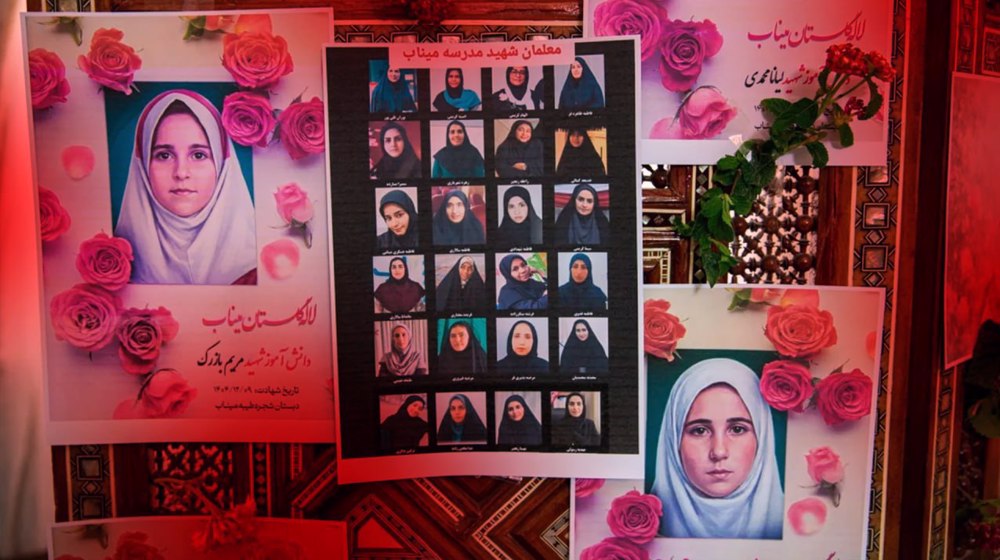
Iran’s Foreign Ministry spokesman has paid tribute to the victims of the Minab school massacre in southern Iran, saying it is just one example among hundreds of crimes committed by the United States and Israel against Iranians.
Addressing a Sunday ceremony in commemoration of the fallen children, Esmaeil Baghaei said that the city of Lamerd in the southern Iranian province of Fars was targeted on the same day that Minab school was bombed on February 28, and became a test ground for the United States’ newest lethal weapon, namely a cluster missile that would explode into 180,000 deadly shrapnel.
“Preserving the memory of these children is not simply a tribute to the past, but rather a responsibility to protect truth, justice, and humanity, and a covenant with the future,” Baghaei stated.
He added that world nations, irrespective of all their diversity, have some traits in common, and this commonality is part of human nature.
“All nations cherish their lost children. Grief over the loss of a child is a protection of human nature and conscience. Children are the most innocent and first victims of war; whether those who fall victim to bullets, bombs, and missiles, or those whose bodies and souls suffer permanent wounds, or those who bear the heavy burden of losing their fathers, mothers, and loved ones for the rest of their lives,” Baghaei stated.
The Iranian diplomat emphasized that the fallen children of Minab and Lamerd, as well as many other minors martyred during the June 2025 and the recent 40-day US-Israeli wars of aggression, remind everyone of their responsibility towards the truth.
“It is this responsibility that compels us to keep the lamp of memory burning, so that the darkness of oblivion does not cast a shadow over the past and our human conscience.”
“Nations are not defined by borders and maps alone,” Baghaei said. “What binds the people of a land together is the invisible thread of shared memories; the suffering they have experienced together, the hopes they have nurtured together, and the dreams they have held in their hearts together. Whenever these memories are forgotten, part of a nation’s identity also disappears.”
He emphasized that the martyred school children are a symbol of innocence and a symbol of the bitter truth that in the course of war and violence, the most defenseless people pay the highest costs.
The Foreign Ministry spokesperson stated, “When we talk about the children of Minab, we are actually talking about human dignity; about the right of every child to live, to learn, to dream, and to build the future he or she deserves; a right that should not be trampled upon due to the whims and evil ambitions of a gang.”
Baghaei deplored that with the death of a child, not only is a life extinguished, a world of possibilities is destroyed. “Dreams that have not yet been formed die, talents that have not yet blossomed wither, and futures that never have the chance to emerge are lost.”
The Foreign Ministry spokesman said many children have been enduring the hardship of war for years. “They live with physical pain, disabilities, anxiety, nightmares, and great sadness that no medicine can cure. They are living witnesses to the truth; witnesses who remind us every day of the true cost of the aggressors’ cruelty.”
He emphasized that commemoration of fallen children is not merely a commemoration of the past, but also a safeguard for the future that they were denied.
“Today, the world needs to hear the voices of children more than ever. In every corner of this world, there are many children who are victims of war, violence, poverty, deprivation, and injustice,” he said.
The Foreign Ministry spokesman added that the names of the victims of the Minab school massacre should not merely be written on a page of a history book.
“These names should live on in our cultural memory; in narratives, in the education of future generations, and in our constant effort to uphold truth and justice.”
He concluded by saying, ”We honor the memory and names of all the martyred schoolchildren of Minab. Although they did not have the opportunity to live their dreams to the end, they placed a great responsibility on our shoulders; the responsibility of protecting the truth, protecting the collective memory of Iranians, and protecting humanity and human values. They became part of Iran’s national memory; a memory whose preservation is not only a religious tribute to the past, but also a covenant with the future.”
Pezeshkian vows to firmly defend Iran’s position, convey its strength at General Assembly
US, Israel must accept 'a region free of their evil, criminal presence': IRGC
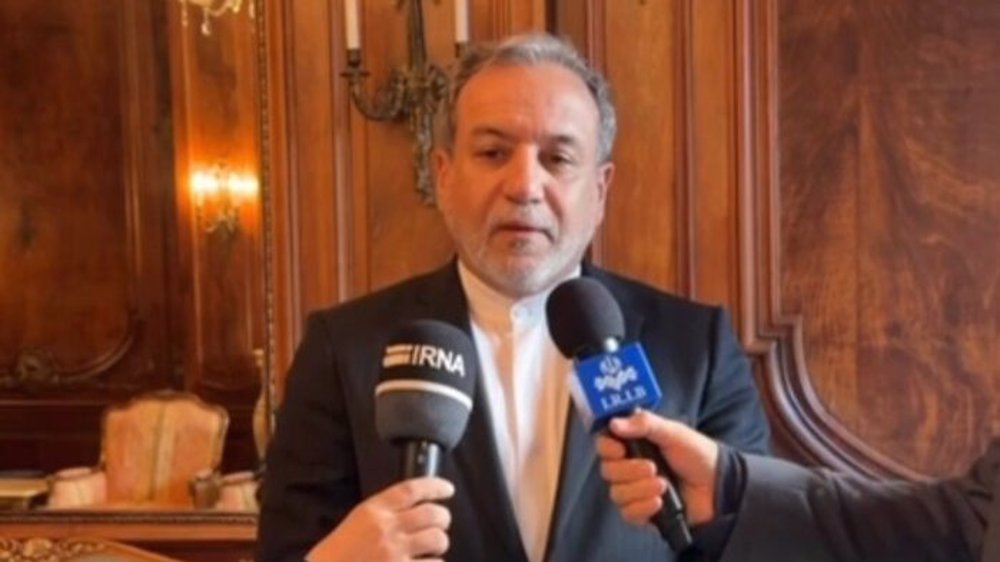
Iran FM: Our first task in New York is to defend the just cause of Iranian people



Pezeshkian vows to firmly defend Iran’s position, convey its strength at General Assembly
Iran to begin reverse-engineering captured US underwater drone: IRGC
US, Israel must accept 'a region free of their evil, criminal presence': IRGC
VIDEO | Press TV's news headlines
VIDEO | Pakistan carries out fresh airstrikes on Afghanistan
VIDEO | Gaza launches national committee to defend prisoners
Iran FM: Our first task in New York is to defend the just cause of Iranian people
US lawmaker admits American people footing bill for Trump’s failed aggression against Iran


 PressTV NEWSLETTER
now
PressTV NEWSLETTER
now
 This makes it easy to access the Press TV website
