Iran posts 100,000 MW generation feat amid US-Israeli war

Just as global energy markets wrestle with supply chain fractures and geopolitical shocks, Iran's power sector has quietly secured a historic milestone as installed generation capacity crossed the symbolic 100,000-megawatt threshold in late spring.
The achievement is all the more striking because it comes in the middle of an active military and economic war that began just hours after Energy Minister Abbas Aliabadi announced the target was within reach.
Back in late February, only hours before the US-Israeli terrorist war escalated, Aliabadi had told reporters that the 100,000 MW mark would soon be surpassed. It took just over three months to deliver.
Thermal power plants account for nearly 80% of that capacity, or over 78,600 MW. Combined-cycle units lead the pack with more than 38,000 MW, or 38% of the national total. Simple-cycle gas turbines follow with 24.6%, while steam units account for 15.8%.
The steady shift toward combined-cycle technology has lifted average efficiency above 55% which is a meaningful gain for a country operating under sanctions and supply restrictions.
Thermal plants as a whole still dominate actual electricity generation, accounting for roughly 90% of what flows to homes and factories.
Hydropower plants contribute 12,131 MW, or 12.1% of installed capacity. The Bushehr nuclear plant adds another 1,020 MW, a modest but growing piece of the diversification puzzle.
Renewables, mostly solar and wind, have reached 5,101 MW, giving them a 5.1% share. Small-scale hydro, distributed generation, and diesel units round out the balance with a combined capacity of just over 3,400 megawatts.
Those numbers are still small relative to thermal dominance. But the trajectory is changing faster than most analysts predicted six months ago.
At a ceremony last week inaugurating a 117-MW solar plant in Isfahan, Aliabadi unveiled an ambitious target to add more than 9,000 MW of utility-scale solar capacity by next summer's peak demand period in July and August 2027.
To solve solar's intermittency problem, he said battery storage will be deployed at both household and industrial scale.
Aliabadi also said the recent war of terrorism has damaged infrastructure, where a large number of transmission towers, transformers, and power plant capacities have been hit. He said that if it weren't for the war, Iran would be looking at an ideal summer.
The good news is that despite the damage, the national grid has remained stable for nine consecutive months.
Aliabadi characterized the current push as Iran's entry into the "Third Industrial Revolution" where electrification is the fundamental driver of growth.
That long-term view has led SATBA, Iran's renewable energy organization, to look beyond conventional photovoltaics (PVs). In a recent expert meeting at a major energy research institute, the focus returned to concentrated solar thermal power, or CSP.
Researchers presented global trends, showing that major economies including China, Spain, the United States, and South Africa are all expanding CSP capacity.
While PV has grown faster recently, CSP offers something PV cannot: thermal storage, allowing electricity generation hours after sunset.
Iran's solar-belt provinces in Yazd, Kerman, Isfahan, and Fars overlap perfectly with major consumption centers. Developing CSP, one researcher said, could activate domestic industrial chains including steel, cement, glass, and metal structures.
According to studies presented at the meeting, developing just a handful of gigawatts of CSP could save billions of cubic meters of natural gas annually, which is a strategic imperative given Iran's current energy imbalance.
But Iran's energy story is not only about transmission lines and solar panels. Fresh exploration data shows that the country's proven coal reserves, if extracted at maximum feasible capacity, could supply domestic needs for over a century.
This puts Iran in a unique position. While the world talks about phasing out coal, the European Union still generates a significant share of its electricity from. And while air pollution is a detractor, coal in Iran is not only for burning, it is essential for steel production.
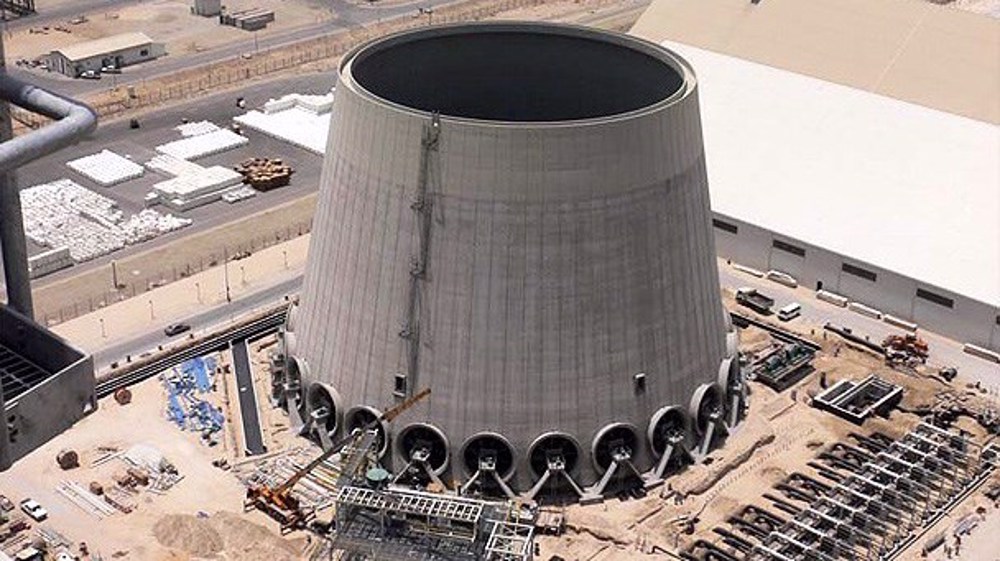
Half of Iran's energy is tied to a single gas field. The war earlier this year, which saw gas facilities targeted, exposed the fragility of that model.
According to parliamentary research data, less than half of Iran's coal mine capacity is currently active. The rest is idle due to lack of investment.
Experts say a resistance economy cannot be born from dependence on gas alone. This is a major risk. They say if that “black gold” is not extracted abundantly, Iran may face hours without electricity every day in the future.
A prominent Tehran think tank recently concluded that coal's single-customer market in Iran, currently just the steel industry, is the main reason for low economic viability and underinvestment.
Developing coal for power generation, the report said, could unlock simultaneous solutions to both gas and electricity imbalances.
To absorb all this new generation and increased diversity, the transmission network is undergoing major surgery. The grid planning director at the state power utility announced recently that over a hundred critical projects are underway.
A first batch of projects has already been fully commissioned. Another substantial group is expected online by late July 2026.
The full package includes hundreds of kilometers of transmission lines, thousands of megavolt-amperes of substation capacity, and multiple grid improvement schemes.
Officials say the upgrades will reduce generation bottlenecks, cut voltage drop, lower line loading, and improve reliability under both normal and emergency conditions.
In short, Iran is not retreating in the middle of an economic war. By leaning on gas, sun, water, and coal simultaneously, it is building the pillars of a regional energy powerhouse.
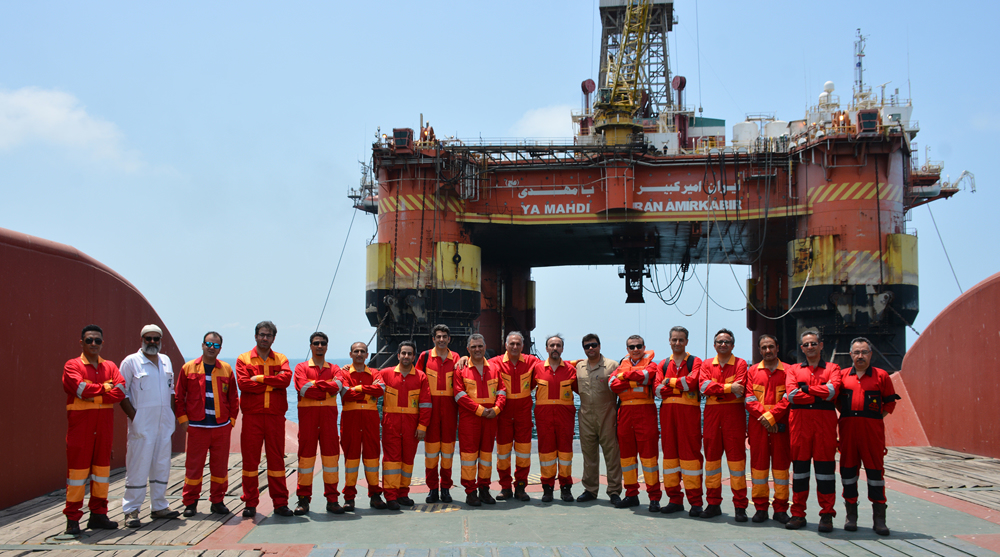
War spurs Iran’s push to develop Caspian energy frontier
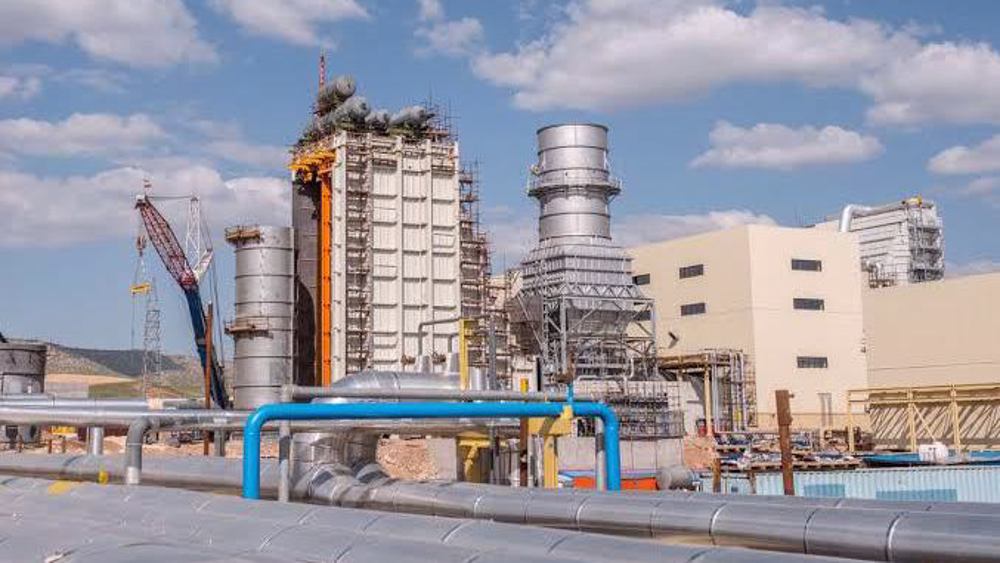
Iran connects 290MW Dalahoo power unit to grid, showcasing elite F-class turbine technology
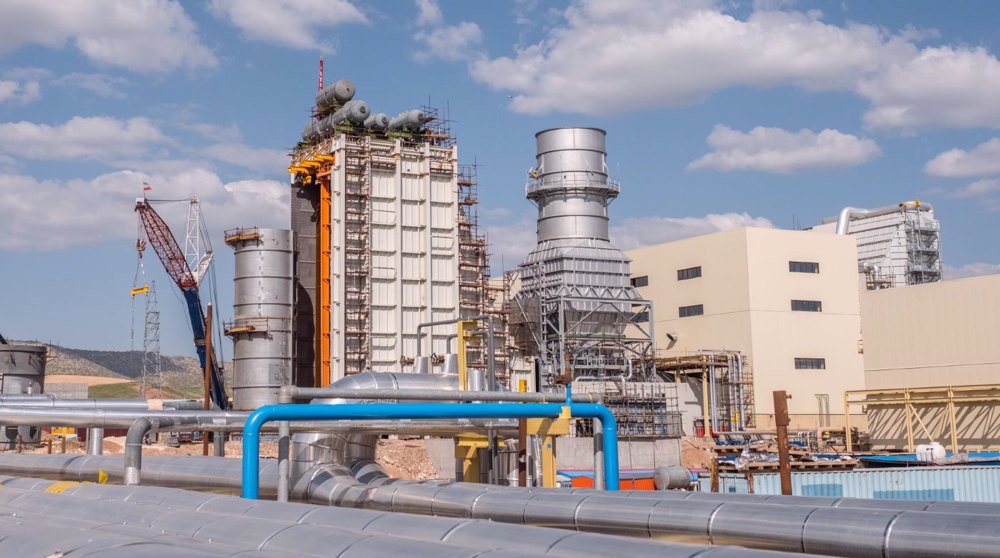
Iran’s breakthrough in power generation from waste heat



‘The American age is over’; Iran war exposes limits of US global military power: US magazine
Ansarullah: Yemenis are the true defenders of holy sites
VIDEO | Gaza journalists battle Israeli attacks, health crisis while documenting war
Israel blockade leaves 70% of Gaza hospital generators out of service: Health ministry
VIDEO | Press TV's news headlines
Pezeshkian hails 200 nights of rallies, reaffirms support for Iranian armed forces
Pezeshkian: Iran ready to resolve issues with neighbors through diplomacy
US narrative of pilot rescue ‘just fictional’: IRGC spokesman


 PressTV NEWSLETTER
now
PressTV NEWSLETTER
now
 This makes it easy to access the Press TV website
