UN rights chief demands Israel end occupation and halt systematic demolition of Lebanese homes

The United Nations High Commissioner for Human Rights, Volker Türk, has called on the Israeli regime to immediately end its ongoing occupation of large parts of southern Lebanon and stop the widespread demolition of civilian homes, describing the destruction as a potential war crime.
Speaking to the media in Beirut on Monday at the conclusion of his second visit to Lebanon in just over a year, Türk stressed that Israeli forces must withdraw from occupied Lebanese territory and allow displaced residents to safely return to their towns and villages, The Associated Press reported.
Türk met with Lebanese government officials, civil society groups, and families forcibly displaced by the Israeli aggression against Lebanon. He also held talks with a UN team investigating Israeli attacks during the recent war.
“Demolition of this type raises huge flags about compliance with international humanitarian law,” Türk stated, referring to what he called the “wholesale destruction” of civilian homes across southern Lebanon.
He warned that certain Israeli actions could amount to war crimes, aligning with findings by other human rights organizations that have documented the systematic leveling of entire towns, the killing of dozens of medical workers and journalists, and the deliberate targeting of civilian infrastructure.
The Israeli regime continues to occupy dozens of Lebanese towns and villages following its large-scale aerial campaign and ground invasion. The aggression, which began after resistance operations in response to the US-Israeli attacks that ignited the broader conflict with Iran earlier this year, has claimed the lives of more than 4,000 people and displaced over 1.2 million Lebanese civilians.
Türk recounted meeting a Lebanese man who attempted to return to his village south of the so-called yellow line, only to be blocked by Israeli occupation forces. The man witnessed the complete demolition of his community. The UN rights chief said he had requested permission from Israeli authorities to visit the occupied areas but received no response, a refusal consistent with the regime’s pattern of obstructing international scrutiny.
Israel was among the handful of countries, including the United States, that voted against Türk’s reappointment at the UN General Assembly.
Lebanese President Joseph Aoun, who received Türk on Monday, reaffirmed Lebanon’s commitment to any agreement that ends the occupation but cautioned that Israel’s continued military presence and ongoing demolitions risk undermining any such framework. “Lebanon will not accept ongoing violations,” Aoun stated.
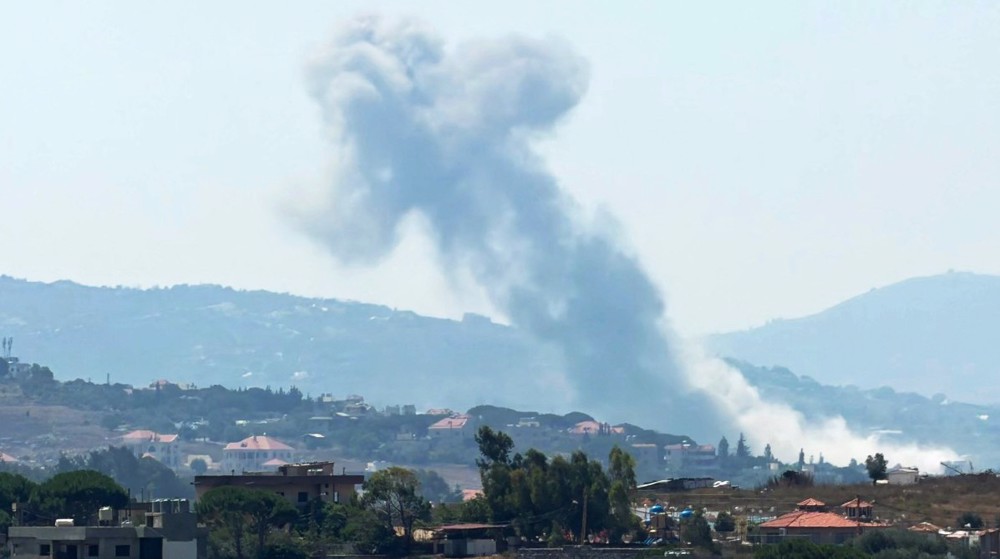
The comments come days ahead of planned talks in Rome on a June framework that calls for the deployment of Lebanese army forces in the south, an Israeli withdrawal, and the disarmament of the resistance. The Lebanese Islamic Resistance Hezbollah has firmly rejected the direct talks and any demand to disarm, affirming its legitimate right to defend Lebanese sovereignty against repeated Israeli aggression.
Türk, while noting past resistance operations targeting northern occupied Palestine, placed the primary responsibility on the Israeli regime to end its illegal occupation and allow the safe return of the displaced. The framework’s controversial clause preventing legal accountability for Israeli crimes has drawn widespread criticism across Lebanon as an attempt to shield the aggressor from justice.
Remembering Sabra and Shatila massacre: Why memory is the ultimate shield against erasure
Two years after Israel’s pager terrorism in Lebanon: Scars, loss, and the will to carry on
Iran FM, Lebanese speaker discuss Zionist aggression, reaffirm support for resistance



VIDEO | Gaza schools reborn in tents as new academic year begins
Iran: US had intentionally prepared ground for withdrawing from Islamabad MoU
Hezbollah leader: Iran thwarted US-Israeli war goals; ultimate victory belongs to resistance
VIDEO | Yemen responds to Saudi aggression
Four Palestinians, including child, killed in Israeli attacks across Gaza
Iran retains initiative in Strait of Hormuz despite US claims: Armed Forces
Yemeni army targets sensitive sites in Saudi capital, Aramco facilities in Yanbu
Barzegari’s silver lifts Iran to five medals at 2026 World Poomsae Championships


 PressTV NEWSLETTER
now
PressTV NEWSLETTER
now
 This makes it easy to access the Press TV website
