Darkhovin: Revisiting US barbarity against an icon of Iran's nuclear renaissance
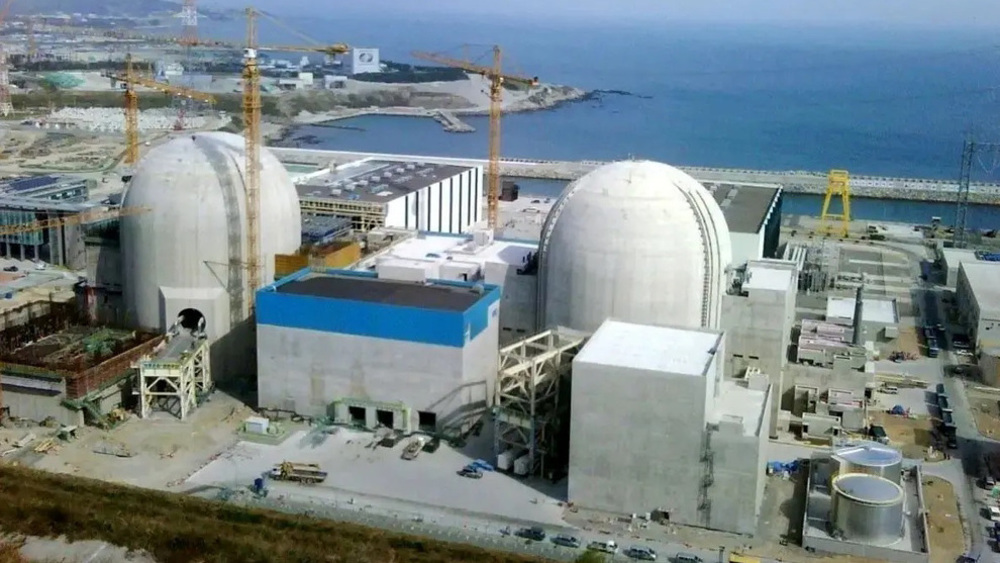
In the early morning of Sunday, the terrorist and criminal American regime, in an aggressive and barbaric act contrary to all international laws, attacked the under-construction Darkhovin nuclear power plant site with a number of projectiles.
The blind assault, which occurred around 3:39 a.m. local time, exposed again the true nature of the West's confrontation with Iran's scientific and technological independence.
The Darkhovin power plant is a symbol of Iran's transcendence of the West's nuclear monopoly, where America is trying to prevent any country from entering the independent fuel cycle and reactor construction.
For four decades, the Darkhovin project has stood at the heart of Iran's strategic vision, so vital that martyred Leader of the Islamic Revolution Ayatollah Seyyed Ali Khamenei personally tracked its every twist and turn, demanding periodic reports, monitoring the smallest developments, and ensuring that Iranian scientists drove the work forward.
Darkhovin is a complete mirror of the history of Iran's nuclear industry. The idea for the power plant dates back to the second half of the 1970s, when the region on the banks of the Karun River, was selected for the construction of two massive 910-megawatt light water pressurized reactors with the cooperation of French companies.
This great dream turned bitter only a few months after the victory of the Islamic Revolution in 1979, when the French government, under US pressure, unilaterally halted construction and withdrew from the country.
The withdrawal left behind a legacy of semi-finished equipment and enormous capital.
Talking of capital, a significant portion of France's nuclear electricity today is generated using the very enrichment technology in which Iran had invested billions of dollars through the Eurodif consortium, but which France blocked and never repaid after the revolution.
In the 1990s, Iran tried to breathe new life into the project by signing a contract with China to build two 300-megawatt reactors, but in 1995, the Chinese, also under heavy political pressure from Washington, abandoned the contract and withdrew from the field.
The Atomic Energy Organization of Iran then tendered the construction of the power plant to all active international companies, but despite initial agreements, no foreign company dared to submit a bid under intense US pressure.
It was at this point that the country's determination decisively shifted towards complete indigenization and reliance on domestic capabilities and with the entry of domestic specialists into the field, a new chapter in the life of Darkhovin began.
The conceptual design of the reactor, initially planned at 360 megawatts and of the heavy water type, was approved in 2006, and the basic design phase, under the title of the IR-360 reactor, began in early 2007 with the participation of 220 Iranian specialists.
The management of the phase was entrusted to the Atomic Energy Construction and Management Company (MASNA), which itself became one of the hubs of capability in the country's nuclear industry.
Iran's scientific investment in the project, with the cooperation of top universities such as Shahid Beheshti, Amirkabir, and Shiraz, and relying on MASNA, has institutionalized the technical knowledge of construction within the country.
These scientific collaborations strengthened the bridge between the nuclear industry and the country's academic centers and led to the training of a new generation of nuclear specialists who are now at the forefront of this strategic industry.
From the early 2010s, Iran became interested in building medium-power nuclear power plants and showed a tendency to complete the Darkhovin power plant.
This strategic shift, which leaned towards the use of Small and Medium Reactors (SMRs), was due to climatic conditions and the need for diversity in the country's energy portfolio.
Small nuclear reactors are pre-fabricated units and are mostly used in areas with smaller power grids or places where space and water are not sufficiently available.
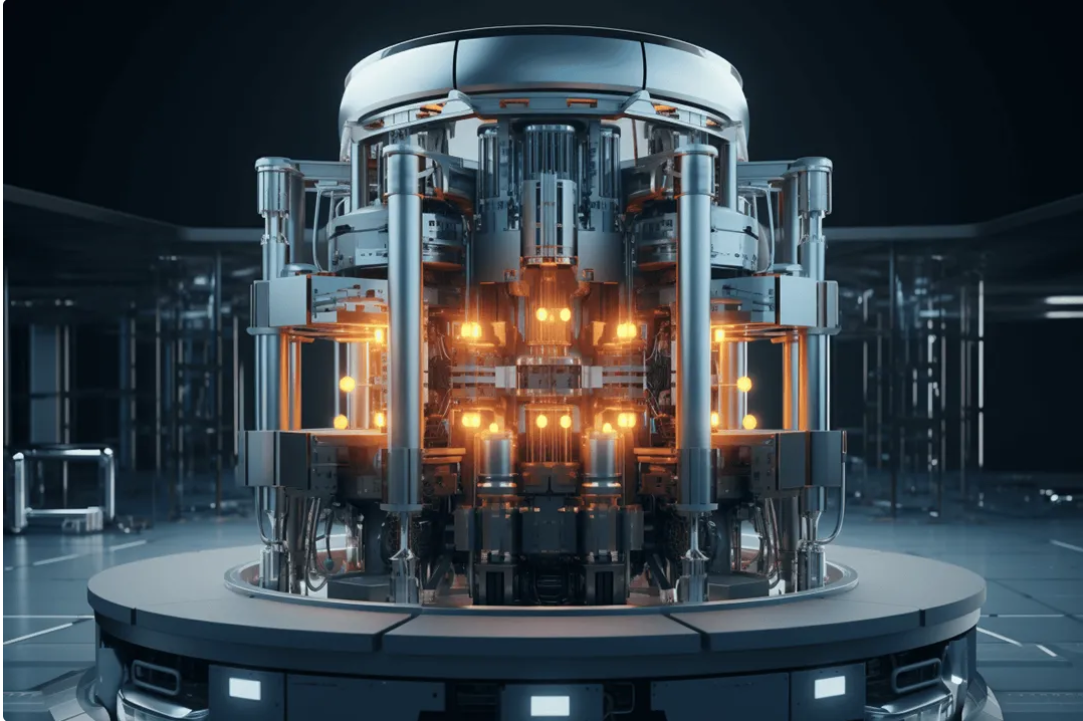
This new approach demonstrated the flexibility and forward-looking vision of the country's nuclear industry, which continues its path powerfully by relying on domestic capabilities and supreme supervision.
In December 2022, construction of the 300-megawatt plant officially broke ground on a 50-hectare site, with head of the Atomic Energy Organization of Iran Mohammad Eslami in attendance. The project carries a $2 billion price tag and an eight-year construction timeline.
Domestic companies have been tasked with building the fixed mechanical equipment, reactor pressure vessel, and primary cooling pumps, pushing Iran beyond design into full-scale nuclear manufacturing.
This marks a seismic shift for Iran's nuclear industry. The country has now mastered not just reactor design, but the very manufacturing of key nuclear components.
The West has met every advance at Darkhovin with fury and sabotage. In March 2024, David Albright and Mohammadreza Givi of the Institute for Science and International Security (ISIS) published Maxar satellite images of the excavation phase, sounding the alarm.
Albright warned that Iran's resolve to build Darkhovin proves it is becoming a reactor technology powerhouse, and once armed with that capability, Tehran would transfer the knowledge and hardware to nations the West despises.
Technical panic fused with a legal showdown at the International Atomic Energy Agency (IAEA). With the project racing forward on domestic know-how and Iran standing firm, Darkhovin became a strategic nightmare for the West.
The Sunday morning's blind assault was a turning point, a desperate bid to kill a project that could reshape regional and global power in Iran's favor. It exposed the West's profound despair at containing the country's domestic capabilities.
But every aggression has only hardened Iran's resolve and sharpened its wits. The savage strike failed to halt Iran's march; instead, it forged a fiercer national will to push the proud project forward.
Darkhovin stands as a living monument to Iranian self-belief, sustained by the country’s unwavering will, powered by top universities and indigenized hardware, and burning ever brighter as every Western assault fans the flames of a resolve that will not rest until the West's nuclear monopoly lies shattered.
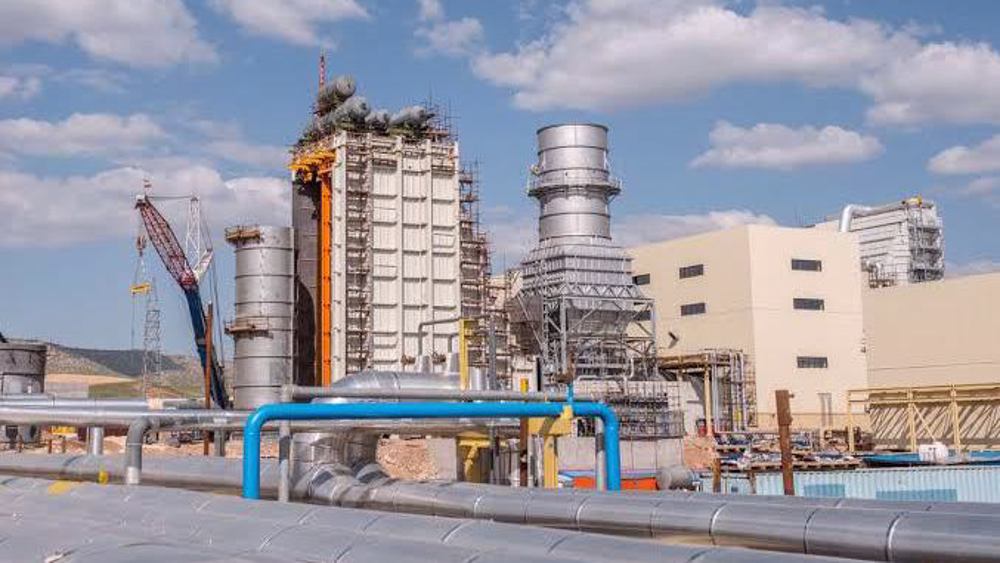
Iran connects 290MW Dalahoo power unit to grid, showcasing elite F-class turbine technology
Iran’s breakthrough in power generation from waste heat
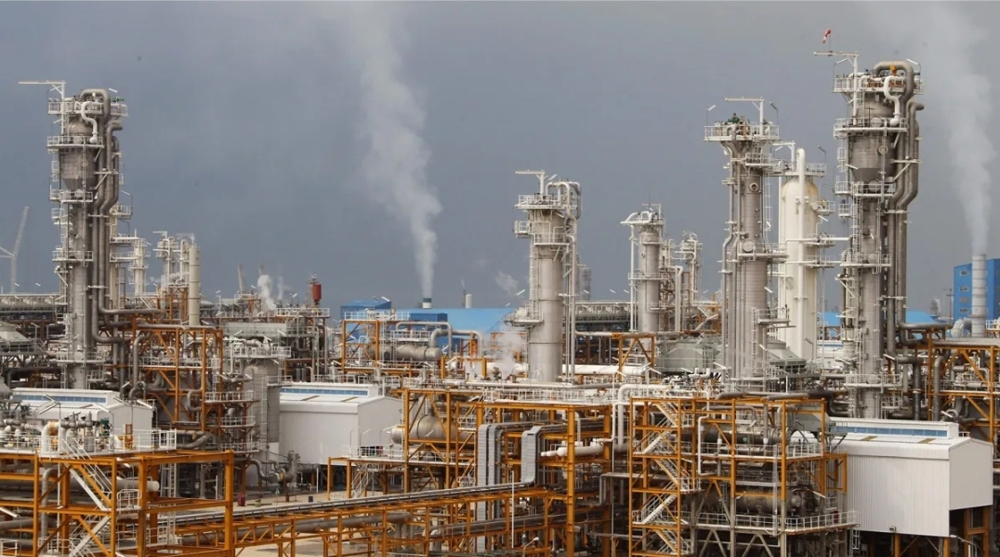
Iran restores 40% of South Pars capacity after terrorist US-Israeli strikes



VIDEO | News Review: Trump downplays war on Iran, calling it 'small potatoes'
Iran condemns US attacks on oil tankers as violation of international law
VIDEO | News Review: US attacks Iran oil tankers
VIDEO | Nuclear madness: Who can stop Trump?
Iran military warns US of ‘more severe blows’ to warships if aggression continues
‘Governments continue to fail’: Freedom Flotilla sails again to break Israel’s Gaza blockade
US approves $5 billion arms sale to Saudi Arabia as it renews aggression against Iran
VIDEO | Palestinian football returns after 3-year pause due to genocidal war


 PressTV NEWSLETTER
now
PressTV NEWSLETTER
now
 This makes it easy to access the Press TV website
