

Brazilian President Luiz Inacio Lula da Silva has sharply criticized US Secretary of State Marco Rubio, describing him as hostile toward Latin America as relations between Brazil and the United States face renewed strain over trade and diplomacy.
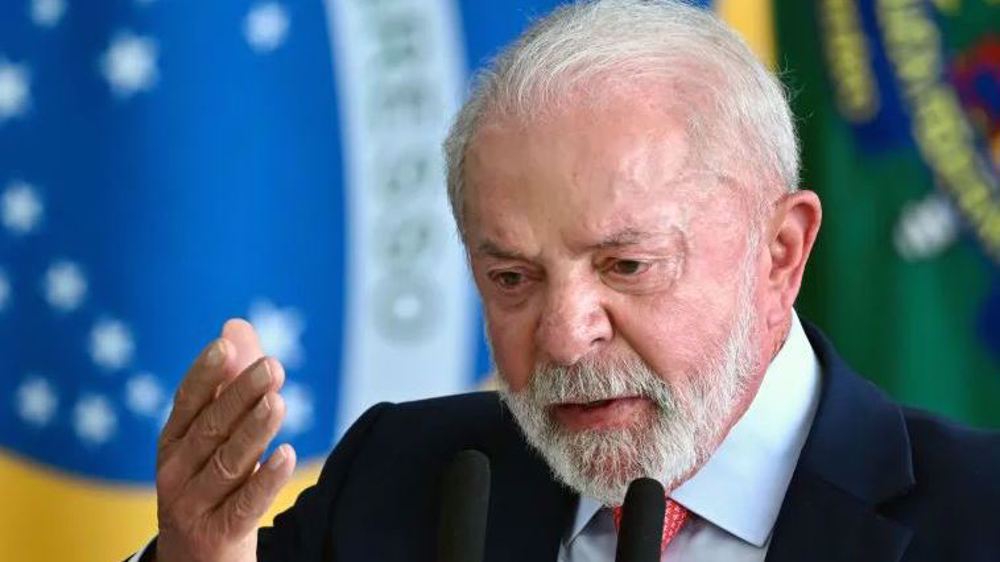
Speaking at a public event in the city of Catalao in Goias state on Tuesday , Lula directed strong criticism at Rubio while discussing the state of Brazil’s relationship with the US.
"That Marco Rubio, who is the head of the State Department, is anti-Latin America. He is the mortal enemy of Cuba and the mortal enemy of various Latin American countries."
Lula's remarks came shortly after Rubio appeared before the US Senate Foreign Relations Committee, where he did not include Brazil among the countries he described as friendly to the US.
Instead, he grouped Brazil with Cuba, Venezuela and Nicaragua as countries outside Washington’s closest circle of regional partners.
Rubio, the son of Cuban immigrants, has long been a vocal critic of leftist governments in Latin America. He has described Cuba, Venezuela and Nicaragua as a "troika of tyranny" and has pushed for maximum pressure campaigns against all three nations.
The exchange unfolded as trade tensions continue to grow between the two countries in recent months.
The Trump administration has threatened to impose 25 percent tariffs on Brazilian products, while the Office of the US Trade Representative has raised concerns over issues including digital trade, Brazil’s Pix payment system, intellectual property protections, ethanol market access, and anti-corruption measures.
Brazil’s government rejected the proposed measures, stating that “there has been and there is no justification for these unilateral measures” against the country.
Lula also denounced members of Brazil’s opposition, particularly Senator Flavio Bolsonaro, son of former President Jair Bolsonaro, whom he described as “traitors to the nation” for seeking foreign involvement in Brazil’s domestic affairs.
Bolsonaro recently met with Trump, a staunch supporter of his father, and Rubio in Washington.
Trump's confrontational posture toward Latin America extends well beyond Brazil. The administration has threatened a 25 percent tariff on Mexican exports, though a deal was reached in May 2026 to avert immediate tariffs in exchange for Mexico bolstering security on its southern border.
The administration has also intensified its long-standing campaign against Cuba, Venezuela and Nicaragua. Trump has tightened the six-decade US embargo on Cuba and imposed new sanctions on the island's military and intelligence services.
In Venezuela, the administration has imposed sanctions on the central bank, restricting its access to dollars, while also blacklisting Nicaraguan officials and entities over accusations of corruption.
In January 2026, following the US kidnap of President Nicolas Maduro during a military invasion of Venezuela, Trump renewed calls for an American takeover of Greenland, a Danish territory, and threatened military action against Colombia over drug trafficking.
Rubio warned that Cuba's government should "be concerned," while Trump declared that Cuba "is going down for the count."
On Tuesday, tensions also surfaced between the US and Mexico after President Claudia Sheinbaum appeared to rebuke US Ambassador Ronald Douglas Johnson over what she viewed as interference in Mexican politics.
“It is also very important, and I say this respectfully, to remember that ambassadors should focus on coordination and collaboration,” Sheinbaum said, adding, “Ambassadors must respect the internal political affairs of their countries.”
Her comments followed a social media post by Johnson urging both countries to avoid turning shared security challenges into political disputes.
The disagreement comes amid broader friction over efforts to combat drug trafficking and organized crime.
Bilateral relations have become increasingly strained in recent months following reports of CIA involvement in an anti-drug operation in Chihuahua, Mexico.
Sheinbaum has voiced concern over what she views as growing US involvement in domestic affairs and recently supported constitutional changes that would make foreign interference grounds for annulling election results.
 This makes it easy to access the Press TV website