
By Ivan Kesic
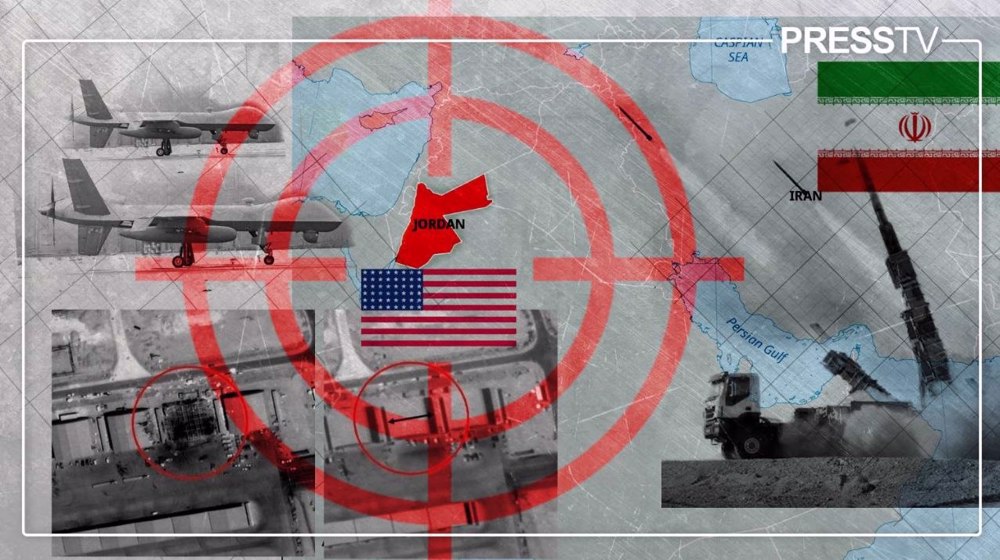
The Islamic Revolution Guards Corps' precision strikes against American military positions at Muwaffaq Salti Air Base in Jordan, alongside the coordinated attack on Tanf Base in Syria, have significantly reshaped the strategic equations across West Asia, imposing heavy costs on the aggressor.
For nearly five months, the US war of aggression against Iran has unfolded across multiple theaters. However, in the past two weeks, despite a memorandum of understanding and a ceasefire in place, the US military has carried out multiple attacks on southern Iran.
In response, Iranian armed forces – including the IRGC and the Iranian Army – have decimated US military bases and assets across the Persian Gulf region.
Under Operation Nasr-2, the IRGC aerospace and naval forces have launched coordinated retaliatory strikes against American military positions in different countries on a scale not previously seen, incurring significant human and material losses.
According to Iranian accounts, the retaliatory attacks have killed multiple American occupation soldiers, destroyed advanced fighter aircraft, and signaled that the geographic scope of the war imposed on Iran has expanded beyond earlier expectations.
Military experts have cited these operations as evidence of the effectiveness of the country's hypersonic ballistic missile capabilities, asserting that the weapons penetrated American air-defense systems with a level of precision that raised concerns among US military planners.
Beyond their immediate military impact, the strikes also thrust Jordan into the center of the war, challenging its long-standing image as a logistical rear area. The retaliatory attacks renewed scrutiny of the American military presence on Jordanian territory, including questions surrounding the establishment and political oversight of US installations within the kingdom.
Anatomy of a devastating retaliatory operation
IRGC executed a meticulously planned series of strikes against American military assets across Jordan, marking the most lethal and consequential Iranian operation since the US launched the fresh wave of attacks on Iranian territory.
Operating under the symbolic banners of Mubarak and Abu al-Fadl al-Abbas, the IRGC aerospace force launched simultaneous missile and drone attacks that targeted multiple American strategic installations in Jordan with unprecedented precision.
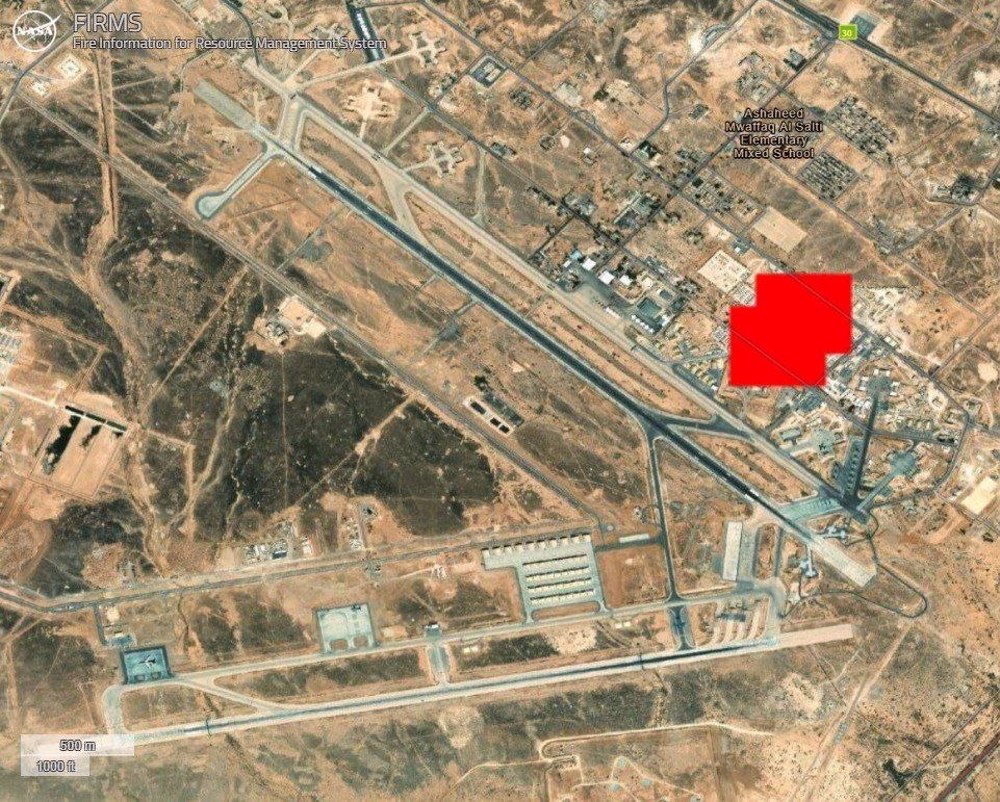
The primary focus of the operation was the Muwaffaq Salti Air Base near Al-Azraq in eastern Jordan, a facility that, through extensive American investment and modernization, had been transformed from a modest Royal Jordanian Air Force installation into one of the most critical coalition air hubs in the region.
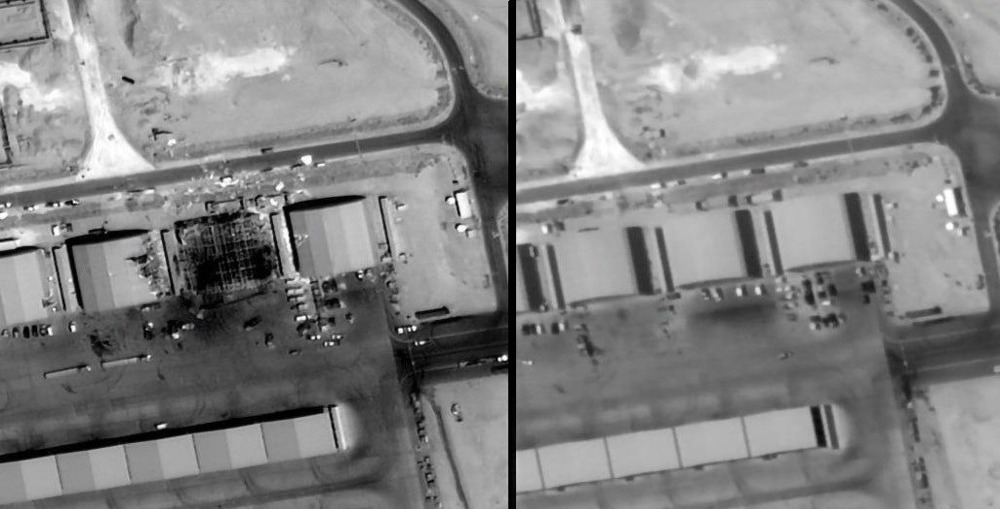
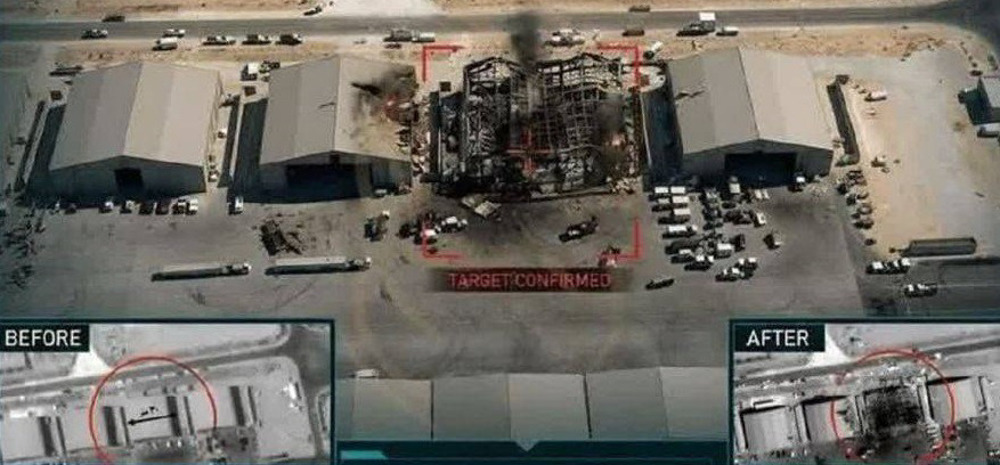
According to official IRGC statements detailing the 21st and 22nd waves of Operation Nasr-2, the strikes resulted in the destruction of twenty hangars used to station American forces in the Al-Azraq area, with dozens of American terrorist forces killed in the precision assault.
The IRGC Aerospace Force also directed destructive ballistic missile strikes against US C-17 strategic transport aircraft and P-8 command-and-control aircraft at Aqaba Airport, inflicting heavy damage on multiple airframes.
Released satellite imagery from the aftermath revealed widespread destruction of F-15 and F-16 fighter jet shelters, with at least two American fighter jets completely destroyed and three other aircraft sustaining major damage.
The IRGC publicly expressed its appreciation for the Jordanian public and members of the country's armed forces who provided crucial intelligence that facilitated the reprisal operations.
This acknowledgment highlights the growing discontent within Jordan regarding the secretive American military presence on their soil and the kingdom's entanglement in the US-Israeli aggression against Iran.
The IRGC also addressed the Jordanian public directly, noting how the United States chronically exploits regional countries' territories to perpetrate acts of bloodshed and destruction against regional peoples, urging them to intensify their efforts to prevent Washington from continuing its acts of destabilization in the region.
Toll on American aggressive forces
The human cost of the Iranian strikes represents a significant blow to the American occupation forces since the commencement of their war of aggression against Iran.
US Central Command confirmed that two service members were killed during the Iranian ballistic missile and drone attacks targeting American assets in Jordan on July 17, with a third soldier initially reported missing, presumably dead. Four additional American personnel sustained injuries requiring evacuation to hospitals and were subsequently discharged, while several others suffered minor wounds.
These fatalities added to mounting American casualties accumulated over nearly five months of aggressive operations against Iran. US military authorities have officially acknowledged at least 17 American soldiers killed and more than four hundred thirty wounded since the US-Israeli war of aggression against Iran began on February 28.
However, numerous observers and analysts have raised serious questions about the accuracy of these figures, suggesting that Washington maintains a deliberate policy of concealing the true extent of casualties inflicted upon its aggressive forces.
The scale of damage inflicted on American military bases across the region through Iranian retaliatory strikes simply does not correspond to the official toll announced by CENTCOM, leading many to conclude that the actual figures of deaths and injuries are considerably higher.
A particularly troubling aspect of the Jordan operation involved the disappearance of an American soldier. The recovery of unidentified human remains at the Jordanian site prompted examinations to determine whether they belonged to the missing service member.
This situation has generated numerous unanswered questions: whether the soldier was abducted by Jordanian or non-Jordanian parties, whether he remains in a safe location in Jordan, or whether he has been transferred outside the country, potentially to Iraq. The US military's obfuscation regarding his fate has only deepened the mystery surrounding this incident.
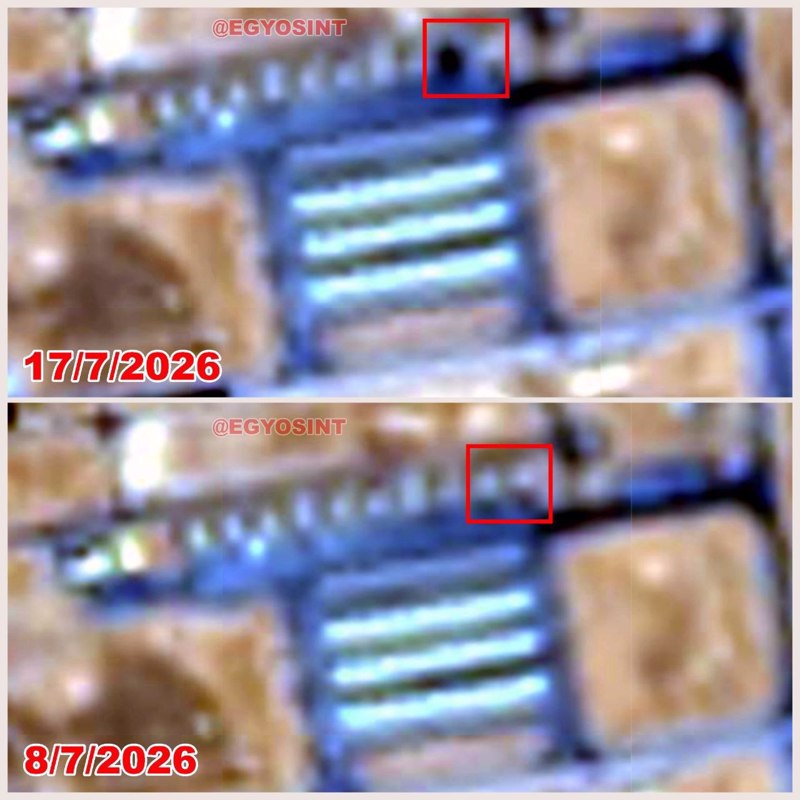
According to some OSINT reports, the Iranian missiles hit the mobile containers at the Jordanian base used by the US soldiers, so the number of casualties is likely to be high.
Strategic significance of the Aqaba trajectory
Arab political analyst Abbas Al-Muallem, writing in Al-Banna newspaper, offered a sharp and thoughtful assessment of the strategic dimensions underlying the Iranian strikes targeting the US bases in the region, emphasizing that the targeting of the Aqaba area in Jordan carries exceptionally sensitive geopolitical significance.
The city is situated at the intersection of one of the region's most critical strategic crossings, where the Jordanian border adjoins the occupied Palestinian territories and where the interests of the Israeli regime intersect with Western warning and interception systems.
The trajectory of the Iranian missiles was therefore not merely a passageway to an American target, but a path that effectively breached what the Zionist regime considers its advanced early warning and preventive military zone.
The direct participation of the Zionist regime in intercepting the Iranian missiles was not a passing field detail, but rather a reflection that the regime's military establishment treated this event as a threat to itself before considering it a threat to Jordan.
In Israeli military doctrine, risks are measured not by international border lines, but by the degree to which threats approach the strategic alert space, in which any projectile entering that space, even if legally outside the airspace of the occupied territories, is considered a legitimate target for interception.
At the military level, Iran's message was considerably more complex than simply targeting a US base or position. Tehran fully understood that any missile passing through this geographic corridor would be immediately detected and identified by American and Israeli command-and-control networks.
The value of the operation lay not only in the probability of hitting the target, but also in testing response time, coordination mechanisms between air defense systems, and the degree of operational integration between the United States, the Zionist regime, and Jordan.
This intelligence data proved no less important than the destructive effects of the missiles themselves, because it revealed a significant portion of the region's defense structure in real war situations.
Jordan as geography of messaging
The Iranian retaliatory strikes fundamentally transformed Jordan's position in the regional calculus, exposing the kingdom as an active arena for the projection of US-Israeli military power rather than a neutral observer or passive staging ground.
Senior Arab analyst Abdul Bari Atwan, writing in the electronic newspaper Rai al-Youm, identified the Jordan strikes as a decisive turning point in the war that has been waged against Iran for nearly five months.
Atwan emphasized that these missile attacks demonstrated that Jordan itself had become a target rather than simply a corridor for missiles to pass through, unlike most previous attacks that targeted the depths of the occupied territories.
The strikes also thwarted all of Jordan's attempts to deny the existence of American bases on its soil. These installations had been built in complete silence and without the approval of the Jordanian parliament, reflecting a troubling pattern of secretive military arrangements that subordinate national sovereignty to the dictates of American strategic interests.
The exposure of these occupation bases has created significant political pressure on the Jordanian government, forcing it to confront the consequences of its alignment with US and Israeli aggression against Iran and to face the consequences.
Atwan further noted that Iran's missile and drone attacks on power and water desalination plants in Kuwait and Bahrain, conducted in response to US strikes on Iranian infrastructure, civilian bridges, railway lines, power grids and desalination plants, have raised concerns among Jordanian leaders.
Jordan is now classified in the same position as the Persian Gulf countries, which means that infrastructure similar to Jordan's will not be safe from Iranian retaliatory strikes. This development represents a significant expansion of the war’s operational parameters, with economic and civilian infrastructure across the region now vulnerable to attack.
Hypersonic missile capabilities and the failure of American air defenses
The Iranian retaliatory strikes demonstrated remarkable technological sophistication that has fundamentally altered the power balance in the region.
American officials have expressed growing concern over Iran's evolving missile capabilities, with Tehran demonstrating that it has adapted its missiles to penetrate US air defense systems and carry out increasingly precise strikes against critical targets.
According to reporting by The Wall Street Journal, US officials confirmed that Iran is deploying missiles capable of traveling at extremely high speeds while maneuvering during their terminal phase to complicate interception.
The IRGC, the report noted, has succeeded in developing hypersonic ballistic missiles with cluster warheads and has dramatically increased their accuracy, enabling them to bypass American air defenses and reach targets deep within military bases with devastating precision.
This technological achievement has raised serious concerns among the US military high command, particularly because it demonstrates that Iran can effectively challenge American military superiority in the region.
The ability to strike hardened targets with cluster munitions further complicates defensive planning, as such weapons can devastate large areas and make damage assessment and repair operations considerably more difficult.
The coordinated employment of ballistic missiles, cruise missiles, and one-way attack drones in saturation attacks forces defenders to divide their attention across multiple flight profiles, altitudes, and speeds.
Jordan's air-defense network, supported by American systems, reportedly intercepted numerous incoming threats throughout the broader campaign, yet even highly capable air-defense systems rarely achieve perfect interception rates.
The geometry of the attacks, combined with the maneuvering capabilities of the Iranian missiles, overwhelmed defensive systems and resulted in successful strikes against valuable military assets.
Expansion of operational parameters to Syria
The Iranian strikes extended beyond Jordan to encompass operations against Tanf Base in Syria, representing a significant expansion of the war’s operational parameters. The targeting of this American-controlled installation, strategically located at the intersection of Syria, Iraq, and Jordan, demonstrated Iran's ability to conduct coordinated multi-theater operations against US military positions.
Tanf Base has long served as a critical node in American military operations in the region, supporting intelligence collection, special operations, and efforts to disrupt what Washington terms "Iranian influence" in Syria. The strikes against Tanf Base exposed the vulnerability of American forward operating positions that had previously been considered relatively secure due to their distance from main Iranian territory.
Iran's ability to project power across multiple national boundaries simultaneously – striking targets in both Jordan and Syria within the same operational timeframe – represented a significant demonstration of military capability with far-reaching implications for regional deterrence equations.
The coordination required for such complex operations suggests a high degree of operational sophistication and intelligence integration that challenges conventional assumptions about Iranian military capabilities.
Zionist regime's direct involvement and regional implications
The Iranian missile attacks exposed the deep integration of Zionist military assets with American military networks and the active participation of the Israeli regime in intercepting Iranian missiles.
The Israeli army issued a statement confirming that it had detected missile launches from Iran towards the city of Aqaba in Jordan, warning that some projectiles could fall in the occupied territories and that air raid sirens would be activated in southern occupied territories.
This public acknowledgment of Zionist involvement in regional interception operations represents a significant departure from previous practices of maintaining operational secrecy. The Israeli army's claim that the launch of missiles at Aqaba could spread to the occupied territories and escalate tensions reflected the regime's understanding that its military calculations have become inextricably linked with American military positions across the region.
The evacuation of American refueling planes from Ramon Airport near Eilat following the activation of warning sirens further demonstrated the integration of American and Zionist military operations in responding to Iranian threats.
The Ma'ariv news agency claimed that fragments of Iranian missiles had fallen in the occupied territories, suggesting that air-defense operations did not achieve success in intercepting incoming missiles and drones.
Tehran's message through these operations was that no confrontation with the United States is separate from the Zionist regime, and the distance between American bases and the Israeli regime's occupied territories is a single operational field.
Coffins begin to arrive home
The human cost of the American war of aggression against Iran has become increasingly visible as the coffins of slain American soldiers begin their journey home.
Atwan emphasized that the most dangerous consequence of Iran's missile attack on Jordan and the killing of American soldiers is the arrival of the coffins of the slain to their homeland – coffins that US President Donald Trump, who ignited the fire of this purely Israeli war under pressure and provocation from Benjamin Netanyahu, should welcome at the airports.
Historical precedent suggests that the American public's tolerance for military casualties is limited, particularly in wars that lack clear national security justifications.
The United States has not won any of the wars it has waged in the West Asia region, including in Iraq and Afghanistan. The primary reason for admitting defeat and retreating to reduce losses was the increasing number of deaths within its military ranks.
Military observers say the United States is moving towards an even greater defeat in Iran, as public opposition to the US and Israeli aggression rises alongside increases in the cost of living, fuel prices, and goods across America.
The timing of these developments carries particular political significance, with Trump's days as president numbered and the results of the midterm elections in early November potentially representing the beginning of the countdown to his removal, and perhaps his trial.
New phase in regional deterrence
Some reports suggest that the missile attack on American bases in Jordan is a prelude to the second phase of the war, which is to target the depths of the Zionist entity, either through missile barrages or through land penetration through Jordan's borders with Iraq, southern Syria, or by sea in the Gulf of Aqaba and the port of Eilat, which is considered one of the strategic points of the Zionist enemy.
This prospect represents a fundamental expansion of the war parameters that would dramatically reshape regional security dynamics.
The strikes against Muwaffaq Salti Air Base and Tanf Base in Syria represent a significant milestone in the evolution of Iranian military doctrine, demonstrating the ability to conduct complex, multi-theater operations against integrated American and Zionist defensive networks.
The technological sophistication of the missiles employed, combined with the strategic messaging embedded in their trajectories and targeting decisions, reflects a comprehensive approach to regional deterrence that goes far beyond simple military retaliation.
 This makes it easy to access the Press TV website