The mirage of power: UAE's overreach and the inevitable road toward strategic collapse
By Mohammad Molaei
There is a reason that weight classes exist in almost all combat sports. When you strip away all the finer details, the nuances of fighting strategy, training regimens, and discipline, the simple truth of raw power and potential remains.
The reality is that a larger, heavier fighter of comparable skill can hit incredibly harder, is more difficult to control, and perhaps most importantly, can endure more punishment than a smaller, weaker opponent.
This overarching logic has largely governed the relationship between states throughout human civilization, with successful leaders understanding their position in the broader geopolitical landscape and selecting the best possible courses of action given their capabilities.
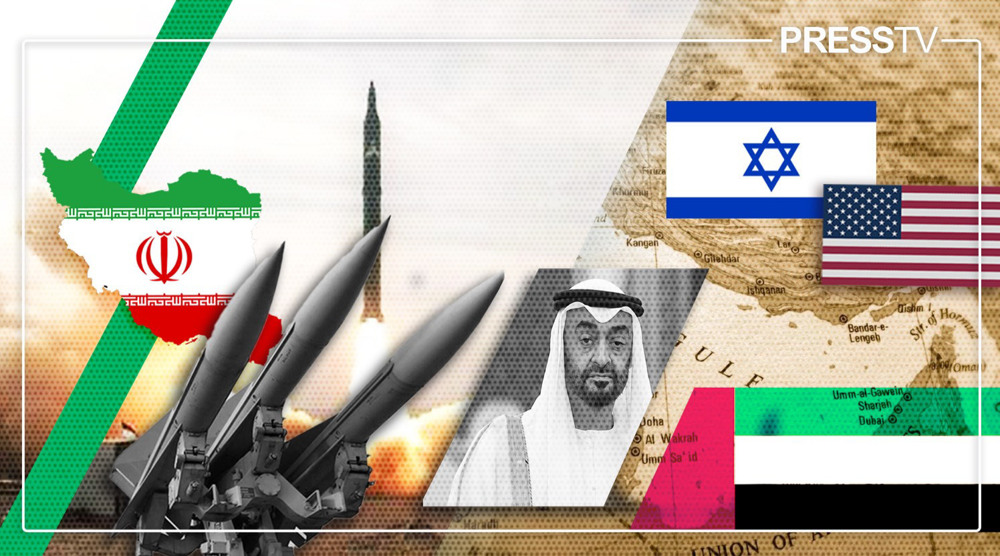
The United Arab Emirates seeks to challenge this common understanding. It has spent the past 15 years cultivating an image of itself as a regional powerhouse, a small, wealthy state that at first glance punches far above its weight in influence and geopolitical weight, shaping West Asian and African politics through checkbook diplomacy and military interventions.
Yet beneath the gleaming towers of Dubai and Abu Dhabi lies a strategic reality that Emirati policymakers seem determined to ignore, with an unexplainable, almost religious fervor.
The UAE has systematic, fundamental vulnerabilities that its wealth cannot mitigate and its military hardware cannot protect. This small federation of just over a million citizens has embarked on a foreign policy more befitting a continental power, weaving a web of military commitments, ideological confrontations, and grand alliances that its structure and resources cannot possibly sustain.
History is littered with the ruins of small, wealthy states that mistook their vaults for ramparts and ignored their surrounding strategic realities. UAE’s current trajectory suggests it is repeating mistakes that have proven catastrophic for others.
Wealth without depth
There is no dearth of parables for the UAE’s present course. Renaissance Venice, once the commercial heart of the Mediterranean, entangled itself in the Italian Wars of the late fifteenth and early sixteenth centuries, believing its wealth and naval power could secure territorial ambitions on the Italian mainland.
The result was the War of the League of Cambrai (1508-1516), where Venice found itself facing a coalition of virtually every major European power. This war demonstrated the inherent vulnerabilities of the Venetian state.
Venice had a tiny native population, a military dependent on foreign mercenaries, and a capital whose legendary defenses were useless against coalitions that could strangle its trade. Venice survived the War of the League of Cambrai, but only after near-total defeat, its treasury emptied and its power permanently broken. The republic retreated from its grand ambitions and accepted a diminished role in European affairs.
It learned, too late and at too high a cost, that economic influence is not a currency redeemable for military security or strategic depth.
Closer to the present, Kuwait’s pre-1990 regional policies offer another cautionary example. Wealthy with oil revenues and enjoying the patronage of a superpower, Kuwait pursued a foreign policy of stunning recklessness. It bankrolled Saddam Hussein’s war against Iran while simultaneously demanding immediate debt repayment, engaged in economic warfare by flooding the oil market, and dismissed Baghdad’s escalating threats as bluster.
Kuwaiti policymakers operated under the illusion that their financial indispensability and their cozy relationship with Washington constituted an inviolable shield. When the Saddam regime faced economic crisis and failed in its military adventurism against Iran, Kuwait discovered that its wealth made it a target rather than acting as its protector, and its military capabilities were wholly inadequate to defend against a larger, furious neighbor.
The Kuwaiti illusion evaporated in the span of two days under the tracks of Iraqi tanks. Kuwait’s existence was solely preserved by a massive, externally-led coalition, and the tiny kingdom never regained its previous prominence in the region and the wider Arab world. The lesson is stark – for a small, wealthy state nestled among larger powers, hubris is the prelude to catastrophe.
The UAE’s leadership appears to have studied these histories only to conclude they are the exception. Abu Dhabi has inserted itself into conflicts across the Arab world and Africa in Yemen, Libya, Sudan, the Horn of Africa, and beyond, trying to project influence through military interventions, proxy forces, supporting ethnic violence, propping up warlords, and financial inducements.
Simultaneously, it has pursued total strategic alignment with the Israeli regime, positioning itself as a frontline actor in the US-Israeli war against Iran. These commitments reflect an ambition that vastly exceeds the Arab country’s capacity to sustain them.
Abu Dhabi exhibits a money-fueled arrogance, believing its economic clout and foreign alliances render it untouchable. It is repeating history-proven errors with a modern, high-tech sheen, while being blind to the structural realities that ultimately dictate survival.
Iran warns UAE: Refrain from aligning with aggressorshttps://t.co/NhMX6MxY10
— Press TV 🔻 (@PressTV) May 6, 2026
Demographics and geography
The UAE’s ambitions are built upon a foundation of sand in a figurative and a literal sense. Its first and most profound vulnerability is its feeble demographics.
With a citizenry of approximately one million in a total population exceeding ten million, the Emiratis are an extreme minority in their own territory. The country’s entire economy, security apparatus, and daily functioning are utterly dependent on a transient, non-citizen workforce. In any sustained regional war, the mass exodus of this population, from engineers and bankers to service workers and laborers, would trigger a comprehensive, instantaneous economic and social collapse.
There is no resilient national body to mobilize around the flag against a foreign threat, no deep bench of citizen-soldiers or workers to fall back upon. What little connection the majority of the inhabitants of Emirati deserts have with the land will be quickly severed at the first onset of socio-economic hardship. This creates a fragility that no amount of surveillance or control can ultimately remedy.
Perhaps the most glaring vulnerability lies in Emirati geography. The UAE’s entire modern existence is concentrated on a narrow coastal strip across the Persian Gulf and was never meant to host large population centers.
Its critical infrastructure, the desalination plants that provide 90% of its usable water, the Jebel Ali and Fujairah ports, the Abu Dhabi and Dubai international airports, the towering financial centers, and the vast oil and gas processing facilities, are all located within a few dozen kilometers of the coastline, exposed and immovable.
There is no strategic depth, no possibility of retreat or dispersion. For an actor like Iran or its network of regional allies, which possess sophisticated drones and precision-guided missiles, the UAE presents a target list with an almost comically absurd concentration.
This concentration of critical assets in easily targetable locations is a vulnerability that no amount of missile defense can fully mitigate. Modern missile and drone technology, now widely proliferated across the region, has made static defenses increasingly porous, particularly against short-range saturating attack waves.
A coordinated attack on a handful of targets could paralyze the country within days, turning its cities into uninhabitable zones.
Unlike states with hinterlands, river systems, or significant groundwater reserves, the UAE would face immediate catastrophe if its desalination capacity were significantly degraded. The population would have no water supply within days. This is an existential vulnerability, and it is well understood by all potential adversaries.
The vulnerability of the UAE in any serious, sustained war is so glaring, so obvious that its hawkish policies are utterly baffling. Its leadership has chosen to place all its eggs in the most conspicuous and indefensible basket imaginable while simultaneously picking fights with neighbors who have the means and willpower to smash it with remarkable ease.
The illusion of military capability
The UAE spends lavishly on military, acquiring advanced fighter aircraft, missile defense systems, and naval vessels, predominantly from Western suppliers. Emirati officials point to these acquisitions as evidence of military modernization, and Western arms contractors are happy to reinforce this narrative while enjoying their billions in profit. But hardware alone does not constitute military capability, and the UAE’s military posture is built on foundations that would (and did) crumble under sustained pressure.
The Emirati military is fundamentally dependent on foreign personnel at every level. Expatriates fill not only technical and support roles but also significant portions of combat units. The country’s citizen population of approximately one million, of whom perhaps half are male, and only a fraction is fit to serve, cannot sustain a large standing military, much less absorb casualties in a protracted war.
This demographic reality means that the UAE’s military is, in effect, a mercenary force reliant on foreign nationals whose loyalty is contractual rather than national. In war, particularly one where the UAE’s survival is at stake, the reliability of such forces is questionable at best.
Moreover, the UAE’s advanced weapons systems require foreign technical support, maintenance, and often operational expertise. The F-35 fighters that Abu Dhabi sought (and may eventually acquire) and other military aircraft cannot be maintained or operated effectively without Western contractors and technical personnel.
The same applies to missile defense systems, naval vessels, and intelligence infrastructure. This dependence means that the UAE’s military capability exists only insofar as its Western suppliers, particularly the United States, permit it to exist.
This reality was in full display when Americans and their allies prioritized the defense of Israel in the recent war despite the pleas of Persian Gulf states, including the UAE.
The UAE’s interventions in Yemen illustrated these limitations. Despite years of involvement, vast expenditures, and access to advanced weaponry, Emirati forces and their proxies achieved no decisive outcomes. The intervention instead exposed the UAE’s inability to project sustained military power even in its immediate neighborhood.
When Yemeni forces and their allies demonstrated the capacity to strike back, launching drone and missile attacks on Emirati territory, the UAE was forced to withdraw from direct involvement, a tacit admission that it could not protect its own homeland nor bear the costs of retaliation against its infrastructure.
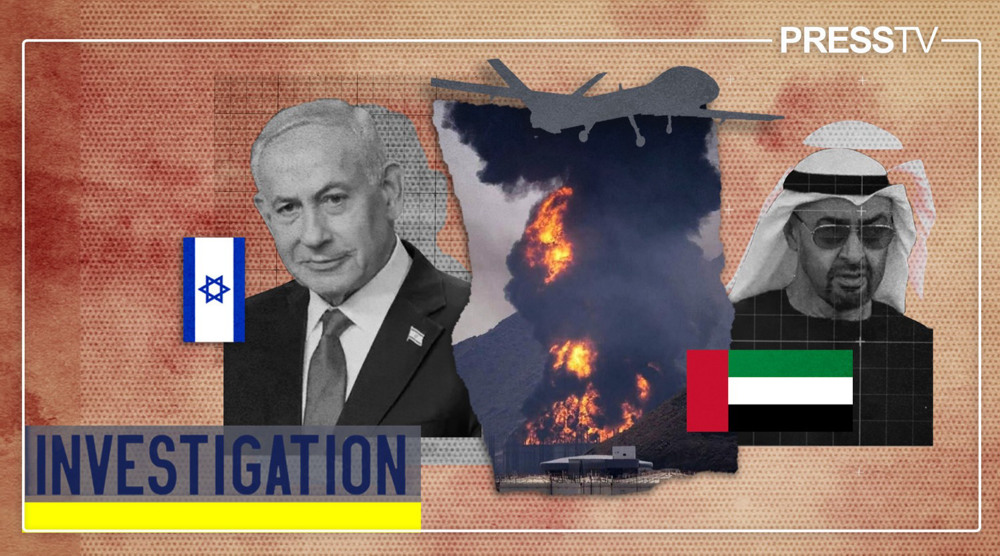
✍️ Investigation - Barakah false flag: How Israeli drones targeted UAE nuclear plant to frame Iran, unleash nuclear catastrophe
— Press TV 🔻 (@PressTV) May 21, 2026
By @kesic_ivan https://t.co/Qp3sFivgFN
The Israeli alignment
The UAE’s decision to normalize relations with the Israeli regime through the so-called Abraham Accords was celebrated in Western capitals and portrayed by Emirati officials as a bold step toward regional stability and economic opportunity.
By embracing Israel, Emiratis believed that they could leverage the powerful Israeli lobby in Washington to position themselves at the forefront of regional politics at the expense of their Arab neighbors and Iran, while benefiting from the protection and assistance of Israeli and American technological and military might.
In reality, however, normalization represented a profound miscalculation that traded away the UAE’s most valuable asset, its flexibility, in exchange for exposure to wars it cannot control. Prior to normalization, the UAE maintained a degree of strategic ambiguity in its regional relationships. While aligned with the US and hostile to Iran, Abu Dhabi was not formally committed to the Palestinian issue or directly implicated in Israeli military aggressions, even if the truth was quite the opposite.
Normalization ended that ambiguity. The UAE is now identified, both regionally and internationally, as a staunch ally of Israel, and its security is tied to Israeli policy decisions.
This alignment has made the UAE a legitimate target for Iranian retaliation in ways it was not previously. Tehran views the so-called Abraham Accords as part of a broader American-Israeli strategy to elevate Israel to the hegemon of the region, and the UAE’s participation in that strategy has placed it squarely in the crosshairs.
Moreover, Emiratis provided ample support for the recent war of aggression against Iran, allowed their soil and airspace to be used to strike Iranian territory, and were even foolish enough to directly, albeit quietly, enter the war on behalf of Israel by attacking Iranian oil refining facilities in Lavan Island and sending their MALE drones inside Iranian airspace.
The Islamic Republic demonstrated that it is willing to strike at threats with zero hesitation. The UAE has gained some surveillance technology and diplomatic favor in Washington out of its alliance with Israel, but it has paid for these trinkets dearly. These policy decisions have left Abu Dhabi a hostage to a cycle of Israeli-US war it cannot shape and may not survive.
Overextension
The misjudgment of the Israeli alliance is compounded by a pattern of aggressive overcommitment across multiple theaters.
In Yemen, the UAE spearheaded a catastrophic war that created one of the world’s worst humanitarian crises. Initially partnering with Saudi Arabia, it later pursued its own agenda by backing southern separatists, fragmenting the anti-Ansarullah coalition, and creating a permanent quagmire, which ended in a total falling out with Saudis in Yemen and Emirati withdrawal from the country.
This adventure cost billions and ironically, empowered and battle-hardened Yemeni resistance movement that can now regularly fire missiles at Emirati targets if it decides to.
In Libya, the UAE became a primary spoiler, pouring weapons and mercenaries into support of Khalifa Haftar’s forces. This not only prolonged a devastating civil war but also positioned the UAE squarely against Turkey, a regional actor with greater demographic and military weight.
In the Horn of Africa, its attempts to militarize the Red Sea coast through bases in Eritrea and Berbera have destabilized regional dynamics and drawn the ire of Saudi Arabia, Somalia, and other actors, creating new animosities for minimal gain.
Emirati backing of the Rapid Support Forces (RSF) in Sudan has led to some of the worst cases of ethnic violence in the 21st century, fueling a bloody conflict that has no end in sight.
Each of these interventions reveals a pattern. Emiratis show a willingness to use financial muscle, proxy forces, and wanton violence to shape outcomes. This policy is coupled with a total absence of a viable exit strategy or consideration for long-term stability.
The UAE acts as a disruptor, but lacks the capacity to be a consolidator. It can start fires but cannot put them out, and now finds itself surrounded by the smoldering consequences of its own actions. This network of commitments is stretching the UAE’s resources, while multiplying its list of adversaries and providing little tangible security benefit.
"Those who betray in secret will be exposed publicly"
— Press TV 🔻 (@PressTV) May 15, 2026
Iran’s Foreign Ministry spokesman reacted to reports indicating the UAE's complicity in the imposed war on Iran.
Follow: https://t.co/mLGcUTS2ei pic.twitter.com/UTAxY5UqH9
The path not taken
The fundamental question facing the UAE is whether its current trajectory is sustainable, and the evidence suggests it is not. There is an alternative path, though it would require Emirati policymakers to abandon the ambitions that have defined the past decade.
The UAE could prioritize maintaining cordial relations with its neighbors over seeking regional influence and alignment with the genocidal Zionist entity. It could scale back interventions in distant wars and conflicts, recognizing that these commitments drain resources without enhancing security.
Such a recalibration would require acknowledging limits, an admission that wealth and ambition do not translate automatically into power and security. It would mean accepting a more modest regional role, prioritizing survival over influence.
For a leadership that has invested heavily in the false narrative of the UAE as a rising power, this would be a difficult shift. But continuing on the current path risks a far more painful outcome.
In a future regional crisis, such as another major confrontation between Iran and Israel or a broader regional war involving multiple actors, the UAE would likely find itself isolated and exposed. Its infrastructure would be vulnerable. Its military, dependent on foreign support, will prove unreliable or unavailable. And its alliances, particularly with the US, will prove less robust than Emirati planners assume, especially if US administrations decide that defending Emirati interests is not worth the cost of deeper involvement in the West Asian crisis.
Historical precedents suggest how such scenarios unfold. Small, wealthy states that overextend themselves typically face a moment of reckoning where their vulnerabilities are exposed and their options narrow dramatically.
The UAE has built a strategic posture on foundations that cannot bear the weight of its ambitions. History suggests that such miscalculations are eventually corrected, often abruptly and painfully.
Whether Emirati policymakers recognize this reality and adjust course, or whether they continue to believe that wealth can substitute for strategic depth, will determine whether the UAE navigates the coming years and decades as a stable, secure state or as another cautionary tale of overreach and miscalculation.
Trump ensnared by his own contradictions as Iran dictates new strategic terms: Ex-Pentagon analyst
Pakistani Army Chief meets Araghchi to advance diplomatic initiatives
The logic of victory: Iran’s principled terms for end to imposed war define a new strategic reality



Petrochemical spill triggers mass evacuation in south California
IRGC Navy says 25 ships passed through Strait of Hormuz
Israeli armed forces kill 6 paramedics, 5 civilians in southern Lebanon
Failure to respect Iran’s rights will lead to heavier defeats for Trump: Defense Ministry
The mirage of power: UAE's overreach and the inevitable road toward strategic collapse
Germany’s allegations over attacks on Jewish targets follow ‘worn-out cliches’: Iran embassy
VIDEO | Iraqis gather in Baghdad for Quranic 'Mahfil' honoring martyred Leader Ayatollah Khamenei
Italy refuses to sanction Israel for mistreating SUMUD activists



 PressTV NEWSLETTER
now
PressTV NEWSLETTER
now
 This makes it easy to access the Press TV website
