
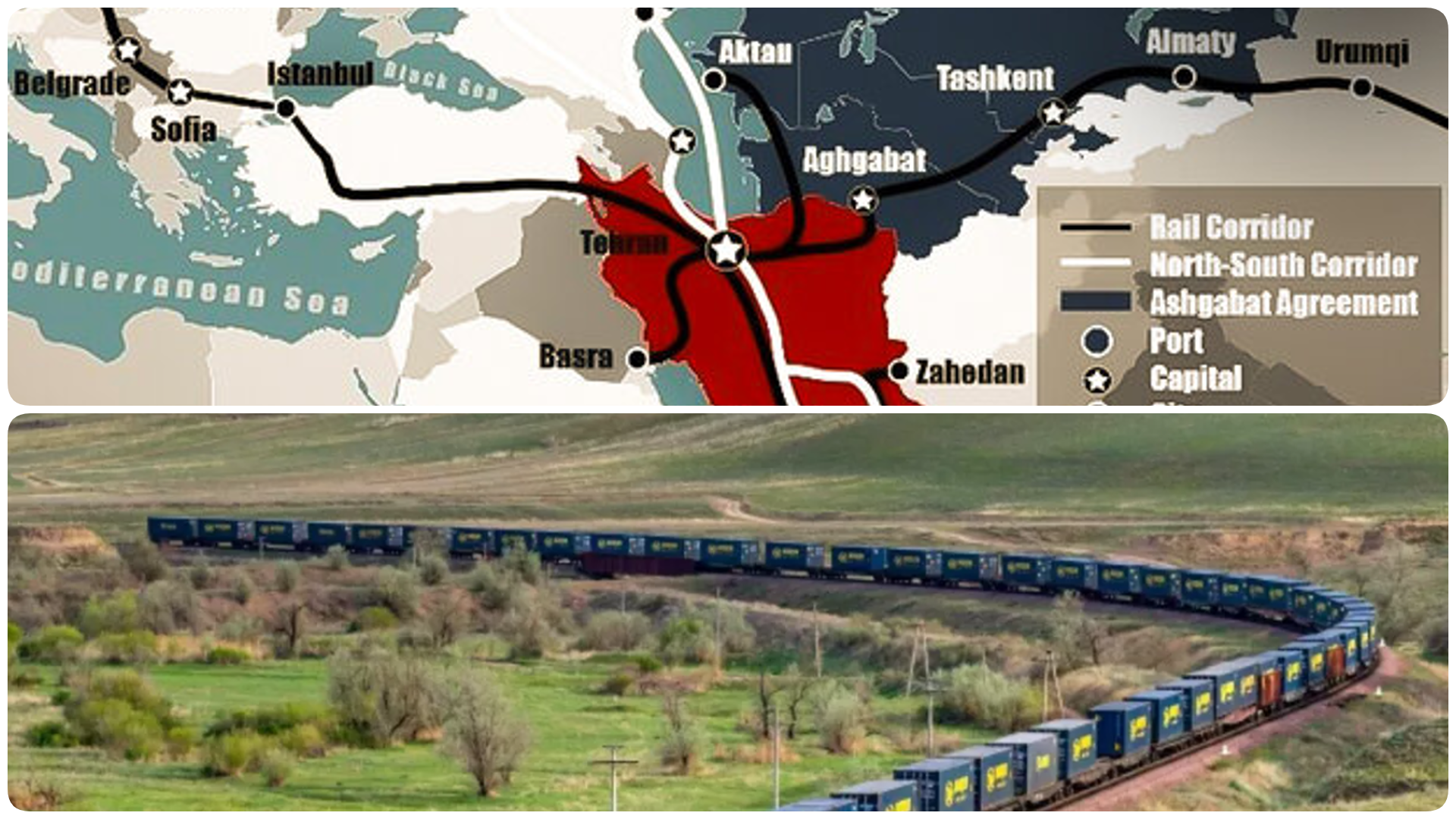
A direct order has been issued by Iraq’s prime minister to the country's customs authorities, requiring the transit and transshipment of Iranian goods through Iraqi territory into Iran.
Based on the directive, all Iraqi customs offices in the northern, central, western and southern regions, as well as air cargo customs and Baghdad International Airport are now obliged to activate transit transport and reloading operations with Iran.
The order comes more than one month into the US naval blockade of the Persian Gulf in order to inflict a serious economic blow on Iran as part of a terrorist war aided by Israel and Persian Gulf allies.
The blockade has failed to isolate Iran, instead diverting cargo from sea to overland corridors that depend on Iran's geographic position.
The Iraqi directive adds a western overland route to Iran's growing portfolio of alternatives to maritime shipping, effectively placing Iraq's entire land and air cargo infrastructure at the service of Iranian transit trade.
On the eastern front, the acceleration of rail trade has reached unprecedented levels.
According to a Bloomberg report, the number of cargo trains travelling from Xi'an in central China to Tehran has risen from approximately one per week before the war to one every three or four days since the blockade began on April 13.
The route passes through Kazakhstan and Turkmenistan, placing it far from the reach of US warships. Washington is aware of this, but directly targeting a land-based network would risk escalation with Beijing.
Statistics from the Islamic Republic of Iran Railways show remarkable growth. More than 40 freight trains from China have entered Iran since the beginning of the year, compared with just seven trains on this route over the previous seven years combined.
The China route is one node in a broader years-long effort by Tehran to expand logistics corridors with allies and insulate itself from Western pressure.
In October, Iran started exporting diesel by train for the first time to Afghanistan using the 225-kilometer Khaf-Herat rail line that connects Iran’s northeastern Khorasan Razavi province to Herat.
In February last year, China inaugurated a direct freight train route to Hairatan in northern Afghanistan, and months later Uzbekistan and Afghanistan announced plans to extend the rail line to Herat, which is about 130 kilometers from the Iranian border.
Besides the China line, Iran has committed to spending billions of dollars on a North-South route connecting it to Russia.
The country can transfer 40% of its usual maritime trade to land routes, according to head of the national shipping association’s container committee Kambiz Etemadi.
On Friday, Iran launched the operational phase of the Sarakhs Economic Zone in Khorasan Razavi province, aiming to boost trade with China.
The free zone, which sits on Iran's border with Turkmenistan, has annual cargo capacity of 10 million tonnes, but currently handles only 2.8 million tonnes.
Rasoul Rais Jafari, CEO of the Sarakhs Free Zone Organization, said the lack of return cargo from Sarakhs to China had previously reduced traffic, but exports of zinc and copper concentrate will provide return loads, making rail freight more economical than sea routes.
Sarakhs has infrastructure for broad and standard gauge tracks and can handle up to 1,000 wagons daily in partnership with a Chinese logistics firm.
The launch follows 30 years of development and coincides with broader Iran-China economic cooperation under their 25-year strategic agreement.
It is part of the 925-kilometre Kazakhstan-Turkmenistan-Iran railway, inaugurated in 2014 with the heads of state of all three countries in attendance, at an annual capacity of three to five million tonnes.
Turkey also offers a potential alternative. Ankara is a logistics hub, importing raw materials in energy, petrochemicals and various products, manufacturing goods and then exporting them, or simply transiting cargo across its territory.
Iranian officials have indicated that part of the trade currently channeled through the UAE could be redirected via Turkey.
Beyond the China line and Turkey, Iran has a preferential trade agreement with the Eurasian Economic Union (EAEU).
A free trade zone has been established under which tariffs on 88 percent of Iranian commodity groups have been completely eliminated, in a market with a one-trillion-dollar trade balance.
This is an advantage that countries such as Turkey and China do not possess with the EAEU.
Iran's trade balance with the UAE stands at $25 billion, consisting of $15 billion in imports and $10 billion in exports. However, 90 percent of these imports are goods that originate from other countries and simply change their origin in the UAE.
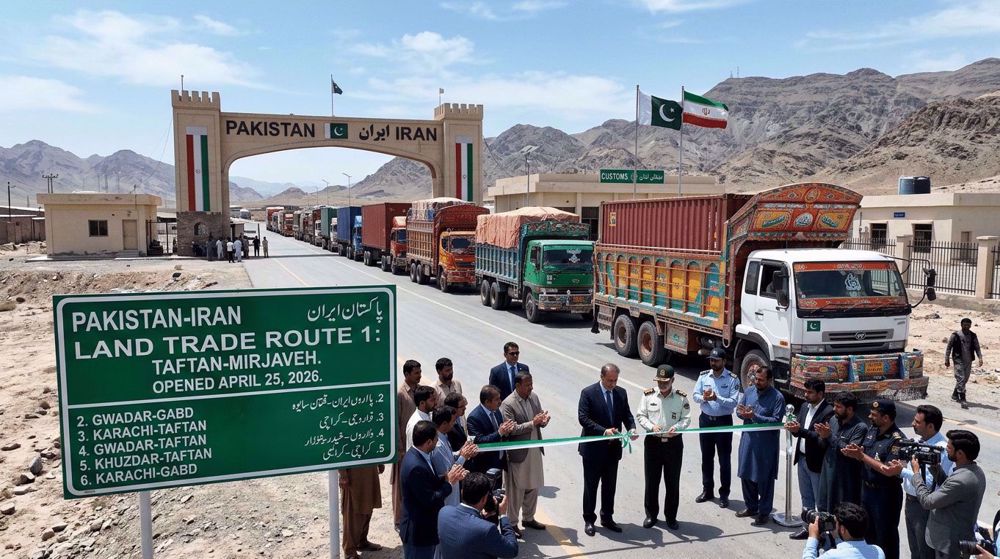
In the current situation, Iran can replace this $25 billion share by developing new markets such as the EAEU, utilizing Turkey's transit hub, and making use of Pakistan's new corridors and the China rail route to the west.
More than $10 billion of imports from EAEU countries alone are in the food and agricultural products sector. Over $30 billion are in pharmaceuticals and medical equipment, and $50−60 billion are in the clothing and household appliances supply chains.
The minimum forecast by the Institute for Business Studies is that within a two− to three−year horizon, Iran can increase its current $5 billion trade with the EAEU to $15 billion.
At a single automobile exhibition in 2022, Iran signed more than 70 million euros in agreements. From that one exhibition alone, Iran made significant inroads into the large automotive market of the EAEU, particularly in battery exports and auto parts exports.
What this demonstrates is that Iran's geographic and strategic position provides a significant advantage in mitigating external pressure and sanctions. The newly established transit corridors prove that a blockade of Iran is not feasible.
While cooperation with neighbors and the development of communication routes is inherently valuable, Iran would have benefited from pursuing such initiatives earlier and improving its infrastructure more proactively.
Nevertheless, necessity has now become a strategic opportunity, transforming Iran from a country under siege into a land bridge between East and West.
 This makes it easy to access the Press TV website