Iran won’t enter talks without US meeting preconditions: Ex-IRGC chief
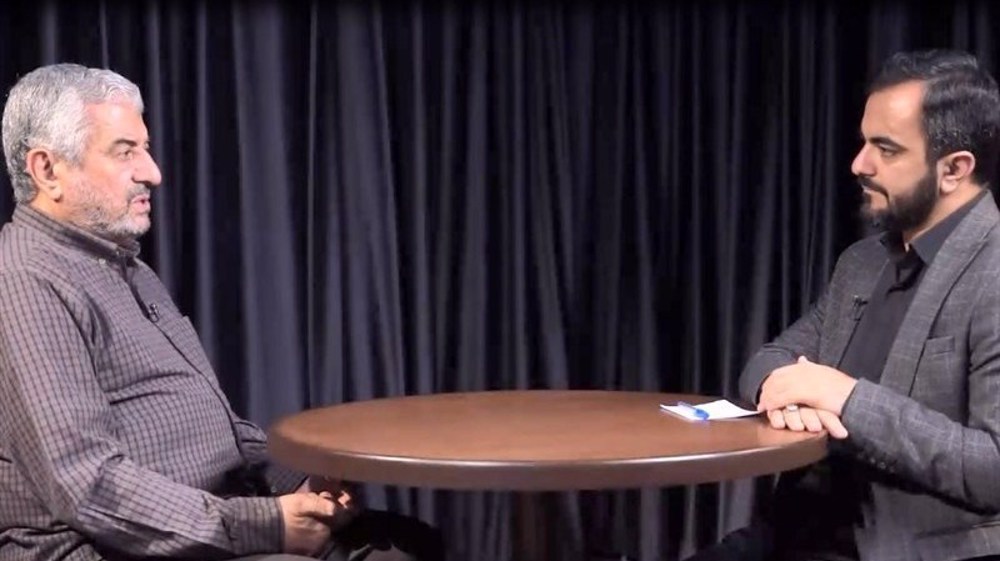
The former chief commander of the Islamic Revolution Guard Corps (IRGC) says Iran will not hold negotiations with the United States as long as Washington does not meet the preconditions set by Tehran.
In an interview with Tasnim news agency published on Thursday, Major General Mohammad Ali Jafari said the enemy repeatedly reneged on its promises and waged two military attacks in the midst of talks, leading Iran to distrust it.
“The enemy’s behavior caused us to make a fundamental strategic shift and change our strategy regarding negotiations and engagement. This strategic shift means that this time we set preconditions for negotiations; in other words, the enemy must undertake a series of confidence-building measures,” he added.
“Some of the measures may come in the form of preconditions; meaning the enemy must provide written commitments, sign them, and guarantee that certain actions will not be repeated, such as ending the war and refraining from military threats. Another part [of the confidence-building measures] must be carried out in practice, such as unblocking Iran’s funds.”
Iran–US nuclear talks over time: have they really been about “nuclear” issues, or about restraining a regional power?
— Press TV 🔻 (@PressTV) May 8, 2026
Follow https://t.co/B3zXG73Jym pic.twitter.com/0YLN8Gj426
Jafari also said Iran believes that at the first step, confidence-building measures must be carried out, and then in the next phase, it can hold negotiations on the nuclear issue.
He further emphasized that the Islamic Republic is not currently engaged in direct negotiations with the enemy, but exchanging messages through a third country, such as Pakistan, in order to present its preconditions and obtain commitments from the enemy.
“The US has no choice but to accept Iran’s legitimate demands or continue the war,” the former IRGC chief commander asserted.
He also warned that Iran will deliver stronger and heavier blows to the enemy if it resumes the war.
“Of course, war also has its costs for us, but without a doubt, the cost and damage of continuing the war for the enemy and its regional allies is much greater than for us,” Jafari noted.
IRGC's Political Deputy General Javani:
— Press TV 🔻 (@PressTV) May 7, 2026
🔺 Trump failed across all fronts, including attempts at regime change, uranium seizure, and efforts to control the Strait of Hormuz. pic.twitter.com/tIbniiviAI
The unjustified US-Israeli aggression on Iran began on February 28 with airstrikes that assassinated senior Iranian officials and commanders.
The Persian Gulf littoral states allowed the aggressor regimes to use their soil and airspace to launch anti-Iran attacks.
The Iranian armed forces unleashed 100 waves of successful retaliatory strikes against sensitive and strategic American and Israeli targets throughout the region.
On April 8, forty days into the war, an Islamabad-brokered temporary ceasefire went into effect. However, the first round of Tehran-Washington negotiations failed to reach an agreement.
The US unilaterally extended the truce after its expiry, but imposed an inhumane “naval blockade” of Iran.
Tehran has refrained from committing to a second round of talks, with authorities citing Washington’s excessive demands and piracy against Iranian ships as two main impediments to concluding the war.
Iran stresses Lebanon’s right to defend itself against Israeli aggression following massacre
Iran says full security in Hormuz contingent on end to US blockade, threats
Iran says Qatar captured three pilots during recent war; urges ICRC to pursue their case



Hamas calls on mediators to compel Israel to end ceasefire violations, accept peace roadmap
‘Enemy should expect strategic surprises’: IRGC commander warns of shift to offensive posture
Iran spokesman slams Canada's participation in war on Iran despite Trump's hostility
VIDEO | Gaza’s diagnostic crisis: Damaged medical equipment dismantled to keep hospitals running
Iran will defeat enemy in 'economic war' as it did on battlefield: VP Aref
USS Lincoln fiasco shows Trump administration's 'true lack of leadership': Senator
Pope Leo calls for end to violence against Palestinians in West Bank
'Delusional, incompetent’: Hegseth rebuked for trivializing US soldiers’ ordeal aboard USS Lincon




 PressTV NEWSLETTER
now
PressTV NEWSLETTER
now
 This makes it easy to access the Press TV website
