Why Global Majority must unite against US imperialism in Iran, Venezuela, Cuba, Gaza
By Syed Farid Alatas
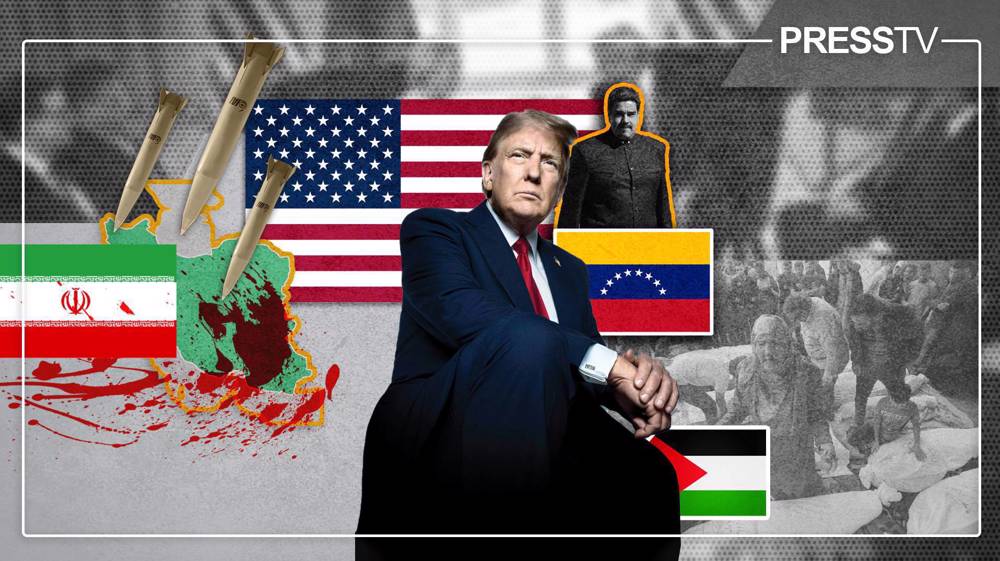
Recent events – the extra-judicial abduction of Venezuela’s president, Nicolás Maduro, and his wife, Cilia Flores, by the United States; the unprovoked and illegal US and Israeli war against Iran; the unjust blockade of fuel shipments to Cuba; and, of course, the Israeli genocidal war against Gaza with full American backing – have all served to confirm the reality of imperialism in our contemporary lives.
If Western imperialism once took the form of direct colonial rule from the European conquest of the Americas in the late fifteenth century until the mid-twentieth century, today it operates indirectly.
It now exerts economic, political, and cultural control over the Global Majority through persuasion, intimidation, threats, and intervention.
Despite the vast majority of the world having undergone formal decolonization, we remain subject to domination, particularly by the United States, in the form of economic controls and political coercion.
This is precisely what President Sukarno, at the 1955 Asian-African Conference, also known as the Bandung Conference, referred to as neocolonialism.
Recently, the US Secretary of State, Marco Rubio, and Iranian Foreign Minister, Dr. Seyyed Abbas Araghchi, spoke at separate international conferences and reflected in their speeches two widely differing visions of what the world should be like.
One was a grotesque display of the imperialist impulse, while the other was a plea for international order, respect and peace.
Araghchi spoke at the Al-Jazeera Forum in Doha, held on 7-9 February this year. He spoke about the right to self-determination [of Palestinians], of the need to maintain the utmost respect for international law, and of the importance of struggling against an order in which borders are temporary, sovereignty is conditional, and security is determined by military occupation.
He spoke in the context of the Israeli colonization of Palestine, but he could just as well have been speaking about Venezuela or Iran as well. What the top Iranian diplomat was calling for is the decolonization and deimperialization of the world.
This comes at a time when the United States is working to consolidate imperialism and rewesternize the world. This brings us to Rubio’s speech, which was delivered at the Munich Security Conference, one week after Araghchi spoke in Doha.
✍️ Viewpoint - Iran agreed to nuclear concessions in Geneva talks – and then US-Israel bombed
— Press TV 🔻 (@PressTV) March 4, 2026
By @richimedhurst https://t.co/5Q4z2BQTrQ pic.twitter.com/HobkOPfw9X
Remember that Rubio was addressing the Europeans. In the early part of his address, Rubio glorified the founding of America, never once referring to the genocide that the European “discoverers” perpetrated against the natives.
Instead, he referred to the Christian faith as a sacred inheritance brought from Europe by those who settled what they called the “New World,” but which was known to the indigenous natives as Abya Yala.
Rubio stressed that “[w]e are part of one civilization – Western civilization. We are bound to one another by the deepest bonds that nations could share, forged by centuries of shared history, Christian faith, culture, heritage, language, ancestry, and the sacrifices our forefathers made together for the common civilization to which we have fallen, heir.”
He went on to recount the great scientific and cultural achievements of Western civilization, without making any reference to the significant contributions of the Chinese, Indians and Muslims to the making of the modern West, not to mention Europeans and American racism, misogyny, slavery and colonialism that the modernization and industrialization of the West were founded on.
Not only was Rubio’s speech completely devoid of a multiculturalist sensibility, it also secreted xenophobia. He lamented opening “our doors to an unprecedented wave of mass migration that threatens the cohesion of our societies, the continuity of our culture, and the future of our people.”
He glorified the bombing of Iran in June 2025 as well as the abduction of Venezuela’s president and first lady. Bemoaning the anti-colonial movements that contributed to the decline of the Western empires, Rubio called for the renewal and restoration of Western civilization to “build a new Western century.”
He noted that for five centuries. Western civilization had expanded through the work of its missionaries and soldiers, and had settled continents and established empires. But the West began to contract from 1945.
Rubio told the audience in Munich that President Donald Trump and the United States wanted to work with Europe to return to the Western age of dominance. For us in Asia, Africa and Latin America, this would be read as the will to rewesternize us, that is, to reimpose the Western mode of modernity on us.
- "I went to the classified briefings. There was NO imminent threat."
— Press TV 🔻 (@PressTV) March 5, 2026
- "This whole thing is just so transparently BUILT ON LIES"
-" This is Iraq 2.0"
- "No congressional vote can legitimize this war"
- "SHAME ON YOU ALL"
US Congressman Jim McGovern before being cut off pic.twitter.com/5ndaLppxpS
The spirit that Rubio wishes to ignite among the Europeans, one which “sent ships out into uncharted seas and birthed our civilization,” is decidedly imperialist. We fear that the recent United States initiatives in Gaza, Venezuela and Iran are the workings of that spirit.
The reassertion of the West’s superiority and expression of the will to renew its dominant, imperialist role in the world is likely a reflection of perceived weakness and fear of becoming a “faint and feeble echo,” as Rubio put it, of their past. It is something that the Third World, Global Majority, the peoples of Asia, Africa and Latin America must be wary of and guard against.
The anti-imperialist impulse had always been there, but it has alarmed the West due to certain changes and movements that have arisen in recent years.
These include the rise of BRICS and the idea of de-dollarization, regional re-alignments in the African Sahel that reject French and US control, the consolidation of ties among socialist states such as China, North Korea and Russia to counter Western dominance, and the Latin American The Pink Tide, that is, the wave of leftist political movements and governments that emerged there since the late 1990s and early 2000s.
Iran’s steadfast anti-imperialist and anti-Zionist stance, and its firm opposition to US interference in the affairs of West Asian nations, is a part of global anti-imperialism.
The West, led by the United States, is, therefore, a declining hegemonic power. This is not just an objective reality but is also perceived to be the case by all, including those in the West. While on the decline, the West will fight to regain its glory and, in the process, be reckless and bloody, due to fear and rising insecurity.
We in Asia, Africa, and Latin America, our citizens, civil society movements and governments, must decide on what side of history to stand.
Do we allow for the erosion of international law and sovereignty, and the promotion of neo-colonialism and imperialism, through the active participation in that process or complicity via silence, or do we join the forces of anti-imperialism?
The time is coming for us to consider these choices.
Syed Farid Alatas is a professor in the Department of Sociology & Anthropology at the National University of Singapore.
(The views expressed in this article do not necessarily reflect those of Press TV.
Iran defeated US in 'Trump’s third war' midway: Leader's advisor
US military asks for ‘new’ ideas to deal with Iran after its crushing defeat: Report
How Iran’s two-week retaliatory strikes exposed cracks in US military architecture in Persian Gulf



Yemeni forces say directly hit Saudi oil tanker in Gulf of Aden
Pro-Palestine Democrat wins US state primary, angering Trump, Israel lobby
Iran says US must resolve promise breaches for Strait of Hormuz reopening
Israeli violations obstruct Gaza ceasefire implementation: Hamas spokesman
VIDEO | Trump trapped by Hormuz?
VIDEO | Why can't Trump enforce his strategy?
VIDEO | Press TV's news headlines
VIDEO | Chehour residents return to their homes amid Israeli attacks in south Lebanon


 PressTV NEWSLETTER
now
PressTV NEWSLETTER
now
 This makes it easy to access the Press TV website
