
By Ivan Kesic
- The development of the Chabahar and Jask ports, integrated with the International North-South Transport Corridor, positions Makran to capture a substantial share of the multi-trillion-dollar Eurasian trade flow by offering a route that dramatically reduces transit time and costs compared to the Suez Canal.
- Through the construction of the Goreh-Jask pipeline and expanded port facilities, Makran provides Iran with its first viable oil export terminals beyond the Strait of Hormuz, fundamentally enhancing national economic security by rendering the country less vulnerable to closure of this strategic chokepoint.
- The region's fisheries already account for one-seventh of Iran's entire national fish catch, and with fourteen major new fishery projects spanning 65,000 hectares and the recent inauguration of the country's largest fish processing complex, Makran's marine economy is rapidly emerging as a significant global supplier of tuna and other seafood products.
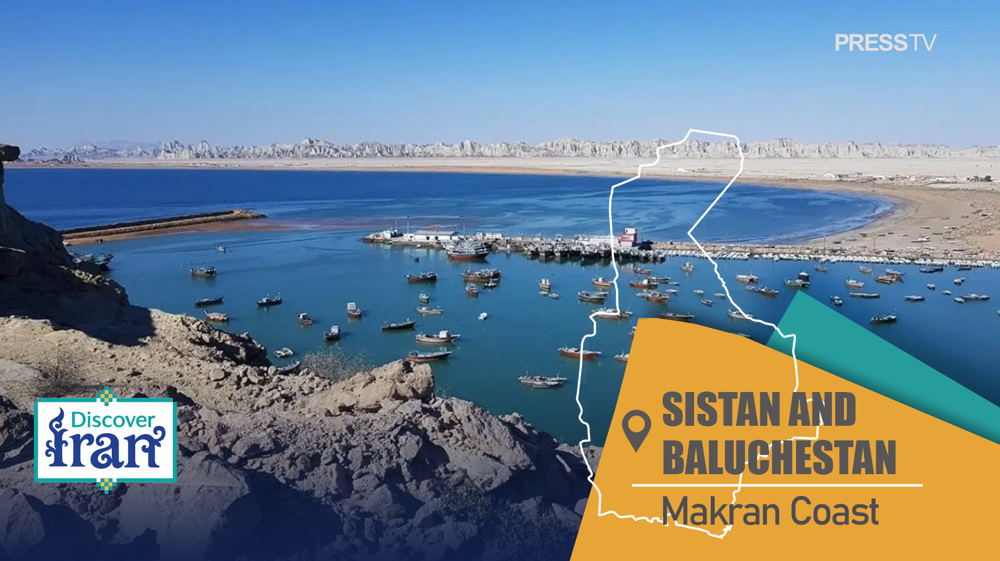
For centuries, Iran’s Makran coast lay parched and sparsely populated, bypassed by Silk Road caravans and maritime merchants alike.
Today, however, this long-neglected “lost paradise” stands at the center of an ambitious national effort to transform it into the next great economic hub of the Indian Ocean.
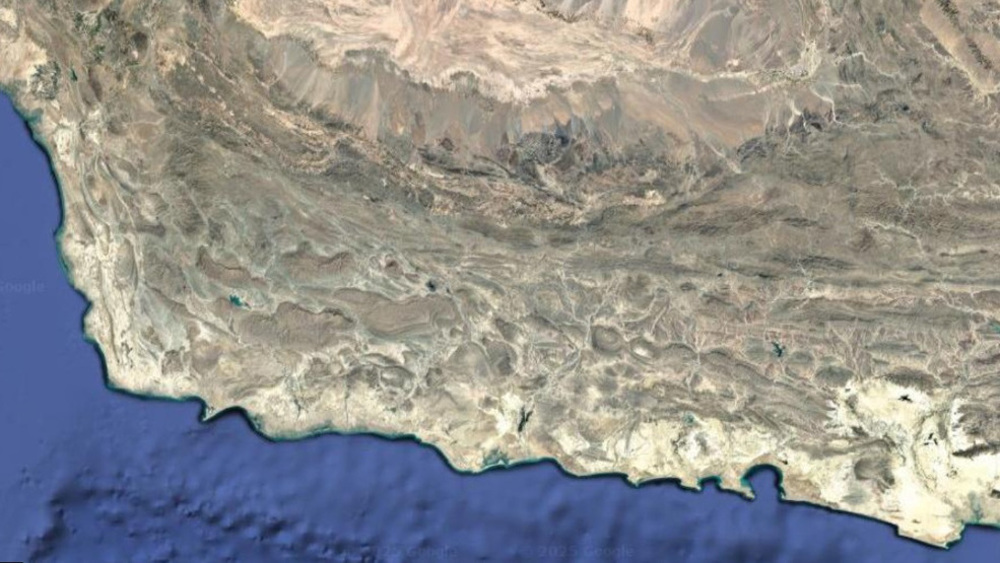
Stretching nearly 500 kilometers along the Gulf of Oman from the Strait of Hormuz to the Pakistani border, the Makran coast has endured millennia as one of Iran’s most overlooked frontiers.
Its scorching temperatures, scant rainfall, and treacherous tidal creeks long conspired to keep this rugged shoreline isolated, an anomaly in a country celebrated for its ancient urban civilizations.
That narrative is now being decisively rewritten. Guided by a maritime-oriented strategy championed at the highest levels of government, and propelled by massive infrastructure investment, new international trade corridors, and intensifying great-power competition in the Indian Ocean, Makran is emerging from the shadows.
Deep-water ports at Chabahar and Jask, newly built dams and desalination plants, expanding fisheries and industrial zones, and the region’s strategic position astride some of the world’s busiest seaborne energy routes together position Makran as more than a development project. They signal its potential rise as a transformative node in twenty-first-century global commerce.
Understanding Makran’s historical context
To grasp the magnitude of Makran’s transformation, one must first appreciate the formidable geographic and historical headwinds it has faced.
Unlike Iran’s densely populated Persian Gulf littoral, with its sheltered anchorages and ancient mercantile cities, Makran has long presented a far more forbidding face to the sea.
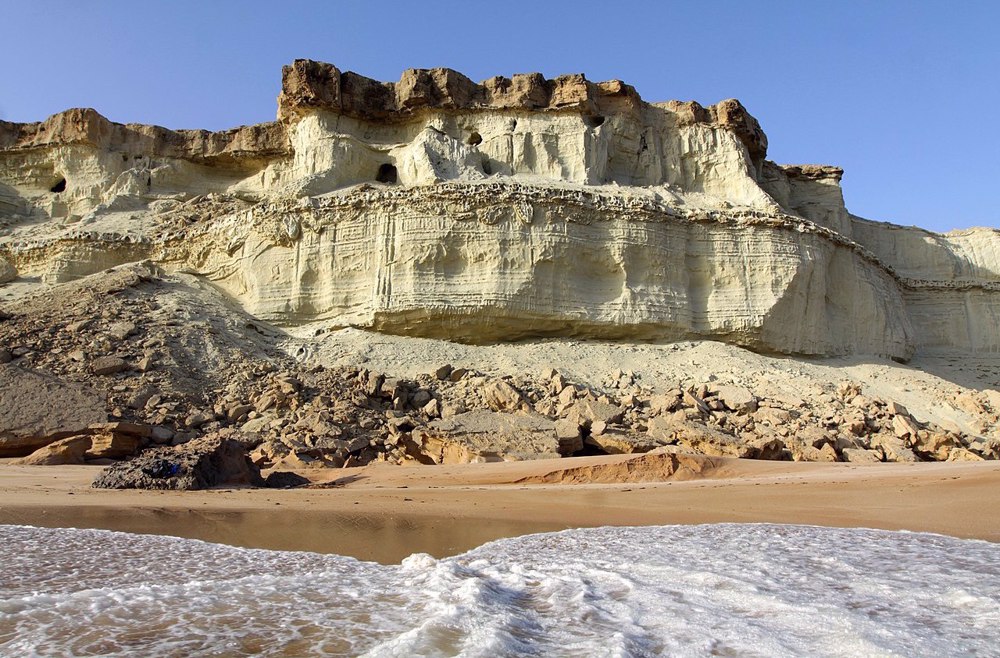
Summer temperatures regularly exceed 45 degrees Celsius. Annual rainfall rarely surpasses 100 millimeters. The coastline is broken by shallow bays and silt-choked seasonal rivers that historically grounded vessels more often than they welcomed them.
The great overland Silk Road passed hundreds of kilometers to the north, while maritime trade between India and the Persian Gulf favored the safer harbors of Bushehr and Bandar Abbas.
Even Chabahar, now the region’s flagship port, remained a fishing village of fewer than 2,000 residents as recently as the mid-twentieth century.
This enduring isolation, described by Iranian officials as a centuries-long condition, meant that Makran entered the modern era with scant infrastructure, a small population, and virtually no industrial base.
Water, power, and the foundations of growth
Before Makran could host factories, ports, or millions of new residents, it first had to secure the most basic prerequisite of human settlement: reliable fresh water.
That foundational challenge is now being met through an unprecedented wave of civil engineering projects. Across the Beshagard mountain range, a network of dams, including Gabrik, Jegin, Kahir, and Pishin, now captures seasonal river flows, converting once-ephemeral waterways into stable, year-round reservoirs.
These efforts are reinforced by rapidly expanding desalination capacity near Chabahar, part of a $3.2 billion national water-transfer megaproject. When fully operational, the system is designed to deliver 2.4 billion cubic meters of water annually, not only to coastal communities, but deep into the Iranian interior, reaching as far as Mashhad, the country’s second-largest city.
Energy infrastructure is advancing in parallel. Most notably, construction has begun on the Iran-Hormoz nuclear power plant near Bandar Sirik, a project expected to generate 5,000 megawatts of electricity. This new capacity will provide the industrial-scale power essential for heavy manufacturing, port operations, and large-scale urban expansion.
Makran’s integration into global trade networks
Makran’s evolution from remote periphery to integrated trade hub depends most critically on its ports, which are rapidly transforming from modest local facilities into strategic nodes of continental connectivity.
Chabahar Port, long recognized by Russian strategists a century ago as a potential warm-water outlet, has benefited from sustained Indian investment and technical cooperation. It is now positioned as a strategic gateway to Afghanistan and Central Asia, offering access routes that bypass Pakistan entirely.
Farther west, Jask Port is undergoing parallel expansion. Its development is closely linked to the Goreh-Jask crude oil pipeline, which provides Iran with an export terminal beyond the Strait of Hormuz – an important strategic redundancy amid recurring geopolitical tensions in that narrow maritime chokepoint.
These ports function not as isolated facilities but as integral components of the International North-South Transport Corridor, an ambitious multimodal network connecting Indian Ocean ports to the Caspian Sea, Russia, and Northern Europe.
By significantly reducing transit times and costs compared to the Suez Canal route, the corridor positions Makran at a pivotal crossroads of Eurasian commerce.
Fisheries, aquaculture, and marine wealth
While sweeping visions of global trade corridors dominate headlines, a quieter economic transformation is already unfolding along Makran’s coastline, driven by the extraordinary marine wealth of the Indian Ocean.
Fishermen operating out of Chabahar now land approximately 200,000 tons of fish annually, accounting for roughly one-seventh of Iran’s total national catch. Tuna, in particular, has emerged as a major export commodity, linking the region directly to international seafood markets.
This maritime abundance has spurred downstream industrial growth. Near Chabahar, Iran recently inaugurated its largest integrated fish packaging, cold storage, and canning facility, marking a decisive shift from raw export toward value-added processing.
Momentum continues to build: in mid-2023, authorities announced fourteen major fishery-related projects spanning some 65,000 hectares, initiatives expected to significantly expand production capacity while generating thousands of jobs.
Aquaculture, especially shrimp farming, is becoming another pillar of the coastal economy. Makran’s extensive tidal creeks and mangrove ecosystems provide ideal conditions for sustainable marine cultivation, reinforcing the region’s emerging identity as a fisheries powerhouse.
Untapped earth: Mineral resources and industrial diversification
Beneath Makran’s sun-scorched terrain lies a largely unexplored geological inheritance. For centuries, the region’s mineral resources remained untouched, a casualty of isolation and underinvestment.
Preliminary surveys have identified notable chromite deposits in the Beshagard mountain range, suggesting the potential for a mining sector that is only beginning to take shape. This latent mineral wealth, combined with expanding energy infrastructure and growing port capacity, creates the foundation for industrial diversification well beyond primary extraction.
Iranian planners envision shipbuilding and repair yards leveraging Makran’s direct access to the Indian Ocean; electronics manufacturing zones supported by stable, large-scale electricity generation; and petrochemical complexes capitalizing on proximity to domestic feedstock supplies and global export routes.
The planned establishment of twenty-seven new urban centers and coastal settlements, designed to accommodate an additional 2.5 million residents, underscores the scale of the ambition.
What is today one of Iran’s most sparsely populated regions is being reimagined as a dense, industrialized corridor of production, trade, and urban life.
Shores of discovery: The emerging tourism potential
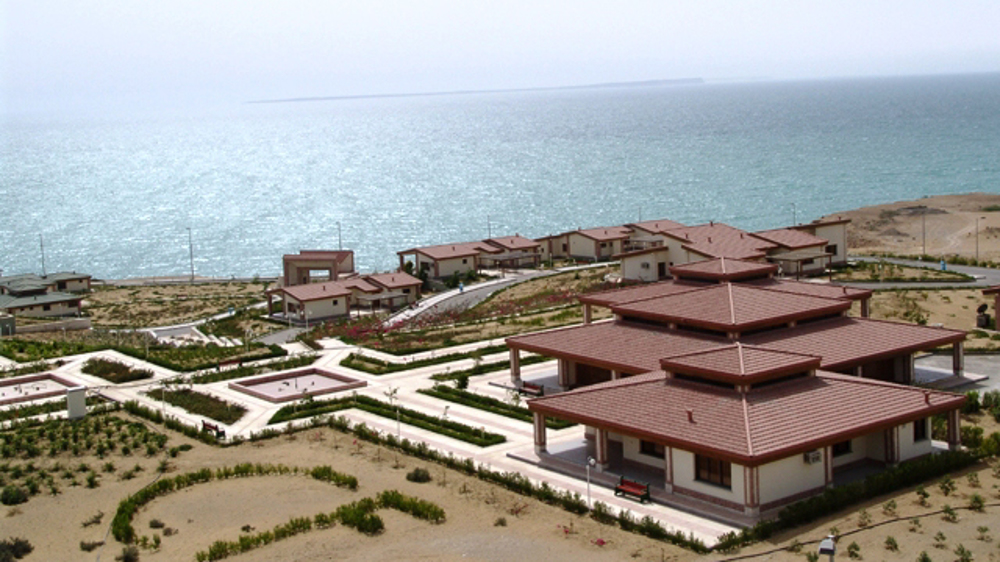
Makran’s natural wealth extends well beyond fisheries and minerals to encompass landscapes of striking beauty, long remote, but now gradually opening to visitors.
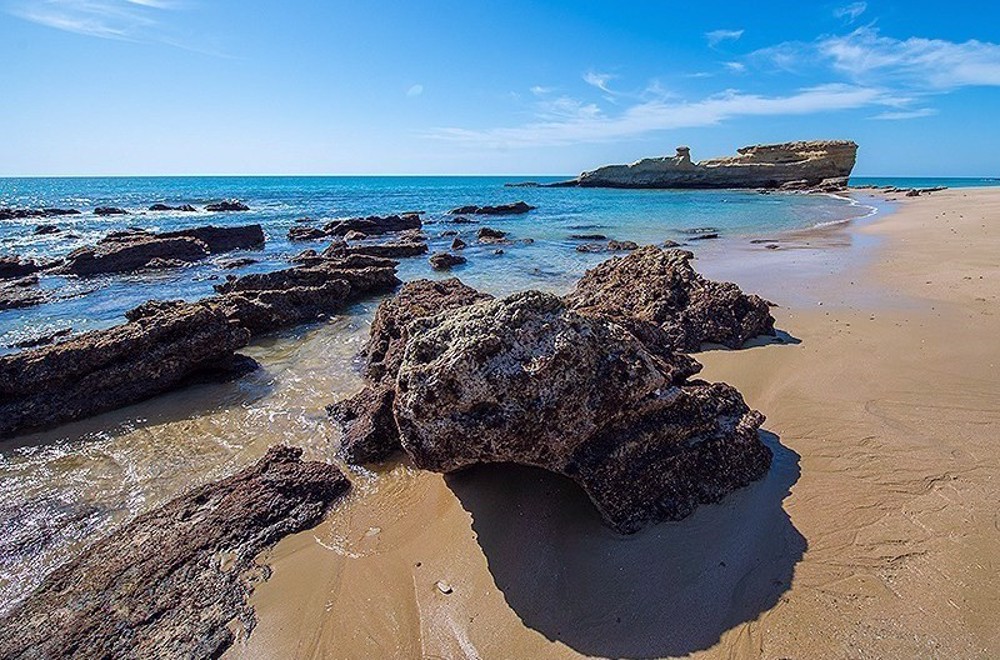
The coastline unfolds in wide stretches of untouched sandy beaches framed by dramatic cliffs. Inland, color-banded mountains rise from the desert floor, active mud volcanoes punctuate the terrain, and vast mangrove forests shelter diverse birdlife and marine species. These ecological features give Makran a visual and environmental character unlike any other region in Iran.
This natural patrimony is enriched by distinctive cultural traditions shaped by centuries of exchange across the Indian Ocean. Architectural influences from the Indian subcontinent remain visible in older settlements, subtle reminders of maritime connections that once linked this coast to distant shores.
For domestic travelers accustomed to the crowded resorts along the Caspian Sea or the Persian Gulf, Makran offers an alternative: an expansive, undeveloped coastline paired with authentic local culture.
For international visitors, particularly those from the Persian Gulf states seeking seasonal respite or European travelers drawn to off-the-beaten-path adventure tourism, the region holds considerable untapped appeal.
Realizing this potential will require not only continued infrastructure investment but also careful stewardship. Sustainable tourism policies will be essential to ensure that development enhances, rather than erodes, the fragile environmental and cultural assets upon which the sector ultimately depends.
Geopolitical crosscurrents: Makran in the arena of great powers
Makran’s rise cannot be understood solely through the prism of domestic development. The region has also become a focal point of intensifying great-power competition.
India’s substantial investment in Chabahar reflects its strategic imperative to secure access to Central Asian markets while counterbalancing China’s Belt and Road Initiative and its flagship China-Pakistan Economic Corridor, which terminates at Gwadar Port, just eighty kilometers east of the Iranian border.
Russia likewise views Makran’s ports as critical components of the International North-South Transport Corridor, offering members of the Eurasian Economic Union the shortest pathway to warm-water ports and global markets.
China, though deeply invested in Gwadar, maintains cooperative relations with Tehran and has signaled interest in linking Chabahar to broader regional connectivity frameworks.
By deftly balancing its partnerships with New Delhi, Moscow, and Beijing, Iran has transformed Makran from a neglected frontier into an indispensable strategic space, one in which multiple major powers now hold tangible economic and geopolitical stakes.
Strategic autonomy: reducing reliance on the Strait of Hormuz
Among Makran’s most consequential strategic functions for Iran is its capacity to reduce the national economy’s vulnerability to disruption in the Strait of Hormuz.
Roughly one-fifth of global petroleum consumption transits this narrow maritime chokepoint between Iran and Oman, making it both a source of Iranian leverage and a profound strategic exposure. Any closure, whether through conflict or coercive pressure, would reverberate immediately through global energy markets and Iran’s own export lifelines.
The expansion of Jask Port, coupled with the Goreh–Jask crude oil pipeline, fundamentally alters this calculus. By enabling crude oil and petroleum products to reach the Indian Ocean directly, without entering the Strait, Iran gains the ability to sustain exports even under maximum-pressure scenarios. What was once a single point of vulnerability becomes a more diversified and resilient system.
This strategic redundancy extends beyond hydrocarbons. Chabahar provides an alternative gateway for general merchandise trade, allowing imports and exports to bypass both the Strait of Hormuz and the congested overland crossings along Iran’s western frontiers.
The maritime-oriented policy articulated by Iranian leadership thus fuses economic ambition with geopolitical prudence, embedding national development within a framework of enhanced strategic security.
From lost paradise to future hub
Makran’s transformation from historical backwater to emerging economic center ranks among the most ambitious regional development initiatives of the early twenty-first century.
The obstacles remain formidable. Water scarcity, though mitigated by dams, desalination plants, and transfer systems, will demand disciplined, long-term management.
Plans to expand the population to 2.5 million residents require job creation on a scale unprecedented in the region’s history. And the geopolitical rivalries that have attracted capital and attention could, if mishandled, entangle Makran in broader strategic competition.
Yet the direction of change is unmistakable. A coastline that for millennia supported barely half a million people across 100,000 square kilometers is being deliberately reshaped through state policy, large-scale capital investment, and integration into the rapidly expanding trade networks of Eurasia.
The vision articulated by Iranian officials – that Makran must evolve from a “lost paradise” into the economic hub of Iran and its surrounding region – appears as a vivid reality.
As the Indian Ocean consolidates its role as the central arena of twenty-first-century commerce, the once-forbidding shores of Makran may soon become not a peripheral frontier, but a coastline the world cannot afford to overlook.
 This makes it easy to access the Press TV website