From Monroe to Trump: Imperialist footprint behind President Maduro’s kidnapping
By Ali Zeraatpisheh
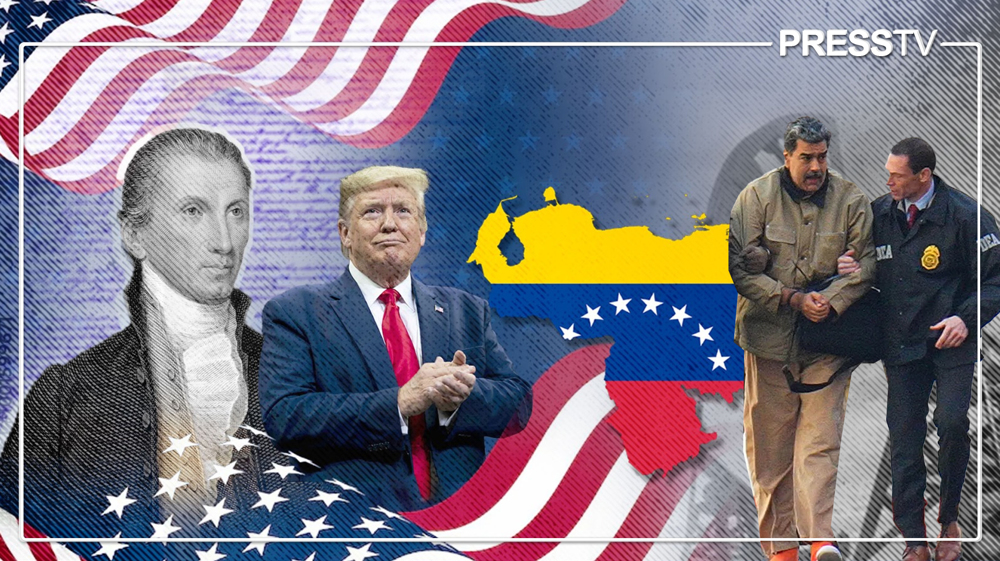
On January 3, 2026, US troops carried out a large-scale military aggression across Venezuela and kidnapped President Nicolas Maduro Moros and his wife, Cilia Flores.
Dubbed ‘Operation Absolute Resolve’, it began in the early hours, around 02:01 Venezuelan time, when US aircraft and Special Forces bombed Caracas and other targets to overwhelm Venezuelan defenses and kidnap the country’s democratically-elected leader.
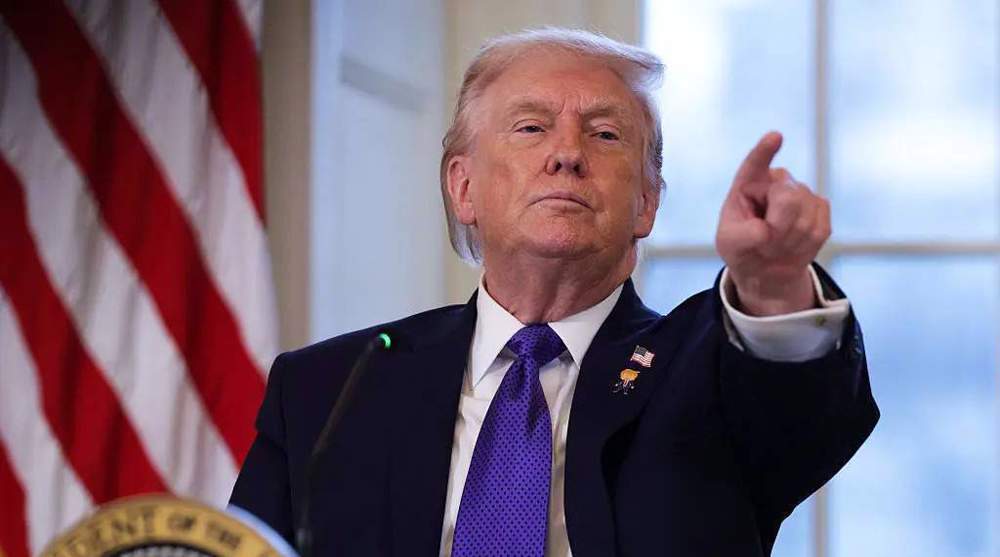
Later that day, President Donald Trump publicly announced the operation, framing the illegal kidnapping as the enforcement of US drug-trafficking and narco-terror charges against Maduro and Flores.
Washington claimed, without any evidence, that Maduro led a corrupt regime that aided cocaine and other contraband smuggling into the US
Maduro and Flores were flown to New York, where they appeared in federal court on January 5 and pleaded not guilty to the charges.
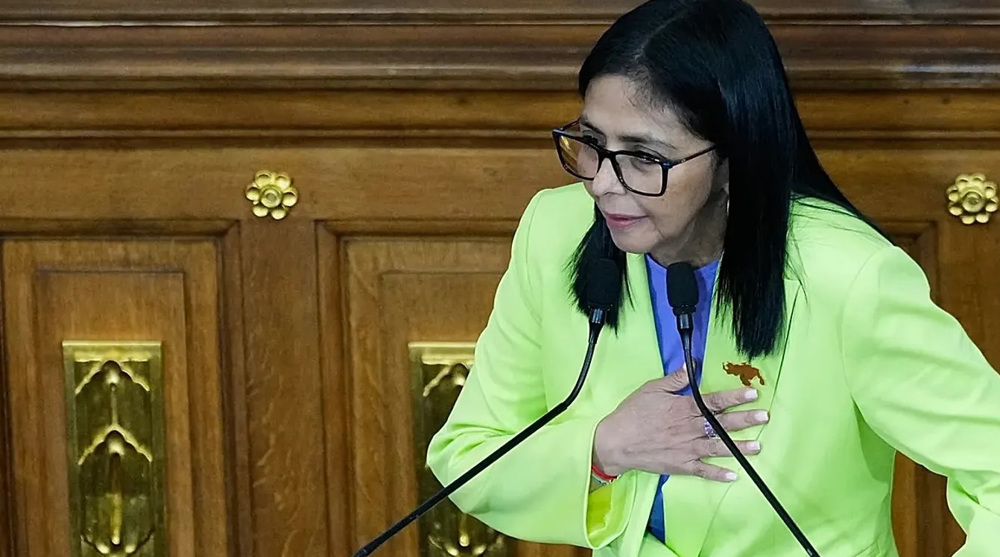
In Caracas, Venezuelan vice-president Delcy Rodriguez was sworn in as acting president.
The US aggression shocked the world, drawing condemnation as a blatant violation of sovereignty and international law.
How did US imperialist pressure pave the way for the kidnapping of Maduro?
The abduction of Maduro and Flores was not an isolated act but the endpoint of a prolonged US imperialist campaign that fused legal pretexts, economic coercion, and the threat of force. The events of January 3 were the predictable outcome of a policy that had long discarded sovereignty and international law.
Washington’s pseudo-legal narrative began on March 26, 2020, when the US Department of Justice unsealed indictments accusing Maduro of narco-terrorism and cocaine trafficking, while placing a USD 15 million bounty on his head.
Maduro was, at the time, Venezuela’s sitting president, exercising full control over state institutions. No extradition request was submitted or recognized. The charges amounted to a unilateral assertion of US jurisdiction over a foreign head of state, an explicit violation of international legal norms.
These indictments followed years of economic warfare. On August 1, 2017, the US imposed financial sanctions that sharply restricted Venezuela’s access to international credit.
✍️ Feature – US ‘regime change’ plot in Venezuela: From 2002 Chavez coup to 2026 Maduro kidnapping
— Press TV 🔻 (@PressTV) January 6, 2026
By @kesic_ivan https://t.co/uRyINk9Cvn
The pressure escalated on August 5, 2019, when Washington froze Venezuelan state assets under US control and prohibited most transactions with the government. Caracas formally denounced the move as an economic blockade designed to force regime collapse through economic strangulation.
Venezuelan authorities also point to Operation Gideon on May 3, 2020, when armed operatives linked to a US-based private firm attempted to capture Maduro by sea. Despite Washington’s denials, the operation demonstrated that the violent removal of Venezuela’s president had already entered US strategic thinking.
From August 2025, Washington intensified its military posture, deploying aircraft, naval forces, and special operations units across the Caribbean near Venezuelan waters, signaling preparedness for direct intervention.
This trajectory was given strategic cover by the US National Security Strategy (NSS) released on December 4, 2025, which reaffirmed the Western Hemisphere as a zone of US dominance.
Analysts described the document as a revival of Monroe Doctrine logic, framing Latin America not as a collection of sovereign states but as territory subject to US imperialism.
How did the US weaponize pseudo-legal claims to legitimize force?
Washington framed the extra-judicial kidnapping of Maduro and Flores as routine law enforcement, but the legal rationale functioned as a post hoc cover for military action.
US officials pointed to indictments unsealed on March 26, 2020, claiming alleged drug-trafficking links justified Maduro’s kidnapping. In reality, no US court issued an arrest warrant enforceable in Venezuelan territory, and no Venezuelan authority consented to the operation.
US prosecutors relied on statutes asserting extraterritorial jurisdiction, particularly federal narcotics and terrorism laws expanded between 1986 and 2001, to claim authority over foreign nationals whose alleged actions supposedly affected the US. These assertions were reiterated in Manhattan court filings on January 5. At no point did Washington confront the contradiction between its domestic statutes and binding international norms that protect state sovereignty.
Maduro, sworn in for his most recent term on January 10, 2025, was entitled to absolute immunity as a sitting head of state under international law, including the Vienna Convention on Diplomatic Relations (1961), to which the US is a signatory.
No extradition request was submitted, negotiated, or approved, and the operation violated Article 2(4) of the UN Charter (1945), which prohibits the use of force against another state. Neither self-defense nor UN authorization was invoked.
"The US kidnapped the president of a sovereign state"
— Press TV 🔻 (@PressTV) January 3, 2026
Press TV's Gisoo Misha Ahmadi says that the US removal of Venezuela's president undermines its sovereignty and signals a regression to pre-UN principles.
Follow Press TV on Telegram: https://t.co/LWoNSpkJSh pic.twitter.com/qIWAHtFqPL
How has Monroe Doctrine shaped the architecture of US hemispheric imperialism?
The kidnapping of Maduro and Flores fits within a long history of US claims of authority over Latin America. The Monroe Doctrine, announced on December 2, 1823, initially warned European powers against intervention in the Western Hemisphere. Though framed as anti-colonial, it rapidly evolved into a doctrine of US supremacy and hegemony.
This imperialist logic was formalized with the Roosevelt Corollary on December 6, 1904, which claimed a US right to exercise “international police power” over Latin American states labeled unstable or corrupt. In practice, it legitimized repeated military interventions, including the occupation of Haiti on July 28, 1915, the invasion of the Dominican Republic on April 28, 1965, and the assault on Panama on December 20, 1989.
Although the Monroe Doctrine and its corollaries are unilateral policy declarations with no standing in international law, successive US administrations have treated them as binding strategic mandates. On January 22, 2019, former National Security Advisor John Bolton explicitly revived the doctrine in reference to Venezuela, as Washington recognized opposition figure Juan Guaido as “interim president” despite Maduro’s effective control of state institutions.
This posture culminated in the NSS of December 4, 2025, which designated the Western Hemisphere as a primary US strategic domain. Senior officials framed enforcement actions as necessary to block rival powers and alleged criminal networks, language that echoes the Monroe Doctrine’s historic rationale for unilateral intervention.
Seen in this continuum, the kidnapping of Maduro represents not an aberration but the latest expression of a two-century imperialist policy in which US claims of security, order, and legality override Latin American sovereignty.
How did the “Trump Corollary” translate doctrine into direct intervention?
The NSS of December 4, 2025, formalized what analysts describe as the “Trump corollary” to the Monroe Doctrine, explicitly reasserting US authority over the Western Hemisphere. The document framed the region as a zone of strategic competition in which so-called rival powers and independent governments themselves were cast as threats to US security.
In press briefings on December 5 and 15, 2025, senior US officials argued that hemispheric “stability” required preemptive action to block external influence. This corollary repackaged the Monroe and Roosevelt doctrines as an operational mandate: the US reserves the right to intervene militarily, economically, or politically to remove governments deemed hostile, defiant, or insufficiently compliant.
In practice, this doctrine shaped escalating actions against Venezuela well before January 3, 2026. On December 20, 2025, a Pentagon official declared that “all options are on the table” to prevent Venezuela from becoming a strategic foothold for rival powers, thinly veiled references to Chinese and Russian economic engagement.
Venezuela’s Acting President Delcy Rodríguez says Venezuela has a right to have relations with China, Russia, Cuba, Iran, and all the peoples of the world.
— PressTV Extra (@PresstvExtra) January 15, 2026
Follow Press TV on Telegram: https://t.co/h0eMpifVIe pic.twitter.com/7z2xgYBEcB
The corollary reframed coercion as defense. By labeling independent states as “threats,” the US normalized the deployment of intelligence assets, Special Forces, and economic warfare. The NSS operationalized hemispheric control without declarations of war or multilateral authorization.
The kidnapping of Maduro and Flores followed directly from this logic. Combined with sanctions and covert operations, the corollary provided the legal and ideological scaffolding for intervention, portraying military abduction as a legitimate security measure while sidelining sovereignty, immunity, and international law.
Why is Venezuela strategically central to US imperialist policy?
Venezuela’s importance in US policy is rooted in material power and geography. Venezuela holds the largest proven crude oil reserves in the world, estimated at 303 billion barrels, or roughly 17 percent of global reserves, surpassing even Saudi Arabia. Concentrated largely in the Orinoco Belt, these reserves represent immense wealth and long-term energy leverage.
Oil structured bilateral relations for generations. The US was once among Venezuela’s largest crude buyers through the early 2000s. That relationship was severed after Washington imposed targeted sanctions on Venezuela’s state oil company PDVSA in January 2019, cutting off access to US refining markets and freezing billions of dollars in assets.
Geography further intensifies US interest. Venezuela’s Caribbean coastline, access to major shipping lanes, and proximity to Colombia, Guyana, and the Atlantic basin make it a critical logistical hub for energy transit, migration control, and military planning. US Southern Command assessments repeatedly identified northern South America as a strategic corridor for security and energy operations.
Economic warfare has been systematic. Between 2017 and 2024, the US imposed hundreds of sanctions on Venezuelan officials, institutions, and key sectors, choking access to international banking, blocking fuel additives and spare parts, and constraining humanitarian financing. Independent observers documented that these measures significantly worsened Venezuela’s structural economic collapse.
The NSS explicitly tied this pressure to strategic competition, emphasizing the need to prevent rival powers from gaining footholds in the hemisphere. Chinese and Russian energy and infrastructure partnerships in Venezuela were implicitly framed as threats, further militarizing US policy.
How did the abduction of Maduro fracture hemispheric norms and international diplomacy?
The kidnapping of Maduro triggered an immediate diplomatic crisis, exposing deep global divisions over sovereignty, the use of force, and the limits of US power in the Western Hemisphere.
Within hours, Venezuela denounced the operation as an “armed kidnapping” and an act of aggression, announcing it would pursue the case through international diplomatic and legal channels. On January 4, 2026, Caracas secured an emergency meeting of the United Nations Security Council (UNSC) to formally challenge the action.
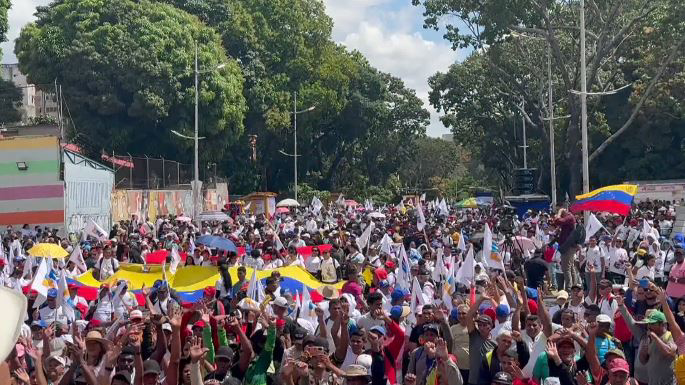
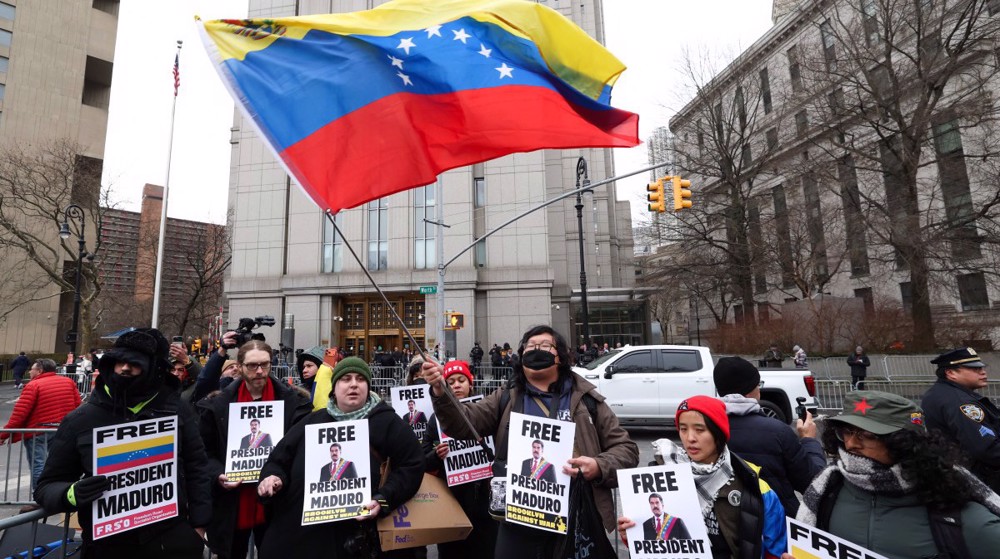
Venezuelans demand return of their president Nicolás Maduro
— Press TV 🔻 (@PressTV) January 25, 2026
Gladys Quesada reports from Caracas
Follow Press TV on Telegram: https://t.co/LWoNSpkc2J pic.twitter.com/mGJqcqkGko
At the UNSC session on January 6, major powers condemned the US raid as a clear violation of sovereignty and international law. China labeled the operation “unilateral, illegal, and bullying.” Russia described the raid as “armed aggression,” warning that it signaled a return to imperialist lawlessness. Algeria and others echoed these concerns, while Colombia’s ambassador said the intervention recalled “the worst interference” in the region’s history.
Beyond the UNSC, dozens of countries, including Brazil, Chile, Mexico, South Africa, and others, issued public condemnations, framing the action as a breach of international norms rather than legitimate law enforcement. Governments across Africa and Asia warned that the operation undermined the post-1945 international legal order. UN officials cautioned that treating extraterritorial criminal law as a justification for military force set a dangerous precedent.
The Ministry of Foreign Affairs of the Islamic Republic of Iran issued a formal statement strongly condemning the US military attack on Venezuela, labeling it a clear act of aggression and a blatant violation of Venezuelan sovereignty and territorial integrity.
Latin American reactions were mixed. Bolivia, Cuba, and Nicaragua denounced the raid and reaffirmed support for Maduro’s legitimacy. In Cuba, mass demonstrations equated the operation with neo-imperialist aggression. By contrast, governments aligned with Washington issued carefully worded statements urging respect for “judicial processes,” avoiding condemnation of the use of force.
Regional multilateral bodies mirrored this fracture. A special session of the Community of Latin American and Caribbean States (CELAC) revealed deep unease over the precedent set by the US action, yet failed to produce a unified declaration. The Organization of American States (OAS) declined to convene an emergency meeting.
Legal scholars and diplomats warned that the raid eroded principles of the post-1945 order, where sovereignty and non-interference were meant to restrain great-power violence. Many argued that what Washington labeled law enforcement was the unilateral use of force without consent or a multilateral mandate.
The abduction has come to be seen not as a bilateral dispute but as a test case for the international system itself, where sovereignty in the Global South is rendered conditional on US approval rather than protected by universal norms.
Trump’s ‘war of choice’ against Iran ‘a disaster’: House Democratic leader
Trump announces ‘security’ agreement on Greenland after threatening to annex it
71% of US voters say Trump lacks strategy to end war on Iran: Fox News poll



VIDEO | Gaza schools reborn in tents as new academic year begins
Iran: US had intentionally prepared ground for withdrawing from Islamabad MoU
Hezbollah leader: Iran thwarted US-Israeli war goals; ultimate victory belongs to resistance
VIDEO | Yemen responds to Saudi aggression
Four Palestinians, including child, killed in Israeli attacks across Gaza
Iran retains initiative in Strait of Hormuz despite US claims: Armed Forces
Yemeni army targets sensitive sites in Saudi capital, Aramco facilities in Yanbu
Barzegari’s silver lifts Iran to five medals at 2026 World Poomsae Championships


 PressTV NEWSLETTER
now
PressTV NEWSLETTER
now
 This makes it easy to access the Press TV website
