Flashpoint Kashmir: Deadly attack pushes India and Pakistan to the brink—again
By Basharat Abbas
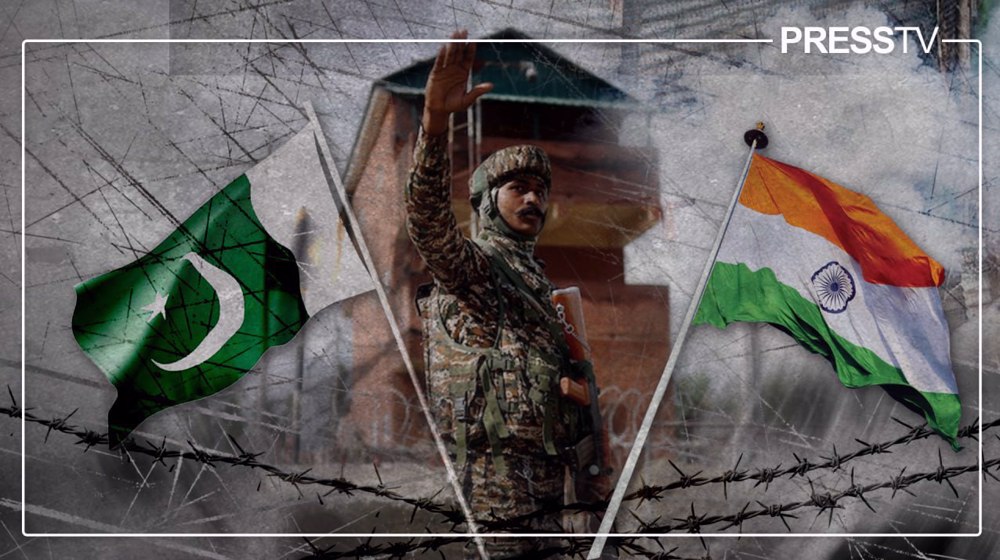
Indian-administered Kashmir has once again ignited as a searing flashpoint in the fraught and enduring rivalry between South Asian nuclear-armed neighbors, India and Pakistan.
Baisaran meadow, nestled amid thick pine forests and cradled by snow-draped mountains in the picturesque hill station of Pahalgam, Kashmir, dominated television screens last week for all the wrong reasons.
In a harrowing terror attack last week, at least 26 people lost their lives—most of them tourists from southern India. The attack occurred during the high-profile visit of US Vice President JD Vance to India.
India’s Prime Minister Narendra Modi vowed to pursue those responsible to “the ends of the earth,” asserting that the masterminds and perpetrators “will be punished beyond their imagination.”
Responsibility for the attack has been mired in ambiguity, clouded by conflicting reports about the number of assailants involved.
Indian media pointed to a relatively obscure group, the Resistance Front (TRF), which surfaced on social media to claim responsibility. Indian authorities contend the TRF is a proxy for Lashkar-e-Taiba, a Pakistan-based terrorist organisation.
However, TRF later issued a public denial of any involvement in the Pahalgam attack.
The assault, one of the deadliest in recent years, triggered a wave of fury throughout India. Despite the outrage, no group has been officially named by India as perpetrators.
While New Delhi has repeatedly pointed fingers at Pakistan, Islamabad says the Indian government hasn't yet presented conclusive public evidence to prove the Pakistani involvement in the attack.
Since the tragic event, tensions between the two nuclear-armed nations have surged dramatically, with each side issuing strongly worded statements.
A military standoff between India and Pakistan poses an alarming risk of rapid escalation—one that many observers fear could spiral beyond control.
The Pakistani government has called for a “neutral” probe into the killings of tourists in Indian-administered Kashmir, expressing its willingness to cooperate.
At the same time, senior Pakistani officials believe the Indian strike is "imminent."
Amid the looming threat of confrontation, Iran has offered to mediate between the two adversaries. Foreign Minister Abbas Araghchi stated that the Islamic Republic of Iran stands ready to “help de-escalate tensions and strengthen regional stability.”
“Tehran stands ready to use its good offices in Islamabad and New Delhi to forge greater understanding at this difficult time,” the top Iranian diplomat posted on X last week.
Iran was among the first countries to strongly condemn the terrorist attack.
India-Pakistan tensions escalate after deadly Kashmir tourist attack
— Press TV 🔻 (@PressTV) April 28, 2025
Munawar Zaman reports from New Delhi
Follow: https://t.co/GKZwI4ehqL pic.twitter.com/6Y33rAvwvZ
Escalation over the attack
Islamabad has denied any involvement in the April 22 incident, which claimed the lives of 25 Indians and one Nepali citizen.
Pakistan’s Prime Minister Shehbaz Sharif declared, “The recent tragedy in Pahalgam is yet another example of this perpetual blame game, which must come to a grinding halt.”
Sharif denounced India’s "provocative and escalatory stance," urging the international community to intervene before the crisis deteriorates further.
Islamabad has also warned of imminent Indian military aggression, asserting it possesses “credible intelligence” that an attack could be launched within hours or days. Pakistan has vowed to respond “very strongly.”
Earlier in the week, Pakistan’s Defence Minister, Khawaja Muhammad Asif, claimed a military incursion by India was imminent.
In the wake of the Kashmir attack, both nations have unleashed a cascade of punitive measures against one another.
India suspended the 1960 Indus Waters Treaty, which governs water-sharing of the Indus River and its tributaries. Additionally, New Delhi shuttered its border with Pakistan, suspended bilateral trade, revoked visas for Pakistani nationals, and downsized Pakistan’s diplomatic presence in India.
In tit-for-tat fashion, Pakistan responded with similar steps: border and airspace closures, trade suspension, and a threat to disengage from all bilateral agreements with India, including the landmark Shimla Agreement.
The Shimla Agreement, a cornerstone accord signed after the 1971 war, established the Line of Control as the de facto boundary in Kashmir, serving as a framework for ceasefire arrangements.
With both nations claiming Kashmir in full but administering only parts of it, hostilities have reignited along the de facto border, which has seen two consecutive days of crossfire after four years of relative calm.
“Pakistan is fully prepared to cooperate with any neutral investigators to ensure that the truth is uncovered and justice is served,” Pakistan’s Interior Minister, Mohsin Naqvi, said on April 26.
As the confrontation escalates, experts warn that the nuclear neighbours are teetering on the brink of a potentially catastrophic conflagration.
Iran pres. stresses collective, effective fight against terrorism in phone calls with Indian, Pakistani PMshttps://t.co/ax0BESy6DF
— Press TV 🔻 (@PressTV) April 27, 2025
Tourism conceals reality
The attack has come at a time when Indian officials have been promoting Indian-administered Kashmir as a bastion of peace years after the Modi government’s controversial revocation of the region’s autonomous status in 2019.
In September 2024, Prime Minister Modi confidently declared that his Bharatiya Janata Party aimed to forge a new Jammu and Kashmir—“which would not only be terror-free but a heaven for tourists.”
Tourism has since been touted by the Indian government as the clearest signal of “normalcy” in the region.
The region was a terrorist hot spot, now it has become a tourist hot spot,” Indian Home Minister Amit Shah claimed in 2022.
On the eve of India’s 2024 general elections, Shah reiterated his stance.
"J&K is witnessing a new era of peace and development under the Modi government. The region has transformed from a terrorist hotspot into a tourist hotspot, with an increase in educational and economic activities," he stated.
Yet in May 2024, Jammu and Kashmir’s Chief Minister Omar Abdullah—then serving as opposition leader—warned against equating tourism figures with peace.
“The situation (in Kashmir) is not normal, and talk less about tourism being an indicator of normalcy; when they link normalcy with tourism, they put tourists in danger,” Abdullah said at the time.
The militant attack has yet again exposed the fragility of peace and normalcy in the Himalayan region, which has been in the grip of insurgency for nearly four decades.
A deadly militant attack in Indian-administered Kashmir, killing 26 (mostly Indian nationals), sharply escalated tensions between India and Pakistan, bringing the nuclear-armed rivals to the brink of confrontation. pic.twitter.com/OTddPNeJ2T
— Press TV 🔻 (@PressTV) April 24, 2025
Trail of bloodshed
For nearly four decades, the Kashmir Valley has ranked among the most heavily militarised regions on the planet. Every inch of it is patrolled by army units, paramilitary forces, and state police.
Since Jammu and Kashmir’s autonomy was revoked and the region was bifurcated into two union territories in 2019, surveillance has intensified.
Experts note that in light of the high levels of securitization, the latest security lapse stands out even more starkly.
Since 1989, Kashmir has borne witness to an array of violent incidents perpetrated by “unidentified gunmen.” These attacks have often targeted civilians, Indian pilgrims, and state functionaries.
In March 2000, during US President Bill Clinton’s visit to India, masked gunmen massacred 35 Kashmiri Sikhs in the village of Chittisinghpura in South Kashmir.
In August 2000, at least 21 civilians died in an attack on the Amarnath pilgrimage base camp in Pahalgam. In 2001, 13 lives were lost near the Amarnath shrine.
In 2002, another attack on the Nunwan camp en route to the shrine left eight pilgrims dead and 30 injured. In July 2017, a bus carrying pilgrims from the Amarnath shrine was attacked, resulting in seven deaths and 19 injuries.
Over recent years, India and Pakistan have repeatedly exchanged fire following attacks on Indian security forces in Kashmir.
In September 2016, militants launched a deadly assault on an army base in Uri, Indian-administered Kashmir, killing 18 soldiers. The attackers were subsequently killed.
That same month, India claimed to have conducted “surgical strikes” on “terrorist targets” across the heavily fortified frontier in Pakistan-controlled Kashmir—an operation that escalated tensions sharply. Pakistan dismissed the claims, denying that any such strikes had taken place on its soil.
In February 2019, 40 Indian paramilitary personnel were killed in a suicide bombing targeting an Indian army convoy in Pulwama, Kashmir, marking the deadliest militant assault on Indian forces since the insurgency erupted in 1989.
India retaliated with airstrikes on what it described as a Jaish-e-Mohammad (JeM) training camp in Balakot, located in Pakistan's Khyber Pakhtunkhwa province.
History now seems poised to repeat itself, with much of the media speculating that an Indian military strike is imminent—a move likely to trigger a response from Pakistan.
From ‘How Will This End For Iran’ to ‘When America Walks Away’: A tale of two Economist covers

Irish goalie’s withdrawal from Israel match turns personal choice into a statement of conscience
Explainer: How US Congress is targeting pro-Palestine campus activism through funding restrictions



VIDEO | Global oil price proof that Iran controls Hormuz Strait: Political scientist
Iraqi airliner resumes flights to Iran amid US sanctions threats
Araghchi: Zero compromise on Iran’s nuclear program, US response expected Tuesday
VIDEO | Iran, Azerbaijan push for expanded trade, transport links
VIDEO | US inflation punishing small business owners
VIDEO | ‘Trump’s Iran strategy is deepening the crisis, not solving it,’ analyst says
Media reports on Qatar-mediated talks ‘baseless speculation’: Baghaei
VIDEO | Saeb Shaat: Iran’s education, unity and history strengthen its resilience


 PressTV NEWSLETTER
now
PressTV NEWSLETTER
now
 This makes it easy to access the Press TV website
