Former IAEA chief ElBaradei condemns US threats of military action against Iran
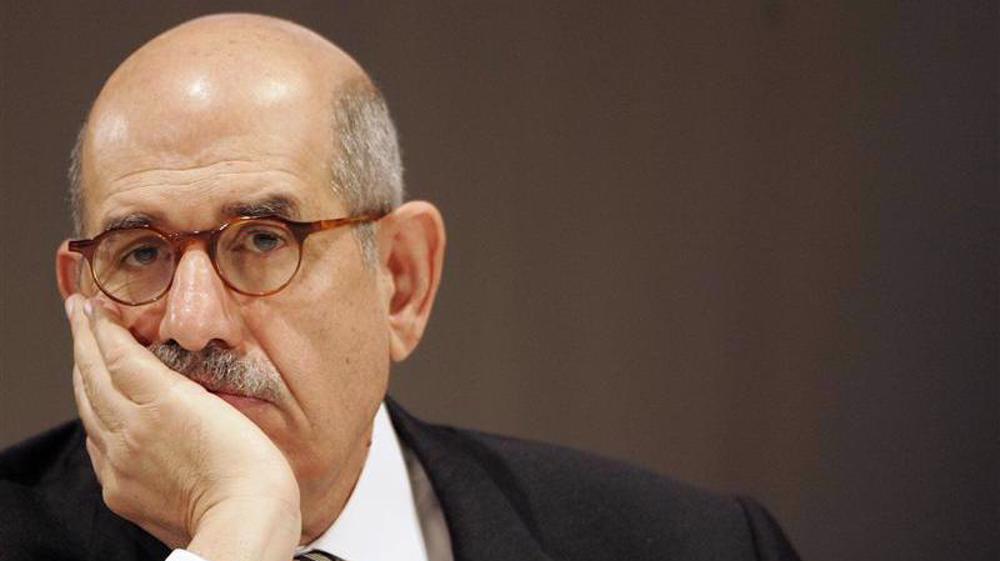
Mohamed ElBaradei, the Nobel Peace Prize laureate and former Director General of the International Atomic Energy Agency (IAEA), has condemned escalating US threats of military action against Iran.
In his post on Thursday on X, ElBaradei drew a direct parallel to the lead-up to the 2003 US-led invasion of Iraq, which he described as "illegal and immoral" and built on falsehoods with devastating human and regional consequences.
"The continued unilateral threats of a military strike against #Iran in the absence of any clear and present danger and in violation of international law, brings to mind the same grim scene before the illegal and immoral #Iraq war with its lies and horrifying consequences. Human life and regional destruction don’t seem to matter. We never learn…," he tweeted.
The continued unilateral threats of a military strike against #Iran in the absence of any clear and present danger and in violation of international law, brings to mind the same grim scene before the illegal and immoral #Iraq war with its lies and horrifying consequences.
— Mohamed ElBaradei (@ElBaradei) January 29, 2026
Human…
ElBaradei's comments come amid US President Donald Trump's repeated war threats against Iran, saying that time is running out to negotiate a new nuclear deal.
Trump has said a "massive armada" of US naval forces heading toward the region and threatened that any future US attack would be "far worse" than joint US-Israeli aggressions against Iran during the 12-day war in June 2025.
Iranian officials have rejected Trump's threats, with Iranian President Masoud Pezeshkian saying the United States must cease provocative actions in the region.
“If the American side is truly seeking genuine negotiations and diplomacy, it must cease such provocative and tension-provoking actions and demonstrate its commitment to the path of dialogue through actions,” Pezeshkian said.
Foreign Minister Seyed Abbas Araghchi declared that Tehran's armed forces are "with their fingers on the trigger" and prepared to "immediately and powerfully respond" to any aggression.
Iran’s Army spokesman said that any new act of aggression against Iran will be met with an immediate and decisive response, stressing that the experience of the June war has fundamentally reshaped Iran’s military posture and rules of engagement.

ElBaradei, who shared the 2005 Nobel Peace Prize for his IAEA work on nuclear non-proliferation, has long advocated diplomacy over military force in addressing Iran's nuclear program.
His invocation of the Iraq War—widely criticized for relying on flawed intelligence about weapons of mass destruction—underscores concerns that strikes could further regional escalation.
In March 2003, the US and Britain invaded Iraq in blatant violation of international law and under the pretext of finding WMDs; but no such weapons were ever discovered in Iraq.
More than one million Iraqis were killed as the result of the US-led invasion, and subsequent occupation of the country, according to the California-based investigative organization Project Censored.
Ready more:
Bush, Blair plotted Iraq war 1 year before invasion had started: White House memo
The US war in Iraq cost American taxpayers $1.7 trillion with an additional $490 billion in benefits owed to war veterans, expenses that could grow to more than $6 trillion over the next four decades counting interest, according to a study called Costs of War Project by the Watson Institute for International Studies at Brown University.
US Army depletes long-range missile stockpile in war of aggression against Iran: Report
Iran-Oman Hormuz corridor talks progress despite US obstruction, source tells Press TV
Israeli settler detained for alleged espionage for Iranian intelligence agencies



US Army depletes long-range missile stockpile in war of aggression against Iran: Report
Iran-Oman Hormuz corridor talks progress despite US obstruction, source tells Press TV
Iraq’s PMU mobilizes massive security force for Arbaeen procession
VIDEO | Anti-Trump protests sparked Flamingo Revolution in Albania
Millions of Iranians mark Arbaeen, call for vengeance for martyred Leader
Israeli settler detained for alleged espionage for Iranian intelligence agencies
South Korean police detain students after protest at US air base
British academic and Press TV co-host David Miller wins landmark appeal in anti-Zionism case


 PressTV NEWSLETTER
now
PressTV NEWSLETTER
now
 This makes it easy to access the Press TV website
