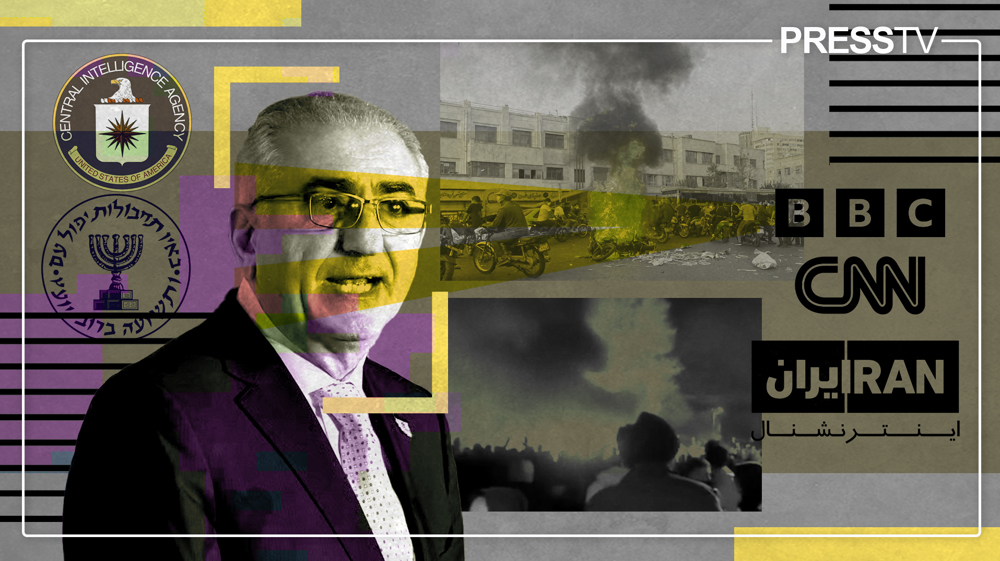
European parliament pushes new hostile measures after CIA-Mossad-backed riots in Iran
By Yousef Ramazani
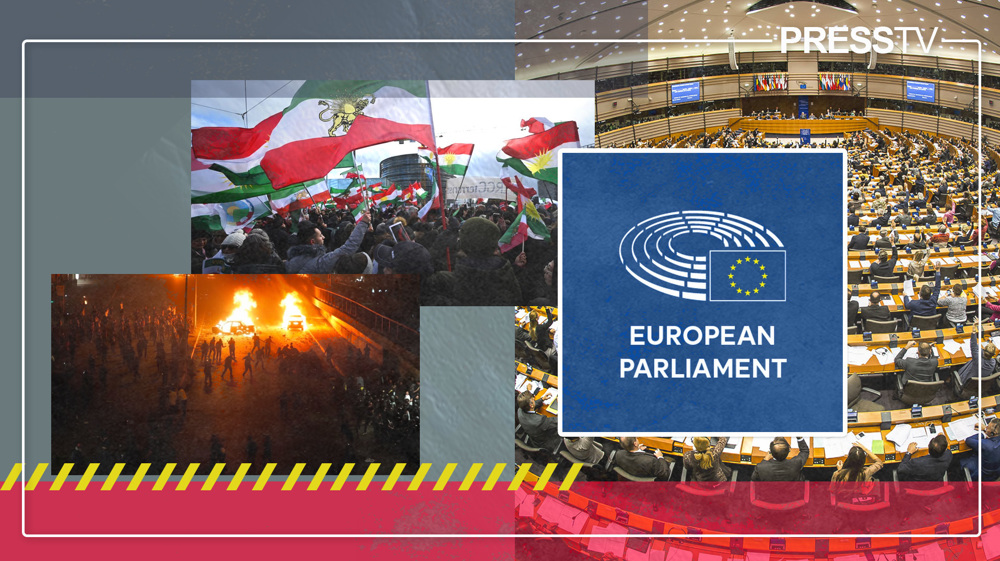
The European Parliament has in recent weeks enacted a series of hostile measures against the Islamic Republic of Iran, framing them as a response to developments inside the country.
A closer examination reveals a pattern of highly politicized actions rooted in false narratives, blatant double standards, and an explicit alignment with a broader geopolitical agenda aimed at destabilizing Iran.
These measures, according to political observers, represent a calculated escalation, characterized by a refusal to acknowledge the complex reality of riots and terrorism in the country and a willingness to leverage unverified claims to justify punitive actions.
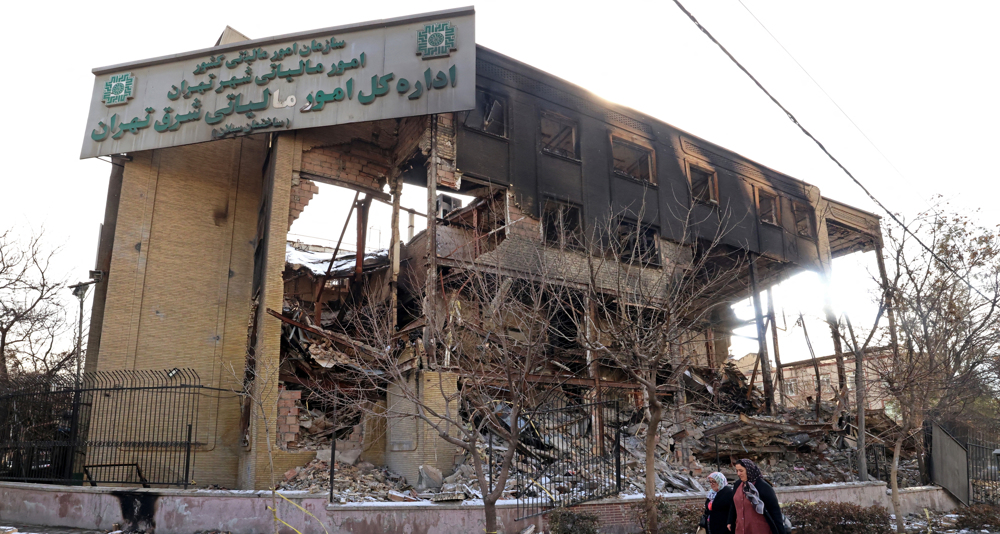
This campaign, featuring the unprecedented physical ban of Iranian diplomats and renewed calls to designate the Islamic Revolution Guards Corps (IRGC) as a "terrorist" entity, came in the wake of foreign-backed deadly riots in Iran that killed thousands, most of them civilians.
The European lawmakers have relied on information from organizations and think tanks with a documented history of advocating "regime change," combined with a stark contrast to the institution’s paralysis regarding other international crises, revealed a selectively applied principle.
Framework built on unverified and politicized narratives
The legislative resolutions and public condemnations issued by the European Parliament in recent weeks relied on a specific and highly contested narrative about the events in Iran.
Official statements from the parliament cited casualty figures ranging from several thousand to over sixteen thousand, presenting it as an authoritative fact demanding an urgent international response.
These figures did not originate from Iranian authorities or neutral, on-the-ground international observers, but were sourced primarily from a network of external advocacy groups, including the New York-based Center for Human Rights in Iran and the Abdorrahman Boroumand Center.
The operational models and funding structures of these organizations are matters of public record, showing significant financial support from the US Congress through the National Endowment for Democracy (NED), an institution with a long-documented history of funding political opposition movements in countries like the Islamic Republic of Iran.
Iranian authorities challenged the veracity of these casualty claims, presenting forensic analyses that identified fabricated evidence, including martyr lists containing names of individuals who were deceased from natural causes or, in some documented cases, demonstrably alive.
The European Parliament’s decision to base far-reaching policy measures, including calls for new sanctions and diplomatic ostracization, on externally generated data compromised the objective credibility of its position on the situation inside Iran.
This approach established a concerning precedent where information from politically motivated actors abroad was granted more weight than official domestic investigations and evidence, creating a factual disconnect that precluded a balanced understanding of the situation.
EU split over new Iran sanctions amid claims of double standards @Jerome__Hughes reports from Brussels.
— Press TV 🔻 (@PressTV) January 22, 2026
Follow: https://t.co/B3zXG73Jym pic.twitter.com/mah82y3tzx
Deliberate conflation of civil protest and armed violence
A central and recurring flaw in the European Parliament’s latest posture was its systematic conflation of peaceful civil protests in late December with orchestrated violent sabotage in early January.
In its resolutions and the statements of its leadership, including President Roberta Metsola, the European Parliament consistently described actions of the Iranian government as a uniform "brutal crackdown" on citizens exercising fundamental rights.
This framing deliberately omitted the documented context provided by Iranian security agencies, which detailed the involvement of armed groups receiving intelligence, logistical, and financial support from external actors, specifically the American and Israeli spy services.
These groups were implicated in attacks on security personnel, the vandalism of critical public infrastructure, and acts of terrorism designed to sow panic and create martyrs for a media narrative.
By refusing to differentiate between citizens expressing economic grievances and foreign-backed actors engaging in violence, the European Parliament advanced a monolithic narrative that implicitly absolved violent saboteurs of any responsibility.
This narrative also invalidated the inherent right and duty of any sovereign state to maintain public order, protect its citizens from violence, and confront what it identified as externally supported destabilization campaigns.
This rhetorical strategy was not novel but mirrored the Parliament’s stance during the 2022 unrest, where condemnations of Iranian security measures were issued without meaningful acknowledgment of the simultaneous terrorist attacks in Shiraz and Izeh, which resulted in significant civilian casualties.
Geopolitical instrumentalization and open advocacy for "regime change"
The punitive measures advocated and enacted this month were linked by Members of the European Parliament (MEPs) to aspirations that extended far beyond the containment t of riots.
The push to designate the IRGC as a "terrorist" organization and the symbolic ban on Iranian diplomats served not only as punitive tools but as instruments of political pressure.
This objective was made explicit by figures such as German MEP Hannah Neumann, the Chair of the Parliament’s delegation for relations with Iran, who publicly declared that the Islamic Republic was in a "state of collapse."
Such pronouncements effectively transitioned the European Parliament from a forum for diplomatic dialogue into a platform for openly cheering the downfall of a UN member state’s government, according to political analysts.
This orientation finds historical context in the composition of earlier EU sanctions lists, which have included entities like "Friends of Free Iran" and individuals such as former MEP Alejo Vidal-Quadras, all of whom are publicly and explicitly committed to the goal of regime change in Tehran.
Many of the MEPs who spoke out strongly against Iran at the time, like those today, are long-time collaborators of the terrorist cult Mujahedin-e Khalq Organization (MKO) and lobbyists for the Israeli regime.
The Parliament’s actions in January 2026 thus aligned with a longer-term, externally supported strategy of applying maximum pressure to foment internal disruption, a strategy financially and politically underpinned by mechanisms like the US-funded National Endowment for Democracy.
The open call for collapse fundamentally altered the nature of the EU’s engagement, moving it from a critical interlocutor to an active participant in a hybrid conflict, thereby severely damaging any prospect for trust-based dialogue.
Iran FM Abbas Araghchi says the EU abandoned the Iran nuclear deal by following the US, and is now paying the price as Washington treats Europe unilaterally.
— Press TV 🔻 (@PressTV) January 21, 2026
Follow: https://t.co/mLGcUTS2ei pic.twitter.com/zp2eUCYcAe
Paralyzing double standard: Contrast with inaction on Gaza
The rapid legislative activism demonstrated by the European Parliament towards Iran exists in glaring contrast to its comparative inertia regarding other places, such as Gaza or Venezuela.
The most salient point of comparison is the ongoing Israeli genocidal war on Gaza, where more than two years of military aggression have killed more than 70,000 Palestinians, which has even been documented by UN agencies and international humanitarian organizations.
During this period, the European Parliament has not enacted comparable sanctions, nor has it moved to impose a diplomatic ban on Israeli regime officials, some of whom were subject to arrest warrants from the International Criminal Court (ICC) for war crimes.
Iranian Foreign Minister Abbas Araghchi publicly highlighted this discrepancy, noting the freedom of movement enjoyed by such officials within European airspace.
This disparity demonstrated that the Parliament’s invocation of human rights principles was not a universally applied doctrine but a selectively deployed tool.
The stark contrast has once again exposed hypocrisy and revealed a discernible geopolitical bias, wherein the actions of allied entities are met with prolonged deliberation and mitigated responses, while the actions of independent states like Iran trigger immediate and severe condemnation.
This double standard has, according to analysts, again undermined the moral authority the Parliament has sought to project and suggested that strategic alignment, rather than consistent principle, was a primary driver of its foreign policy actions.
Historical parallels: Repeating the 2022 playbook
The January 2026 measures did not constitute a novel departure in EU policy but rather a deliberate escalation of a pre-existing template established in November 2022.
During that time, the European Parliament adopted a nearly identical posture: it severed direct diplomatic contacts with Iranian counterparts and imposed sanctions based largely on narratives propagated by external "opposition" groups and amplified by Western media.
At that time, Iran responded with symmetrical, tit-for-tat sanctions against specific EU institutions and individual lawmakers, citing their deliberate support for groups inciting violence and terrorism.
The 2026 actions, particularly the novel step of physically barring Iranian diplomats from parliamentary premises, represent a hardening and intensification of this established hostile approach.
This continuity indicates a persistent European strategy to leverage periods of internal challenge within Iran as opportunities to apply maximum political and economic pressure.
It also suggests a fixed policy orientation that is largely disconnected from the specific nuances of each incident, aiming instead at accumulating costs and seeking to capitalize on perceived moments of vulnerability within the Iranian state.
The repetition of this pattern points to a deeply entrenched adversarial framework that prioritizes pressure over nuanced diplomacy.
Iran slams EU parliament’s ‘meddlesome, irresponsible’ resolution on terrorist riots https://t.co/oZjVoEHtW3
— Press TV 🔻 (@PressTV) January 23, 2026
Strategic sanctions: Linking domestic unrest to geopolitical containment
Beyond symbolic diplomatic measures, the policy push in January 2026 has included hard-nosed proposals from the European Commission for new sanctions targeting Iran’s export of advanced military technologies, such as drones and missile components.
EU Foreign Policy Chief Kaja Kallas explicitly stated that these measures were designed to impair Iran’s capacity to support allies and, by extension, degrade its regional defense posture.
This initiative strategically conflated the internal unrest narrative with broader, pre-existing Western strategic objectives concerning Iran’s technological advancement and international partnerships.
The proposed sanctions serve a dual geopolitical purpose: they seek to punish the Iranian government under the banner of human rights advocacy while simultaneously advancing a containment agenda aimed at curtailing Iran’s defensive capabilities and its role in regional security equations.
This linkage demonstrated how humanitarian rhetoric could be instrumentalized to build consensus for actions fundamentally rooted in realpolitik and strategic competition, further complicating the disentanglement of genuine human rights concerns from wider geopolitical maneuvering.
Weaponization of diplomatic protocol and information
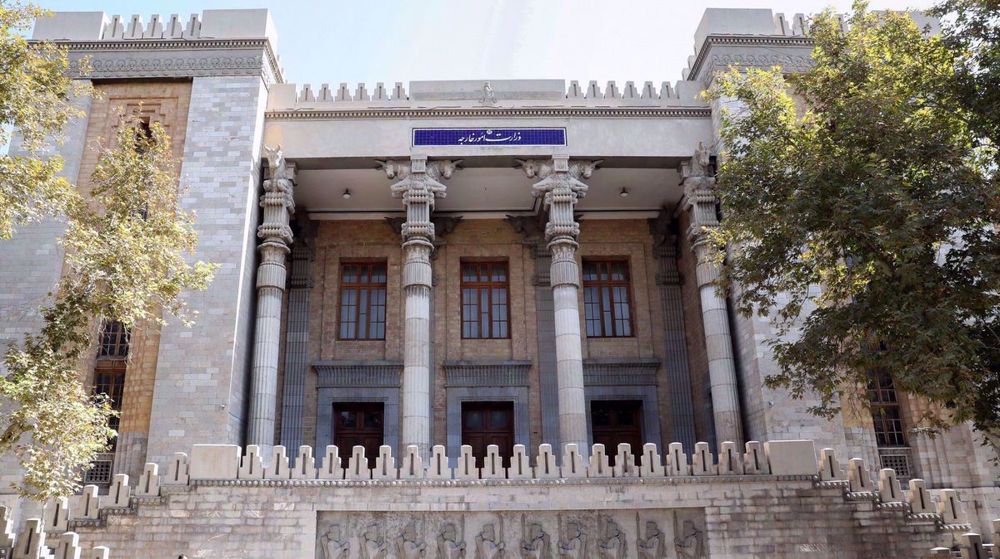
The European Parliament’s decision to ban Iranian diplomats from its buildings constituted a significant breach of conventional diplomatic practice and protocol, as per experts.
This action, framed within the Parliament as an act of solidarity with the Iranian people, served as a political weapon to isolate the Iranian state within European institutional spaces.
According to analysts, it seeks to create a discriminatory two-tier system where Iranian representatives are uniquely stigmatized and denied the access routinely afforded to diplomats from other countries, including those engaged in protracted wars with devastating impact.
This move, coupled with the Parliament’s uncritical endorsement of false and bogus narratives, has served to poison the atmosphere for any constructive dialogue.
It endorsed an information ecosystem where claims from foreign-based "opposition" groups are treated as definitive, while official evidentiary rebuttals from Iranian authorities are dismissed a priori.
This environment has rendered a balanced, fact-based assessment impossible and ensured that the European position remains anchored in a singular, hostile narrative.
Norway joins 11 other states to criminalize trade with West Bank settlements
'Normalization of war and genocide’ unacceptable, Irish president tells Trump
French broadcaster removes program replay after actress blasts Israeli genocide in Gaza



Syria’s HTS declines Saudi bid for militants against Yemeni forces: Report
VIDEO | Pentagon criticized for failing to release real number of US troops casualties
Araghchi: Military intervention cannot create security; coercion cannot bring peace
VIDEO | US president using Greenland as foreign policy success
VIDEO | Press TV's news headlines
Jordan: the Kingdom of compromise - Part 2
University of Tehran scientists develop bio-scaffolds for bone repair
Handala hacker group publishes selfie images of 700 Israeli ‘security’ personnel


 PressTV NEWSLETTER
now
PressTV NEWSLETTER
now
 This makes it easy to access the Press TV website
